Sisilia Frederika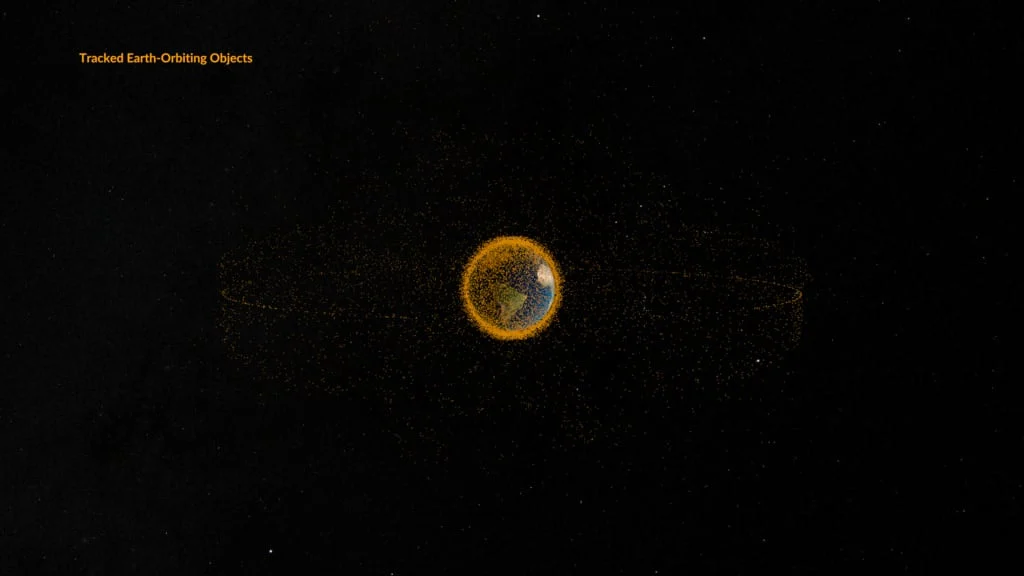
The proliferation of satellite megaconstellations in Low Earth Orbit (LEO) has reached a critical juncture, with new research suggesting that current deployment plans may lead to an irreversible cascade of orbital debris. A seminal paper by Professor Hugh G. Lewis of the University of Birmingham, recently released on the arXiv pre-print server, warns that the traditional models used to predict orbital stability are no longer sufficient for the modern era of active, maneuvering satellite fleets. By accounting for the complexities of active collision avoidance, continuous satellite replenishment, and specific aerodynamic drag profiles, Lewis’s research identifies a "critical size" for these constellations beyond which the fragment population enters a state of infinite growth—a phenomenon known as the Kessler Syndrome.
The Evolution of Orbital Stability Modeling
The concept of a self-sustaining debris cascade was first proposed in 1978 by NASA scientist Donald J. Kessler and colleague Phillip Anz-Meador. Their original model, which has dictated space policy for over four decades, was based on a "passive" environment. In this scenario, satellites were largely treated as inert objects that remained in their orbits until gravity and atmospheric drag eventually brought them down. Under the Kessler model, the primary concern was the density of objects; once a certain density was reached, collisions would create more debris than the atmosphere could remove, leading to a runaway effect.
However, the "New Space" era has fundamentally altered the behavior of objects in LEO. Modern satellites are equipped with sophisticated propulsion systems and autonomous collision avoidance software. Furthermore, commercial operators do not simply launch a satellite and leave it; they manage massive constellations where defunct units are immediately replaced to maintain service continuity. Professor Lewis argues that the classical models fail to capture these dynamics, necessitating a new framework that accounts for the "active" nature of today’s orbital infrastructure.
Chronology of the Orbital Debris Crisis
The path toward the current crisis has been marked by several key events that have increased the urgency of Professor Lewis’s research:
- 1957 – 1970s: The dawn of the space age saw a relatively empty orbital environment. Space was perceived as an infinite resource where debris would naturally dissipate.
- 1978: Donald Kessler publishes "Collision Frequency of Artificial Satellites: The Creation of a Debris Belt," providing the first mathematical warning of orbital runaway.
- 2007: A Chinese anti-satellite (ASAT) missile test destroys the FY-1C weather satellite, creating over 3,000 pieces of trackable debris and tens of thousands of smaller fragments, significantly increasing the collision risk in LEO.
- 2009: The first major accidental collision between two intact satellites occurs when the active Iridium 33 and the defunct Cosmos 2251 collide over Siberia, adding approximately 2,000 pieces of large debris to the environment.
- 2019 – Present: The launch of SpaceX’s Starlink marks the beginning of the megaconstellation era. In just five years, the number of active satellites in orbit has more than quadrupled, moving from approximately 2,000 to nearly 10,000.
The Lewis Framework: Three Thresholds of Sustainability
Professor Lewis’s study analyzes fourteen planned or partially operational constellations using an updated mathematical framework. This framework evaluates the "critical size" of a constellation based on its altitude, the physical geometry of the satellites, and the operator’s replenishment strategy. The research categorizes constellations into three distinct levels of environmental impact:
Below Threshold (Sustainable)
Constellations in this category are considered environmentally neutral or positive in the long term. While collisions may still occur, the rate of fragment generation is lower than the rate at which atmospheric drag removes debris. Over time, the fragment population associated with these constellations will actually decline.
Exceed Unstable Threshold
At this level, the constellation reaches a point of equilibrium. The fragment population increases significantly but eventually levels off. While this does not result in an immediate runaway effect, it creates a "crowded" environment that increases the operational costs and risks for all space actors.
Exceeding Runaway Threshold
This is the most dangerous category. Constellations that exceed the runaway threshold will see an infinite growth in the fragment population. In this scenario, the sheer number of satellites and the frequency of their replacement create a feedback loop where debris generation permanently outpaces debris removal. This effectively guarantees the onset of Kessler Syndrome within the specific orbital shells occupied by these constellations.
Identifying the "Runaway" Offenders
The study highlights several high-profile projects that currently exceed the runaway threshold. Most notably, SpaceX’s "Starmind" proposal—an ambitious plan to place one million AI-driven data centers into orbit—is flagged as a primary concern. Similarly, Blue Origin’s "Project Sunrise" and the Chinese "Guowang" (National Network) constellation, which consists of approximately 13,000 satellites, are categorized as exceeding the infinite runaway threshold.
The data suggests that the sheer scale of these projects is incompatible with the long-term stability of the LEO environment. If these constellations are launched as currently planned and regulated, they could generate millions of fragments, leading to an "orbital gridlock" that would prevent future launches and potentially damage existing essential infrastructure, such as GPS and weather monitoring satellites.
The Role of Altitude and Atmospheric Drag
A critical finding in the Lewis paper is the correlation between altitude and sustainability. Constellations that operate at lower altitudes (typically below 550 kilometers) benefit from higher atmospheric density. This density creates "drag," which acts as a natural vacuum cleaner, pulling debris back into the Earth’s atmosphere where it burns up upon re-entry.
For instance, Starlink’s Mobile Satellite Service (MSS) and Blue Origin’s TeraWave performed relatively well in the sustainability metrics because they operate in these lower "self-cleaning" orbits. Conversely, even smaller fleets can be hazardous if they occupy higher altitudes. The Eutelsat Next fleet, consisting of only 528 satellites, was found to exceed the unstable threshold because its higher orbital altitude ensures that any debris created will remain in space for decades, if not centuries.
The "Vacuum" Problem in Regulatory Oversight
Perhaps the most alarming aspect of the research is the revelation that current regulatory assessments are conducted in a "vacuum." National regulators, such as the Federal Communications Commission (FCC) in the United States, typically evaluate the debris mitigation plan of a single constellation in isolation. They rarely consider the cumulative impact of multiple megaconstellations occupying the same or adjacent orbital shells.
Furthermore, these assessments often ignore the "background noise" of existing space junk. There are currently over 36,000 pieces of debris larger than 10 centimeters and an estimated one million fragments between 1 and 10 centimeters already in orbit. Professor Lewis argues that when these existing hazards are factored in, alongside the inevitable "unintended failures" of satellite hardware (such as propulsion or communication loss), the sustainability of these constellations looks even more precarious.
Implications for the Future of Spaceflight
The implications of reaching a tipping point in orbital debris are profound. If LEO becomes a graveyard of high-velocity fragments, the "Space-Faring Age" could be abruptly curtailed.
- Economic Impact: The global space economy is projected to reach $1.8 trillion by 2035. A Kessler event would jeopardize satellite-based telecommunications, global positioning systems, and Earth observation data, which are vital for modern agriculture, finance, and climate monitoring.
- Scientific Loss: Ground-based and space-based astronomy are already being hampered by the light pollution and radio interference caused by megaconstellations. A runaway debris population would make further telescope deployments or deep-space missions (such as those to Mars or the Moon) significantly more dangerous and expensive.
- Geopolitical Tension: As orbital shells become "clogged," the competition for remaining safe paths could lead to international conflict. The lack of a binding global treaty on space debris management means that the actions of one nation or one corporation can permanently degrade a resource shared by all of humanity.
Industry and Regulatory Responses
While some companies have voluntarily committed to higher standards—such as SpaceX’s commitment to de-orbiting satellites within five years of mission completion (beating the FCC’s new five-year rule)—the Lewis paper suggests that voluntary measures are insufficient.
Industry experts and academic researchers are calling for a fundamental shift in how space is managed. This includes the development of Active Debris Removal (ADR) technologies, such as "space tugs" or harpoons designed to de-orbit large pieces of junk. However, ADR remains technologically unproven at scale and legally complex, as international law currently prohibits one nation from touching another nation’s space objects without explicit permission.
Conclusion: A Ticking Clock in Low Earth Orbit
Professor Lewis’s research serves as a stark warning that the window for sustainable space development is closing. The transition from thousands to millions of objects in orbit represents a phase shift that our current regulatory and mathematical models are ill-equipped to handle.
The paper concludes that unless regulators begin to consider the aggregate impact of all planned constellations and enforce strict "critical size" limits, the very technology intended to connect the world may eventually disconnect us from the stars. As the "New Space" race accelerates, the priority must shift from how many satellites can be launched to how many can be safely sustained. The alternative is a crowded, hazardous orbit that could lock humanity on Earth for generations to come.