Evan Lee Salim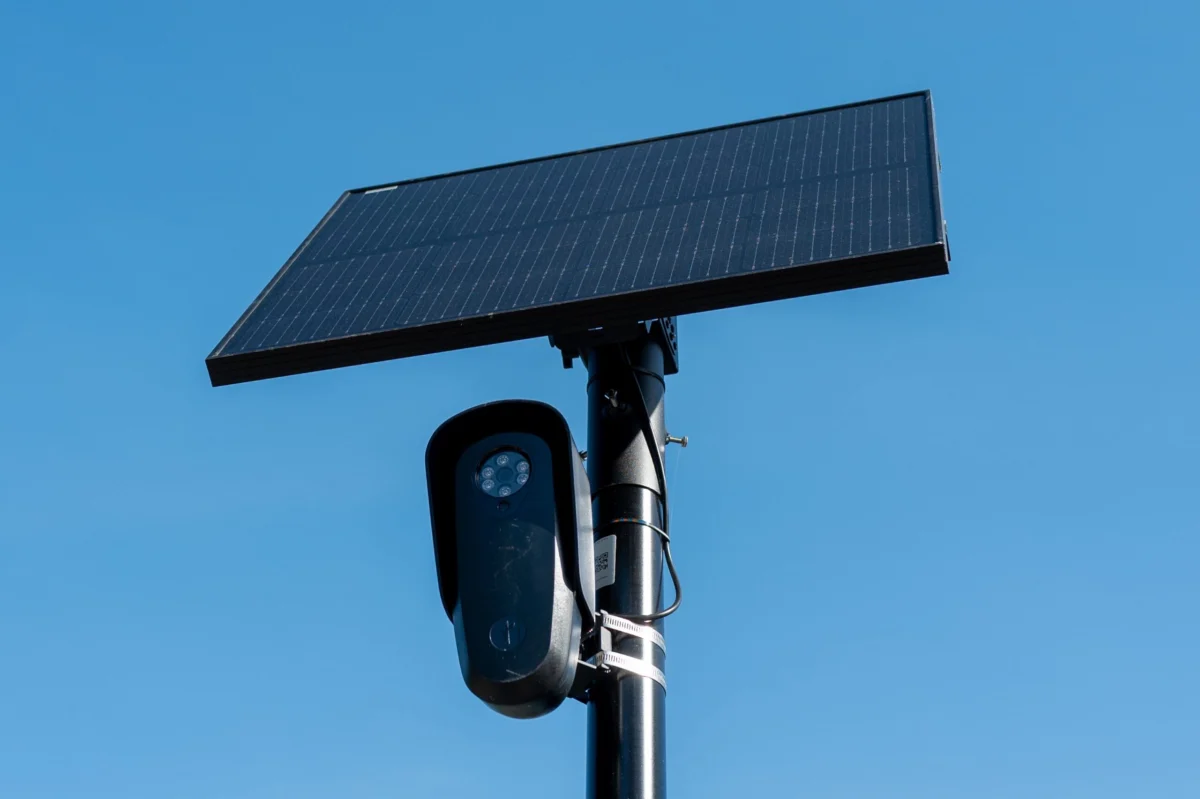
The nation finds itself at a critical juncture, grappling with the complex interplay between public safety and individual privacy, a tension acutely embodied by the rise of pervasive surveillance technologies. At the forefront of this contentious discussion is Flock Safety, a company whose CEO, Garrett Langley, asserts that the country must forge a "compromise" rather than prioritizing one over the other. "When people talk about just one of these, privacy or safety, they’re prioritizing the wrong thing, and what we have to prioritize as a country is compromise," Langley stated during a recent interview with Fox News. "How do we have our safety, and how do we balance privacy?" This declaration comes amidst a surging wave of public skepticism, political opposition, and mounting evidence of the potential for misuse of Flock’s extensive network of cameras, drones, and automated license plate recognition (ALPR) systems. The debate surrounding Flock Safety is not merely about a single company but represents a microcosm of the broader societal challenge of integrating powerful new technologies responsibly into the fabric of daily life without eroding fundamental civil liberties.
The Rise of Automated Surveillance: Flock Safety’s Footprint and Technology
Flock Safety, established in 2017, positions itself as a leader in community safety technology, asserting its mission to "eliminate crime" by equipping law enforcement agencies and neighborhoods with tools for real-time intelligence gathering. The company’s core offering revolves around automated license plate recognition (ALPR) cameras, which are deployed across thousands of communities throughout the United States. These cameras, often affixed to poles, buildings, or integrated into mobile units, continuously scan and capture license plate numbers. Beyond mere identification, the technology records the date, time, and precise location of vehicles, storing this data in a centralized, cloud-based database. The system also extracts additional vehicle characteristics such as make, model, color, and can detect unique attributes like bumper stickers or roof racks, creating a comprehensive digital fingerprint of vehicle movements.
The operational mechanism of Flock’s ALPR system is designed for broad data collection. When a vehicle passes a Flock camera, its license plate is read, and an image of the vehicle is captured. This data is then uploaded to Flock’s servers, where it can be accessed and queried by authorized law enforcement personnel. A key feature of Flock’s system is its interconnected network; law enforcement agencies subscribing to the service can often share access to data with neighboring jurisdictions, effectively creating a vast, interconnected surveillance grid. This capability allows for the tracking of vehicles across municipal and county lines, significantly expanding the scope of surveillance. While the company maintains that its cameras focus solely on vehicle data and do not actively capture personally identifiable information of individuals, the sheer volume and interconnectedness of this data raise significant privacy concerns, as it allows for the retrospective tracking of millions of citizens, regardless of their involvement in criminal activity.
Flock Safety’s stated mission is to modernize policing and aid in criminal investigations, from solving property crimes to apprehending suspects in more serious offenses. The company boasts an impressive market penetration, with partnerships extending to over 2,000 cities and more than 1,400 law enforcement agencies across the United States. This rapid and widespread adoption underscores the perceived utility of ALPR technology by many security and police departments. However, this deep integration into local security infrastructure has inadvertently placed Flock Safety at the epicenter of a national dialogue about the appropriate boundaries of surveillance in a democratic society, prompting a reevaluation of the balance between technological efficiency and individual rights.
Allegations of Misuse and the Erosion of Public Trust
The concerns surrounding the potential for misuse of Flock Safety’s technology are far from hypothetical, having transitioned swiftly from abstract ethical debates to concrete, documented instances of alleged abuse. A significant investigation by The Washington Post recently illuminated at least 46 cases where police officers, granted access to Flock’s extensive network and its powerful data, were accused of misusing the surveillance data for unauthorized personal purposes. These alarming incidents detailed officers reportedly leveraging ALPR systems to track, stalk, or harass their former spouses, romantic partners, or individuals with whom they had personal disputes. One particularly egregious example involved an officer in a domestic dispute utilizing the system to monitor the movements of an ex-partner, transforming a public safety tool into an instrument for personal vendetta and control.
The implications of these findings are profound and multi-layered. They expose a critical vulnerability in the existing oversight mechanisms for advanced surveillance technologies, demonstrating how powerful data access, even when initially deployed with legitimate public safety objectives, can be exploited for malicious ends in the absence of robust safeguards and accountability. For the alleged victims, the experience was deeply violating, transforming public infrastructure into a private surveillance tool that invaded their personal lives and compromised their sense of security. Such revelations severely undermine public confidence in law enforcement and the technology it employs.
Responding to these revelations, Garrett Langley expressed remorse during an interview with CBS News, particularly after hearing an alleged victim’s account. "I apologize. It kills me that she went through that," Langley stated, acknowledging the profound personal suffering caused by such misuse. However, he simultaneously attempted to distance Flock Safety from culpability for the underlying issue of police misconduct. "I don’t think that Flock created police abuse. I think we’re the first company to ever shine a light on it and build the tools to find it." This dual stance—expressing empathy for victims while positioning the company as part of the solution rather than contributing to the problem—highlights the delicate public relations tightrope Flock Safety is attempting to walk. Critics argue that while the technology may not inherently "create" abuse, it undoubtedly provides unprecedented capabilities that significantly amplify the potential for such misuse, particularly when robust ethical guidelines, transparent policies, and stringent legal frameworks are lacking. The ability to track individuals’ movements over time creates a powerful informational advantage that, in the wrong hands, can easily become a tool for harassment or intimidation, thus eroding the fundamental trust between citizens and those tasked with protecting them.
A Bipartisan Backlash: From Progressive Warnings to Conservative Concerns
The controversy surrounding Flock Safety and similar surveillance technologies has notably transcended traditional political divides, emerging as a potent issue that resonates with both the left and the right. This bipartisan convergence underscores the fundamental nature of the concerns: the erosion of privacy, the potential for government overreach, and the implications for individual liberties in an increasingly monitored society.
On the left, prominent Democratic figures and progressive advocates have voiced strong opposition, framing the deployment of such systems as an affront to civil liberties and a dangerous step towards a pervasive surveillance state. Michigan’s Democratic Senate nominee, Abdul El-Sayed, recently castigated his opponent, Mike Rogers, for allegedly supporting "this mass proliferation of Flock cameras, any and everywhere, watching your every move to collect information without you even noticing." El-Sayed’s critique taps into widespread fears that constant, passive monitoring could have a chilling effect on freedom of association and expression, and that such technologies could disproportionately target minority communities, exacerbating existing social inequalities. Senator Bernie Sanders, a leading voice for progressive causes and a consistent advocate for civil liberties, echoed these sentiments with an unequivocal social media post: "STOP AI MASS SURVEILLANCE. STOP FLOCK." These statements reflect a broader concern among progressives about the unchecked expansion of governmental and corporate power through technological means, particularly when it impacts privacy, equity, and the potential for algorithmic bias. The historical context of surveillance being used to suppress civil rights movements and target marginalized groups often informs these critiques, adding an additional layer of urgency to their calls for restraint.
Conversely, the issue has also garnered significant attention and opposition from the political right, which traditionally champions individual freedom, limited government, and protection against state intrusion. Three House Republicans recently introduced a bill, H.R. 9800, that explicitly seeks to prohibit federal government agencies from purchasing automated surveillance systems utilizing facial recognition, biometric identifiers, or license plate recognition. Significantly, the bill specifically names "including a Flock Safety camera" as an example of the technology to be restricted. This legislative effort signals a growing conservative concern over the potential for government overreach and the erosion of individual privacy rights, viewing such widespread, passive surveillance as an unwarranted intrusion into citizens’ lives. The analogy drawn in the original article to the "data center backlash" becoming a bipartisan issue is apt; both scenarios highlight how technological advancements, when perceived as infringing on core values like privacy or local control, can galvanize opposition from across the political spectrum. For many conservatives, the idea of an omnipresent government tracking citizens’ movements resonates deeply with long-held principles of liberty and skepticism towards centralized authority. The unique aspect of Flock Safety’s controversy is its ability to bridge these ideological gaps, uniting factions that rarely agree on policy under the shared banner of protecting privacy from powerful surveillance technologies. This bipartisan scrutiny presents a significant challenge for Flock Safety and the broader surveillance industry, signaling a potential shift in how these technologies are regulated and perceived at a national level.
Company Adjustments and Continued Scrutiny
In direct response to the escalating public and political pressure, Flock Safety has initiated several policy and operational adjustments, presenting them as proactive steps towards greater accountability and enhanced privacy protection. These changes, announced in the face of mounting criticism, include:
- Reduced Default Data Retention Period: The standard duration for storing ALPR data has been significantly shortened. Previously, data was retained for 30 days; this default period has now been reduced to seven days. This means that, by default, captured license plate information and associated images will be automatically deleted from Flock’s servers after one week, aiming to reduce the overall volume and duration of sensitive data retention.
- Mandatory Case Code for Data Access: To enhance accountability and create a clear audit trail for data access, Flock Safety now requires law enforcement officers to enter a specific "case code" before they can access any stored ALPR data. The intent behind this change is to ensure that every data query is explicitly linked to an active criminal investigation or a legitimate law enforcement purpose, making it easier to track who accessed what data and for what reason.
While these changes represent a strategic concession to privacy advocates and a demonstrable effort to address some concerns, they have been met with a combination of cautious optimism and significant skepticism from civil liberties organizations. The American Civil Liberties Union (ACLU), a leading voice in the debate over surveillance technology, acknowledged Flock’s efforts but raised crucial questions regarding their ultimate effectiveness. In its official response to Flock’s announced changes, the ACLU stated, "While Flock has not shortened the default retention period to the ACLU’s recommended 48 hours, its proposal may be a step in the right direction. Whether this is a real change or just another Flock PR move, however, will depend on how its ‘Evidence Mode’ operates."
The "Evidence Mode" feature is at the core of the ACLU’s skepticism and has become a focal point for critics. While the default retention is now seven days, police departments retain the ability to override this setting. By classifying specific data as "evidence" related to an ongoing investigation, officers can save this information for significantly longer periods, potentially circumventing the intended privacy benefits of the shortened default. This mechanism raises profound questions about the true impact of the policy change, as it places the discretion for extended data retention back in the hands of the very users who have been accused of misuse. Critics argue that without stricter controls, transparent guidelines for when "Evidence Mode" can be legitimately invoked, and robust external oversight, the seven-day default could become largely ceremonial, failing to address the fundamental concerns about long-term data accumulation and the potential for abuse.
Furthermore, while the requirement for a case code is a positive step towards transparency, it does not inherently prevent misuse. An officer determined to access data for unauthorized personal reasons could potentially generate a