admin
admin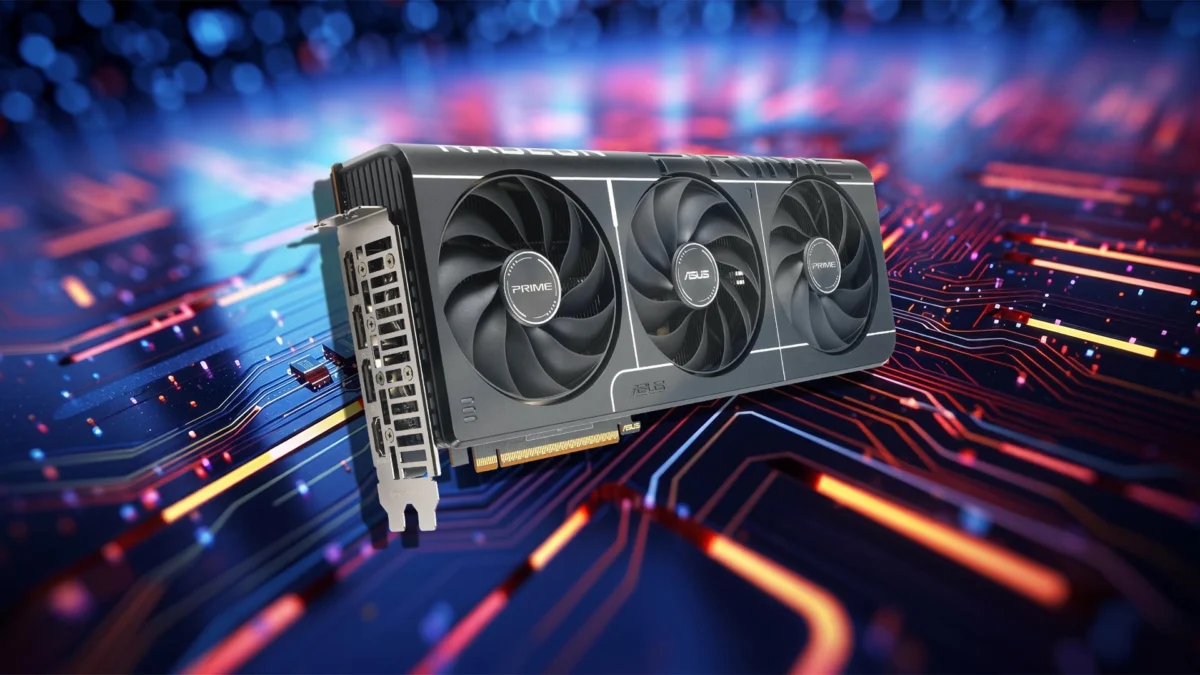
The global semiconductor market is currently bracing for a projected tightening of graphics memory supply, a development that threatens to drive up the retail prices of mid-range and high-end video cards in the coming quarters. Amidst this atmosphere of economic uncertainty for PC builders, Amazon has introduced a timely price correction on one of the most anticipated components in the current hardware cycle. The ASUS Prime Radeon RX 9070 OC Edition has seen its price point lowered to $529.99, reflecting a $50 discount from its standard MSRP. This adjustment positions the card as a primary contender for the title of the most efficient price-to-performance ratio in the modern gaming hardware landscape, offering a high-bandwidth solution for enthusiasts who are wary of future price hikes driven by component scarcity.
The Technical Architecture of the ASUS Prime Radeon RX 9070
At the heart of the ASUS Prime Radeon RX 9070 lies a robust architectural foundation designed to bridge the gap between enthusiast-grade performance and mainstream accessibility. The card is equipped with 3,584 stream processors, a configuration that allows for massive parallel processing of complex graphical shaders and compute tasks. This silicon is paired with 16GB of GDDR6 video memory (VRAM), a capacity that has increasingly become the industry standard for modern AAA titles that utilize high-resolution textures and expansive open-world environments.
The memory subsystem operates on a 256-bit bus, facilitating a memory speed of 20Gbps. This combination ensures that the GPU can handle the significant data throughput required for 1440p and 4K gaming without encountering the bottlenecks that often plague cards with narrower memory interfaces. In a market where VRAM capacity is often a point of contention among consumers, the inclusion of 16GB provides a degree of "future-proofing," ensuring the card remains viable as game engines become more demanding over the next several years.
Clock speeds on the ASUS Prime variant have been factory-tuned to exceed reference specifications. The GPU features a base factory clock of 2,590MHz, with the capability to boost up to 2,610MHz during intensive gaming sessions or rendering workloads. This "OC Edition" designation indicates that the silicon has been binned and tested to maintain these higher frequencies reliably, providing a marginal but measurable performance uplift over standard models while maintaining a focus on power efficiency.
Engineering and Thermal Management
ASUS has utilized its "Prime" branding for this model, a series typically associated with clean aesthetics and reliable engineering rather than the aggressive, RGB-heavy styling of the ROG Strix lineup. The thermal solution is a testament to this philosophy, utilizing a triple-fan array built on ASUS’s proprietary Axial-tech design. These fans feature smaller hubs that allow for longer blades and a specialized barrier ring that increases downward air pressure. This design ensures that airflow is directed precisely through the heat sink fins, maximizing heat dissipation even during sustained heavy loads.
To enhance the longevity of the cooling system, ASUS has incorporated dual-ball fan bearings. In contrast to traditional sleeve bearings, which can degrade over time due to lubricant evaporation or friction, dual-ball bearings are rated for twice the lifespan, making the card a more reliable long-term investment. Furthermore, the interface between the GPU die and the heat sink utilizes an advanced phase-change thermal pad. This material is designed to transition its physical state to fill microscopic gaps more effectively than traditional pastes, ensuring rapid and consistent heat transfer.
Acoustic performance is managed via integrated 0dB technology. This system utilizes onboard sensors to monitor the GPU temperature in real-time; when the temperature remains below 55°C—typically during light productivity tasks, web browsing, or indie gaming—the fans cease spinning entirely. This eliminates mechanical noise and reduces dust accumulation, providing a silent computing experience until the user launches a demanding application.
Physical Dimensions and Integration
One of the most notable aspects of the ASUS Prime Radeon RX 9070 is its physical footprint. While modern high-end GPUs have trended toward massive, four-slot designs that require specialized "super-tower" cases, the RX 9070 maintains a more conservative 2.5-slot profile. Measuring 312 x 130 x 50mm, the card is significantly more compatible with a wide range of mid-tower and even some small-form-factor (SFF) chassis.
The structural integrity of the card is reinforced by a vented backplate. This component serves two purposes: it prevents the PCB (Printed Circuit Board) from sagging or flexing under its own weight and allows hot air to pass through to the chassis’s exhaust fans rather than being trapped against the circuit board.
In terms of connectivity, the card is equipped with a modern suite of outputs. It features three native DisplayPort 2.1a ports and one native HDMI 2.1b port. The inclusion of DisplayPort 2.1a is particularly relevant for users planning to upgrade to next-generation high-refresh-rate monitors, as it supports significantly higher bandwidth than the older 1.4a standard.

Power delivery is handled through two standard 8-pin PCIe power connectors. Unlike some of its competitors that have moved toward the newer 12VHPWR connectors—which have faced scrutiny regarding cable seating and thermal issues—the RX 9070 relies on the proven reliability of the 8-pin standard. ASUS recommends a minimum power supply unit (PSU) of 650W, a requirement that is easily met by most mid-range gaming PCs, thereby lowering the total cost of ownership for those upgrading from older hardware.
Contextualizing the Market: The Looming Memory Shortage
The timing of this $529.99 deal is particularly significant given the current state of the global semiconductor supply chain. Industry analysts have pointed toward a tightening supply of GDDR6 memory chips, the primary component in modern graphics cards. This shortage is driven by several factors:
- AI Demand Diversion: Major memory manufacturers like Samsung, SK Hynix, and Micron are diverting significant portions of their production capacity toward HBM (High Bandwidth Memory) and DDR5 to satisfy the explosive growth in the artificial intelligence and data center sectors.
- Transition to GDDR7: As the industry prepares for the rollout of GDDR7 memory in next-generation flagship cards, production lines for GDDR6 are being scaled back, leading to a temporary "supply gap" where demand for current-gen mid-range cards exceeds the available component stock.
- Logistical Constraints: Ongoing shifts in global trade routes and manufacturing hubs continue to introduce volatility into the pricing of raw materials used in PCB fabrication.
When memory costs rise, graphics card manufacturers (AIBs) typically pass those costs on to the consumer. By securing a 16GB card at a discounted rate of $529.99, consumers are effectively insulating themselves against the potential price volatility expected in the latter half of the year. Historically, when memory shortages hit, the mid-range segment (the $500–$600 bracket) sees the most significant percentage-based price increases, as margins are thinner than in the "halo" product categories.
Chronology of the Radeon RX Series Evolution
The release and subsequent discounting of the RX 9070 marks a pivotal moment in the chronology of AMD’s graphics division. To understand its value, one must look at the progression of the RDNA architecture:
- RDNA 1 (RX 5000 Series): Introduced the transition from the aging GCN architecture, focusing on gaming efficiency and PCIe 4.0 support.
- RDNA 2 (RX 6000 Series): Brought hardware-accelerated ray tracing and the Infinity Cache, significantly improving performance-per-watt and challenging the high-end market.
- RDNA 3 (RX 7000 Series): Introduced the chiplet design, allowing for better yields and more aggressive pricing strategies.
- RDNA 4/Current Cycle (RX 9000 Series): Represents a refinement of the chiplet approach with a renewed focus on memory bandwidth and mid-range dominance.
The RX 9070 is positioned as the "sweet spot" of the current generation. While the RX 9070 XT offers higher compute units, its price point often exceeds the $600 threshold, making it a difficult sell for the value-conscious gamer. The non-XT variant, especially when discounted, provides approximately 90-95% of the performance of its "XT" sibling for a significantly lower entry price.
Industry Reactions and Broader Implications
Market analysts view the current ASUS-Amazon promotion as a strategic move to capture market share before the holiday season and before any supply-chain-induced price corrections take effect. Statements from supply chain observers suggest that while demand for GPUs has stabilized following the post-pandemic "crypto-mining" craze, the new bottleneck is no longer the GPU silicon itself, but the supporting components like VRAM and power delivery modules.
Gaming community sentiment has generally been positive regarding the ASUS Prime series. Users have noted that the lack of "gamer-centric" aesthetic flourishes—such as heavy RGB lighting and aggressive shrouds—is a welcome change for those building professional workstations or minimalist gaming setups. The focus on thermal stability and acoustic silence aligns with a growing trend among PC enthusiasts who prioritize a quiet environment over visual spectacle.
Furthermore, the RX 9070’s performance in 1440p gaming puts pressure on its direct competitors. With 16GB of VRAM, it holds a distinct advantage over competing cards in the same price bracket that may only offer 8GB or 12GB. As modern titles like Cyberpunk 2077, Alan Wake 2, and Starfield continue to push VRAM usage beyond the 10GB mark at high settings, the RX 9070’s memory buffer becomes a critical asset rather than a luxury.
Conclusion: A Strategic Window for Upgraders
The ASUS Prime Radeon RX 9070, currently priced at $529.99 on Amazon, represents a calculated opportunity for PC builders. By combining a 16GB VRAM buffer, a high-efficiency triple-fan cooling system, and a compact 2.5-slot design, it addresses the primary concerns of the modern gamer: longevity, compatibility, and noise.
As the industry prepares for a potential contraction in memory supply, the ability to acquire a current-generation, overclocked card at a 9% discount provides a safeguard against future market volatility. For those operating on a 650W power supply and looking to transition into 1440p or 4K gaming, the RX 9070 offers a compelling argument for being the most logical upgrade path available in the current hardware climate. Consumers are advised to monitor stock levels closely, as hardware deals of this nature often serve as a precursor to broader market shifts or inventory rebalancing.