Garick Elordi
The announcement that Call of Duty: Modern Warfare 4 will debut on Nintendo’s successor to the Switch has been met with significant scrutiny following reports that the physical retail version will not contain a traditional game cartridge. According to reports from independent video game retailer Video Game Plus, the physical edition of the upcoming military shooter on the Switch 2—unofficially referred to as Nintendo’s next-generation hardware—will instead be a "code-in-a-box" release. This format provides consumers with a plastic case containing a printed voucher for a digital download, rather than a physical storage medium.
This development marks a pivotal and controversial moment for the franchise’s return to Nintendo platforms. Modern Warfare 4 represents the first Call of Duty title to appear on a Nintendo console since the release of Call of Duty: Ghosts on the Wii U in 2013. While the technical achievement of bringing a modern, high-fidelity Call of Duty title to Nintendo hardware is considerable, the decision to forego physical media has sparked a debate regarding consumer rights, digital ownership, and the future of brick-and-mortar gaming retail.
The Retailer Backlash and the Physical Market
The report originated from Video Game Plus (VGP), a prominent specialty retailer known for its focus on physical media and imports. In a public statement shared via social media, the retailer expressed its intention to boycott the distribution of the Switch 2 version of Modern Warfare 4 if the "code-in-box" report proves accurate. VGP argued that the move undermines the fundamental value of physical collecting and the secondary market.
"The future of physical gaming should concern every physical game fan," the retailer stated. "And if it’s just a box with a download code inside, VGP won’t be carrying it. We believe physical games should actually be physical games."
The core of the retailer’s grievance lies in the lack of resale value and the erosion of consumer ownership. When a game is tied to a one-time-use digital voucher, it becomes permanently tethered to a single Nintendo Account. This prevents the game from being traded in, sold on the used market, or shared among friends—a cornerstone of the console gaming ecosystem for decades. For independent retailers, whose profit margins often rely on the trade-in and resale of pre-owned software, the "code-in-box" trend represents a direct threat to their business model.
A Decade-Long Hiatus and the Microsoft-Nintendo Deal
The arrival of Modern Warfare 4 on the Switch 2 is the culmination of a complex series of corporate maneuvers and legal commitments. For 13 years, the Call of Duty franchise remained absent from Nintendo hardware, largely due to the technical limitations of the original Nintendo Switch and the Wii U’s commercial struggles. During this period, the series pushed the boundaries of graphical fidelity and file sizes, often exceeding 100 gigabytes—a footprint that the original Switch’s mobile architecture and limited internal storage could not easily accommodate.

The landscape changed significantly during Microsoft’s $68.7 billion acquisition of Activision Blizzard. To appease global regulators—including the UK’s Competition and Markets Authority (CMA) and the US Federal Trade Commission (FTC)—Microsoft signed a 10-year binding agreement to bring Call of Duty to Nintendo platforms with "full feature and content parity" to the Xbox and PlayStation versions. Modern Warfare 4 is the first title to fulfill this promise, launching "day-and-date" on the Switch 2 alongside the PC, PlayStation 5, and Xbox Series X/S versions.
Technical Constraints and the Storage Dilemma
Industry analysts suggest that the decision to skip a physical cartridge may be driven by the sheer scale of modern Call of Duty titles. Modern Warfare 4 utilizes the "Call of Duty HQ" launcher, a unified interface that manages campaign assets, multiplayer maps, and the massive Warzone battle royale component. On other platforms, the installation size for the full experience frequently exceeds 150GB.
Nintendo’s proprietary cartridges are available in various capacities, typically ranging from 8GB to 32GB, with 64GB cards being rare and significantly more expensive for publishers to manufacture. If Modern Warfare 4 requires 100GB or more of data, Activision would be forced to either use multiple expensive 64GB cartridges—which would likely drive the retail price above the standard $70 MSRP—or require a massive "mandatory download" even if a smaller cartridge were provided.
By opting for a code-in-box, Activision avoids the manufacturing costs of high-capacity cartridges entirely. However, this shifts the burden of storage onto the consumer, who will likely need to invest in high-speed microSD cards for their Switch 2 console to house the game’s data.
Comparison with Industry Standards: The Game Key Card System
What makes the report particularly notable is that Nintendo has already developed a compromise for this specific issue: the "Game Key Card" system. Introduced to bridge the gap between physical and digital sales, the Game Key Card is a physical card with a scannable chip or code that can be sold at retail but functions similarly to a digital license. Crucially, some versions of this system allow for a more flexible transfer of licenses than a simple one-time-use paper voucher.
If Activision has indeed chosen to ignore this system in favor of a standard paper code inside a plastic case, it suggests a prioritization of cost-cutting over the preservation of a physical secondary market. This follows a growing trend in the industry. For example, the upcoming Grand Theft Auto VI is rumored to be leaning heavily into digital-first distribution, and Blizzard’s Diablo 4 port for the Switch 2 is reportedly following the same code-in-box path as Modern Warfare 4.
Historical Chronology of Call of Duty on Nintendo
The history of the franchise on Nintendo hardware has been one of technical compromise and eventual abandonment:
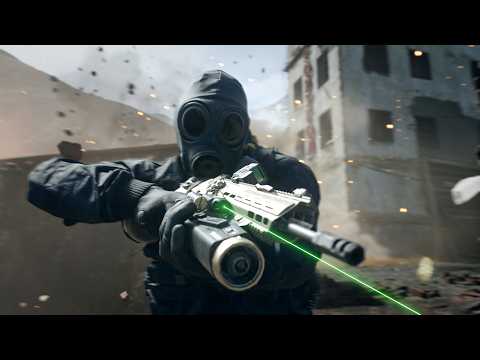
- 2007–2011 (The Wii Era): Developers like Treyarch and High Voltage Software ported titles like Modern Warfare, World at War, and Black Ops to the Wii. These versions featured unique gesture-based controls but suffered from significantly downgraded graphics and smaller multiplayer lobbies.
- 2012–2013 (The Wii U Era): Black Ops II and Ghosts were released on the Wii U. While they offered HD graphics and GamePad integration, the low install base of the console led to dwindling player counts and the eventual cessation of support.
- 2017–2023 (The Switch Era): Despite the massive success of the Nintendo Switch, no Call of Duty titles were ported to the system, with Activision citing the console’s hardware limitations as a primary factor.
- 2024–Present: Following the Microsoft acquisition, the series returns with Modern Warfare 4 on the Switch 2, promising a new era of high-performance portable play.
The Beta and Performance Expectations
Despite the controversy surrounding the physical release, anticipation remains high for the game’s performance on Nintendo’s new hardware. The second leg of the Modern Warfare 4 beta is scheduled to begin later this week, providing the first hands-on opportunity for players on the Switch 2.
The beta is expected to include:
- One full campaign mission demonstrating the graphical capabilities of the new console.
- A selection of core 6v6 multiplayer maps.
- An introductory look at the Warzone integration.
Technical experts are eager to see how the Switch 2 handles the game’s engine. Rumors suggest the console utilizes NVIDIA’s DLSS (Deep Learning Super Sampling) technology, which could allow the Switch 2 to output a 4K image when docked, despite running at a lower internal resolution. This would be essential for maintaining the "parity" promised in the Microsoft-Nintendo agreement.
Broader Implications for the Gaming Industry
The "code-in-box" phenomenon is part of a larger shift toward an all-digital future. According to recent financial reports from major publishers, digital sales now account for over 80% of total software revenue for AAA titles. For publishers, digital distribution eliminates manufacturing, shipping, and storage costs, while also effectively killing the used game market from which they receive no royalties.
However, for the consumer, this shift raises questions about long-term access. If a digital storefront is eventually taken offline—as seen with the Nintendo 3DS and Wii U eShops—players who do not have the game installed may lose access to their purchase permanently. Physical cartridges act as a hedge against this "digital sunsetting."
As the industry moves toward the next generation of hardware, the controversy surrounding Modern Warfare 4 serves as a litmus test for consumer tolerance. If the game sees commercial success on the Switch 2 despite the lack of a physical cartridge, it may embolden other publishers to abandon physical media entirely, signaling the end of the traditional "game in a box" era for Nintendo fans.
Activision has not yet officially responded to the reports regarding the Switch 2’s retail format. As the launch date approaches, both retailers and consumers are awaiting a formal confirmation that will determine whether this milestone release will be a celebration of the franchise’s return or a flashpoint for the ongoing debate over the value of physical media.