Sisilia Frederika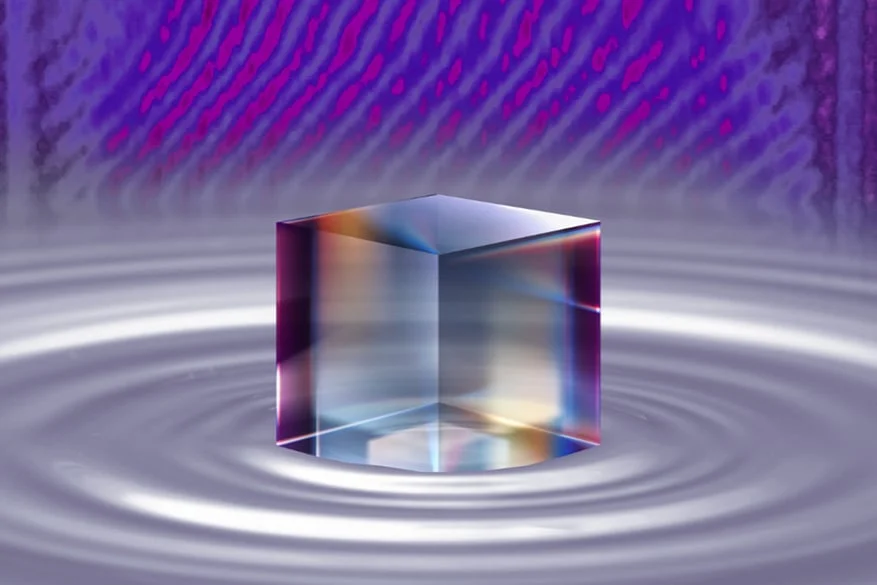
In a landmark study that bridges the gap between planetary science and the future of clean energy, physicists at the Lawrence Livermore National Laboratory (LLNL) have successfully simulated the extreme conditions found within the interiors of "ice giant" planets like Neptune and Uranus. The research, published recently in the journal Nature Physics, provides the first experimental confirmation of a long-standing hypothesis: that carbon, under immense pressure and temperature, can form "diamond rain" that falls through the liquid mantles of these distant worlds. Beyond its astronomical implications, the study reveals a breakthrough in inertial confinement fusion (ICF) that could potentially triple the energy yield of future fusion experiments.
For more than two decades, a significant discrepancy has existed between theoretical quantum mechanical models and physical experiments regarding the melting point of diamond under extreme pressure. This 20% gap, representing a difference of over 1,000 degrees Kelvin, has hindered both our understanding of planetary evolution and our ability to precisely control the fusion reactions required for carbon-based ignition targets. By utilizing the University of Rochester’s Omega Laser Facility and advanced X-ray diffraction techniques, the LLNL team has finally reconciled these two fields, offering a new roadmap for both astrophysics and sustainable energy.
The Omega Experiment: Replicating the Hearts of Giants
The experiment was conducted at the Omega Laser Facility, one of the world’s most powerful high-energy density physics laboratories. To replicate the crushing pressures of a planetary interior, the research team utilized a series of high-intensity laser pulses to vaporize the outer layer of a synthetic diamond sample. This process, known as ablation, generates a massive, high-velocity shockwave that travels inward through the material.
As the shockwave compressed the diamond, the internal pressure surged to more than 10 million atmospheres (one terapascal, or 1 TPa)—roughly three times the pressure found at the Earth’s center. Simultaneously, the temperature within the sample spiked to levels comparable to the surface of the Sun. To capture the state of the material during this billionth-of-a-second event, the team employed ultra-fast X-ray diffraction. This technique allows scientists to "see" the atomic structure of a material in real-time, providing a snapshot of the transition from solid diamond to liquid metallic carbon.
The data collected during these nanosecond intervals provided the definitive evidence needed to align experimental observations with modern quantum-physics-based models. The researchers confirmed that the melting point of diamond at these extreme pressures is significantly higher than previously thought, validating the precision of contemporary theoretical simulations that had long been questioned by the scientific community.
Resolving the 20-Year Mystery of Carbon Phase Transitions
The "carbon problem" has been a thorn in the side of high-pressure physics since the early 2000s. Previous experiments had suggested that diamond melted at lower temperatures than predicted by the laws of quantum mechanics. This led to a fundamental uncertainty in the "Equation of State" (EOS) for carbon—the mathematical description of how a material’s volume changes under pressure and temperature.
The LLNL study, led by physicist Marius Millot and his colleagues, identified that earlier discrepancies were likely the result of measurement limitations in older diagnostic tools. By using the high-brightness X-ray sources at the Omega facility, the team was able to distinguish between the solid and liquid phases of carbon with unprecedented clarity.
"The resolution of this discrepancy is not just a win for theoretical physics; it is a prerequisite for the next generation of high-energy experiments," the study authors noted. By confirming that the quantum models are accurate, scientists can now use those models to predict the behavior of carbon in environments that are currently impossible to replicate in a laboratory setting, such as the cores of massive "Super-Earth" exoplanets.
The Discovery of "Floating" Diamonds and Planetary Weather
Perhaps the most visually evocative discovery of the study is the confirmation of the "diamond rain" phenomenon. The LLNL researchers found that, under specific conditions of temperature and pressure, solid diamond is actually less dense than the liquid metallic carbon surrounding it.
This creates a physical relationship similar to that of ice and water on Earth. Just as ice cubes float in a glass of water because they are less dense than the liquid phase, solid diamonds would theoretically "float" or remain suspended within a sea of liquid carbon before eventually sinking toward the core of an ice giant as pressures increase.
In the context of Neptune and Uranus, this process is believed to be a primary driver of their internal heat. As methane (CH4) in the atmosphere is subjected to extreme pressures, the hydrogen is stripped away, and the carbon is compressed into diamond. As these diamonds "rain" down through the mantle, the friction and gravitational energy released generate immense amounts of heat. This explains why Neptune, in particular, radiates 2.6 times more energy than it receives from the Sun—a mystery that has puzzled planetary scientists for decades.
Implications for Nuclear Fusion and Clean Energy
While the planetary implications are profound, the most immediate practical application of this research lies in the field of nuclear fusion. Lawrence Livermore National Laboratory is home to the National Ignition Facility (NIF), which achieved a historic "net energy gain" in December 2022. NIF uses a process called Inertial Confinement Fusion, where 192 powerful lasers are fired at a tiny capsule containing hydrogen fuel (deuterium and tritium).
These capsules are often made of high-density carbon or synthetic diamond. To achieve fusion, the capsule must be compressed perfectly and symmetrically. The recent findings from the Omega experiment suggest that the way NIF currently handles these diamond capsules can be significantly optimized.
The LLNL paper argues that the standard approach—blasting the capsule with a sudden, massive burst of energy—may not be the most efficient method. Instead, the data suggests that a "slower, gentler" initial shock can achieve a more stable and uniform melting of the diamond capsule. According to the team’s calculations, refining the shock timing to match the newly confirmed melting point could triple the amount of fusion energy released by the fuel.
"A three-fold increase in energy gain would be a transformative leap for fusion research," said one LLNL researcher associated with the facility. "It moves us three steps closer to the ‘engineering breakeven’ point, where fusion could theoretically be harnessed as a continuous power source for the electrical grid."
Chronology of Carbon Research and Fusion Milestones
The path to this discovery has been decades in the making, involving a series of incremental breakthroughs in laser technology and material science:
- 1981: Physicist Marvin Ross first proposes the idea of "diamond rain" in the interiors of Uranus and Neptune based on theoretical models of hydrocarbon behavior.
- 2000s: Early laser compression experiments begin to show a 20% discrepancy between the observed melting point of diamond and quantum mechanical predictions.
- 2010: The National Ignition Facility begins its first major campaigns, identifying the stability of the diamond capsule as a primary hurdle to achieving ignition.
- 2017: Preliminary experiments at the SLAC National Accelerator Laboratory provide early evidence of diamond formation in plastic samples, but lack the precision to resolve the melting point mystery.
- 2022: NIF achieves scientific breakeven (Ignition), proving that fusion can generate more energy than the laser energy used to drive it.
- 2024: The LLNL/Omega study is published, resolving the 20-year carbon mystery and providing the physics required to triple fusion yields.
Broader Impact and Future Directions
The success of the LLNL study highlights the importance of interdisciplinary research. By solving a problem in planetary science, researchers have simultaneously unlocked a potential solution for the global energy crisis. The ability to accurately model carbon phase transitions allows for the design of more resilient fusion targets, reducing the risk of "instabilities" that have long plagued ICF experiments.
Furthermore, the data provides a new lens through which we can view the thousands of exoplanets discovered by the James Webb Space Telescope and other missions. Many of these planets are "mini-Neptunes" or "Super-Earths" with carbon-rich compositions. Understanding the internal "weather" of these worlds—such as the presence of liquid carbon oceans or diamond precipitation—is essential for determining their magnetic fields and potential habitability.
As LLNL continues to refine its fusion protocols based on these findings, the scientific community anticipates a new era of "high-gain" fusion experiments. While the transition from a laboratory experiment to a functional fusion power plant remains a challenge of immense proportions, the realization that we can triple energy output simply by better understanding the melting point of a diamond represents a significant milestone in the quest for limitless, carbon-free energy.
The researchers conclude that while we may not be visiting the diamond-filled interiors of Neptune anytime soon, the physics learned from those distant giants is already hard at work on Earth, bringing the dream of a fusion-powered future into clearer focus.