Sisilia Frederika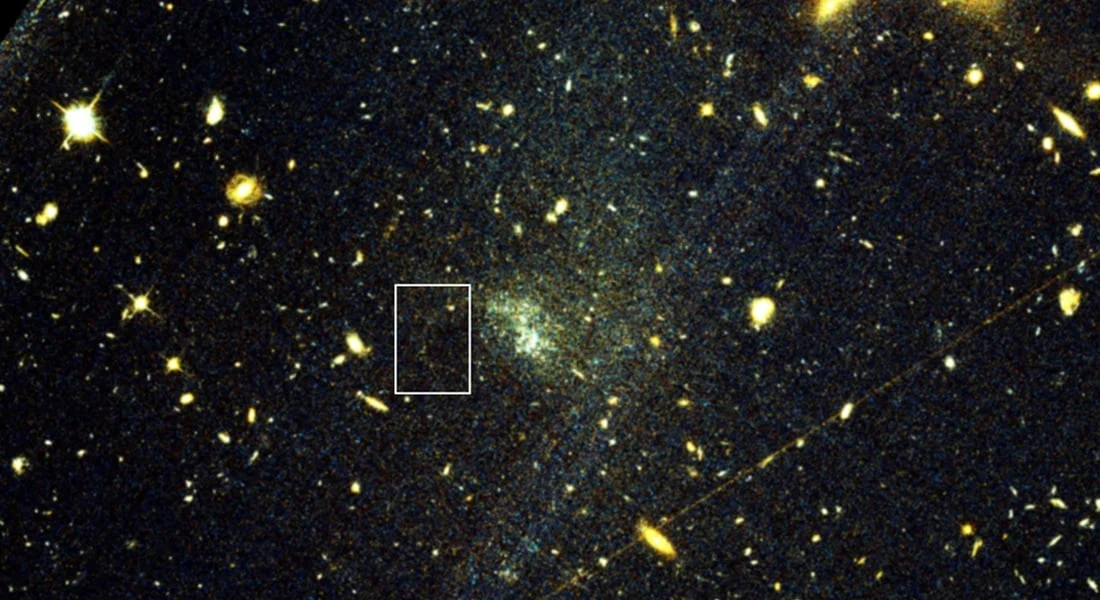
The discovery of a stellar stream stretching more than 3,000 light-years from a globular cluster within a distant galaxy has provided astronomers with a breakthrough tool to study the invisible scaffolding of the universe. A research team led by Julie Kiel Holm, a PhD student at the University of Copenhagen’s Niels Bohr Institute, identified this faint trail of stars in the ultra-diffuse galaxy (UDG) known as UGC9050-Dw1. Located approximately 115 million light-years from Earth, this finding represents the first time a stellar stream associated with a globular cluster has been detected outside the Milky Way, offering a rare glimpse into the gravitational forces exerted by dark matter in the far reaches of the cosmos.
The study, published in the journal Nature, utilized high-resolution imaging from the Hubble Space Telescope and the Canada-France-Hawai’i Telescope (CFHT) to isolate the delicate structure. While stellar streams are relatively well-documented within our own galaxy, their detection in distant, low-density galaxies like UGC9050-Dw1 has long been considered a "holy grail" for observational astronomers. By analyzing the shape and trajectory of these stars, researchers can now infer the density and distribution of dark matter within galaxies that were previously too dim or "disturbed" to measure accurately.
The Mystery of Ultra-Diffuse Galaxies
Ultra-diffuse galaxies (UDGs) represent some of the most enigmatic structures in the modern cosmological landscape. These galaxies can be as physically large as the Milky Way—spanning tens of thousands of light-years—yet they contain only a fraction of the stars. Because they lack the dense stellar populations and gas reservoirs characteristic of spiral galaxies, they emit very little light, making them difficult to detect against the cosmic background radiation.
UGC9050-Dw1 is a prime example of this phenomenon. Astronomers describe the galaxy as "disturbed," a term indicating that its shape is not a perfect sphere or disk but rather shows signs of gravitational interference. This lack of structural uniformity is often a clue that a galaxy has undergone significant tidal interactions with neighboring bodies or contains a complex distribution of dark matter.
Prior to this discovery, the origins of UDGs remained a subject of intense debate. One prevailing theory suggests they are "failed" galaxies that lost their gas early in their history, preventing the birth of new stars. Another theory proposes that they are the remnants of more traditional galaxies that were stretched and thinned by the gravitational pull of larger galaxy clusters. The identification of a stellar stream within UGC9050-Dw1 provides crucial evidence for the latter, suggesting that tidal forces are actively shaping these ghostly celestial objects.
Globular Clusters as Gravitational Probes
To understand why this discovery is significant, one must look at the role of globular clusters. These are ancient, densely packed groups of stars—often numbering in the hundreds of thousands—that orbit the cores or halos of galaxies. Because they are among the oldest structures in the universe, globular clusters act as "fossil records" of a galaxy’s formation.
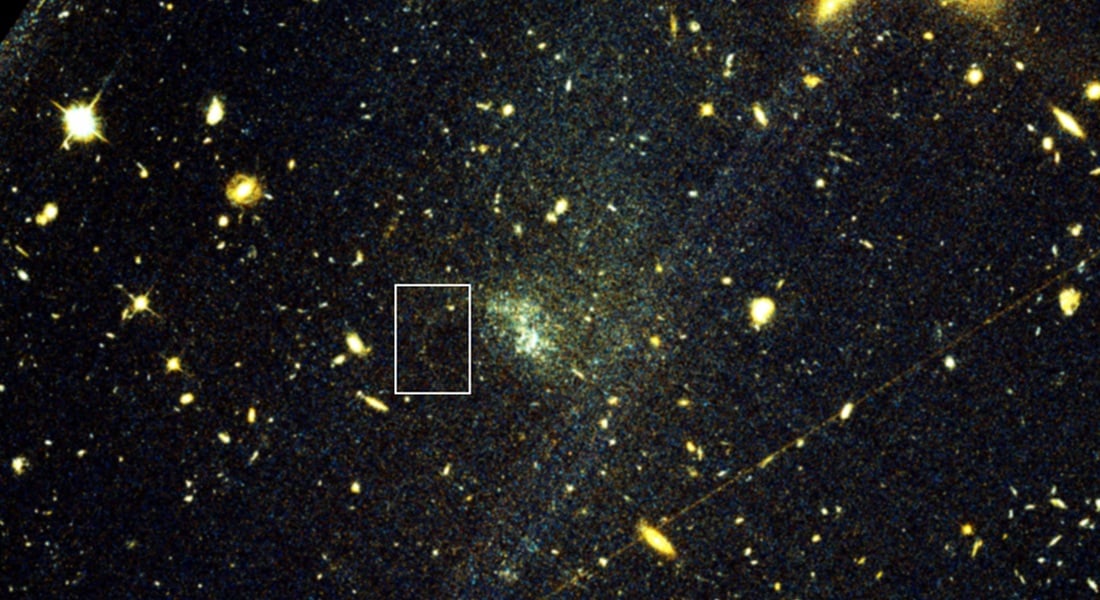
In the Milky Way, astronomers have observed approximately 150 globular clusters. When these clusters interact with the host galaxy’s gravitational field, stars are often pulled away from the main group, forming long, thin "streams" that follow the cluster’s orbit. This process, known as tidal stripping, is dictated almost entirely by the distribution of mass within the galaxy. Since dark matter accounts for the vast majority of a galaxy’s mass, the way these streams are elongated or curved serves as a direct map of the dark matter halo.
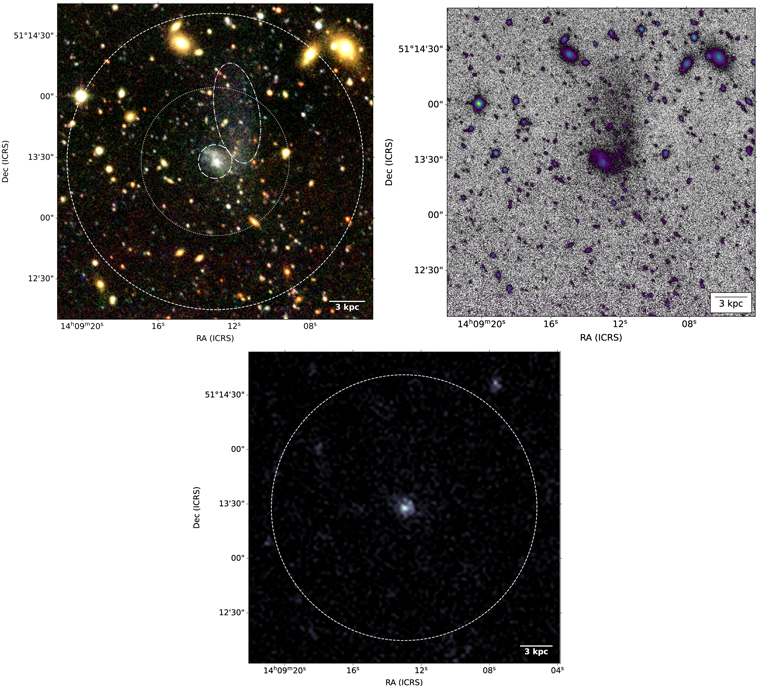
Julie Kiel Holm and her team specifically targeted UGC9050-Dw1 because of its unusually high concentration of globular clusters. Using the Canada-France-Hawai’i Telescope’s wide-field imaging capabilities, the team captured the faint, log-stretched glow of a stream emanating from one of these clusters. The stream’s length—exceeding 3,000 light-years—indicates a significant gravitational "tug" that is consistent with a high concentration of dark matter.
Technological Collaboration and Data Analysis
The detection of such a faint feature required a multi-instrument approach. The team relied on the Canada-France-Hawai’i Telescope (CFHT) to provide the initial wide-field images in the g, r, and i spectral bands. These bands allow astronomers to filter out certain types of light and highlight the specific colors associated with older, metal-poor stars typically found in globular clusters.
Complementing the CFHT data was the Hubble Space Telescope, which provided the necessary resolution to distinguish individual stars and confirm that the stream was indeed a cohesive structure rather than a background artifact. Additionally, data from the Galaxy Evolution Explorer (GALEX) in the Near-Ultraviolet (NUV) spectrum helped the researchers analyze the core of UGC9050-Dw1. The UV emission confirmed that the galaxy is largely devoid of young stars, reinforcing its status as an ultra-diffuse, "star-starved" system.
Professor Sarah Pearson, a co-author of the study and an expert in galactic dynamics at the University of Copenhagen, emphasized the technical difficulty of the achievement. "The dimness of these ultra-diffuse galaxies makes it incredibly hard to detect objects as delicate as stellar streams," Pearson noted. "By proving that we can see these structures 115 million light-years away, we have opened a new window into the dark sector of the universe."
Dark Matter’s Invisible Hand
Dark matter remains the most significant unsolved problem in physics. It does not emit, absorb, or reflect light, rendering it invisible to every type of telescope currently in existence. Yet, it constitutes roughly 85% of the matter in the universe. Its presence is inferred only through its gravitational influence on visible matter—the way it holds galaxies together and prevents stars from flying off into the void.
The discovery in UGC9050-Dw1 is particularly valuable because it validates the use of stellar streams as a "universal" measuring stick. Until now, the study of globular cluster streams was a localized science, restricted to the Milky Way and its nearest neighbor, Andromeda. Holm’s research proves that the same physics governing the Milky Way applies to galaxies with vastly different compositions.
"Our results are consistent with previous studies regarding dark matter in ultra-diffuse galaxies, but we are measuring it with a completely new tool," Holm stated. This tool allows scientists to determine whether dark matter is "cold" (slow-moving particles) or "fuzzy" (extremely light particles that behave like waves), as different models of dark matter would result in different shapes and densities for the stellar streams.
Timeline of Discovery and Future Implications
The journey to this discovery began with the identification of UDGs in the Coma Cluster nearly a decade ago, which sparked a global race to understand their mass. The specific study of UGC9050-Dw1 took place over several years, as researchers waited for optimal viewing windows from Hubble and processed the complex imaging data from the CFHT.
The publication of the team’s findings in 2024 marks a shift in extragalactic archaeology. With the upcoming deployment of the Vera C. Rubin Observatory and the continued operations of the James Webb Space Telescope (JWST), astronomers expect to find hundreds of similar streams across the local universe. These observatories possess the sensitivity required to detect even fainter tidal features, potentially allowing for a comprehensive "dark matter census" of the nearby cosmos.
The implications extend beyond just mapping mass. Some theorists suggest that dark matter may have been created by gravitational waves in the early universe, or that it interacts with itself in ways we have yet to observe. By studying how stellar streams are "perturbed" or broken apart in distant galaxies, scientists can look for signs of dark matter "sub-halos"—smaller clumps of dark matter that would act like invisible bowling balls, scattering the stars in a stream.
A New Era for Galactic Archaeology
The study of UGC9050-Dw1 is a testament to the evolving nature of astronomy, where the focus is shifting from what we can see to what we can infer. As Julie Kiel Holm explained, the ability to observe these streams in entirely different kinds of galaxies "opens the door to using them to build a much broader understanding of how dark matter behaves."
For the scientific community, this discovery provides a necessary bridge between theoretical models and observational reality. It confirms that the "disturbed" nature of ultra-diffuse galaxies is not a random occurrence but a predictable result of gravitational interactions mediated by dark matter. As researchers refine their methods, the faint glow of these 3,000-light-year-long rivers of stars will continue to illuminate the darkest corners of our universe, proving that even in the silence and shadow of deep space, gravity always leaves a trail.