Sisilia Frederika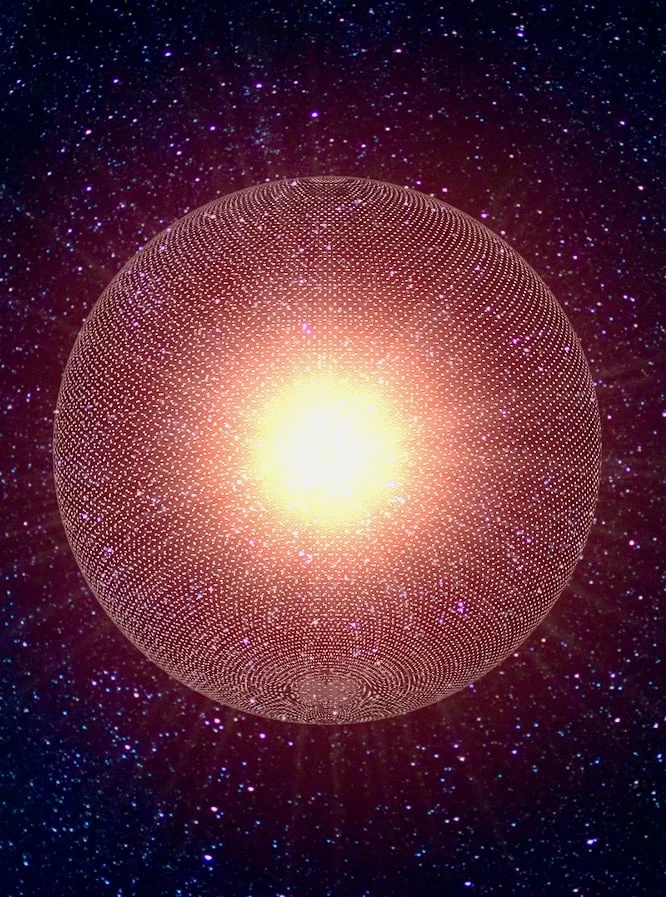
The international scientific community’s quest to identify evidence of advanced extraterrestrial civilizations has encountered a significant setback as the latest search for Dyson Spheres, led by researchers at Uppsala University in Sweden, has failed to confirm its most promising candidates. Project Hephaistos, an ambitious initiative dedicated to scanning the cosmos for signs of astroengineering, recently utilized the unprecedented sensitivity of NASA’s James Webb Space Telescope (JWST) to scrutinize two stellar objects previously identified as potential technosignature sources. According to findings recently submitted to the journal Monthly Notices of the Royal Astronomical Society (MNRAS), both candidates have been officially eliminated as hypothetical megastructures, revealing instead the complex nature of cosmic coincidences.
The search for Dyson Spheres represents a specialized niche within the broader field of the Search for Extraterrestrial Intelligence (SETI). The concept, first popularized by physicist Freeman Dyson in 1960, posits that a sufficiently advanced civilization would eventually outgrow the energy resources of its home planet. To sustain its technological progression, such a civilization might construct a massive shell or a dense swarm of energy-collecting satellites around its parent star to capture the entirety of its solar radiation. While such structures remain theoretical, they are governed by the laws of thermodynamics, which dictate that even the most efficient energy-harvesting system must radiate "waste heat" in the form of infrared energy.
The Genesis of Project Hephaistos and the Search Methodology
Project Hephaistos was established to systematically search for these infrared anomalies. Led by Andreas Korn and a team of astrophysicists at Uppsala University, the project began with a massive data-mining operation. Researchers analyzed a sample of approximately five million objects within 1,000 light-years of Earth, narrowing the field to roughly one million stars for more intensive study. This initial survey relied on a multi-instrumental approach, combining optical data from the European Space Agency’s (ESA) Gaia satellite with infrared data from NASA’s Wide-field Infrared Survey Explorer (WISE).
The selection criteria were stringent: the team sought stars that exhibited a "flux deficit" in the visible spectrum—suggesting something was partially obscuring the star’s light—paired with a "flux excess" in the mid-infrared spectrum, indicating the presence of warm material radiating waste heat. Following this rigorous filtering process, seven M-dwarf stars emerged as high-priority candidates. M-dwarfs, or red dwarfs, are particularly attractive targets for technosignature searches due to their extreme longevity and high abundance in the Milky Way, providing ample time for technological civilizations to arise and evolve.
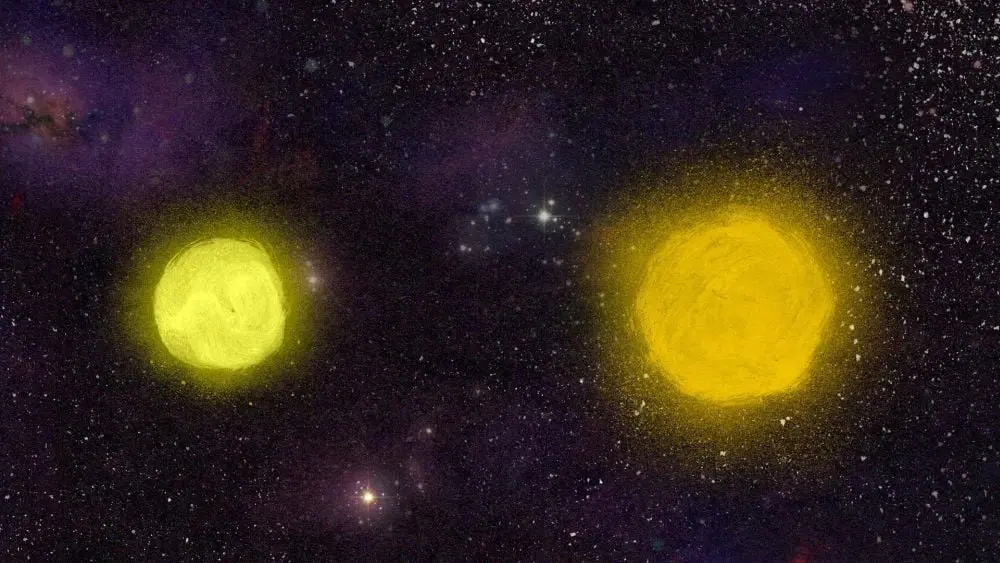
The two stars selected for follow-up with the James Webb Space Telescope were the most promising of this group. Both are approximately 15th-magnitude M-dwarfs, located within the solar neighborhood but far too faint to be seen with the naked eye. Initial data suggested they possessed infrared signatures that could not be easily explained by natural phenomena such as circumstellar dust disks or debris belts.
The JWST Verdict: A Case of Cosmic Superposition
The transition from the WISE satellite to the James Webb Space Telescope provided a jump in resolution that proved decisive. While WISE was instrumental in identifying the initial infrared excess, its spatial resolution is relatively coarse. When observing distant stars, WISE often blends the light of multiple objects into a single pixel. The James Webb Space Telescope, equipped with the Mid-Infrared Instrument (MIRI) and the Near-Infrared Spectrograph (NIRSpec), allowed the Hephaistos team to "deblend" the signals.
Upon closer inspection, the "Dyson Sphere" signatures evaporated. The JWST imaging revealed that the infrared excess did not originate from the M-dwarf stars themselves, nor from any structure orbiting them. Instead, the researchers discovered a rare astronomical alignment known as a superposition. In both cases, a distant, high-redshift galaxy was located almost perfectly behind the foreground M-dwarf star, separated by less than an arcsecond in the sky.
In the first instance, the background object was identified as a Hot Dust Obscured Galaxy (Hot DOG). These are among the most powerful and luminous galaxies in the universe, characterized by intense star formation and massive central black holes shrouded in thick clouds of dust. The dust absorbs the galaxy’s ultraviolet and visible light and re-emits it as intense mid-infrared radiation, perfectly mimicking the expected heat signature of a Dyson Sphere.
The second candidate was revealed to be a "dusty starburst" galaxy with an extended morphology. This galaxy features bright "knots" of star formation, where young, massive stars heat surrounding gas and dust. To the lower-resolution WISE sensors, this distant galactic activity appeared to be a localized heat source associated with the foreground star.
Thermodynamic Constraints and the Kardashev Scale
The failure to find Dyson Spheres in this specific sample highlights the extreme difficulty of technosignature detection. To understand why astronomers look for infrared heat, one must look to the Kardashev Scale, proposed by Soviet astronomer Nikolai Kardashev in 1964. The scale categorizes civilizations based on their energy consumption:
- Type I: A civilization capable of harnessing all the energy available on its home planet.
- Type II: A civilization capable of harnessing the total energy output of its parent star (the level required to build a Dyson Sphere).
- Type III: A civilization capable of harnessing the energy of its entire host galaxy.
The Second Law of Thermodynamics states that energy cannot be used without some of it being degraded into heat. For a Type II civilization, the "waste" from a star-enveloping structure would necessarily glow at temperatures between 100 and 600 Kelvin, placing the emission peak squarely in the mid-infrared spectrum.
"Eventually, even if you are using this Dyson Sphere energy to do computing, the energy will be transformed and emitted in the infrared as waste heat," Andreas Korn explained. "But this is the signature that we were looking for: a star that is a little bit too faint in the optical and has substantial amounts of waste heat in the infrared."
The results of Project Hephaistos suggest that while the physics of the search is sound, the "noise" of the universe—specifically the presence of infrared-bright background galaxies—poses a significant challenge to identifying true technological artifacts.
The Distinction Between Spheres and Swarms
Despite the negative results, the concept of astroengineering remains a valid area of scientific inquiry. Researchers note that a solid "shell" (a Dyson Sphere) is likely a mechanical impossibility due to the immense tensile strength required and the lack of gravitational stability. Instead, most modern theorists favor the "Dyson Swarm."
A Dyson Swarm would consist of millions of individual solar-collecting satellites orbiting a star in various planes. Such a configuration would be much easier to construct incrementally and would not require the exotic materials needed for a solid sphere. While a swarm might collect less total energy than a complete shell, it would still provide a Type II civilization with orders of magnitude more power than is available on a planetary surface.
From an observational standpoint, a Dyson Swarm might be detectable through its effect on a star’s light curve. As the satellites pass in front of the star, they would cause slight, perhaps periodic, dips in luminosity. "If you see that there was a periodicity to the variability, then you could potentially constrain the morphology of an artificial megastructure," Korn noted. This approach mirrors the transit method used by missions like Kepler and TESS to find exoplanets, though the signatures of a swarm would likely be more complex and irregular.
Implications for Future Technosignature Searches
The findings from Project Hephaistos underscore the necessity of high-resolution data in the search for extraterrestrial intelligence. The contamination of the Dyson Sphere candidate list by background galaxies suggests that a large portion of existing "anomalous" infrared sources may simply be cases of unlucky alignment.
However, the outlook for the 2030s is optimistic. A new generation of ground-based and space-based telescopes is currently in development, designed to provide higher-resolution infrared data over much larger areas of the sky than JWST can currently map. These future missions, such as the proposed Habitable Worlds Observatory or advanced surveys using the Extremely Large Telescope (ELT) in Chile, will be better equipped to distinguish between local stars and the distant, dusty galaxies that masquerade as technosignatures.
Furthermore, the methodology developed by the Hephaistos team—integrating Gaia’s precision astrometry with WISE and JWST’s photometry—provides a roadmap for future surveys. By refining the "vetting" process, astronomers can more efficiently filter out false positives like Hot DOGs and starburst galaxies before committing precious telescope time to deep-space observations.
Conclusion: The Persistent Mystery of the Silent Sky
While the two most promising Dyson Sphere candidates have been debunked, the search continues. The "Great Silence," or the Fermi Paradox—the contradiction between the high probability of extraterrestrial life and the lack of evidence for it—remains one of the most profound mysteries in science.
The elimination of these candidates does not disprove the existence of Dyson Spheres; rather, it refines the boundaries of where they might be found. As Project Hephaistos moves forward, the team will continue to sift through the data of millions of stars, looking for that elusive signal that cannot be explained by starbursts, dust clouds, or distant galaxies.
For now, the stars observed by the James Webb Space Telescope remain silent, and the infrared heat detected across the light-years belongs not to the engines of an advanced civilization, but to the natural, violent processes of a maturing universe. The search for our cosmic neighbors, however, remains a priority for those who believe that the first step to finding intelligence in the stars is knowing exactly what to look for—and what to rule out.