Galang Taruna
Samsung Electronics is poised to release its latest addition to the acclaimed Galaxy S series, the Galaxy S26 FE (Fan Edition), positioned as a more accessible alternative to its flagship S26 lineup. However, initial assessments suggest that the S26 FE, while offering some advancements, largely mirrors its predecessor, the Galaxy S25 FE, with the notable exceptions of an updated processor, a slightly larger and heavier build, and a significant price increase. This strategic positioning by Samsung has sparked considerable discussion among industry analysts and consumers regarding its value proposition in an increasingly competitive smartphone market.
The Evolving "Fan Edition" Philosophy
The "FE" designation has historically represented Samsung’s commitment to delivering core flagship experiences at a more palatable price point, often incorporating feedback from its dedicated user base. The concept gained significant traction with the Galaxy S20 FE, which successfully combined key features like a high refresh rate display, capable cameras, and robust performance at a compelling price, making flagship technology accessible to a broader audience. Subsequent FE models, such as the S21 FE and S23 FE, have attempted to uphold this legacy, albeit with varying degrees of market success. The S26 FE, launching in 2026, arrives at a time when the premium mid-range segment is more crowded than ever, forcing manufacturers to innovate not just in features but also in pricing strategy. The challenge for the S26 FE is to justify its existence and its price tag against both its own predecessor and the standard S26 models, which have seen price adjustments since their initial launch.
Design and Build Quality: Familiar Aesthetics with Refinements
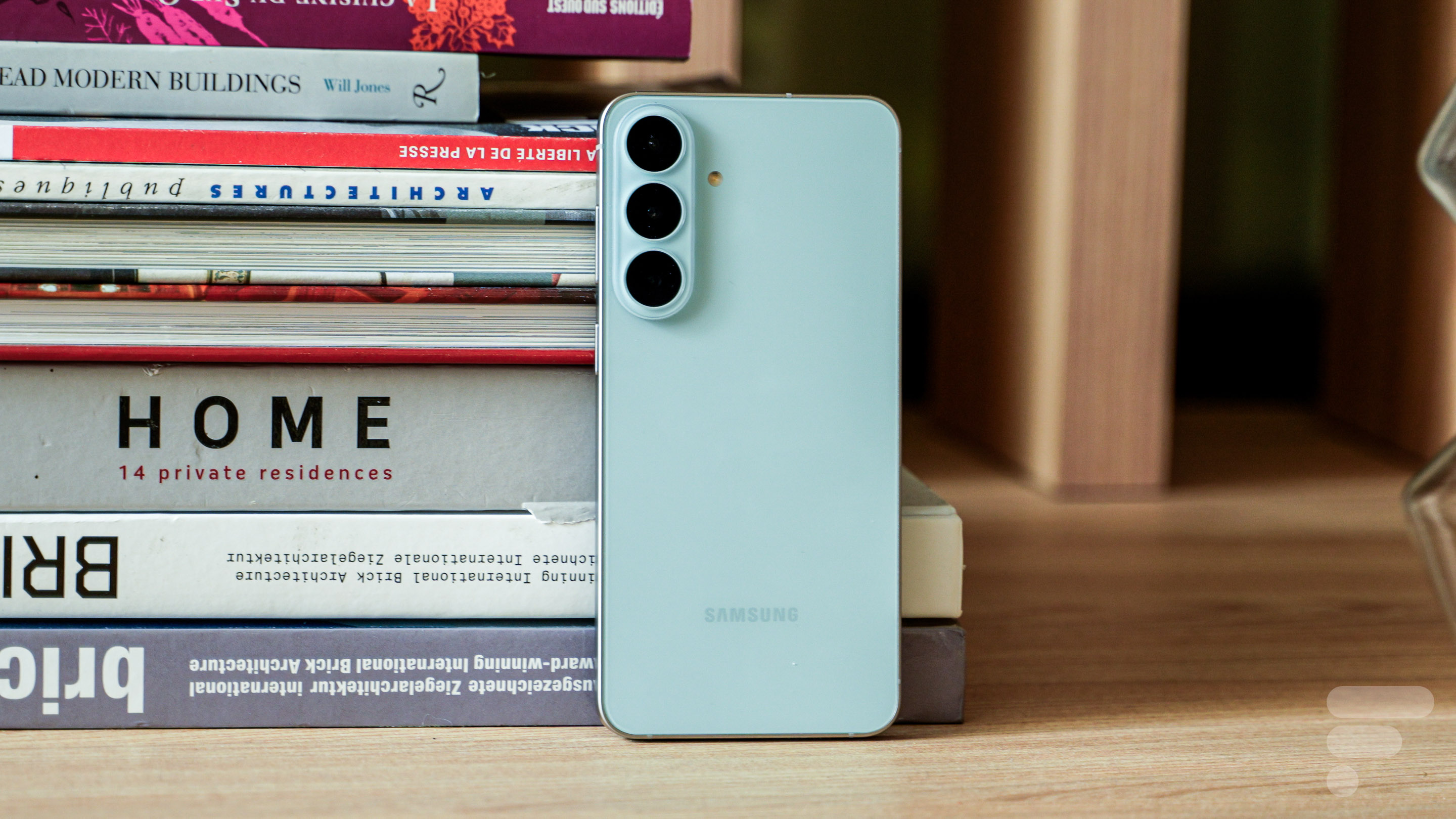
At first glance, the Galaxy S26 FE shares a striking resemblance to its immediate predecessor, the S25 FE, maintaining the popular 6.7-inch display size. This continuity ensures a familiar user experience in terms of screen real estate. However, the S26 FE exhibits subtle dimensional changes, being marginally longer and wider, and notably, three grams heavier than the S25 FE. While these differences are minor, they contribute to the device’s overall tactile impression.
The S26 FE adopts the "Signature" design language of the broader S26 series, characterized by its sleek, very flat edges and a premium aluminum frame. The rear panel is crafted from glass, contributing to a high-end feel, and the device will be available in three distinct color options: classic Graphite, serene Blue, and an appealing Water Green. A significant design refinement lies in the camera island. Departing from previous designs, the S26 FE features a frosted glass camera module that seamlessly encompasses all lenses. This integrated design not only offers a cleaner aesthetic but also serves a practical purpose: preventing dust accumulation between individual camera sensors. Furthermore, the lenses are slightly recessed, providing an additional layer of protection against scratches and impacts. This thoughtful design element enhances both durability and visual appeal. As expected from a modern Samsung premium device, the S26 FE boasts an IP68 rating, ensuring robust resistance against dust and water ingress, a standard feature across the entire S26 range and a crucial selling point for consumers seeking durability.
Performance Under Scrutiny: The Exynos 2500 Dilemma
The most significant hardware alteration in the S26 FE is the integration of the Exynos 2500 system-on-chip (SoC), manufactured using a 3nm process. This choice is particularly noteworthy given Samsung’s tiered processor strategy within its S26 lineup: the standard S26 and S26 Plus utilize the more powerful Exynos 2600, while the top-tier S26 Ultra benefits from the flagship Snapdragon 8 Elite Gen 5.
The Exynos 2500, while a new generation chip, has not generated the same level of excitement or performance benchmarks as its higher-end counterparts. According to preliminary data and internal testing, the Exynos 2500’s performance profile positions it closer to the previous generation’s high-end chip, such as the Snapdragon 8 Gen 3, rather than the current top-tier Snapdragon 8 Elite. This disparity raises questions about the "flagship experience" the S26 FE aims to deliver, especially in demanding applications like high-fidelity gaming or intensive multi-tasking.

Despite these comparative assessments, Samsung officially claims substantial performance gains for the S26 FE over its S25 FE predecessor. The company reports a 51% increase in CPU performance, a 25% boost in GPU capabilities, and an 11% improvement in NPU (Neural Processing Unit) efficiency, the latter being critical for artificial intelligence tasks. These enhancements are expected to ensure fluid daily operation and responsiveness for typical smartphone usage. However, for users seeking the absolute peak of Android performance, the Exynos 2500 might fall short when directly compared to devices featuring the Snapdragon 8 Elite Gen 5 or even the Exynos 2600. This strategic choice of SoC is a critical factor in understanding the S26 FE’s positioning as a more "affordable" option, albeit one that makes certain performance compromises. The ongoing debate surrounding the performance parity (or lack thereof) between Samsung’s Exynos chips and Qualcomm’s Snapdragon offerings often influences consumer purchasing decisions, particularly in regions where both variants are available.
Camera System: Stagnation Amidst Innovation
In an era of rapid advancements in smartphone photography, the S26 FE’s camera system presents a curious case of hardware stasis. Samsung has opted to retain the identical camera configuration found in the S25 FE. This includes a 50-megapixel main sensor with optical image stabilization (OIS), a 12-megapixel ultra-wide-angle lens, and an 8-megapixel telephoto lens offering 3x optical zoom. The higher 5x optical zoom capability remains exclusively reserved for the S26 Ultra, maintaining a clear differentiation within the lineup.
This decision to reuse camera hardware is particularly striking given the swift evolution of imaging technology in the smartphone industry. Competitors, and even other segments of the market, are exploring and implementing advanced sensor technologies, such as LOFIC (Lateral Overflow Integration Capacitor) sensors, which promise significant improvements in dynamic range and low-light performance, albeit at a higher cost. The choice to maintain the previous generation’s sensors in the S26 FE suggests a focus on cost control or perhaps a belief that the existing hardware, when paired with advanced software, still meets the expectations of the "Fan Edition" demographic.
Indeed, Samsung heavily relies on its sophisticated software suite to enhance the S26 FE’s photographic capabilities. The device leverages the "ProVisual Engine" for advanced image processing and features the acclaimed "Nightography" mode for superior low-light performance. Furthermore, the S26 FE integrates the full suite of "Galaxy AI" tools powered by One UI 9. These AI functionalities include automatic video cropping, an audio eraser for cleaner sound in recordings, and AI-powered call filtering, all designed to augment the user experience beyond raw sensor capabilities. However, industry rumors suggesting Samsung might transition to more performant Sony camera sensors for the upcoming Galaxy S27 series imply an internal recognition of the need for future hardware upgrades in its flagship and sub-flagship devices.

Software Enhancements and Longevity Commitment
Beyond the core hardware, the Galaxy S26 FE introduces several software-driven improvements and reinforces Samsung’s commitment to long-term device support. A notable feature inherited from the premium S26 models is the 360° horizontal stabilization for video recording, a highly practical addition for users who frequently capture dynamic footage, such as during cycling or other active pursuits. Wireless charging capabilities have also seen an upgrade, moving from 10 watts to a faster 15 watts, providing more convenience for quick top-ups. The front-facing selfie camera has received a minor but impactful enhancement, with its field of view widening from 80 degrees to 85 degrees. This expanded angle is particularly beneficial for group selfies, reducing the likelihood of cutting out individuals from the frame.
The device retains a robust 4900 mAh battery, a capacity that should comfortably power the 6.7-inch display and Exynos 2500 SoC through a full day of typical usage. Wired charging remains at a brisk 45 watts, with Samsung quoting an impressive 70% charge in just 30 minutes, ensuring minimal downtime.
Perhaps the most compelling long-term value proposition of the S26 FE lies in Samsung’s industry-leading software commitment. The company promises seven years of security updates and support for seven generations of Android operating system upgrades. This extended support cycle significantly enhances the device’s longevity and relevance, offering users unparalleled peace of mind and reducing the frequency of device replacement. Furthermore, at launch, buyers will receive a complimentary six-month subscription to Google AI Pro, adding further value through advanced AI services. This commitment to extended software support is a strategic move by Samsung, not only improving customer satisfaction but also aligning with growing environmental concerns about electronic waste.
Pricing Strategy and Market Positioning: A Conundrum

The pricing of the Galaxy S26 FE has emerged as a central point of contention and analysis. Samsung has announced an upward revision in pricing, attributing it partly to the ongoing global "memory crisis," which has impacted component costs across the electronics industry. The S26 FE will be available at €799 for the 8 GB RAM and 128 GB storage variant, and €899 for the 256 GB storage option. These prices represent increases of €50 and €90, respectively, compared to the launch prices of the S25 FE.
This price hike, coupled with the largely incremental hardware upgrades, undermines the traditional "affordable" premise of the Fan Edition series. The most significant challenge to the S26 FE’s market positioning comes from within Samsung’s own portfolio. The standard Galaxy S26, a more premium device with superior specifications, is currently available at €699 for the 128 GB model – a full €100 less than the S26 FE. For this lower price, consumers receive a device with 12 GB of RAM, the more powerful Exynos 2600 processor, a demonstrably better camera system, and an advanced LTPO display technology. The only concessions on the standard S26 are a slightly slower charging speed and a battery capacity tailored to its size.
This pricing discrepancy creates a significant dilemma for potential buyers. Why would a consumer opt for the S26 FE, which offers fewer advancements and a higher price, when the flagship S26 is available for less and delivers a superior overall experience? This situation suggests a potential for internal product cannibalization, where the S26 FE struggles to carve out its own niche in the market, especially when pitted directly against its more capable and now more affordable sibling. The "memory crisis" explanation, while valid for general market trends, does not fully account for the S26 FE’s pricing relative to the standard S26, leading to questions about Samsung’s broader product segmentation and market strategy.
Competitive Landscape and Future Outlook for the FE Series
The Galaxy S26 FE enters a crowded and highly competitive market segment. At its new price point, it faces stiff competition not only from other Android flagships and premium mid-range devices from brands like Xiaomi, OnePlus, and Google Pixel but also from previous generation flagship devices, which often see significant price drops after new models are released. The internal competition with the standard S26 further complicates its standing.

Market analysts suggest that Samsung’s strategy with the S26 FE might be a calculated risk. Perhaps it aims to cater to a specific segment of users who prioritize the larger 6.7-inch screen size and the extended software support above raw processing power or cutting-edge camera hardware, especially if they perceive the S26 to be too compact. However, the current pricing makes this argument tenuous. The traditional value proposition of the FE series – offering flagship features at a significant discount – appears to be diluted with the S26 FE.
The future of the Fan Edition series hinges on Samsung’s ability to redefine its purpose and pricing strategy. If subsequent FE models continue this trend of incremental upgrades coupled with price increases, the line risks losing its original appeal and becoming redundant within Samsung’s expansive Galaxy portfolio. For the S26 FE to truly succeed, it needs to either offer a more compelling set of unique features or revert to a pricing strategy that genuinely reflects its "affordable" positioning relative to the flagship S-series devices. Without a clear competitive advantage in terms of features or price, the S26 FE may struggle to resonate with the very "fans" it is designed to serve.
Conclusion
The Samsung Galaxy S26 FE arrives with a mix of familiar design, incremental software enhancements, and a commitment to longevity that is commendable. Its adoption of the Exynos 2500 chip provides a performance boost over its predecessor, and the refined design elements, particularly around the camera module, are welcome improvements. However, these advancements are overshadowed by a significant price increase and, critically, by the availability of the standard Galaxy S26 at a lower cost, offering superior specifications across several key metrics. This strategic misstep in pricing and positioning raises substantial questions about the S26 FE’s market viability and the long-term direction of Samsung’s "Fan Edition" philosophy. While the promise of seven years of updates is a powerful incentive, it may not be enough to overcome the immediate value proposition presented by its own flagship sibling. The S26 FE’s journey will be closely watched as it navigates a challenging market landscape, seeking to justify its existence as a truly "Fan Edition" device.