Sisilia Frederika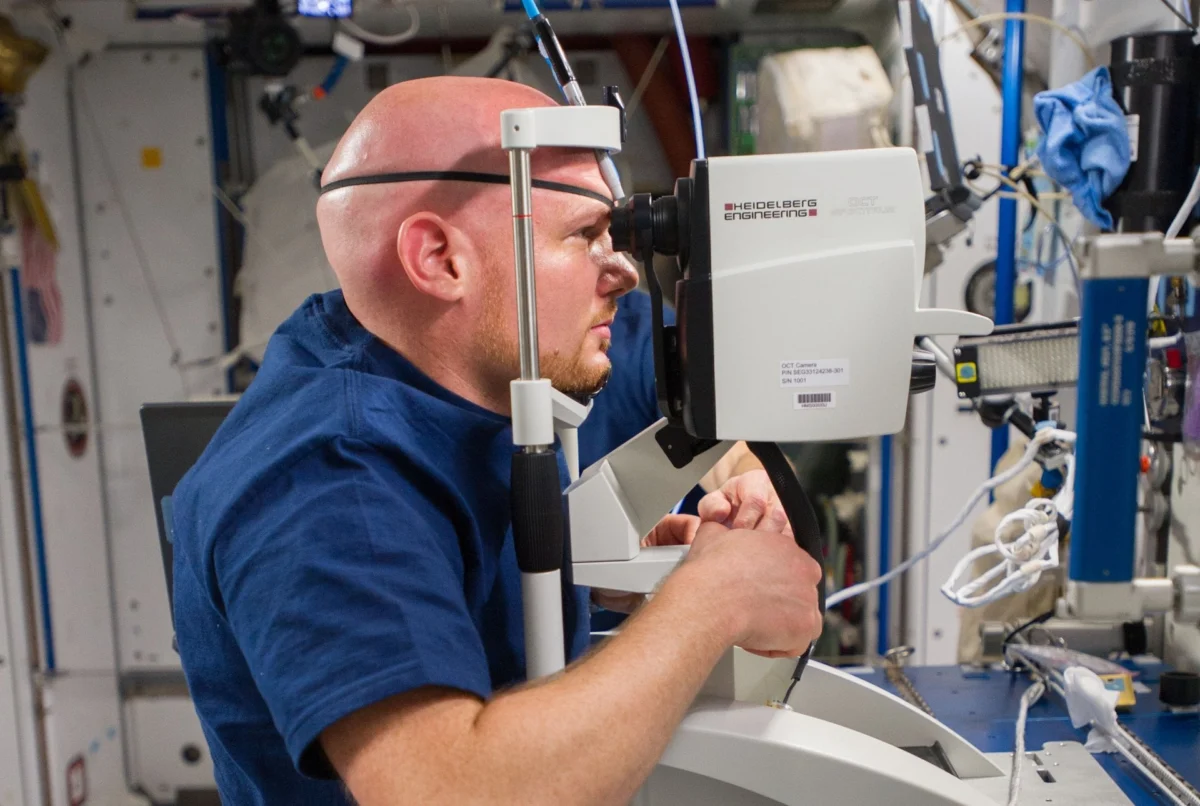
The biological challenges of leaving Earth’s gravitational pull have been a central focus of aerospace medicine since the inception of the Space Age. While the most well-documented effects of microgravity include bone demineralization and muscle atrophy, a recent international study has brought to light a specific and previously under-examined physiological shift: the upward movement of the lower eyelids. This phenomenon, referred to in the medical community as "reverse ptosis," highlights the intricate ways in which the absence of gravity reshapes human anatomy, potentially impacting the visual health and operational efficiency of astronauts on long-duration missions.
The study, titled "The effect of short-term microgravity and hypergravity on eyelid and brow position," was recently published in the journal Eye & ENT Research. The research was a collaborative effort involving a diverse team of experts from the School of Medicine at Western Sydney University (WSU) in Australia, the Center for Space Medicine and Extreme Environments Berlin, the Aotearoa New Zealand National Eye Center, Otago University, and the Saarland University Medical Center in Germany. By analyzing the facial anatomy of astronauts in the microgravity environment of the International Space Station (ISS), the team has provided new insights into the mechanical and fluid-driven changes that occur in the human face when removed from Earth’s constant 1g environment.
The Discovery of Reverse Ptosis in Space
On Earth, gravity acts as a constant downward force on the soft tissues of the face. The lower eyelids are particularly susceptible to this pull, maintaining a position that typically exposes the full cornea while resting just at the lower edge of the iris. However, the study found that in microgravity, this downward pull is eliminated, causing the lower eyelids to rise. This condition, known as reverse ptosis, occurs when the lower eyelid sits abnormally high, often covering a portion of the lower cornea.
The research team conducted a meticulous analysis of 115 high-resolution NASA photographs featuring 13 different astronauts. By measuring the Marginal Reflex Distance 2 (MRD2)—the distance from the center of the corneal light reflex to the edge of the lower eyelid—the researchers were able to quantify the shift. The data revealed that the MRD2 decreased by an average of 1 millimeter across the surveyed group. While a millimeter may seem negligible in a terrestrial context, in the delicate anatomy of the eye, it represents a significant alteration.
The findings were striking: 100% of the astronauts surveyed exhibited signs of reverse ptosis, and 62% of them showed a change greater than 1 millimeter. These results were found to be consistent with observations made during short-term parabolic flights, which simulate microgravity for brief intervals. The fact that the changes appear so rapidly and persist throughout the duration of a mission suggests that the phenomenon is an immediate and sustained physiological response to the space environment.
Mechanisms of Change: Fluid Shifts and Elastic Recoil
To understand why the eyelids migrate upward in space, the researchers pointed to two primary physiological drivers: cephalad fluid shift and the elastic recoil of facial tissues.
Cephalad Fluid Shift
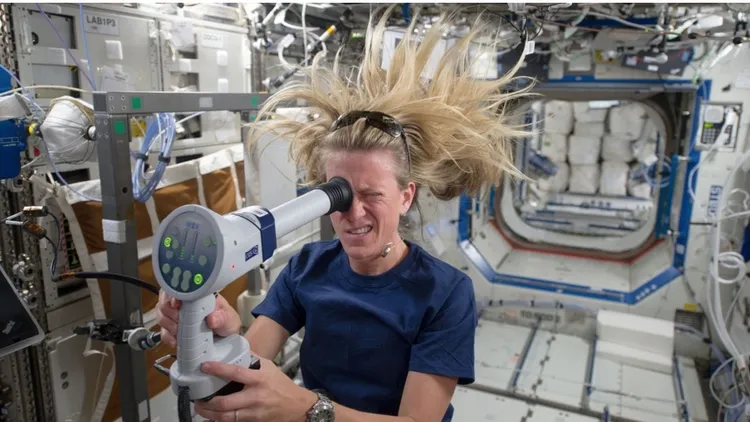
One of the most immediate effects of entering microgravity is the redistribution of bodily fluids. On Earth, gravity pulls blood and interstitial fluids toward the lower extremities. In space, this "downward" pull vanishes, leading to what is known as cephalad fluid shift. Approximately 2 liters (1.32 gallons) of fluid migrate from the lower body toward the head and torso.
Of this volume, roughly 50 milliliters (~1.7 ounces) is redistributed into the soft tissues of the head and neck. This leads to the "puffy face" appearance commonly seen in astronauts during their first few weeks in orbit. The study suggests that this fluid accumulation causes swelling in the pretarsal area—the region of the eyelid containing the tarsal plate. This swelling creates internal pressure that physically pushes the lower eyelid upward, contributing to the observed reverse ptosis.
Elastic Recoil of Facial Tissues
The second mechanism involves the inherent elasticity of human skin and connective tissue. On Earth, these tissues are in a constant state of tension, being pulled downward by gravity. In the absence of this external force, the natural elastic fibers within the skin and underlying fascia attempt to return to a "neutral" state of minimum tension. This results in an upward "recoil" of the facial features. Without gravity to anchor the lower eyelid, the elastic forces within the orbicularis oculi muscle and the surrounding skin pull the lid upward toward the brow.
The Context of Spaceflight Associated Neuro-ocular Syndrome (SANS)
The study of reverse ptosis does not exist in a vacuum; it is part of a broader, critical field of research known as Spaceflight Associated Neuro-ocular Syndrome (SANS). For over a decade, NASA and other space agencies have tracked a suite of ocular changes in astronauts, including the flattening of the posterior globe, thickening of the retinal nerve fiber layer, and optic disc edema.
While reverse ptosis specifically affects the external anatomy of the eye, its implications are linked to the overall health of the visual system. The researchers noted that a significantly raised lower eyelid can lead to changes in the curvature of the cornea. Because the eyelid applies pressure to the eye, an altered position can induce astigmatism or other refractive errors. Furthermore, reverse ptosis can lead to a reduction in the inferior visual field, potentially obscuring an astronaut’s peripheral vision—a critical factor during complex tasks such as extravehicular activities (EVAs) or the operation of robotic arms.
Chronology of Ocular Research in Human Spaceflight
The understanding of how space affects the eyes has evolved significantly over the last sixty years:
- Mercury and Gemini Eras (1961–1966): Early missions were too short to observe significant physiological changes beyond basic motion sickness and minor fluid shifts.
- Apollo and Skylab (1968–1974): As mission durations increased, astronauts began reporting "flashes" of light (cosmic ray visual phenomena), but structural changes to the eye were not yet a primary focus.
- The ISS Era (2000–Present): With astronauts spending six months or more in orbit, SANS became a recognized medical priority. In 2011, NASA officially characterized the syndrome after several long-duration crew members returned with persistent vision changes.
- The 2024–2025 Study: The recent work by Western Sydney University and its partners represents the latest chapter in this timeline, shifting the focus from internal globe pressure to the external mechanics of the eyelid and its role in the broader ocular health of the crew.
Data Analysis and Statistical Significance
The study’s reliance on the MRD2 metric provided a standardized way to compare pre-flight, in-flight, and post-flight states. The researchers utilized a combination of archival photography and photogrammetry to ensure accuracy. By comparing the ISS data to results from parabolic flights—often called "Vomit Comet" missions—the team confirmed that the eyelid shift begins within seconds of entering 0g.
However, the hypergravity phase of parabolic flights (where forces reach 1.8g to 2g) showed the opposite effect: the lower eyelids were pulled significantly lower than their Earth-normal position. This inverse relationship reinforces the theory that eyelid position is directly tethered to the gravitational environment, acting almost like a biological inclinometer.
Implications for Long-Duration Exploration
As NASA’s Artemis program prepares to return humans to the Moon and eventually send a crew to Mars, understanding these minor physiological changes becomes paramount. A mission to Mars is expected to last roughly three years, including the transit time in microgravity and time spent in the partial gravity (0.38g) of the Martian surface.
The potential for diminished visual acuity due to reverse ptosis or SANS poses a mission-critical risk. If an astronaut’s visual field is reduced or their cornea shape is altered, their ability to read instruments, perform medical procedures, or land a spacecraft could be compromised. The study suggests that while about 30% of astronauts currently report subjective visual symptoms, the actual anatomical changes, like reverse ptosis, are occurring in nearly everyone.
Expert Analysis and Future Directions
The research team has emphasized that while the current study establishes a clear trend, more work is needed to determine the long-term clinical significance of reverse ptosis. One of the primary recommendations stemming from the report is the implementation of standardized imaging protocols for all future missions. Currently, researchers often rely on general-purpose photography; dedicated ophthalmic imaging would allow for more precise tracking of eyelid position and corneal topography.
Furthermore, the study opens the door for developing countermeasures. Just as astronauts use "Lower Body Negative Pressure" (LBNP) devices to pull fluids back toward their legs to combat cephalad shift, there may be a need for localized treatments or specialized eyewear to maintain eyelid position and protect the cornea during multi-year voyages.
The findings also provide a unique data set for terrestrial medicine. Understanding how fluid shifts and elastic recoil affect the eyes could assist in treating patients on Earth who suffer from ptosis (drooping eyelids) or those who are bedridden for long periods, experiencing similar fluid redistributions.
Conclusion
The study led by Western Sydney University serves as a reminder that the human body is a product of Earth’s gravity, and every system—down to the position of an eyelid—is fine-tuned to function within a 1g environment. As humanity moves toward becoming a multi-planetary species, the "small" changes, such as a 1-millimeter shift in the eyelid, will require as much scientific rigor as the engineering of the rockets themselves. Ensuring that astronauts can see clearly is not just a matter of health; it is a matter of mission success in the unforgiving environment of deep space.