Galang Taruna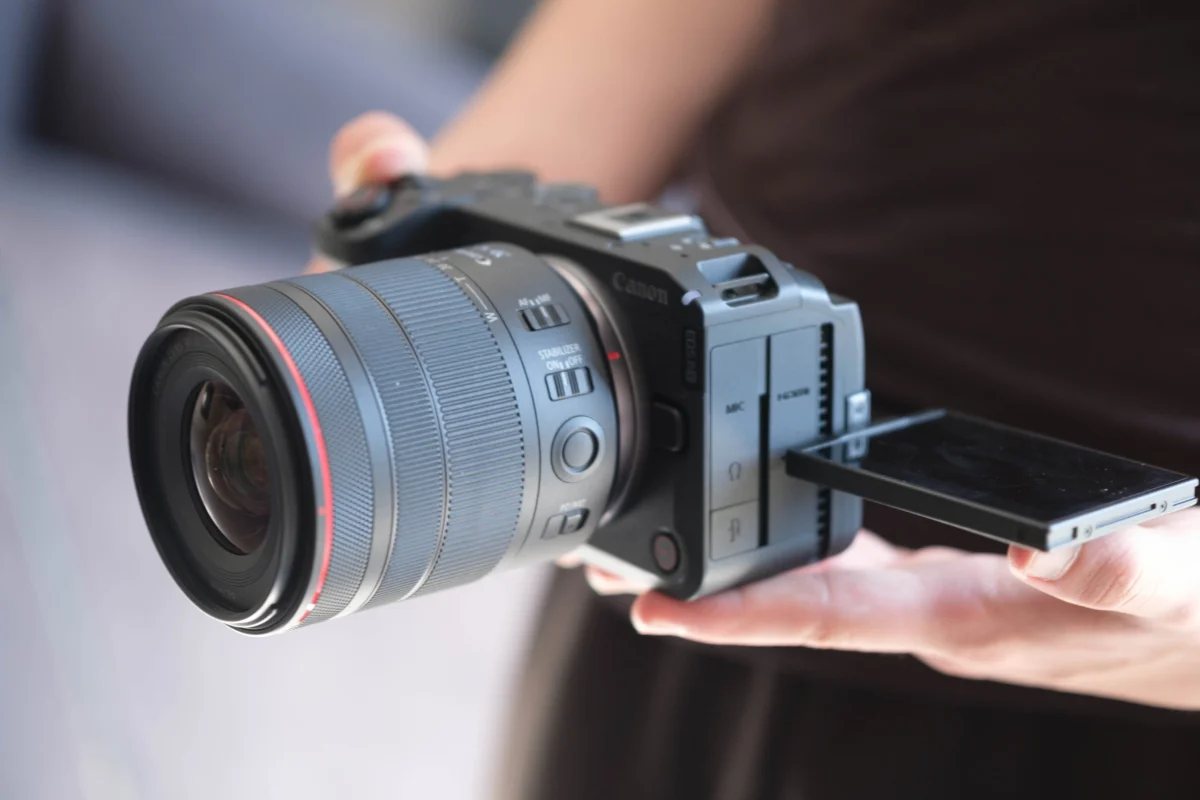
Canon has officially launched the EOS R6 V, a new mirrorless camera that blurs the lines between its hybrid photo and dedicated Cinema EOS camera lines. Unveiled on August 10, 2026, the R6 V shares core imaging technology with the Cinema EOS C50, including its 32.5-megapixel full-frame sensor, advanced video codecs, and Canon Log profiles, but introduces crucial enhancements like in-body image stabilization and active cooling, all at a significantly lower price point of €2,499 for the body only. This strategic release positions the R6 V as a formidable tool for solo content creators and videographers seeking cinema-level performance within a compact, hybrid form factor.
A New Vision for Video-First Hybrid Cameras
Canon’s recent trajectory in the mirrorless market has seen its hybrid cameras increasingly excel in video capabilities. Models like the EOS R5 II with its 8K stacked sensor and the R6 III with its 7K capabilities have demonstrated Canon’s commitment to high-resolution video. However, these cameras, designed primarily as stills cameras, often encountered limitations such as overheating during extended shoots and complex menu navigation for video-specific functions. The EOS R6 V directly addresses these challenges, representing a deliberate shift towards a video-centric design within a familiar hybrid body.

The development of the EOS R6 V follows the September 2025 introduction of the Cinema EOS C50, Canon’s first dedicated cinema camera to feature the 32.5-megapixel sensor. The C50, a true cinema camera with its Cinema EOS menus, integrated XLR handle, and a price tag nearing €4,000, set a new benchmark for accessible cinema production. The R6 V effectively inherits the C50’s most critical video assets—its sensor, advanced video modes, Log profiles, and robust active cooling system—and integrates them into an EOS R-series hybrid body. A key differentiator for the R6 V is the inclusion of sensor-shift image stabilization, a feature notably absent from the C50, making it an even more compelling choice for run-and-gun filmmaking.
Design and Ergonomics Tailored for Videography

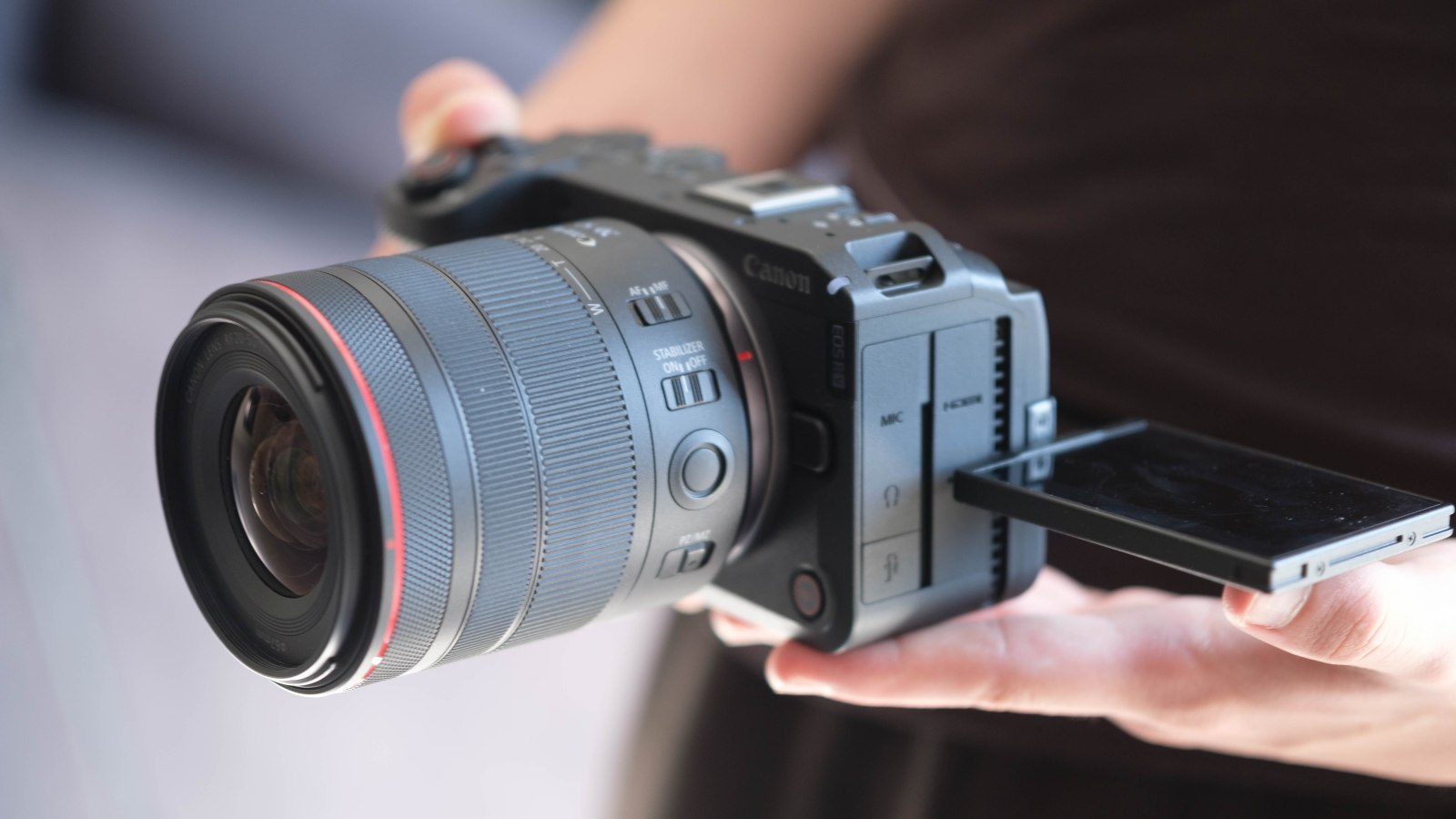
The physical design of the EOS R6 V immediately signals its video-first philosophy. While retaining the comfortable grip and robust, weather-sealed construction characteristic of Canon’s mirrorless lineup, weighing 598 grams (body only), the R6 V departs from traditional hybrid camera aesthetics by omitting the electronic viewfinder (EVF). This space is instead occupied by a prominent active cooling unit, a clear indication of its endurance-focused video capabilities. This design choice underscores a trade-off: sacrificing an EVF for sustained recording times, eliminating thermal shutdowns that plague many photo-first hybrids.
The control layout has been meticulously re-engineered for efficient video production. Six customizable buttons (C1 to C6) are strategically placed for quick access to critical video functions like zebras, false colors, and stabilization modes. A dual-trigger system features a primary record button under the index finger and a secondary button on the front, ideal for self-shooting or gimbal setups. A front-facing tally lamp provides immediate visual confirmation of recording status, a small but significant detail that streamlines solo operation on set.

A notable innovation is the integrated zoom rocker around the shutter button, designed to control the motorized zoom of compatible lenses without requiring a grip adjustment. This feature synergizes perfectly with the simultaneously launched RF 20-50mm F4 L IS USM PZ lens. This lens, the first L-series RF zoom to feature a motorized zoom, offers a versatile focal range (20mm for wide vlogging to 50mm for interviews), corrected focus breathing, and dedicated controls, including a zoom switch, stabilization toggle, and a customizable button. This combination of camera body and lens offers an intuitive, single-operator solution for dynamic shooting scenarios.
Furthermore, Canon has included a second tripod mount on the left side of the body, allowing for native vertical mounting on tripods or rigs. Coupled with an interface that automatically rotates, this feature is invaluable for creators producing content for social media platforms, eliminating the need for cumbersome cages or L-brackets and significantly speeding up vertical workflow.

Connectivity: A Professional Production Hub
The R6 V’s connectivity suite reinforces its professional video aspirations. It boasts a full-size HDMI Type-A port, a robust and reliable connection for external monitors or recorders, unlike the more fragile micro-HDMI found on many hybrids. This output supports ProRes RAW to compatible external recorders, expanding post-production flexibility. The camera also functions as a 4K 60p UVC webcam without requiring intermediary software, catering to live streamers and remote production needs.

Audio capabilities are equally comprehensive, featuring a 3.5mm headphone jack and a microphone input. Crucially, Canon’s multi-function shoe allows for direct attachment of digital microphones and accessories like the Tascam CA-XLR2d module, providing two XLR inputs without additional cables. The camera supports up to four audio channels, enabling simultaneous recording of primary audio, backup tracks, and lavalier microphones.
The USB-C port, compliant with USB 3.2 Gen 2 standards, offers 10 Gbit/s data transfer speeds and supports continuous power delivery via external Power Delivery batteries, ensuring extended recording sessions without interruption. Dual memory card slots—one CFexpress Type B for high-bandwidth internal RAW recording and one SD UHS-II for lighter codecs or simultaneous backup—provide ample and flexible storage solutions.

Display and Monitoring: A Singular Control Point
With the absence of an EVF, the R6 V’s 3-inch, 1.62-million-dot vari-angle touchscreen becomes the primary control and monitoring interface. While the display offers good clarity and responsiveness, its brightness can be a limitation in direct sunlight, potentially necessitating an external monitor for critical exposure judgments. However, the vari-angle articulation is highly effective, allowing for comfortable viewing from various angles, including low-level shots, high angles, and self-shooting. The intelligent interface rotation for vertical shooting further enhances usability for social media content creation.

The on-screen display provides a wealth of information, including aperture, exposure compensation, white balance, ISO, remaining recording time, and battery life. Dedicated video monitoring tools such as waveform, false colors, zebras, and focus peaking are all readily accessible, often rendering an external monitor optional for many shooting scenarios. Crucially, Canon has designed the display to place these indicators along the edges, preventing them from obscuring the subject in the frame. The ability to load custom .cube LUTs allows creators to preview their final graded look in-camera, streamlining workflow.
Autofocus: Canon’s Unrivaled Precision

Canon maintains its industry-leading position in autofocus technology with the R6 V, which integrates the advanced Dual Pixel CMOS AF II system, bolstered by the DIGIC Accelerator processor for enhanced subject recognition and tracking. The system is adept at identifying and tracking people, eyes, animals, and vehicles, even when subjects occupy a small portion of the frame or momentarily disappear behind obstacles. The R6 V also allows for the registration of up to ten priority faces, ensuring consistent focus on key subjects amidst distractions.
Autofocus transitions are highly customizable in terms of speed and sensitivity, allowing operators to select between rapid, decisive focus shifts for action sequences or smooth, cinematic racks for interviews. The sophisticated focus breathing correction ensures minimal frame shift during focus changes, a critical feature for professional video production. The touchscreen interface further enhances control, enabling intuitive tap-to-focus and subject selection. A dedicated product demonstration mode quickly shifts focus to an object presented in front of the lens, then smoothly returns to the presenter’s face, a feature invaluable for product reviewers and solo presenters. While no autofocus system is flawless, instances of hesitation in dense vegetation or extreme low light are rare and generally fall below the threshold of impacting a take.

Image Stabilization: A Key Advantage
The EOS R6 V boasts a robust 7.5-stop in-body image stabilization (IBIS) system, a significant advantage over its Cinema EOS C50 counterpart, which lacks sensor-shift stabilization entirely. This mechanical stabilization, complemented by electronic stabilization and subject-aware cropping, allows for remarkably stable handheld footage, making it an ideal choice for documentary, reportage, or shoulder-mounted shooting by a single operator. While a gimbal still offers superior stability for walking shots, the R6 V’s IBIS greatly expands handheld possibilities, offering a distinct edge in scenarios where external stabilizers are impractical.

Photographic Capabilities and Strategic Compromises
While fundamentally a video-first camera, the R6 V retains substantial photographic capabilities, leveraging its 32.5-megapixel full-frame CMOS sensor (the same as the C50 and R6 III) and DIGIC X/Accelerator processors. This resolution strikes a balance, offering ample room for cropping without the massive file sizes of 45-megapixel sensors. JPEG output is consistent with Canon’s reputation for natural colors and accurate skin tones, while CR3 RAW files provide excellent dynamic range for post-processing.

The camera’s electronic shutter enables burst shooting at up to 40 frames per second, with a pre-capture function that saves 20 frames before the shutter is fully pressed. This technically makes it capable of capturing fast action. However, the absence of an EVF significantly limits the practical usability for tracking fast-moving subjects, as relying solely on the rear LCD can be challenging in dynamic situations.
ISO performance is commendable up to ISO 6400, with noise exhibiting a fine grain that is easily manageable. Beyond this, the 32.5-megapixel sensor, with its smaller individual photosites compared to lower-resolution sensors (like the 12MP sensor in the Sony FX3), shows its limitations earlier in extreme low-light scenarios.

Crucially, the R6 V makes two clear strategic omissions: it lacks a mechanical shutter and does not support flash photography (despite having a hot shoe). The absence of a mechanical shutter contributes to silent operation and generally well-controlled rolling shutter in most video scenarios. However, the lack of flash support effectively closes the door to studio photography, illuminated portraiture, and event photography requiring artificial light. These are not oversights but deliberate design choices to optimize the R6 V for its primary role as a video production tool, indicating that it is designed to complement rather than replace a dedicated stills camera like the R6 III. The R6 V is built for capturing images between video takes, not as a primary photographic workhorse in all scenarios.
Power and Endurance: Built for Long Shoots

The EOS R6 V utilizes the familiar LP-E6P battery, shared across several Canon bodies. For still photography, two batteries typically suffice for a full day of shooting. In video, endurance varies with format intensity. High-resolution modes like 7K RAW and 4K 120fps demand more from the processor and active cooling, leading to faster battery drain. However, the active cooling system ensures that recording can continue for extended periods without thermal shutdowns, a critical improvement over previous photo-centric hybrids.
The inclusion of USB-C Power Delivery is a game-changer for professional use. Connecting a suitable external battery pack allows the R6 V to operate for many hours continuously, making it an ideal setup for interviews, studio work, or extended event coverage. For professional applications, a minimum of two LP-E6P batteries, augmented by external USB-C power, is recommended.

Price, Availability, and Competitive Landscape
The Canon EOS R6 V is available for €2,499 (body only) or €3,699 when bundled with the new RF 20-50mm F4 L IS USM PZ lens. This aggressive pricing and feature set place it squarely in a rapidly evolving market segment.

The R6 V’s most direct internal competitor is the Canon EOS C50. Both cameras share the same sensor, resolution, frame rates, and Log profiles, delivering virtually identical image quality. The €1,500 price difference reflects their distinct target audiences:
- Canon EOS C50: Offers Cinema EOS menus (optimized for production workflows), a bundled XLR handle, and multiple rigging points for complex studio or multi-crew setups. It lacks IBIS.
- Canon EOS R6 V: Integrates crucial IBIS, a more compact hybrid form factor, and vertical shooting features, making it ideal for single operators and run-and-gun documentary/reportage work. Its hybrid body design is more approachable for users transitioning from DSLRs or mirrorless photo cameras.
Against external competitors, the R6 V enters a competitive field:

- Sony FX3/FX3A: For years, the Sony FX3 (and its updated FX3A from 2025) has been a benchmark in this segment. However, at over €4,000 and now five years old, it shows its age with no Open Gate, no internal RAW, and an older generation autofocus system. While its 12MP backlit sensor still excels in low light and its accessory ecosystem is mature, the R6 V’s superior features and significantly lower price present a compelling alternative.
- Nikon ZR: Recently introduced, the Nikon ZR shares a similar compact, EVF-less philosophy, offering internal RAW and color science derived from RED. While details are still emerging, it signifies growing competition in the dedicated video hybrid space.
- Panasonic Lumix S1 II: Remains a strong contender for advanced video features, including Open Gate and excellent stabilization. Its autofocus system is generally considered less robust than Canon’s, but it offers a true hybrid experience with an EVF and mechanical shutter.
- Canon EOS R6 III: Priced at €2,899, the R6 III shares the R6 V’s sensor but retains an EVF, mechanical shutter, and flash support. Its primary limitation for serious videographers is the lack of active cooling, which can lead to overheating during prolonged high-resolution recording. For photographers who also shoot video, the R6 III remains a strong choice. However, for those prioritizing extended video recording, the R6 V’s lower price and active cooling make it the superior option.
Conclusion
The Canon EOS R6 V represents a pivotal moment in Canon’s camera lineup. It is perhaps the most coherent and strategically disruptive product the company has released for serious videographers. By distilling the core imaging power of the Cinema EOS C50 into a more compact, affordable, and ergonomically optimized hybrid body, Canon has created a powerful tool specifically for solo creators. The inclusion of sensor-shift stabilization, active cooling, vertical shooting capabilities, and an industry-leading autofocus system, all while offering internal RAW and advanced Log profiles, makes the R6 V an exceptionally compelling package.

While its deliberate omission of an EVF, mechanical shutter, and flash support clearly delineates its role, these compromises are understandable given its video-first mission. The R6 V does not seek to replace a traditional hybrid for stills photography but rather to offer a dedicated, high-performance video solution that is both accessible and highly capable. In a market where competitors are either older, more expensive, or still playing catch-up on key features like Open Gate and internal RAW, Canon’s aggressive pricing and feature set with the R6 V establish a new benchmark for what a video-centric hybrid can offer, firmly positioning it as a leading choice for the modern content creator.