Lina Irawan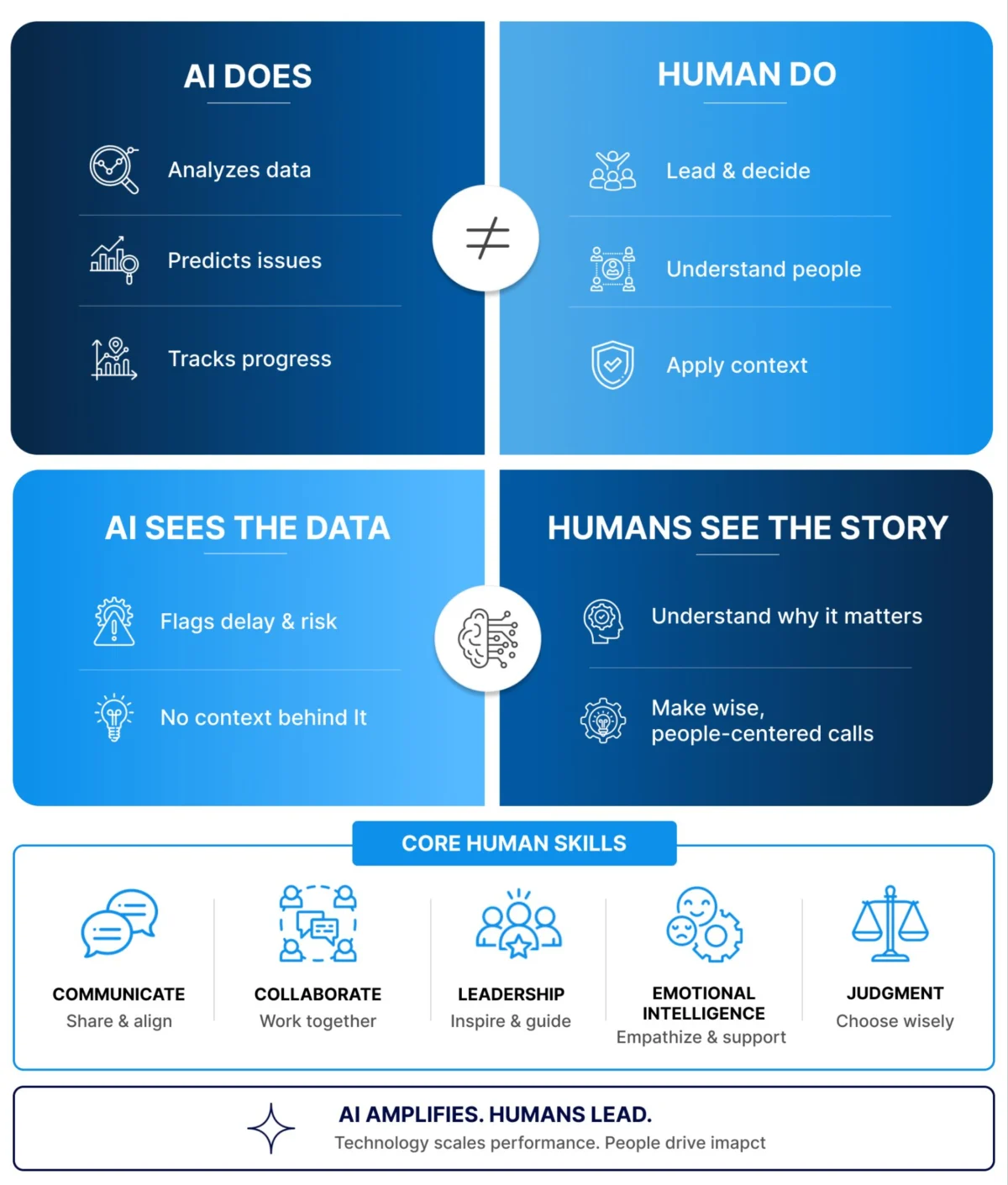
The landscape of software engineering project management is undergoing a paradigm shift, moving away from the traditional model of manual oversight toward a future defined by autonomous systems and strategic orchestration. In the foundational years of the industry, the role of the technical project manager (TPM) was often characterized as the "Gantt chart warrior"—a professional whose primary contribution involved the manual tracking of dependencies, the reconciliation of spreadsheets, and the persistent follow-up with engineering teams to ensure deadlines were met. However, as engineering organizations scale and the complexity of global software systems intensifies, this administrative-heavy model is becoming obsolete. The integration of generative artificial intelligence (AI), large language models (LLMs), and agentic workflows into delivery pipelines is not merely a technological upgrade; it represents a fundamental transformation in how complex systems are built, shipped, and maintained.
From Reactive Management to Predictive Orchestration
The traditional "coordination tax" has long been a bottleneck for high-growth technology companies. Internal audits across various engineering organizations indicate that highly skilled project managers currently spend between 60% and 70% of their working hours on routine administrative tasks. These tasks include updating status reports, reconciling conflicting data points across disparate tools like Jira and GitHub, and generating reports that often become outdated by the time they reach executive stakeholders. Recent productivity research from Microsoft suggests that this burden is nearing a breaking point, projecting that by 2030, AI-driven automation will handle approximately 80% of these routine coordination tasks.
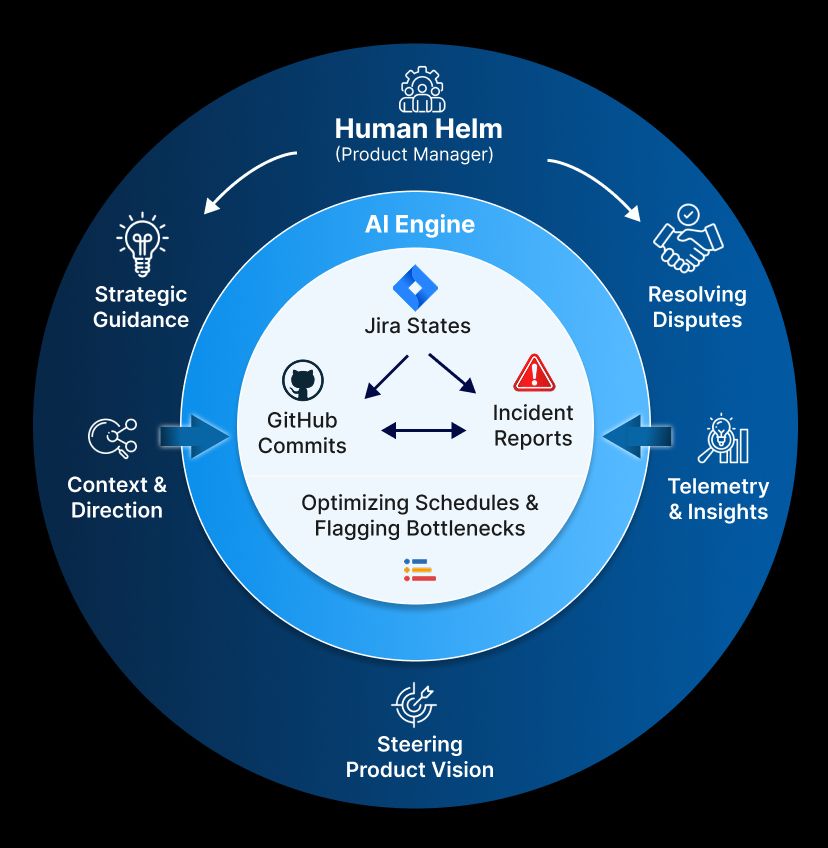
This shift marks the transition from Reactive Management to Predictive Orchestration. In a reactive environment, a project manager’s value is often measured by their ability to identify what broke yesterday or why a deadline was missed. In a predictive environment, augmented by machine learning (ML) and continuous telemetry, the focus shifts to anticipating bottlenecks before they occur. By ingesting real-time data from Git commits, pull request (PR) comments, and continuous integration/continuous deployment (CI/CD) logs, AI agents can provide an objective, real-time assessment of a project’s health without the need for synchronous daily standups.
The Technical Mechanics of AI-Augmented Delivery
The technical infrastructure supporting this evolution relies on sophisticated ML models capable of analyzing codebase complexity and historical delivery patterns. Rather than relying on a project manager’s "gut feel" to identify risks, modern systems employ Monte Carlo simulations to forecast project outcomes. These simulations run thousands of potential scenarios based on team velocity, code churn, and historical "bug-to-feature" ratios to provide a statistical probability of hitting a release date.
This data-driven approach has already yielded measurable results in early-adopting organizations. The administrative burden on technical PMs has, in some documented cases, dropped to less than 30% of their total time. This efficiency gain allows for a dramatic reallocation of human capital. Time previously spent on status tracking (historically 25% of the role) is being reduced to 8% through automated telemetry. Similarly, risk management efforts are being streamlined from 15% to 5% as AI identifies patterns across thousands of tickets that would be impossible for a human to track manually.
The Rise of Agentic AI and Multi-Agent Systems
While much of the public discourse surrounding AI focuses on generative tools for drafting summaries or meeting agendas, the more significant advancement in technical delivery is the emergence of Agentic AI. Unlike standard LLMs that require constant prompting, agentic systems are designed to take independent action within a defined framework.
Leading engineering organizations are now experimenting with "Project Assistant" agents that are deeply integrated into operational workflows. For example, if an AI agent detects via HR systems or Slack status that a lead backend engineer is unavailable due to illness, it does not simply flag the absence. The agent independently analyzes the sprint backlog, identifies the critical dependency chain, and generates a re-prioritized workload for the remaining team members. This proposal is then presented to the human project manager for final approval. In this scenario, the PM functions as a Systems Architect, supervising a workforce composed of both human developers and intelligent digital agents.
Implementation Challenges: Data Quality and Operational Debt
The transition to an AI-augmented project management model is rarely seamless. The implementation process often exposes significant "operational debt"—hidden inconsistencies in how teams operate that were previously masked by human intervention. One of the primary hurdles identified by technical leaders is data quality. AI models are inherently dependent on the integrity of the data they ingest.
When organizations first deploy automated status reporting, they frequently encounter "hallucinations" or system failures caused by inconsistent engineering disciplines. For instance, if one team marks a ticket as "done" when the code is merged, while another team only marks it "done" when it passes quality assurance (QA), the AI cannot provide an accurate aggregate view of progress. This exposure of organizational inconsistency forces a higher level of discipline in documentation and process standardization, which, while painful in the short term, leads to more robust engineering cultures.
Navigating Algorithmic Over-Reliance
A second significant challenge is the risk of algorithmic over-reliance. When project managers embrace AI without a critical lens, they risk following recommendations that lack necessary context. An illustrative example occurred in a large-scale deployment where an automated scheduling tool repeatedly recommended code releases on Friday afternoons. The ML model had identified a historical pattern of "spare capacity" during those hours. However, the model failed to understand that these "spare" hours were historically reserved for emergency hotfixes, not planned releases.
Furthermore, AI models can struggle with the nuances of technical documentation. In one instance, an AI agent flagged a low-priority bug as a high-complexity risk because the bug report was poorly written and contained numerous technical keywords. A human PM was required to intervene, recognizing that the complexity score was artificially inflated by the quality of the prose rather than the difficulty of the underlying code. These instances highlight the necessity for "AI literacy" among technical leaders—the ability to distinguish between correlation and causation and to recognize potential biases in training data.
The Irreplaceable Value of Human Context and EQ
Despite the advancements in predictive modeling, the "art" of software delivery remains a fundamentally human endeavor. AI excels at logic and pattern recognition, but it lacks emotional intelligence (EQ), the ability to navigate organizational politics, and the capacity for contextual judgment.
A critical scenario involves the management of stakeholder expectations during a crisis. If an AI system flags a two-week delay in a feature launch due to low engineering velocity, it provides an accurate but incomplete picture. A human PM might intentionally negotiate that delay because a zero-day security vulnerability was discovered in an upstream dependency. The PM understands that framing the delay to the executive board as "security hardening" will maintain trust and secure additional resources, whereas the AI’s raw data framing it as a "slowdown" might trigger unnecessary panic.
Furthermore, AI can detect a 15% drop in team velocity, but it cannot identify the underlying cause if that cause is human-centric, such as team burnout after a grueling deployment cycle or a personal crisis affecting a key contributor. Building psychological safety and knowing when to push a team versus when to offer breathing room remain exclusively human capabilities.
Future Outlook: Specialized Roles in 2030
As the industry moves toward 2030, the role of the technical project manager is expected to diverge into several specialized domains. The "entry-level" aspects of the job will likely be fully supported by AI assistants that resolve resource conflicts and schedule meetings autonomously. This evolution will give rise to new, high-value specializations:
- AI-Orchestration Leads: Professionals focused on the design and maintenance of the agentic workflows that drive the delivery pipeline.
- Technical Governance Architects: Leaders responsible for ensuring that AI-driven decisions align with corporate ethics, security standards, and long-term technical debt strategies.
- Strategic Delivery Partners: High-level consultants who focus exclusively on stakeholder alignment, human-centric leadership, and the "art" of navigating complex organizational shifts.
Conclusion: A New Era of Human-Machine Collaboration
The integration of artificial intelligence into technical project management does not signal the end of the profession; rather, it marks the beginning of its most strategic era. By automating the repetitive and tedious tasks that have historically plagued the discipline, AI allows human leaders to focus on the high-stakes decisions that require nuanced judgment and empathy.
For project professionals, the path forward involves a rapid upskilling in AI literacy and a renewed focus on core human skills. The most successful leaders will be those who view AI not as a competitor, but as an advanced "autopilot" that allows them to focus more clearly on the final destination. The future of software delivery is defined by technical excellence achieved through the synergy of autonomous systems and strategic human leadership. This collaboration promises a level of speed, clarity, and precision that was previously unattainable in the era of manual coordination.