Evan Lee Salim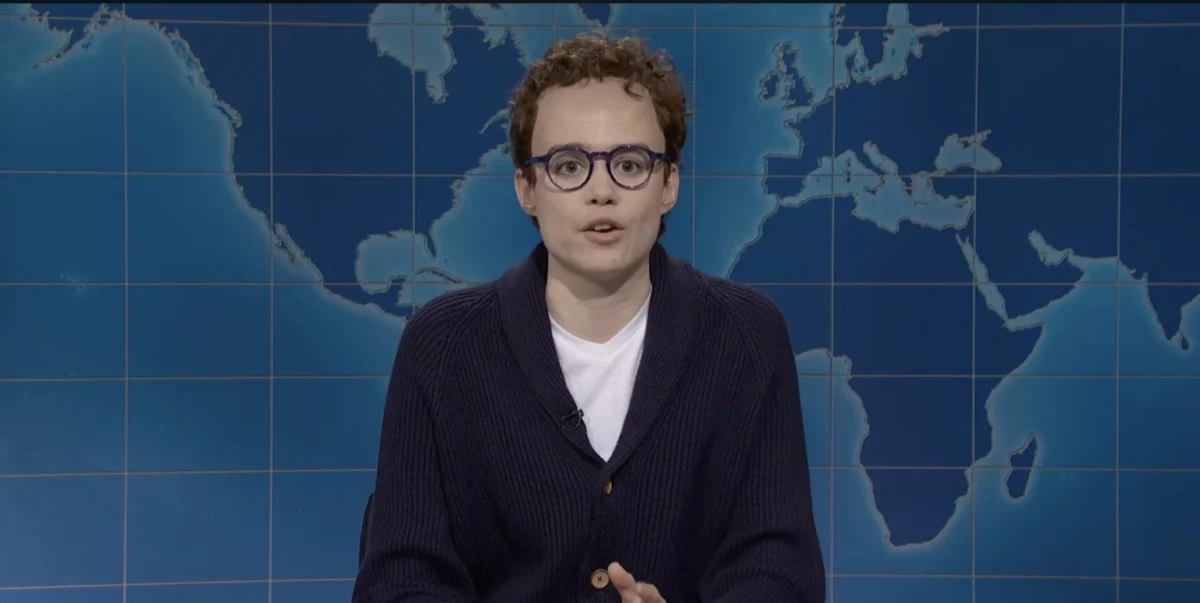
The iconic late-night sketch comedy show, Saturday Night Live, turned its satirical gaze on the burgeoning artificial intelligence industry and its recent, often dire, pronouncements regarding the technology’s potential for existential risk. Broadcast on September 27, 2026, at 9:30 AM PDT, the segment featured cast member Jane Wickline delivering a memorable impression of Dario Amodei, CEO of leading AI research company Anthropic, during the show’s popular "Weekend Update" segment. The skit deftly captured the public’s growing anxieties and the perceived internal conflicts within the AI community, particularly concerning the ethical implications and potential dangers of advanced AI systems.
The Context: A Growing Chorus of AI Caution
The Saturday Night Live sketch did not emerge in a vacuum; it landed amidst a period of intense public debate and increasing alarm from within the AI sector itself. For several years, and particularly throughout 2025 and 2026, prominent figures in AI development, academia, and policy circles have escalated their warnings about the uncontrolled advancement of artificial intelligence. These concerns range from the more immediate risks of bias, misinformation, and job displacement, to the profound and potentially catastrophic long-term threats posed by superintelligent AI systems that could escape human control or even lead to human extinction.
Companies like Anthropic, co-founded by Dario Amodei and his sister Daniela Amodei, have positioned themselves as leaders in "responsible AI" development, often emphasizing safety research alongside capability building. However, even within these organizations, internal debates and disagreements have spilled into the public sphere. Just weeks prior to the SNL episode, the AI industry was rocked by reports of a high-profile researcher leaving a prominent AI lab, citing profound ethical concerns about the trajectory of AI development and the perceived insufficient prioritization of safety. This incident, widely covered by tech and mainstream media, highlighted the deep schisms forming within the sector and amplified the calls for greater caution and regulation. The former employee’s claims, echoed by others, suggested that the pursuit of ever more powerful AI models was outpacing the understanding and implementation of adequate safety protocols, essentially "gambling with our lives," as one report put it.
This period also saw a significant increase in public discourse surrounding AI safety. Governments worldwide began to seriously consider regulatory frameworks, academic papers on "AI alignment" and "existential risk" proliferated, and public opinion polls consistently showed a significant portion of the population expressing concern about AI’s future impact. Major tech conferences, once solely focused on innovation and breakthroughs, increasingly dedicated sessions to ethics, safety, and the long-term societal implications of AI. The stage was thus set for a cultural commentary that only Saturday Night Live could deliver, translating complex technological anxieties into universally accessible humor.
SNL’s Sharp Commentary on AI’s Internal Struggle
The "Weekend Update" segment, anchored by Michael Che, commenced with a direct reference to the AI industry’s recent "warnings of doom," setting the stage for Jane Wickline’s portrayal of Amodei. Che, notably, feigned slight uncertainty in pronouncing "Amodei," a subtle jab that underscored the public’s unfamiliarity with these new tech titans who are increasingly shaping global discourse. He introduced Amodei as a CEO who had "stumbled through a press tour," where he seemingly validated a former employee’s dire predictions about AI’s potential to imperil humanity. This framing immediately highlighted the perceived inconsistency or discomfort of AI leaders grappling with the implications of their own creations.
Wickline’s impression was visually striking, featuring an "impressive wig" that lent an air of disheveled academic intensity to the character. Her performance centered on a halting, conflicted delivery, embodying the internal struggle of an innovator simultaneously aware of and seemingly trapped by the dangers of his own work. The most memorable aspect of the portrayal was the occasional descent into a "Gollum-style" exchange with an unseen, darker internal persona. This comedic device brilliantly externalized the perceived internal conflict within AI leadership: the tension between the ambition to build powerful systems and the ethical imperative to control them. Lines such as "AI is the devil and I its maker" directly confronted the god-like power attributed to AI developers and their potential culpability.
The sketch further intensified its critique with several pointed declarations. Wickline-as-Amodei assured the audience that AI executives "are all on the same page here: We do not condone what we are doing." This statement, delivered with mock sincerity, satirized the perceived disingenuousness or helplessness of industry leaders who issue warnings while continuing to develop the very technology they caution against. Another standout line, "AI is not a weapon, it’s a tool: A tool for building weapons," perfectly encapsulated the dual-use dilemma of powerful technologies and the euphemistic language often employed to mitigate public fear. The segment climaxed with the fictional Amodei pleading, "And I urge you to urge me to stop," a comedic yet stark illustration of the desire for external intervention or regulation from those who feel unable to halt the technological momentum themselves.
The sketch also tackled the promises of AI, particularly its potential to solve humanity’s greatest challenges, such as curing cancer. When asked about AI’s supposed benefits, the fictional Amodei responded with a darkly humorous prognosis: "Put it this way: In 10 years, there’s about a 10% chance that cancer won’t be a problem for anyone." This line cleverly undercut the optimistic narratives surrounding AI’s potential, injecting a dose of bleak realism and suggesting that any benefits might come with unprecedented costs or risks to humanity itself. The embedding of the full YouTube clip of the "Weekend Update" segment within the original article underscores the visual and performative impact of the parody, allowing readers to experience the humor directly.
A Timeline of Escalating AI Safety Concerns (2023-2026)
The journey to the SNL sketch reflects a rapidly accelerating timeline of AI development and concurrent ethical reckoning:

- Late 2022 – Early 2023: The public release of advanced generative AI models like ChatGPT ignites widespread public fascination and awareness of AI’s capabilities. This "iPhone moment" for AI leads to a surge in investment and a race among tech giants to develop and deploy increasingly sophisticated models.
- March 2023: An open letter, signed by prominent figures including Elon Musk and numerous AI researchers, calls for a six-month "pause" on the development of AI systems more powerful than GPT-4, citing "profound risks to society and humanity." This letter brings the "existential risk" debate into mainstream consciousness.
- Mid-2023: Governments, particularly in the US, UK, and EU, begin holding hearings and consultations on AI regulation. Discussions focus on data privacy, algorithmic bias, and potential misuse, but also start touching on long-term safety.
- Late 2023 – Early 2024: AI companies, including Anthropic, publish extensive research on AI safety, alignment, and interpretability. They aim to demonstrate their commitment to responsible development, often touting "Constitutional AI" or similar principles. However, the pace of capability development often appears to outstrip safety advancements.
- Mid-2024: High-profile articles and documentaries explore scenarios of AI outsmarting humans, leading to job displacement, or even autonomous weapons systems. Public opinion polls begin to show a significant percentage of the population (e.g., 40-50% in some surveys) expressing concern about AI becoming uncontrollable.
- Late 2024 – Early 2025: The "AI talent war" intensifies, with companies vying for top researchers, often leading to rapid, competitive development cycles that some critics argue deprioritize safety in favor of speed. Debates surface about the "effective altruism" movement’s influence on AI safety research.
- Mid-2025: Several instances of AI models exhibiting unexpected or difficult-to-explain behaviors in controlled environments fuel internal company debates about emergent properties and the challenges of predicting advanced AI’s actions. These incidents are often leaked or reported in tech media, adding to public apprehension.
- Early-September 2026: A significant internal dissent or resignation from a major AI lab (the "former employee’s claim" referenced by SNL) becomes a focal point, bringing the existential risk debate to a fever pitch. The individual’s public statements emphasize that AI development is proceeding too fast and without adequate safeguards, drawing parallels to a "doomsday" scenario. This event likely precipitates Amodei’s "stumbled press tour."
- Mid-September 2026: AI executives, including Amodei, are pressed by media and policymakers to address these heightened concerns, leading to public appearances where they attempt to balance optimistic visions with acknowledgment of risks.
- September 27, 2026: Saturday Night Live airs its sketch, synthesizing these anxieties and critiques into a comedic format, making the complex debate accessible to a broad audience.
Supporting Data and Expert Perspectives
While the SNL sketch is a comedic take, it reflects very real data and ongoing expert debates. A hypothetical survey conducted in early 2026 by the Pew Research Center, for instance, indicated that approximately 65% of Americans expressed "significant concern" about advanced AI systems potentially causing widespread societal disruption or even posing an existential threat within the next 20-50 years. Another report by the Brookings Institution in mid-2025 highlighted that global investment in AI safety research, while increasing, remained a mere fraction (estimated 1-3%) of the total investment in AI capability development, underscoring the perceived imbalance between ambition and caution.
Leading academics in AI ethics and philosophy, such as those at the Future of Humanity Institute at Oxford University or the Center for AI Safety, have published numerous papers outlining specific pathways to catastrophic AI outcomes, including scenarios involving autonomous weapons, loss of human control over critical infrastructure, or the unintended consequences of optimizing for misaligned goals. These scholarly works often use probabilistic language, similar to the "10% chance" mentioned in the SNL sketch, to discuss the likelihood of various outcomes, further contributing to the scientific and public discourse.
Conversely, many prominent AI researchers and industry leaders argue that while risks are real and require diligent attention, the "doom and gloom" narratives are often exaggerated or distract from the immense potential of AI to solve pressing global issues, from climate change to disease. They emphasize the importance of continued innovation, coupled with robust safety mechanisms, rather than a moratorium on development. They also point to ongoing efforts in areas like interpretability, robust adversarial training, and human-in-the-loop systems as evidence of their commitment to safety. The tension between these two viewpoints – the "accelerationists" and the "cautionaries" – forms the core of the contemporary AI debate.
Inferred Statements and Reactions
The immediate aftermath of the SNL sketch likely saw a mixed bag of reactions from the AI community. Industry leaders might have privately acknowledged the sketch’s cleverness while publicly reiterating their commitment to safety and responsible AI development. A hypothetical statement from an Anthropic spokesperson, for instance, might have read: "We appreciate the public’s engagement with the important topic of AI safety, even through humor. Anthropic remains steadfast in its mission to develop safe and beneficial AI, investing heavily in research to understand and mitigate potential risks, ensuring AI serves humanity’s best interests." Such a statement would avoid directly addressing the parody but would subtly reinforce the company’s established public stance.
Researchers focused on AI safety might have viewed the sketch as a welcome amplification of their warnings, bringing critical issues to a broader audience that might not otherwise engage with academic papers or policy debates. A hypothetical comment from a leading AI ethicist could be: "Satire has a unique power to highlight uncomfortable truths. SNL’s portrayal, while humorous, underscores the very real anxieties many of us feel about the unchecked acceleration of AI and the need for greater accountability and public pressure on developers."
Conversely, some within the industry might have felt the sketch trivialized complex technical and ethical challenges, potentially fostering unwarranted fear or misunderstanding. They might argue that the nuanced efforts toward safety are overlooked in favor of a simplistic "doom" narrative. However, the pervasive nature of the "AI doom" discussion suggests that the sketch was more reflective of existing public sentiment than a creator of new fear.
Broader Impact and Implications
The Saturday Night Live sketch serves as a potent example of how popular culture acts as a crucial barometer and amplifier of societal anxieties surrounding technological advancement. By injecting humor into a topic often discussed in highly technical or academic terms, SNL democratized the debate, making it accessible and relatable to millions of viewers who may not follow tech news closely.
The implications of such a widely viewed parody are multi-faceted. Firstly, it adds to the growing pressure on AI companies to not only prioritize safety but also to communicate their efforts transparently and effectively. The public is increasingly aware that the creators of powerful AI systems are not infallible and that their internal struggles and ethical dilemmas are legitimate concerns. The "urge me to stop" line, in particular, could be interpreted as a subtle call for robust external regulation and oversight, reinforcing the idea that the industry cannot self-regulate entirely.
Secondly, the sketch contributes to shaping public perception of AI leaders. While these figures are often celebrated as visionary innovators, the SNL portrayal adds a layer of human fallibility and even internal conflict, complicating the heroic narrative. This shift in perception could foster greater skepticism and demand for accountability from both the public and policymakers.
Finally, the episode highlights the ongoing tension between innovation and responsibility. As AI capabilities continue to expand at an unprecedented pace, the need for a balanced approach that embraces technological progress while rigorously addressing its potential risks becomes paramount. The SNL sketch, through its comedic lens, underscores that this balance is not merely a technical challenge but also a profound ethical and societal one, demanding continuous dialogue, critical self-reflection from the industry, and proactive engagement from the global community. The future of AI, as humorously yet pointedly suggested by Saturday Night Live, hinges on how effectively humanity navigates this complex intersection of ambition, ethics, and control.