Galang Taruna
Nvidia, long recognized as the undisputed leader in designing the planet’s most coveted AI chips, is now strategically expanding its formidable influence deeper into the hardware supply chain by manufacturing its own memory. This pivotal development introduces a proprietary high-bandwidth memory solution named NVHBM, marking a significant architectural shift that promises to redefine performance and efficiency benchmarks for artificial intelligence accelerators.
For years, the high-performance memory (HBM) essential for AI accelerators – typically stacked in compact, multi-die towers – has been supplied by a triumvirate of industry giants: SK Hynix, Samsung, and Micron. The controller responsible for managing this memory traditionally resided on the main processor chip, dictating data flow and communication. Nvidia’s audacious move fundamentally alters this established design by relocating the memory controller directly within the HBM stack itself. While seemingly an internal "plumbing detail" to the uninitiated, this re-architecture is, in fact, a profound technological leap, representing a key characteristic of what is anticipated for the HBM4E generation of memory. Nvidia’s NVHBM appears to be its proprietary and optimized implementation of this cutting-edge design, claiming substantial advantages over the broader HBM4E standard.
Understanding High Bandwidth Memory (HBM) and Its Evolution
To fully grasp the magnitude of Nvidia’s innovation, it’s crucial to understand the role and evolution of High Bandwidth Memory. HBM is a specialized type of RAM designed for high-performance applications, primarily in data centers, supercomputing, and AI accelerators, where immense data throughput is paramount. Unlike traditional DDR (Double Data Rate) memory, HBM consists of multiple silicon dies stacked vertically, connected by through-silicon vias (TSVs). This three-dimensional stacking dramatically shortens the electrical pathways between the memory dies and the processor, leading to significantly wider interfaces, higher bandwidth, and improved power efficiency compared to conventional memory solutions.
The journey of HBM began with the first generation (HBM) in 2013, followed by HBM2, HBM2E, HBM3, and most recently, HBM3E, which is currently at the forefront of AI accelerator technology. Each successive generation has brought exponential improvements in bandwidth, capacity, and power efficiency, directly correlating with the increasing demands of AI models that require processing ever-larger datasets at incredible speeds. The impending HBM4 generation, and its enhanced variant HBM4E, represent the next frontier, promising further advancements in performance and integration. The race to master HBM4 and HBM4E is intense among memory manufacturers and accelerator designers, as faster memory directly translates to a more efficient processor, capable of being fed data continuously without bottlenecks or idle cycles.
The NVHBM Advantage: Unprecedented Gains in Performance and Efficiency
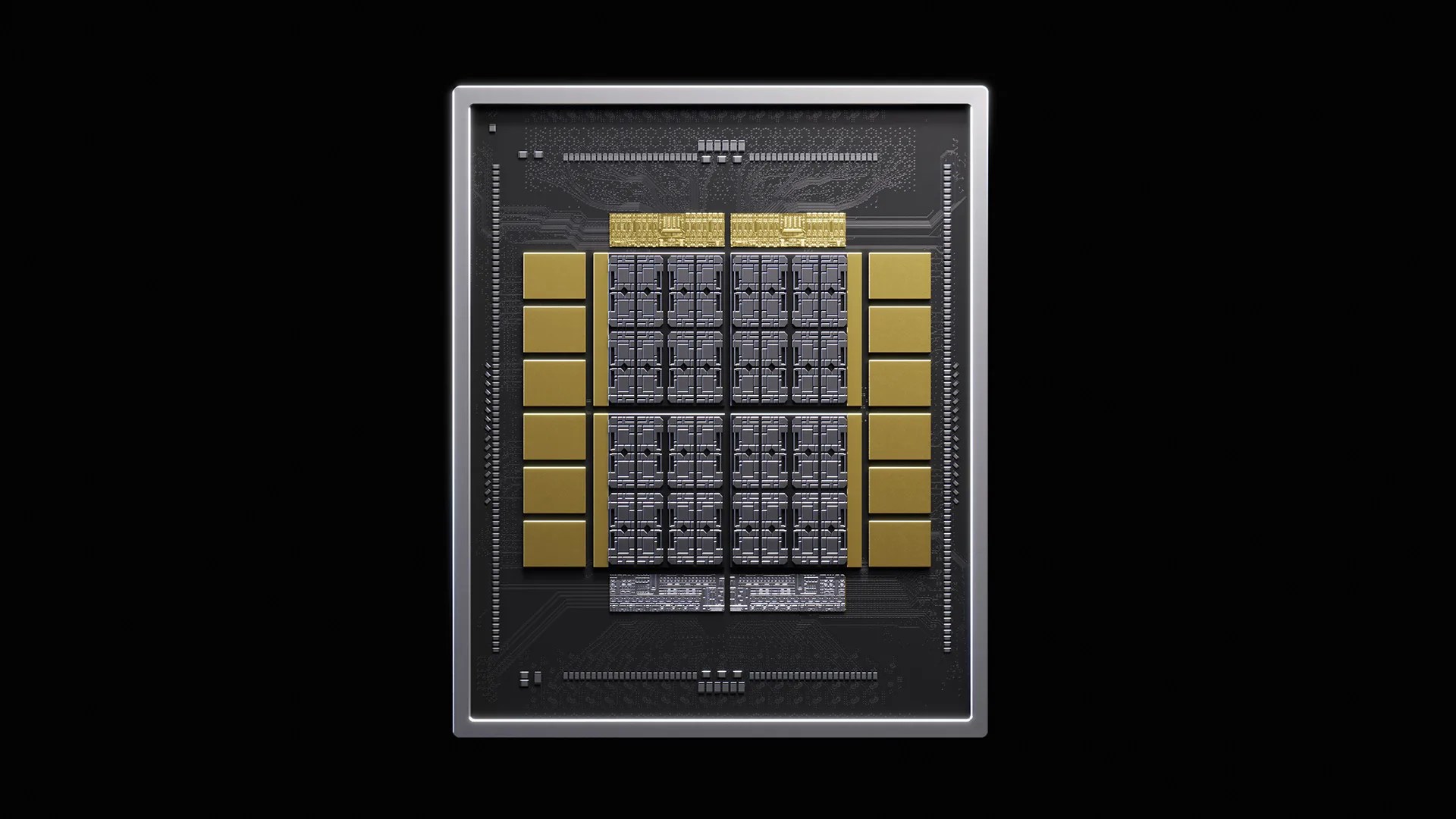
Nvidia is touting impressive performance metrics for its NVHBM solution when compared to the upcoming HBM4E standard. The company claims up to a 30% increase in bandwidth and a 15% reduction in power consumption. These figures are not mere incremental improvements; they represent a substantial leap in the capabilities of AI hardware.
The core of this performance boost lies in the architectural change: integrating the memory controller directly into the HBM stack. This proximity dramatically shortens the data pathways between the memory cells and their controller, minimizing electrical signal degradation, reducing latency, and enhancing signal integrity. The result is faster, more reliable data transfer. Furthermore, this more compact interface frees up valuable die area on the main compute chip – an estimated 25% – which Nvidia can then reallocate for additional processing cores or specialized AI accelerators. For training or running large-scale AI models, the primary bottleneck is rarely raw computational power but rather the speed and efficiency of data transfer between memory and the processor. NVHBM directly addresses this critical constraint, allowing AI processors to operate at their peak potential more consistently.
Amazon as the Inaugural Partner: A Strategic Collaboration
The first major adopter of Nvidia’s groundbreaking NVHBM technology is Amazon, integrating it into its next-generation Trainium4 AI processor. This partnership is particularly noteworthy given Amazon Web Services (AWS) has been aggressively developing its own custom silicon for cloud workloads, including the Trainium series for AI training and Inferentia for inference, through its Annapurna Labs division. The collaboration highlights a strategic alignment: Amazon seeks to optimize its cloud infrastructure for AI workloads with leading-edge hardware, and Nvidia aims to validate and deploy its new memory standard with a key cloud provider.
Amazon and Nvidia have jointly announced an ambitious deployment plan, anticipating an additional 2 million GPUs – specifically Vera processors equipped with NVHBM memory – to be rolled out between 2027 and 2028. This massive expansion underscores the scale of AI infrastructure development and the confidence placed in NVHBM’s capabilities. For Amazon, leveraging NVHBM for its Trainium4 processors could provide a significant competitive advantage in the fiercely contested cloud AI market, offering its customers superior performance and efficiency for their demanding AI applications.
Navigating the Memory Crisis: A Timely Intervention and Strategic Rationale
Nvidia’s timing for introducing NVHBM is particularly pertinent, coinciding with an unprecedented global memory crisis. The industry is currently facing severe HBM shortages, with reports indicating that the entire production capacity for 2027 is already sold out. This scarcity has led to soaring RAM prices and extended lead times for critical components, impacting the entire technology sector, especially those heavily reliant on AI hardware.

In this challenging environment, Nvidia’s move to exert greater control over its memory supply chain is not merely a technical innovation but a shrewd business strategy. By integrating the memory controller and potentially influencing or even undertaking aspects of HBM manufacturing itself, Nvidia reduces its reliance on the three traditional HBM suppliers. This vertical integration strategy provides several advantages:
- Supply Security: It can help insulate Nvidia from future supply chain disruptions and shortages, ensuring a more stable supply of crucial components for its AI accelerators.
- Cost Control: Direct involvement in memory architecture and production could offer better cost control, especially significant given Nvidia has already raised the prices of its graphics cards three times this year.
- Performance Customization: Developing proprietary memory allows for deeper optimization and tighter integration with Nvidia’s GPU architectures, potentially unlocking performance levels unattainable with off-the-shelf HBM.
- Market Dominance: Further consolidating control over key components strengthens Nvidia’s already dominant position in the AI hardware market, making it even harder for competitors to challenge its lead.
Implications for the AI Hardware Ecosystem and Beyond
The introduction of NVHBM carries significant implications across the AI hardware ecosystem:
- For HBM Manufacturers (SK Hynix, Samsung, Micron): While Nvidia is not entirely replacing these suppliers, its deeper involvement in HBM architecture could shift dynamics. These companies might need to adapt their offerings or collaborate more closely with Nvidia to remain competitive. It also signifies that chip designers are increasingly seeking custom solutions, potentially fragmenting the HBM market into standard and proprietary variants.
- For Nvidia’s Competitors (AMD, Intel): This move raises the bar for competing AI accelerator developers. AMD and Intel, both striving to capture a larger share of the AI market, will need to counter with their own innovations in memory integration or risk falling further behind in performance and efficiency.
- Vertical Integration Trend: NVHBM is a strong indicator of a broader trend towards vertical integration in the tech industry, especially in the high-stakes AI sector. Companies are increasingly seeking to control more aspects of their hardware and software stacks to gain competitive advantages and mitigate supply chain risks.
- Broader Market Impact: The performance gains promised by NVHBM could accelerate advancements in AI research and deployment, enabling the development of even larger and more complex models, pushing the boundaries of what AI can achieve.
Nvidia’s Expanding Empire: Beyond GPUs
Nvidia’s strategy extends far beyond merely designing powerful GPUs. The company has meticulously built a comprehensive ecosystem, from its ubiquitous CUDA software platform that locks in developers to its increasing foray into full-stack solutions. Moves like the development of NVHBM, alongside its reported interest in acquiring AI powerhouses like Hugging Face (a deal valued at $12.9 billion), demonstrate a clear intent to control every critical link in the AI value chain. By integrating the memory controller into the HBM stack, Nvidia reclaims a layer of technology previously left to its memory suppliers, further tightening its grip on the hardware foundation of the AI revolution.
While the immediate deployment of NVHBM is focused on enterprise-grade AI accelerators for cloud providers like Amazon, its potential availability in consumer-grade GPUs remains unknown. However, the precedent set by this innovation signals Nvidia’s commitment to pushing the boundaries of memory technology across its product portfolio. This strategic play is a logical progression for a company that consistently seeks to optimize performance, control its supply chain, and cement its position as the indispensable architect of the artificial intelligence era.
The introduction of NVHBM is more than just a new memory specification; it represents Nvidia’s strategic maneuver to fortify its technological leadership, secure its supply chain, and continue dictating the pace of innovation in the rapidly evolving world of artificial intelligence. It underscores a future where seamless integration and optimized data flow are paramount, and where companies like Nvidia are willing to redraw architectural blueprints to achieve them.