Galang Taruna
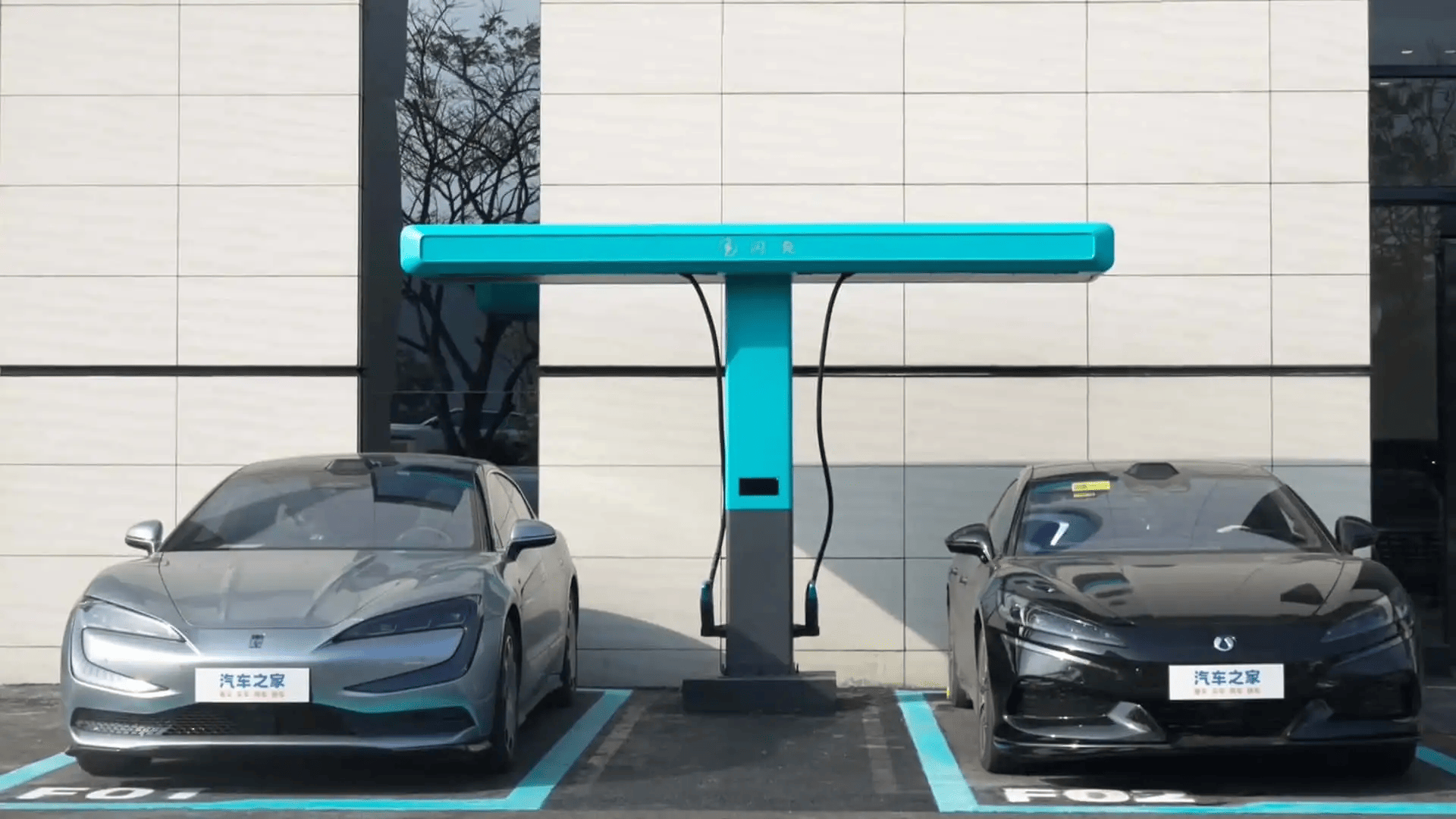
In a remarkable display of strategic execution and ambitious expansion, BYD, the world’s leading manufacturer of new energy vehicles (NEVs), has announced the deployment of 10,000 ultra-fast charging stations under its "Flash Charging" network in just under six months. Launched on March 5th, this aggressive rollout has seen BYD average an astonishing 55 new charging points daily, establishing a formidable infrastructure presence across 325 cities. What distinguishes this achievement further is the company’s commitment to an open network philosophy, with nearly one-third of the 1.83 million registered users not owning a BYD vehicle, a stark contrast to the historical closed-ecosystem model favored by some early market leaders. This rapid build-out and inclusive strategy underscore BYD’s intent not only to dominate the electric vehicle manufacturing landscape but also to become a pivotal player in the essential charging infrastructure that underpins the global shift to electric mobility.
Rapid Deployment and Strategic Reach
The sheer pace of BYD’s Flash Charging network deployment is unprecedented in the electric vehicle charging sector. Kicking off its operations just over a quarter ago, the company has managed to establish 10,000 charging stations across a vast geographical spread encompassing 325 major urban centers and key transit routes. This equates to an average installation rate exceeding 55 stations per day, a logistical and engineering feat that speaks volumes about BYD’s industrial capabilities and strategic foresight. To put this into perspective, many established charging networks take years to reach similar milestones, highlighting BYD’s aggressive scaling strategy. For instance, Electrify America, one of the largest open DC fast-charging networks in the U.S., announced reaching 10,000 individual chargers (not stations) after several years of operation, demonstrating the significant difference in deployment speed.
This rapid expansion is not merely about numbers; it’s about strategic placement. By targeting a wide array of cities, BYD is laying the groundwork for a comprehensive charging ecosystem that aims to alleviate range anxiety for EV drivers across various regions. The focus on both urban and inter-city locations suggests a dual strategy: supporting daily commutes and enabling long-distance travel, thereby fostering greater confidence in electric vehicles as viable alternatives to internal combustion engine cars for all types of journeys. The data on registered users further highlights the network’s burgeoning utility, demonstrating a significant user base even in its nascent stages. The 1.83 million registered users underscore a robust initial adoption, indicating strong demand for high-speed charging solutions.
Technological Prowess: The 1.5 Megawatt "Flash Charging" Experience
At the heart of BYD’s Flash Charging initiative lies cutting-edge technology designed to redefine the electric vehicle charging experience. Each Flash Charging station is engineered to deliver an astounding 1.5 megawatts (1,500 kW) of power through a single charging gun. This extraordinary power output translates into hyper-fast charging times, with BYD claiming that vehicles can replenish their batteries from 10% to 70% in as little as five minutes. This speed dramatically reduces the time commitment associated with EV charging, bringing it closer to the convenience of refueling a traditional gasoline vehicle, a critical factor for mainstream adoption and long-haul travel.
This technological leap is made possible by BYD’s proprietary Blade 2.0 battery technology. These lithium iron phosphate (LFP) cells are specifically designed to withstand and efficiently manage the intense power delivery required for ultra-fast charging, all while maintaining long-term durability and safety. The Blade Battery, renowned for its structural integrity, thermal stability, and high energy density, has been a cornerstone of BYD’s EV success, and its evolution to Blade 2.0 further solidifies the company’s leadership in battery innovation. The ability to accept such high charge rates without significant degradation is a testament to BYD’s deep vertical integration, from raw materials to final vehicle and infrastructure. This vertical integration allows BYD to optimize the entire charging ecosystem, ensuring seamless communication and performance between the vehicle and the charger.
While BYD is at the forefront of this ultra-fast charging revolution, it is not alone. Other automotive giants, such as Geely, are also aggressively pursuing high-power charging solutions, with some of their platforms aiming for similar charging speeds. This competition is expected to drive further innovation and expand the availability of such advanced infrastructure, ultimately benefiting the entire EV ecosystem and accelerating the transition away from fossil fuels. The push towards megawatt charging is seen by many industry analysts as the next frontier in EV infrastructure, essential for making electric trucks and long-range passenger vehicles truly competitive.
An Open Network Philosophy: A Paradigm Shift
Perhaps one of the most significant aspects of BYD’s Flash Charging strategy is its immediate embrace of an open network model. The revelation that nearly one-third of the 1.83 million registered users are drivers of non-BYD electric vehicles represents a deliberate and impactful departure from the closed-loop strategies that have historically characterized parts of the EV charging market. This approach stands in stark contrast to pioneers like Tesla, whose Supercharger network was exclusively reserved for Tesla vehicles for many years before gradually opening up to other brands, often with limitations such as requiring adapters or slower charging speeds for non-Tesla cars. Tesla’s decision to open its network came much later in its Supercharger deployment cycle, driven by market pressure and the need to maximize network utilization.
BYD’s decision to launch with an open network offers multiple strategic advantages. Firstly, it positions BYD as a facilitator of broader EV adoption, not just a seller of its own vehicles. By welcoming all EV drivers, BYD enhances the overall utility and appeal of its charging infrastructure, fostering a stronger network effect. This inclusivity builds brand trust and loyalty, even among non-BYD owners, who may consider BYD for future vehicle purchases due to their positive charging experience. Secondly, this model diversifies BYD’s revenue streams. Beyond vehicle sales, the company can generate substantial income from charging services, transforming its infrastructure into a profitable business unit in its own right. This infrastructure-as-a-service model creates a more resilient and diversified financial foundation for BYD, reducing its sole reliance on vehicle sales margins.
Furthermore, an open network encourages greater data collection on charging patterns and vehicle compatibility across various brands. This valuable data can inform future network expansion, optimize charging algorithms, and even influence battery development for improved interoperability. While there remains a caveat that non-BYD vehicles may not always achieve the maximum 1.5 MW charging rate due to their own battery management systems or connector limitations, the availability of high-power charging for all compatible EVs is a substantial boon for the industry. This inclusive approach is likely to garner goodwill from consumers and regulatory bodies alike, positioning BYD as a leader committed to the collective growth of the EV market and demonstrating a forward-thinking approach to industry standards.
Strategic Partnerships and Ambitious Future Targets
To sustain its aggressive deployment pace and achieve its ambitious future goals, BYD has forged strategic alliances. A notable partnership was signed in June with Sinopec, China’s colossal state-owned oil and gas company. This collaboration is a masterstroke, leveraging Sinopec’s extensive network of over 30,000 service stations across China. By integrating Flash Charging stations into existing Sinopec locations, BYD can rapidly expand its footprint without the significant capital expenditure and logistical challenges associated with acquiring new land and developing entirely new sites. This "land banking" strategy, utilizing pre-existing prime roadside real estate, provides an unparalleled advantage in scaling infrastructure. It minimizes site acquisition costs and accelerates permitting processes, which are often major bottlenecks in charging network expansion.
The declared objective for BYD’s Flash Charging network is to reach a total of 20,000 stations by the end of 2026. This target is meticulously planned, with 18,000 stations designated for urban areas and 2,000 strategically placed along major highways to facilitate long-distance travel. Achieving this goal would require an acceleration of the current deployment rate, from the impressive 55 stations per day seen in the first six months to approximately 80 stations per day for the remainder of the period. While challenging, BYD’s track record and the Sinopec partnership suggest this target is within reach, further cementing its role in China’s EV ecosystem. The collaboration with a national energy giant like Sinopec also brings significant political and economic backing, crucial for such large-scale infrastructure projects.
Global Vision: European Expansion on the Horizon
BYD’s ambitions for its ultra-fast charging network extend far beyond China’s borders. The company has already announced plans for the rollout of Flash Charging in Europe, adapting its technology to meet regional standards. In France, BYD has confirmed the impending arrival of its ultra-fast charging infrastructure, which will utilize the European standard CCS2 (Combined Charging System 2) connector, rather than the Chinese GB/T standard. This commitment to local compatibility is crucial for widespread adoption and seamless integration into the European EV market, ensuring that BYD’s stations can serve the vast majority of EVs sold in the region.
The company’s goal for Europe is to establish 3,000 charging stations, a substantial investment that signals BYD’s long-term commitment to the continent’s electric mobility transition. This figure, though smaller than its Chinese targets, represents a significant contribution to Europe’s charging infrastructure, which is still in development compared to China. Early demonstrations have already showcased the prowess of BYD’s charging technology in Europe. A Denza Z9GT, a premium model from BYD’s sub-brand, recently achieved a record-breaking charging rate of 720 kW on a 600 kW French charging point. This incident not only highlighted the vehicle’s capability to draw immense power but also demonstrated the potential for BYD’s technology to push the boundaries of existing European infrastructure, even exceeding its stated limits under optimal conditions. Such real-world performance validation is critical for building consumer confidence and establishing BYD’s credibility in a competitive market like Europe, where charging infrastructure quality is a key concern.
The introduction of this advanced charging network is poised to significantly impact the purchasing decisions of prospective EV owners in Europe. For those considering BYD’s growing range of electric models, the promise of ultra-fast charging capabilities – reducing roadside stops to mere minutes – could be a decisive factor, addressing lingering concerns about charging convenience and speed, especially for long-distance travel. This also positions BYD as a holistic mobility provider, offering not just vehicles but also the essential support infrastructure.
Broader Implications for the Electric Vehicle Landscape
BYD’s monumental investment in ultra-fast charging infrastructure carries significant implications for the global electric vehicle landscape. Firstly, it accelerates the overall development of charging networks worldwide. As a major player demonstrating the feasibility of rapid, large-scale deployment, BYD sets a new benchmark for other OEMs and dedicated charging providers. This increased competition is beneficial for consumers, leading to more robust and widespread charging options, and driving innovation across the sector.
Secondly, BYD’s open network strategy could influence broader industry trends, potentially encouraging other manufacturers to open their proprietary networks or to prioritize interoperability. A truly open and expansive charging ecosystem is vital for the mass adoption of EVs, removing friction points for drivers regardless of their vehicle brand. This move could also put pressure on existing charging networks to upgrade their power output to match BYD’s capabilities, fostering a "race to the top" in charging speed.
Thirdly, this move reinforces BYD’s unique position as a vertically integrated powerhouse. By controlling not only the battery and vehicle manufacturing but also a substantial portion of the charging infrastructure, BYD gains a comprehensive advantage. This allows for optimized integration between vehicle and charger, potentially unlocking even greater efficiencies and performance. It also provides a degree of control over the entire EV ownership experience, from purchase to daily operation, offering a seamless ecosystem that few competitors can match. This integration can also lead to cost efficiencies in the long run, as BYD can leverage its scale across multiple business units.
Finally, the scale of this Chinese-led infrastructure push highlights China’s leadership in the global EV transition. The rapid deployment and advanced technology demonstrate a national commitment to electric mobility that could serve as a model for other regions. As BYD continues its global expansion, its Flash Charging network will likely follow, potentially reshaping charging infrastructure availability in key international markets. This expansion also represents a significant soft power play, establishing Chinese technological standards and infrastructure as global benchmarks.
In conclusion, BYD’s deployment of 10,000 ultra-fast charging stations in less than six months is a watershed moment in the electric vehicle industry. It showcases an unparalleled pace of infrastructure development, introduces groundbreaking charging technology, and champions an open network model that prioritizes broad accessibility. As BYD marches towards its 2026 targets and expands its Flash Charging footprint into Europe, its strategic moves are poised to not only solidify its own market position but also significantly accelerate the global transition to a fully electric future. The race for EV dominance is no longer just about vehicles; it’s increasingly about who can build the most robust, efficient, and accessible charging ecosystem, and BYD is making a compelling case for its leadership in this critical domain.