Evan Lee Salim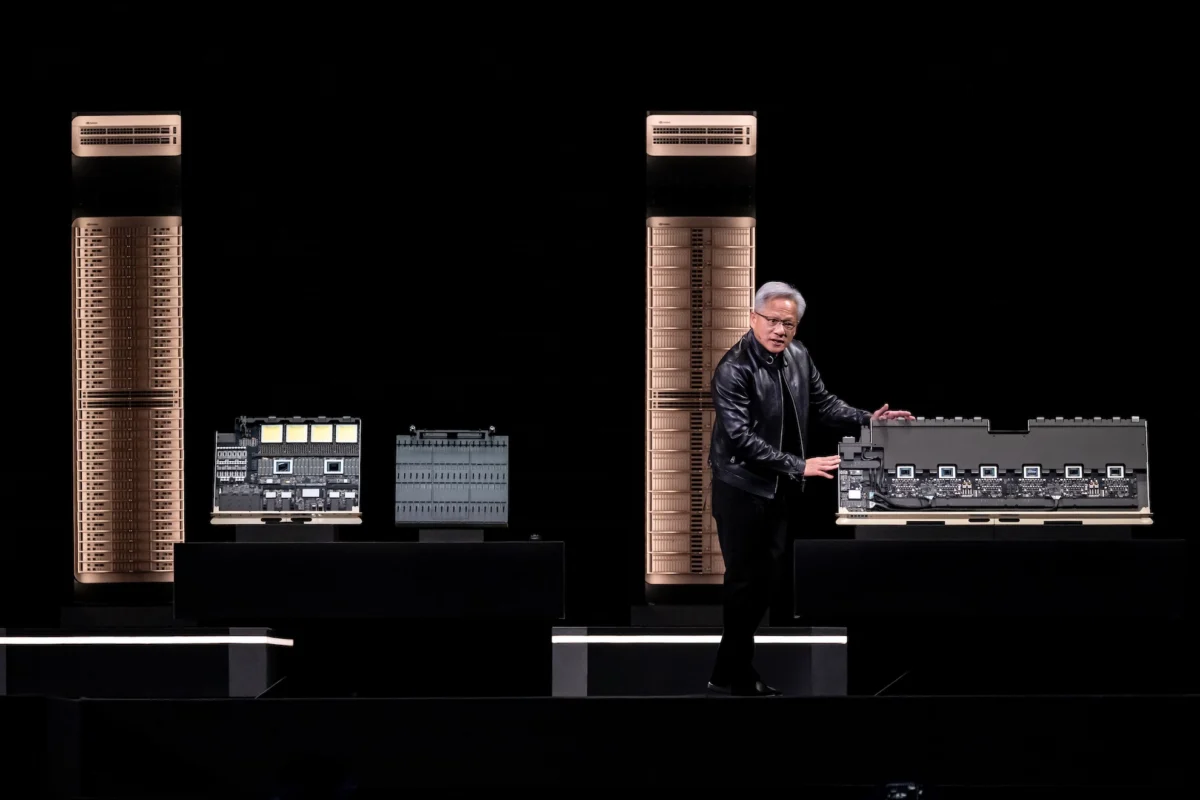
The narrative surrounding Nvidia, a dominant force in the artificial intelligence revolution, has undergone a significant transformation in recent weeks. For years, the company’s unparalleled success was largely attributed to its near-monopoly on state-of-the-art Graphics Processing Units (GPUs), essential hardware for training and deploying complex AI models. This dominance fueled an extraordinary surge in market capitalization, with Nvidia’s shares experiencing a tenfold increase between early 2023 and mid-2025. However, the emergence of custom AI chips from hyperscale cloud providers like Amazon, Google, and Microsoft introduced a period of investor apprehension, prompting questions about the long-term durability of Nvidia’s competitive edge in the GPU market.
This earlier narrative, while largely factual, focused too narrowly on individual chip performance. Following the company’s recent earnings report, a more nuanced understanding has begun to coalesce within the investment community and industry at large: Nvidia’s strategic advantage extends far beyond its silicon. As AI compute demands escalate to the gigawatt scale, the complexity of orchestrating vast data centers – managing data flow, interconnectivity, power efficiency, and resource allocation – has become paramount. Nvidia, through years of proprietary research and development, has quietly built an extensive ecosystem of hardware and software designed specifically to tackle these intricate orchestration challenges, thereby establishing a formidable lead in the critical systems that surround and enable its GPUs, even amidst intensifying competition on the GPU front itself.
The Evolving Landscape of AI Compute
The journey to Nvidia’s current strategic position is rooted in the explosive growth of AI, particularly generative AI and large language models (LLMs), which began to accelerate dramatically in the early 2020s. These models require unprecedented levels of computational power, driving demand for GPUs to astronomical heights. Nvidia’s CUDA platform, a proprietary parallel computing architecture and programming model, had already established a strong developer ecosystem, making its GPUs the de facto standard for AI research and deployment. This created a powerful flywheel effect: more developers used CUDA, leading to more demand for Nvidia GPUs, which in turn incentivized more investment in CUDA and GPU innovation.
By 2023, as AI investments surged, Nvidia’s H100 and A100 GPUs became the gold standard, often commanding high prices and experiencing supply constraints. This period marked Nvidia’s peak as a seemingly unassailable GPU provider. However, the very scale of this demand spurred a reaction from major cloud providers. Companies like Amazon Web Services (AWS) with their Inferentia and Trainium chips, Google Cloud with its Tensor Processing Units (TPUs), and more recently, Microsoft with its Athena accelerators, began investing billions into developing their own custom AI silicon. Their motivations were clear: reduce reliance on a single vendor, gain greater control over their hardware supply chain, optimize chips for their specific workloads, and potentially lower operational costs. This development sparked concerns among investors that Nvidia’s core GPU business might face erosion as hyperscalers increasingly brought their AI chip development in-house.
Beyond the Silicon: The Orchestration Imperative
While the competitive pressures on GPU development are real, the new understanding highlights that the value proposition in AI infrastructure is shifting. Operating a megascale data center at peak efficiency, especially one dedicated to AI, is an extraordinarily complex undertaking. It’s not merely about plugging in thousands of powerful GPUs; it’s about ensuring these GPUs communicate seamlessly, access data without bottlenecks, manage power consumption efficiently, and work in concert to process petabytes of information. As AI workloads become larger, faster, and more distributed, the challenge of efficient orchestration grows exponentially.
The notion of "compute as a commodity," often discussed in the context of cloud services, implies that raw processing power can be bought and sold interchangeably. Yet, the reality in advanced AI is far from this ideal. The performance of an AI model is not solely determined by the theoretical peak FLOPs (floating-point operations per second) of its GPUs, but critically by how effectively those GPUs are fed data and how efficiently they communicate with each other and the rest of the system. This is where Nvidia’s deeper strategy comes into focus.
The Vera Rubin Architecture: A Holistic Approach
Nvidia’s latest offerings, exemplified by its upcoming Vera Rubin architecture, provide a clear illustration of this shift towards system-level integration. The Vera Rubin platform is not merely a new GPU; it’s a comprehensive AI computing architecture designed as an integrated rack-scale solution. This architecture pairs the powerful Rubin GPU with a suite of other specialized units, including the Vera CPU, the Groq 3 LPX inference accelerator, and dedicated racks for high-speed storage and networking.
Industry discussions with Nvidia engineers reveal the profound specialization of these accompanying systems. While the Rubin GPU is engineered for raw computational throughput, the Vera CPU and other components are meticulously designed to optimize everything outside the GPU, ensuring maximum efficiency of the entire AI system. If the GPU is the engine of an AI data center, these surrounding components represent the sophisticated transmission, steering, and fuel delivery systems that allow the engine to perform at its peak.
The Critical Role of the Vera CPU and Data Orchestration
The Vera CPU, in particular, addresses the fundamental challenge of data orchestration. Modern AI models are voracious consumers of data, and the speed at which this data can be accessed, processed, and moved between different memory tiers and storage systems is often the primary bottleneck, not the raw compute power of the GPU itself. Jason Hardy, Nvidia’s VP of storage technology, elaborated on this, stating, "Vera is important because there’s only so much memory that you can put in a single server or any sort of compute platform." This highlights the inherent physical limitations of memory capacity within a single compute node.
As data centers have scaled up their computing power, memory capacity has also expanded significantly, driving demand for advanced memory technologies and enriching companies like Micron, a leading memory manufacturer, in what has been termed the "second wave of the infrastructure boom." However, the sheer volume and velocity of data required by modern AI models mean that merely having abundant memory is insufficient. The critical challenge lies in efficiently getting the right data to the right GPU at the right time, minimizing latency and maximizing throughput. This "traffic direction" within the data center is paramount for achieving optimal tokens-per-watt performance, a key metric for energy-efficient AI.
Hardy further explained the tangible benefits: "We saw upwards of 3x improvement in these operations, where the Vera CPU is allowing for acceleration. So now we can use our flash to its fullest potential, because we can get all that performance out of it without bottlenecking." This significant performance gain underscores how dedicated hardware for data orchestration can unlock the full potential of high-speed storage and memory, transforming them from potential bottlenecks into enablers of faster AI training and inference. The Vera CPU, through advanced memory management, caching strategies, and direct data paths, acts as an intelligent data conductor, ensuring a continuous and optimized flow of information to the powerful GPUs.
The Groq 3 LPX inference accelerator, another component of the Vera Rubin architecture, further illustrates Nvidia’s multi-pronged strategy. While Rubin GPUs handle the most demanding training workloads, specialized inference accelerators like the Groq 3 LPX are optimized for high-throughput, low-latency inference tasks, which often have different architectural requirements and power profiles. This modular approach allows for greater flexibility and efficiency in deploying AI solutions across a spectrum of use cases.
Industry Parallels: OpenAI’s Jalapeño Chip
Nvidia is not alone in recognizing the critical importance of data movement and orchestration. Other leading AI players are tackling the same fundamental problems, albeit with different architectural philosophies. OpenAI, for instance, in developing its custom Jalapeño chip, focused heavily on minimizing data movement from the outset. As stated in a recent blog post, OpenAI designed Jalapeño "to minimize data movement and communication delays." The core idea behind Jalapeño is to create a large, integrated compute domain that can encompass an entire workload within one connected system, thereby drastically reducing the need to move data off-chip or across various system components.
This approach—avoiding data movement entirely by conducting a workload within a single, highly integrated chip—contrasts with Nvidia’s strategy of optimizing data movement and orchestration across a distributed system. However, the underlying logic is identical: to enhance overall system efficiency not merely by adding more raw processing cycles, but by intelligently managing and reducing the overhead associated with data transfer. This convergence of focus from different industry leaders highlights the emerging consensus that efficient data handling is the next frontier in AI hardware innovation. It effectively opens up an entirely new layer of infrastructure, beyond the GPU itself, where companies can compete and differentiate.
Competitive Implications and Future Outlook
This strategic shift by Nvidia, while reinforcing its leadership, does not automatically guarantee an unchallenged reign. The company will still face robust competition from rival chipmakers and hyperscalers in this new orchestration layer. However, the nature of the competition has evolved. Building a standalone, high-performance GPU is now only one piece of the puzzle; the ability to integrate that GPU seamlessly into an entire, highly efficient system is becoming the paramount differentiator. This demands expertise across silicon design, interconnects, software stacks, networking, and data center architecture – a full-stack capability that few companies possess.
Nvidia’s decades of experience in designing complex parallel computing systems, its deep integration of hardware and software (through CUDA and other platforms), and its established relationships with data center operators give it a significant head start. Its existing NVLink and InfiniBand interconnect technologies, along with software solutions for managing large-scale GPU clusters, are foundational elements of this orchestration layer. The Vera Rubin architecture builds directly upon this existing foundation, extending Nvidia’s control and optimization capabilities from the individual GPU to the entire rack and beyond.
The broader implications for the AI industry are profound. Companies that can offer integrated, high-efficiency AI infrastructure solutions will gain a substantial advantage. This could further consolidate power among players capable of designing and deploying full-stack solutions, potentially raising the barrier to entry for new competitors. Moreover, the relentless pursuit of efficiency through orchestration directly addresses critical concerns around the energy consumption of AI, offering a path towards more sustainable and scalable AI deployments in an era where AI data centers are projected to consume significant portions of global electricity grids.
In these early stages of the "orchestration era" for AI infrastructure, Nvidia appears to have not just a strong position, but a commanding lead. By anticipating and addressing the systemic challenges of large-scale AI, Nvidia has skillfully repositioned itself, demonstrating that its true value lies not just in manufacturing the most powerful individual components, but in engineering the most efficient and integrated systems to power the future of artificial intelligence.