admin
admin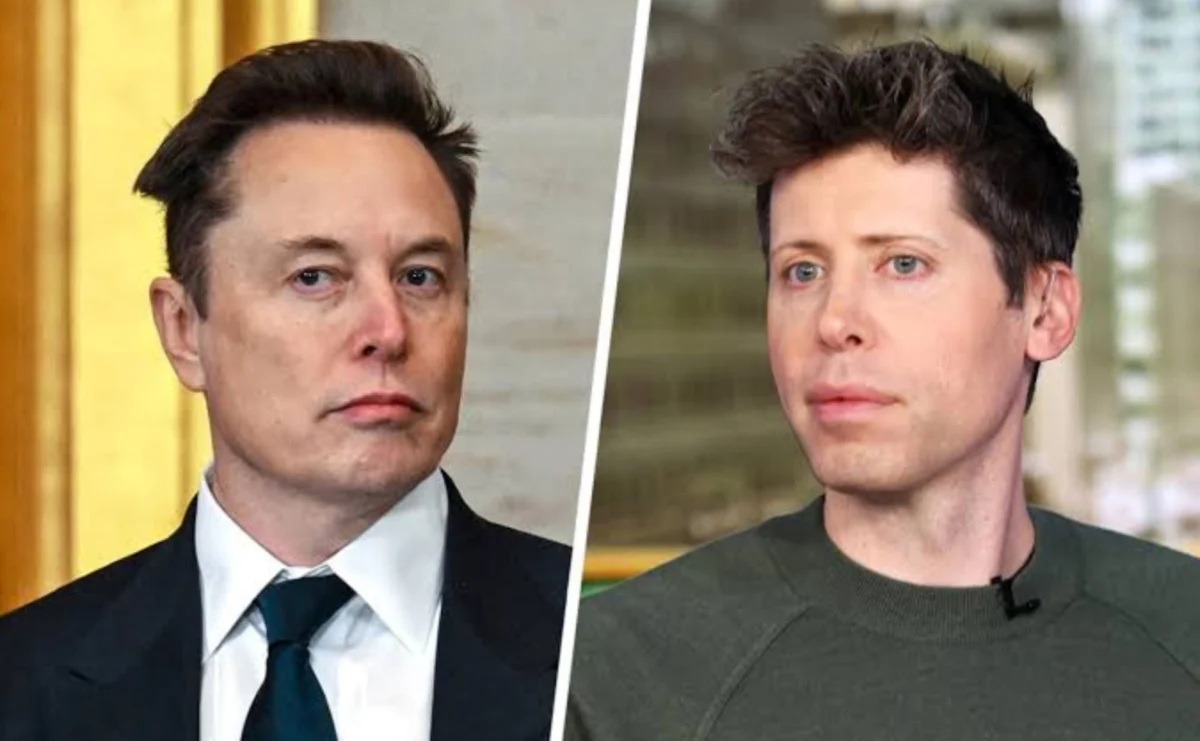
The long-standing and increasingly acrimonious rivalry between Elon Musk and Sam Altman has entered a volatile new chapter following OpenAI’s formal announcement that it will terminate its technology partnership with Cursor, an artificial intelligence startup recently acquired by SpaceX. The decision, which OpenAI attributed to concerns regarding the security of its proprietary technology and a history of contract violations by Musk-led entities, marks a significant decoupling of two of the most influential forces in the artificial intelligence sector. In response, SpaceX and Cursor leadership have downplayed the impact of the severance, revealing that OpenAI’s models account for only a small fraction of their platform’s total user traffic, while simultaneously strengthening ties with OpenAI’s primary competitor, Anthropic.
The friction reached a flashpoint on August 29, 2026, just weeks after SpaceX finalized a landmark $60 billion all-stock acquisition of Cursor. Cursor, an AI-powered code editor that has gained rapid traction among software engineers for its ability to predict and generate complex programming sequences, was widely seen as a strategic cornerstone for SpaceX’s internal software development and its broader ambitions in the AI space. However, OpenAI’s subsequent move to "wind down" its contract with the platform suggests that the integration of OpenAI’s GPT models into a Musk-owned enterprise was a bridge too far for Altman’s organization.
The Terms of Termination and OpenAI’s Security Rationale
In a detailed blog post titled "Our Decision on Cursor Following Its Acquisition by SpaceX," OpenAI outlined a two-year transition period, setting a final shutoff date for model access on November 12, 2026. The organization framed the move not as a competitive strike, but as a necessary measure to protect its intellectual property. OpenAI’s statement emphasized a lack of confidence in SpaceX’s willingness to adhere to established terms of service, explicitly citing "experience with Elon Musk’s companies violating contracts" as the primary driver for the decision.
Industry analysts suggest that OpenAI’s concerns likely stem from the potential for "model distillation" or the reverse-engineering of its proprietary weights and architectures. By having direct API access to OpenAI’s most advanced models within a platform owned by a direct competitor—Musk also oversees xAI, the developer of the Grok large language model—OpenAI may have feared that its technology could be used to train or refine rival systems. The termination serves as a defensive moat, ensuring that the proprietary "secret sauce" of the GPT series remains shielded from the SpaceX and xAI ecosystems.
SpaceX and Cursor Respond with Defiance
The reaction from the SpaceX camp was swift and characterized by a dismissive tone regarding OpenAI’s importance to the Cursor platform. Michael Truell, the co-founder and CEO of Cursor, addressed the development by providing data intended to minimize the perceived blow to his company’s operations. According to Truell, OpenAI models currently serve approximately 5% of Cursor’s total user traffic. This statistic suggests that Cursor has already successfully diversified its model backend, relying heavily on other providers or its own custom-tuned models.
"We’re sorry to see that OpenAI put out a note saying they plan to block Cursor users from accessing OpenAI models in three months," Truell stated, though he noted that discussions to resolve the impasse were technically ongoing. The discrepancy between OpenAI’s 2026 deadline and Truell’s mention of a "three-month" window remains a point of confusion for some observers, though it may imply a shorter timeline for specific high-tier features or a preemptive shift by Cursor to migrate users away from OpenAI infrastructure sooner than required.
Elon Musk, known for his unfiltered commentary on social media, was more blunt in his assessment of the situation. Responding to the news on his X platform, Musk referred to Sam Altman and OpenAI President Greg Brockman as "utterly untrustworthy," repeating his frequent allegation that the pair "stole" what was originally intended to be an open-source non-profit organization. This rhetoric underscores the deeply personal nature of the conflict, which has long since transcended simple market competition.
The Anthropic Factor: A Strategic Realignment
As the relationship between SpaceX and OpenAI dissolves, a new alliance appears to be hardening. Anthropic, the AI safety and research company founded by former OpenAI executives, has moved quickly to fill the vacuum. Tom Brown, Anthropic’s co-founder and Chief Compute Officer, publicly reaffirmed the company’s commitment to Cursor following the OpenAI announcement. Brown noted that Cursor has been a "trusted partner" since the release of the Claude 3.5 Sonnet model and announced that Anthropic would "continue to increase compute to support Claude models in Cursor."

This realignment is significant for several reasons. First, Anthropic’s Claude models are widely regarded by the developer community as being on par with, or in some coding tasks superior to, OpenAI’s GPT-4o. By leaning into the Anthropic ecosystem, Cursor ensures that its users retain access to top-tier AI capabilities without interruption. Second, the partnership provides Anthropic with a massive distribution channel through SpaceX’s global infrastructure, potentially including integration with the Starlink satellite network to provide low-latency AI services to remote regions.
A Timeline of Escalation: From Partners to Adversaries
The current dispute is the latest in a decade-long saga that began with a shared vision for safe artificial intelligence. To understand the gravity of the SpaceX-OpenAI split, one must look at the chronological degradation of the Musk-Altman relationship:
- 2015: Musk, Altman, Brockman, and others co-found OpenAI as a non-profit research lab with $1 billion in commitments. The goal is to develop AGI for the benefit of humanity, free from the profit motives of big tech.
- 2018: Musk, concerned that OpenAI is falling behind Google’s DeepMind, attempts to take control of the organization to run it himself. Altman and the board reject the proposal. Musk departs OpenAI, citing potential conflicts of interest with Tesla’s own AI development.
- 2019: OpenAI creates a "capped-profit" subsidiary to attract the massive capital required for compute power. Microsoft invests $1 billion, a partnership that would eventually grow to $13 billion.
- 2023: Musk launches xAI, positioning it as a direct competitor to OpenAI. He begins a public campaign criticizing OpenAI for becoming a "closed-source, maximum-profit company effectively controlled by Microsoft."
- Early 2024: Musk files a lawsuit against OpenAI, alleging breach of contract and breach of fiduciary duty regarding the company’s shift away from its non-profit roots. The lawsuit is later dismissed on technical grounds, with the court ruling Musk waited too long to file, though the legal battle continues to simmer in various jurisdictions.
- Mid-2024: Apple announces a partnership to integrate ChatGPT into iOS. Musk threatens to ban Apple devices from his companies’ premises, citing security risks.
- August 2026: SpaceX acquires Cursor for $60 billion. OpenAI terminates the Cursor partnership two weeks later.
Broader Implications for the AI Ecosystem
The fallout from this decision extends beyond the immediate participants, signaling a broader shift toward "walled gardens" in the AI industry. As the leading model providers—OpenAI, Google, and Anthropic—become more protective of their technology, the era of universal API access may be coming to an end. This trend poses a challenge for startups like Cursor that rely on third-party models to power their services.
For the developer community, the SpaceX-OpenAI split highlights the importance of model agnosticism. Cursor’s ability to remain "unfazed" by the loss of OpenAI models is a testament to the platform’s flexible architecture. However, if other major providers follow OpenAI’s lead and begin restricting access based on corporate ownership or competitive overlap, it could stifle innovation in the "wrapper" and "tooling" layers of the AI stack.
Furthermore, the $60 billion valuation of Cursor and its acquisition by SpaceX suggests that the next frontier of the AI war will be fought in the tools used to build software. By owning the IDE (Integrated Development Environment), SpaceX gains direct insight into how the world’s most advanced software is being written. This "meta-level" data is incredibly valuable for training the next generation of coding models, such as Musk’s Grok, potentially allowing SpaceX to bypass the need for OpenAI’s technology entirely within a few years.
Regulatory and Legal Outlook
The aggressive moves by OpenAI and the retaliatory rhetoric from Musk are likely to draw the attention of antitrust regulators. The Federal Trade Commission (FTC) and the Department of Justice (DOJ) have already signaled their intent to scrutinize the AI sector for anti-competitive behavior. OpenAI’s decision to cut off a competitor’s access to its infrastructure could be interpreted as an "essential facilities" issue, particularly if OpenAI’s models are deemed necessary for a business to remain viable in the market.
Conversely, SpaceX’s acquisition of a major AI startup for $60 billion—a figure that rivals the price Musk paid for Twitter (now X)—will likely face its own set of regulatory hurdles. The consolidation of AI talent and technology under the umbrella of a company that also controls critical satellite infrastructure and defense contracts raises complex questions about market dominance and national security.
As of late August 2026, the situation remains fluid. While the immediate operational impact on Cursor users appears minimal, the symbolic weight of the termination is immense. It represents the final collapse of any remaining professional courtesy between Musk and Altman, setting the stage for a protracted period of corporate warfare where the primary casualties may be the principles of openness and collaboration that originally brought the two men together. With Anthropic firmly in the SpaceX camp and OpenAI deepening its ties with Microsoft and Apple, the AI landscape is now clearly divided into warring factions, with the future of the technology hanging in the balance.