admin
admin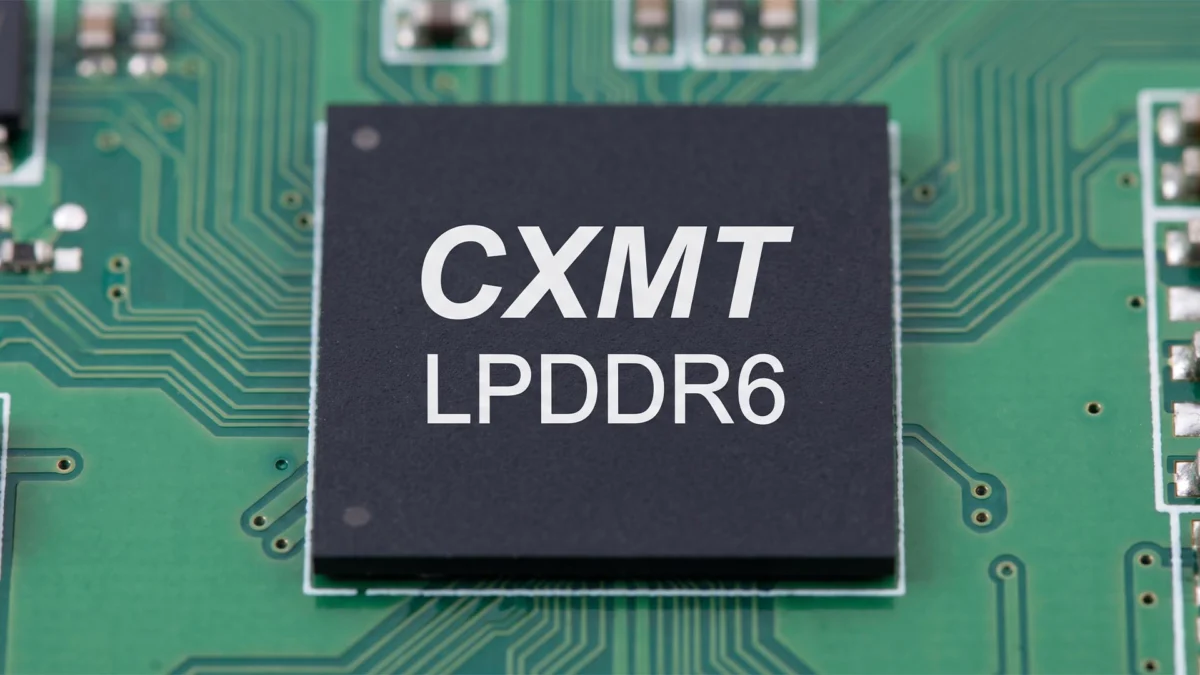
The global semiconductor landscape is witnessing a significant shift as Xiaomi and ChangXin Memory Technologies (CXMT) prepare to introduce the world’s first smartphone ecosystem powered by next-generation LPDDR6 RAM. According to recent industry reports and supply chain disclosures, Xiaomi’s upcoming in-house chipset, the XRING 03, is slated to be the first mobile processor to feature native support for the LPDDR6 standard. This development is bolstered by a strategic partnership with CXMT, China’s leading DRAM manufacturer, which is reportedly set to begin mass production of these advanced memory modules as early as next month. While this milestone positions CXMT ahead of industry titans such as Samsung Electronics, SK hynix, and Micron in terms of market timing, the partnership faces substantial hurdles regarding production volume and yield stability due to ongoing international trade restrictions.
The Technical Evolution: From LPDDR5X to LPDDR6
The transition to LPDDR6 (Low Power Double Data Rate 6) represents a critical juncture for the mobile industry, particularly as the demand for on-device generative artificial intelligence (AI) continues to surge. While the current LPDDR5X standard offers impressive data transfer speeds—peaking at approximately 8.5 Gbps to 9.6 Gbps—the upcoming LPDDR6 standard is expected to push these boundaries significantly. Preliminary specifications suggest that LPDDR6 could offer bandwidth exceeding 12.8 Gbps, providing the necessary throughput for complex Large Language Models (LLMs) to run locally on handheld devices without relying on cloud-based processing.
For Xiaomi, integrating LPDDR6 support into the XRING 03 chipset is more than a technical achievement; it is a strategic maneuver to differentiate its flagship offerings. The XRING 03 is reportedly manufactured using TSMC’s advanced 3nm "N3P" process node. By pairing a cutting-edge 3nm SoC with next-generation memory, Xiaomi aims to achieve a level of power efficiency and computational density that could rival or surpass the upcoming iterations of Apple’s A-series and Qualcomm’s Snapdragon chips.
Strategic Alliance: Xiaomi and CXMT
The collaboration between Xiaomi and CXMT underscores a broader trend of vertical integration within the Chinese technology sector. CXMT has been aggressively expanding its research and development capabilities to achieve self-sufficiency in the memory market, a goal that has become increasingly urgent in the face of U.S. export controls. By securing an early design win with Xiaomi, CXMT gains a high-profile platform to demonstrate its technological parity with Western and South Korean rivals.
However, the partnership appears to be characterized by a "low-volume, high-prestige" approach. Internal teasers and industry analysis indicate that the initial rollout of LPDDR6 will be exclusively reserved for the Xiaomi 18 Fold. This device, Xiaomi’s next-generation wide-folding flagship, is positioned as a direct competitor to the Samsung Galaxy Z Fold8 and the long-rumored "iPhone Fold." Given the premium pricing and niche appeal of foldable smartphones, the projected shipment volume for the Xiaomi 18 Fold is remarkably conservative. Market analysts from The Next Web suggest that shipments for the XRING 03-equipped foldable may not even reach the 500,000-unit mark, with some estimates placing the figure as low as 300,000 units.
Manufacturing Bottlenecks and Geopolitical Constraints
The decision to limit LPDDR6 to a low-volume device like the Xiaomi 18 Fold is likely a calculated response to manufacturing realities. CXMT’s path to LPDDR6 mass production is fraught with technical challenges stemming from its inability to acquire the latest Extreme Ultraviolet (EUV) lithography machines. Under current U.S. trade policies, Chinese firms are restricted from purchasing EUV equipment, which is essential for the efficient, high-yield production of sub-10nm class DRAM.

To circumvent these restrictions, CXMT must rely on legacy Deep Ultraviolet (DUV) machinery. While DUV can be used to produce advanced chips through a process known as multi-patterning, this method is significantly more complex, time-consuming, and expensive. Multi-patterning requires several passes through the lithography stage to define the tiny features of a memory chip, which inherently lowers the overall yield—the percentage of functional chips on a wafer—and increases the cost per unit.
Industry experts suggest that while CXMT can produce LPDDR6 chips, it cannot yet do so with the scale or cost-efficiency required for mass-market devices like the standard Xiaomi 15 or 16 series. Consequently, the Xiaomi 18 Fold serves as a "halo product"—a device meant to showcase technological prowess rather than drive massive sales volume. This allows CXMT to refine its production processes without the pressure of meeting tens of millions of orders.
Chronology of Development and Market Expectations
The journey toward LPDDR6 has been a multi-year endeavor involving global standards bodies and individual manufacturers. A brief timeline of the events leading to this milestone includes:
- Late 2023: The JEDEC Solid State Technology Association begins formalizing the initial specifications for the LPDDR6 standard, focusing on increased bandwidth and reduced power consumption for AI applications.
- Early 2024: Rumors emerge regarding Xiaomi’s internal "XRING" project, suggesting the company is developing a high-performance SoC to reduce its dependence on external vendors.
- Mid-2024: CXMT announces breakthroughs in its DRAM manufacturing process, hinting at a "next-generation" memory product slated for late 2024 or early 2025.
- Late 2024: Leaked teaser images from the Chinese social media platform Weibo link the Xiaomi 18 Fold to the XRING 03 and LPDDR6 memory.
- Next Month (Projected): CXMT is expected to commence the "risk production" phase of LPDDR6, transitioning into limited mass production shortly thereafter.
- 2025-2026: Anticipated launch of the Xiaomi 18 Fold and the broader market entry of LPDDR6 solutions from Samsung and SK hynix.
Competitive Landscape: The Global Response
While CXMT may claim the title of "first to mass produce," the established leaders of the DRAM market—Samsung, SK hynix, and Micron—are not far behind. Samsung has already demonstrated its LPDDR5X-10.7Gbps modules and is expected to transition to LPDDR6 in late 2025 to coincide with the launch of the next generation of mobile platforms.
The advantage held by the "Big Three" lies in their access to EUV technology and their massive economies of scale. Once Samsung and SK hynix begin their LPDDR6 cycles, they are expected to quickly overwhelm CXMT in terms of volume and price competitiveness. For global OEMs (Original Equipment Manufacturers) like Apple or Google, the stability and volume offered by the established leaders remain the primary draw. However, CXMT’s early move is a significant psychological and political victory for China’s domestic semiconductor industry, proving that innovation can persist even under severe external pressure.
Implications for the Mobile Industry
The introduction of LPDDR6 via the Xiaomi XRING 03 has several long-term implications for the smartphone industry:
- The Rise of On-Device AI: With the bandwidth provided by LPDDR6, smartphones will be able to handle more sophisticated AI tasks, such as real-time video editing, complex language translation, and autonomous agent features, without the latency associated with cloud computing.
- Battery Life Optimization: LPDDR6 is designed not just for speed but for efficiency. By moving data more quickly and operating at lower voltages, the new standard will help offset the high power draw of 3nm processors and high-refresh-rate foldable displays.
- The Sovereignty of Silicon: Xiaomi’s push into custom silicon (XRING 03) paired with domestic memory (CXMT) signals a move toward a "China-first" supply chain. This reduces vulnerability to global trade fluctuations and allows for tighter hardware-software integration, similar to Apple’s vertically integrated model.
- Foldable Market Differentiation: By equipping the Xiaomi 18 Fold with exclusive hardware like LPDDR6, Xiaomi is attempting to move the foldable conversation away from just "hinge design" and toward "computational supremacy."
Conclusion
The impending mass production of LPDDR6 by CXMT and its debut in the Xiaomi XRING 03-powered Xiaomi 18 Fold marks a pivotal moment in the semiconductor race. It highlights the rapid maturation of the Chinese memory industry and the ambitious hardware goals of Xiaomi. However, the shadow of low production yields and the limitations of DUV lithography suggest that the path to global dominance remains uphill. While Xiaomi and CXMT may win the race to be first, the ultimate success of LPDDR6 will be determined by who can provide the technology at the scale required for the billions of smartphones sold worldwide. For now, the Xiaomi 18 Fold stands as a high-tech vanguard, signaling a future where the boundaries of mobile performance are once again being pushed by new and determined players.