Vera Intan Clara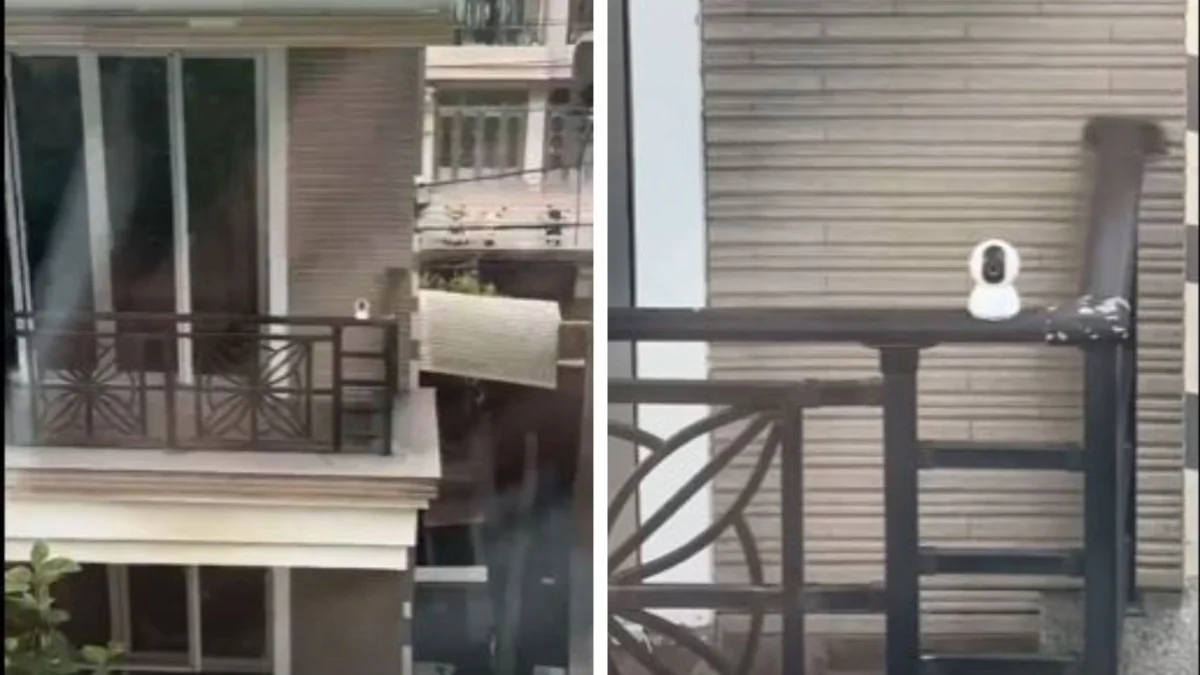
A recent post on the popular social media platform Reddit, shared to the r/mildlyinfuriating subreddit, has ignited a widespread discussion about personal privacy, neighborhood surveillance, and the escalating tensions that can arise from modern security technology. The post featured compelling footage depicting a camera prominently mounted on a neighbor’s railing, undeniably angled directly towards the original poster’s (OP) bedroom window situated across the way. This incident, while seemingly localized, quickly became a focal point for thousands of online users, drawing attention to the complex interplay between property rights, individual privacy, and the evolving legal landscape surrounding residential surveillance.
The Genesis of a Digital Dispute: A Private Gaze in a Public Forum
The core of the dispute originated from a visual discovery made by a Reddit user who observed their neighbor’s security camera pointed with disconcerting precision at their private bedroom space. While the user did not specify the duration the camera had been in place before its discovery, the immediate reaction and subsequent decision to post on r/mildlyinfuriating underscore a profound sense of violation and unease. The subreddit, known for cataloging minor annoyances that nonetheless evoke strong emotional responses, proved to be an ideal platform for this particular grievance, attracting a torrent of reactions ranging from practical advice to elaborate, sometimes humorous, suggestions for retaliation.
This event is not an isolated incident but rather a microcosm of a growing societal challenge. The proliferation of affordable, high-definition security cameras, often equipped with advanced features like pan-tilt-zoom (PTZ) and night vision, has empowered homeowners to monitor their properties with unprecedented ease. However, this accessibility has simultaneously blurred the lines of what constitutes acceptable surveillance, especially when cameras extend their gaze beyond property lines and into the ostensibly private spaces of neighbors. The Reddit post serves as a stark reminder of how easily technology intended for security can be perceived as an instrument of intrusion, igniting disputes that are often difficult to resolve without clear legal precedent or amicable communication.
A Digital Chronology of Escalation and Discussion
The timeline of this online saga, though confined to the digital realm, reflects a rapid progression from initial observation to widespread debate:
- Discovery (Undated): The original poster identifies the camera pointed at their bedroom window. The exact date of this discovery is not provided, nor is the duration the camera had been installed prior to notice.
- Initial Reaction (Inferred): A feeling of discomfort and privacy violation prompts the OP to seek advice or commiseration.
- Reddit Post (Recent): The OP shares footage or a description of the camera’s angle on r/mildlyinfuriating, seeking community input. This act immediately thrusts a private concern into a public forum.
- Viral Engagement (Immediate After Post): Within hours, the post garners significant attention, with thousands of upvotes and hundreds, if not thousands, of comments. This rapid engagement highlights the universality of the privacy concern and the relatability of neighborly disputes.
- Community Brainstorming (Ongoing): Commenters begin to offer a diverse range of solutions, from legally sound advice to humorous and aggressive counter-strategies. This phase showcases the collective problem-solving capacity of online communities, albeit with varying degrees of practicality and legality.
- Legal Speculation and Anecdotal Evidence (Concurrent): The discussion naturally shifts towards the legal implications, with users citing personal experiences or general knowledge of privacy laws, further emphasizing the ambiguity of the situation.
- Broader Implications (Emerging): The post transcends its initial context, becoming a case study for discussions on digital ethics, neighborhood conflict resolution, and the societal impact of pervasive surveillance technology.
The Spectrum of Online Reactions: From Practicality to Pyrotechnics
The responses from the Reddit community were a testament to the varied approaches individuals might consider when faced with perceived surveillance. These suggestions can broadly be categorized into practical deterrence, satirical escalation, and technologically aggressive counter-measures.
-
Practical and Psychological Deterrence:
One prevalent suggestion focused on a non-damaging, yet psychologically impactful, form of deterrence. A user proposed acquiring "a life-sized cutout and put it in the window to stare back," adding that "moving it around periodically would add to the effect." This recommendation taps into the psychological aspect of surveillance, turning the tables on the observer by making them the observed. The intent is not to damage property but to create an unsettling, perhaps even humorous, counter-observation that might make the neighbor reconsider their camera’s placement. Similar to this, another user suggested a less confrontational but equally effective strategy: "point a floodlight at their camera." This method, they argued, "won’t damage their property but will render it useless since due to the amount of light they can’t see what’s behind it." Furthermore, the commenter noted that the floodlight might also impact the neighbor’s sleep, potentially prompting them to complain about the light and indirectly revealing their discomfort with reciprocal actions. This approach leverages existing technology to create a non-destructive functional interference, highlighting a clever way to assert privacy without escalating to property damage. -
Satirical and Humorous Escalation:
A more whimsical, yet equally illustrative, response leaned into the realm of the absurd. One commenter proposed an elaborate and highly impractical solution: "it’s time to get a pet hawk and train it to snip cameras." While clearly a jest, this comment underscores the deep frustration and desire for a decisive, almost poetic, form of justice that users feel when their privacy is violated. The humor acts as a coping mechanism, channeling anger into creative, albeit fantastical, revenge scenarios. Such suggestions, while not actionable, reveal a common sentiment among those who feel powerless against perceived intrusions. -
Technologically Aggressive Counter-Measures and Their Legal Quagmire:
The discussion took a more serious, and potentially legally precarious, turn with suggestions involving advanced technology. One reply escalated the idea of counter-surveillance significantly, describing a "Class 4 laser" capable of "overheating a camera’s internal sensor if aimed directly into the lens for an extended period." The commenter justified this by arguing that if the neighbor possesses a "harmless electronic device in his own home," the original poster should be entitled to one as well. This suggestion introduces a critical ethical and legal dilemma. While the laser itself might be a "harmless electronic device," its deliberate use to disable another person’s property, regardless of its invasive nature, could constitute property damage or even a form of assault depending on local laws and intent. Class 4 lasers are high-powered devices often used in industrial or scientific applications, capable of causing severe eye damage and skin burns, and their recreational use against another’s property raises significant safety and legal concerns.This technological escalation prompted a fascinating hypothetical scenario from another user, imagining how the situation might unfold if police were called after such an action. The script, presented as a dialogue, painted a vivid picture:
"Hello Police. My neighbor is breaking my cameras with a green laser. ‘How do you know?’. Well the video camera zoomed onto his bedroom window showed him pointing it at it. ‘Uh, okay?’. Because of the angle too, I can see his upper chest and up, so I see it in his hands. …. end scene."
This fictional exchange brilliantly exposes the irony and potential self-incrimination inherent in the neighbor’s position. To report the laser attack, the neighbor would inadvertently have to admit to illegally surveilling the OP’s bedroom, thereby providing evidence against themselves. This hypothetical interaction underscores the legal complexities and potential for unintended consequences when one party engages in questionable surveillance practices. It highlights the importance of clear legal boundaries and the potential for a "clean hands" doctrine in legal disputes.
The Murky Waters of Privacy Law: A State-by-State Conundrum
The legality of a neighbor’s camera pointed at someone’s bedroom window is far from straightforward and depends heavily on the applicable state and even local laws. As highlighted by Nolo, a reputable legal information website, cameras aimed at publicly visible areas are generally permitted. This means if a camera captures what anyone walking down the street could see—a front yard, a driveway, or a house from a public vantage point—it is typically within legal bounds. The rationale here is that there is no "reasonable expectation of privacy" in areas visible to the public.
However, the situation changes dramatically when a camera is aimed directly at a private space, such as a bedroom window. This introduces the concept of "intrusion upon seclusion," a key component of privacy law. For an intrusion upon seclusion claim to be valid, several elements generally need to be met:
- Intentional Intrusion: The defendant (the neighbor) must have intentionally intruded, physically or otherwise, upon the solitude or seclusion of the plaintiff (the original poster) or their private affairs or concerns.
- Private Place: The intrusion must have occurred in a place where there is a reasonable expectation of privacy. A bedroom, especially one not readily visible from public spaces, almost universally qualifies.
- Highly Offensive to a Reasonable Person: The intrusion must be considered highly offensive to a reasonable person. A camera pointed directly into a bedroom window, capable of capturing intimate details of one’s private life, would likely meet this criterion for most individuals.
The variability across states is significant. Some states have specific statutes that criminalize invasion of privacy, particularly when it involves surreptitious surveillance of private activities. In such jurisdictions, an individual in the OP’s situation might be able to involve law enforcement directly, potentially leading to criminal charges against the neighbor. This offers a more immediate and forceful recourse than pursuing a civil claim, which typically involves seeking monetary damages or an injunction (a court order to stop the behavior) and can be a lengthy, expensive process.
In states without explicit criminal statutes for this specific type of surveillance, the recourse might be limited to civil action. This would require the original poster to file a lawsuit, demonstrating damages (e.g., emotional distress, cost of installing privacy measures) and proving the elements of invasion of privacy. The burden of proof in civil cases is generally lower than in criminal cases ("preponderance of the evidence" vs. "beyond a reasonable doubt"), but the process remains challenging.
Complicating matters further are several factors:
- Camera Capabilities: Does the camera merely record, or does it have advanced zoom, pan-tilt, or night vision capabilities that enhance its invasive potential?
- Context of Placement: Is the camera truly for security (e.g., covering a gate, a specific entry point) and merely incidentally catches the window, or is its primary angle unmistakably directed at the private space? The intent of the neighbor, though often difficult to prove, can play a role in legal determinations.
- Visibility from Public Areas: If the bedroom window is clearly and entirely visible from a public street or park, the expectation of privacy diminishes. However, if the camera offers a uniquely invasive view that is not otherwise publicly accessible, the privacy claim strengthens.
Broader Impact and Societal Implications
The Reddit incident underscores a burgeoning societal tension fueled by the omnipresence of surveillance technology. The widespread adoption of smart home devices, including security cameras, has inadvertently ushered in an era where the boundaries of privacy are constantly being tested and redefined.
- Erosion of Privacy: The primary implication is the gradual erosion of personal privacy. When individuals cannot feel secure in their own homes, particularly in private spaces like bedrooms, the fundamental right to be left alone is compromised. This constant awareness of potential observation can lead to psychological stress, anxiety, and a chilling effect on personal freedom within one’s own dwelling.
- Escalation of Neighborhood Disputes: What might start as a minor annoyance can quickly escalate into full-blown neighborhood feuds, as evidenced by the aggressive suggestions on Reddit. These disputes can strain community relations, lead to legal battles, and decrease property values due to ongoing tension. The lack of clear legal guidelines often exacerbates these conflicts, leaving individuals to grapple with ambiguous situations.
- The "Panopticon" Effect in Residential Areas: The concept of the "panopticon," where individuals modify their behavior due to the possibility of being watched, is increasingly relevant in residential settings. Even without concrete evidence of constant monitoring, the mere presence of a camera pointed at a private space can induce a sense of self-censorship and discomfort, altering how individuals behave in their own homes.
- Challenges for Legislators: The rapid pace of technological innovation in surveillance far outstrips the speed at which laws can be drafted and enacted. Legislators face the formidable task of creating comprehensive privacy laws that balance property owners’ rights to security with individuals’ rights to privacy, all while accounting for ever-evolving camera capabilities.
- The Need for Communication and Mediation: This scenario highlights the critical importance of initial, calm communication between neighbors. Often, misunderstandings or lack of awareness about a camera’s angle can be resolved amicably. When direct communication fails, third-party mediation can be an effective, less confrontational alternative to legal action, aiming to find mutually agreeable solutions.
Recommendations for Individuals Facing Similar Situations
For individuals finding themselves in a situation akin to the original poster’s, a structured approach is generally recommended:
- Document Everything: Take clear photographs or videos of the camera’s placement and angle, noting any dates and times. Keep records of any communication attempts with the neighbor.
- Understand Local Laws: Research state and local laws regarding privacy, surveillance, and nuisance. Websites like Nolo or local government resources can provide general information, but specific legal advice is crucial.
- Attempt Amicable Resolution: Politely approach the neighbor to discuss your concerns. They might be unaware of the camera’s invasive angle or be willing to adjust it. A non-confrontational approach is often the most effective first step.
- Consider Mediation: If direct communication fails, consider engaging a neutral third-party mediator to help facilitate a resolution.
- Consult Legal Counsel: Before taking any action that could be construed as property damage (like using a laser or strong floodlight) or before filing a formal complaint, consult with a qualified attorney specializing in property law or privacy rights. An attorney can provide accurate advice based on specific jurisdictional laws and help navigate potential legal pitfalls.
- Explore Non-Damaging Deterrents: If legal action is not immediately feasible or desired, consider non-damaging deterrents like privacy screens, blinds, or even strategically placed outdoor lighting, while being mindful not to create a nuisance for other neighbors.
The Daily Dot, which originally reported on the Reddit post, appropriately noted that it could not independently verify the user’s location, the specific state law that would apply, or the outcome of the described situation. Legal information cited from Nolo reflects general principles and may not apply in all jurisdictions. Given the nuanced and state-specific nature of privacy laws, readers facing similar dilemmas are strongly advised to consult a qualified attorney regarding their specific circumstances to ensure compliance with local regulations and protect their rights effectively. This incident serves as a powerful reminder that while technology offers convenience and security, it also demands a heightened awareness of its impact on our shared spaces and fundamental rights.