Sisilia Frederika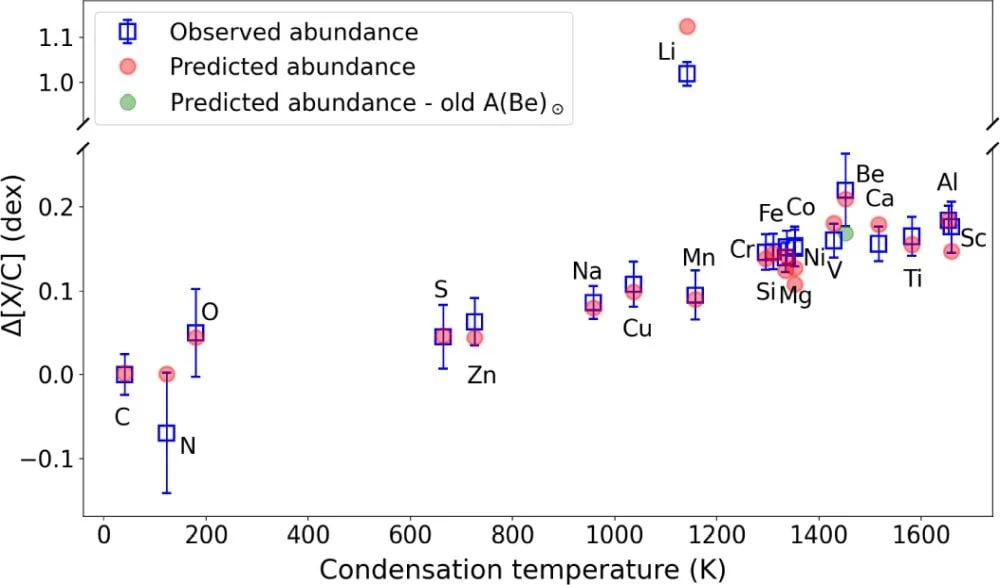
An international team of astrophysicists has identified a definitive method for determining whether a star has consumed its own orbiting planets, a discovery that carries profound implications for our understanding of planetary system stability and the rarity of the Solar System. By analyzing the rare element Beryllium in a specific pair of binary stars located 180 light-years from Earth, researchers have provided the first clear "smoking gun" evidence of a star engulfing approximately 11.2 Earth masses of rocky material. The study, led by Anne Rathsam, a doctoral researcher at the Institute of Astronomy, Geophysics, and Atmospheric Sciences at the University of São Paulo, Brazil, was published in the journal Astronomy and Astrophysics.
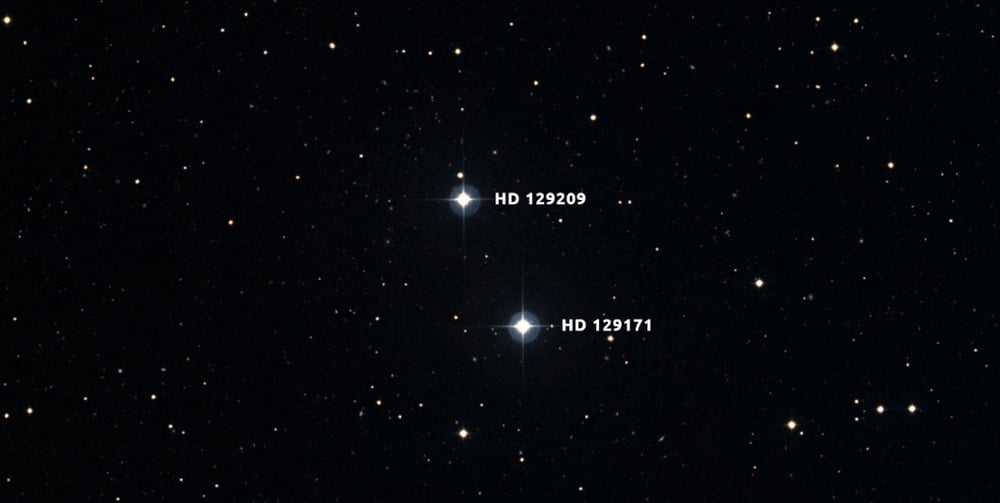
The findings focus on the binary system HD 129171 and HD 129209. In the realm of stellar evolution, binary stars are typically viewed as "chemical twins" because they emerge from the same parental cloud of molecular gas. Under standard models of star formation, these siblings should possess identical chemical signatures. However, observations have frequently revealed "anomalous" pairs where one star displays a significantly higher concentration of heavy elements than its companion. This discrepancy has long sparked a debate in the astronomical community: are these differences the result of minor variations within the original birth cloud, or are they the forensic evidence of a "planetary meal" consumed long after the stars reached maturity?
The Beryllium Breakthrough: A New Forensic Tool
To solve this cosmic mystery, the research team turned to Beryllium (Be), a light, rare element that is notoriously difficult to track in stellar atmospheres. Unlike heavier elements produced through stellar nucleosynthesis—the process by which stars fuse atoms in their cores—Beryllium is not created inside stars. In fact, stellar interiors are generally hostile to Beryllium; the element is easily destroyed at the high temperatures found in a star’s deep layers.
Most of the Beryllium in the universe originated either during the Big Bang in trace amounts or through a process known as cosmic ray spallation, where high-energy particles strike heavier nuclei in the interstellar medium, breaking them apart. On Earth, Beryllium is exceptionally rare, accounting for only 0.0004% of the crust. In the atmosphere of a star like our Sun, it is even more scarce.
"Lithium had already been used as a possible indicator of planetary engulfment, but it’s destroyed relatively easily," explained lead author Anne Rathsam. While Lithium-7 is often studied, it is rapidly depleted during the main sequence phase of a Sun-like star’s life. Its lighter isotope, Lithium-6, is even more fragile, often vanishing during the pre-main sequence phase. Beryllium, however, is more robust. It can survive in the cooler, outer layers—the photosphere—of a Sun-like star for much longer than Lithium, making its presence a more reliable diagnostic tool for identifying the late-stage ingestion of rocky material.
Analyzing the HD 129171/HD 129209 Binary Pair
The research focused on HD 129171 and HD 129209, two stars that are remarkably similar to our Sun in terms of mass, temperature, and magnetic activity. Despite these fundamental similarities, their chemical compositions are starkly different. Initial observations suggested that HD 129171 was "polluted" with an excess of refractory elements—substances with high melting points that are the primary building blocks of rocky planets, such as iron, magnesium, silicon, calcium, and titanium.
To confirm the origin of this pollution, the team utilized the Very Large Telescope (VLT) operated by the European Southern Observatory (ESO) in Chile. Specifically, they employed the Ultraviolet and Visual Echelle Spectrograph (UVES), a high-resolution instrument capable of breaking down stellar light into a detailed spectrum. This allowed the researchers to measure the "precise differential abundances" between the two stars with unprecedented accuracy.
The spectral data revealed that HD 129171 was not only enriched in common refractory elements but also possessed a significantly higher concentration of Beryllium compared to its twin, HD 129209. Because Beryllium is a major component of rocky planetary material but is not produced by the star itself, its overabundance provided the definitive evidence the team needed.
Quantifying the "Planetary Meal"
By applying complex chemical models to the spectral data, the researchers were able to quantify the amount of material HD 129171 had absorbed. The results indicated that the star had engulfed roughly 11.2 Earth masses of rocky material.
The study notes that it is impossible to determine whether this material came from a single "Super-Earth" or a series of smaller, terrestrial-sized planets. "That material may have come from a single large planet or from several smaller bodies," Rathsam noted. "However, in the case of Sun-like stars, internal mixing is so efficient that the final chemical signature doesn’t allow us to distinguish between those scenarios."
The timing of this engulfment is also a subject of intense study. While stars can consume planets early in their lives during the chaotic period of disk formation, the presence of Beryllium in the photosphere suggests that this event may have occurred after the star had already stabilized, or that the sheer volume of material was enough to leave a lasting mark on the star’s outer layers that internal convection had not yet erased.
The Rarity of the Solar System
The discovery does more than just solve a chemical puzzle; it offers a sobering perspective on the stability of planetary systems across the galaxy. Our own Solar System is characterized by "dynamic quietude." The massive gas giants, like Jupiter and Saturn, maintain nearly circular orbits in the outer reaches, while the smaller rocky planets, including Earth, reside in stable orbits within the inner system. This configuration has remained largely unchanged for billions of years, providing the long-term stability required for life to emerge and evolve.
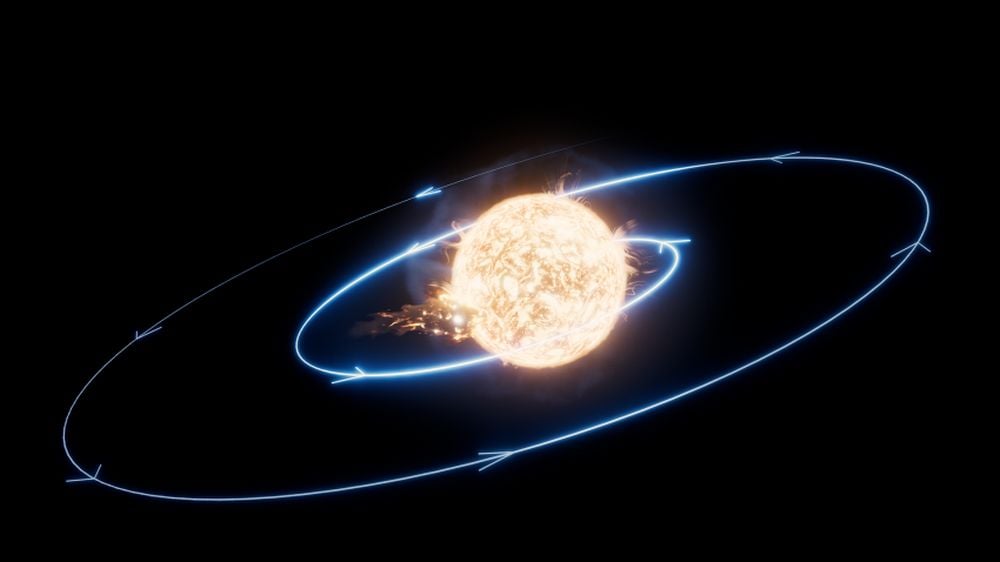
However, the findings from the HD 129171/HD 129209 system suggest that such stability may be the exception rather than the rule. If planet engulfment is a common occurrence among Sun-like stars, it implies that many planetary systems undergo "violent dynamic phases." These phases occur when gravitational perturbations—perhaps caused by the migration of giant planets or the influence of a binary companion—fling inner rocky planets toward their host star.
"In our planetary system, the planets have relatively stable, low-eccentricity orbits," Rathsam said. "However, if planetary engulfment is common, it suggests that many systems undergo violent dynamic phases. Life wouldn’t just need billions of years to emerge and evolve. The planet would also have to remain in a sufficiently stable orbit to survive significant gravitational perturbations."
Broader Implications for Habitability and Astronomy
Co-author Jorge Luis Melendez Moreno emphasized that this research aligns with other recent trends in exoplanetary science. While thousands of exoplanets have been discovered, very few systems mirror the architecture of our own. Many systems feature "Hot Jupiters"—gas giants that have migrated inward, likely destroying or consuming any rocky planets in their path.
"When we bring together evidence from dynamical simulations, exoplanet observations, and chemical studies of binary stars, a consistent picture emerges, indicating that systems similar to the Solar System may be less common than we imagined," Moreno explained.
This research marks a significant step forward in the field of "chemical tagging," where astronomers use the chemical "fingerprints" of stars to reconstruct their history and the history of the galaxies they inhabit. If Beryllium can be used to identify which stars have destroyed their inner planets, astronomers can begin to filter through star catalogs to find the "quiet" stars—those most likely to host stable, Earth-like worlds.
The study also challenges the assumption that chemical differences in binary stars are always "born with" the stars. By proving that external pollution from planets is a viable and measurable cause of chemical anomalies, the research forces a re-evaluation of how we interpret stellar data.
Conclusion and Future Research
The identification of Beryllium as a diagnostic tool for planet engulfment opens a new chapter in stellar archaeology. Moving forward, the team hopes to apply this technique to a larger sample of binary stars to determine the statistical frequency of engulfment events. If a high percentage of Sun-like stars show Beryllium enrichment, it would further suggest that the "violent" model of planetary system evolution is the standard, making the peaceful history of Earth’s neighborhood all the more remarkable.
For now, HD 129171 stands as a cautionary tale of the cosmos—a star that carries the chemical remains of the worlds it destroyed, providing Earth-bound observers with a rare glimpse into the chaotic life cycles of planetary systems. The work of Rathsam and her colleagues ensures that while those planets are gone, their chemical legacy remains as a vital data point in our quest to understand our place in the universe.