Sisilia Frederika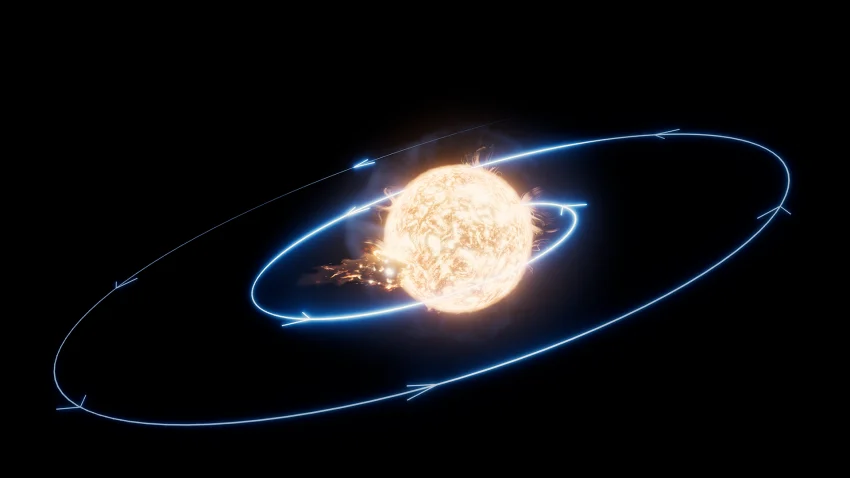
Recent astrophysical research into the chemical composition and internal structure of the Sun has provided compelling evidence for a dramatic event in the early history of our solar system: the ingestion of a large, rocky planet by our host star. This hypothesis, detailed in a new study led by Professor Mutlu Yildiz of Ege University, seeks to resolve two long-standing discrepancies that have puzzled solar physicists for decades. By simulating the Sun’s evolution with the inclusion of an engulfed "super-Earth," researchers have found a potential explanation for the Sun’s unexpectedly low lithium levels and the peculiar behavior of sound waves traveling through its interior.
For centuries, the Sun was viewed as a standard laboratory for understanding stellar evolution. However, as observational technology has improved—particularly through the advent of helioseismology—scientists have realized that the Sun deviates from the "Standard Solar Model" (SSM) in several key ways. The SSM is a mathematical framework used to predict the temperature, density, and chemical makeup of a star based on its mass and age. While the model works for many stars, it fails to perfectly align with the measured characteristics of our own Sun, suggesting that a significant, disruptive event occurred during its formative stages.
The Mystery of the Missing Lithium
One of the most prominent contradictions in solar physics is the "Lithium Problem." Lithium is a light element that is relatively fragile; it is easily destroyed by nuclear reactions at temperatures exceeding approximately 2.5 million Kelvin. According to theories regarding the proto-solar nebula—the cloud of gas and dust from which the Sun and planets formed—the Sun should have inherited a specific amount of lithium. However, spectroscopic analysis of the Sun’s photosphere, or its outer surface, reveals that it contains nearly 100 times less lithium than predicted.
Historically, astronomers attempted to explain this depletion through internal mixing processes. They theorized that convection—the movement of hot plasma rising and cooler plasma sinking—might carry surface lithium down into the hotter, deeper layers of the Sun where it would be incinerated. Yet, the Standard Solar Model suggests that the Sun’s convection zone does not reach deep enough to facilitate such extensive destruction. This "lithium-poor" characteristic has remained a hallmark of the Sun that few models could adequately replicate without making extreme assumptions about stellar physics.
Helioseismology and the Sound Speed Anomaly
The second major discrepancy involves the speed of sound within the Sun’s interior. Just as geologists use seismic waves from earthquakes to map the Earth’s internal layers, astronomers use helioseismology to study the Sun. Pressure waves, generated by the turbulent movement of plasma in the outer layers, resonate throughout the Sun. By measuring these oscillations on the solar surface, scientists can calculate the speed of sound at various depths.
The data gathered over the last few decades has revealed a persistent mismatch between observed sound speeds and those predicted by the SSM, particularly at the base of the convection zone. This region, known as the tachocline, is the transition layer between the Sun’s radiative interior and its outer convective shell. The measured sound speed in this region is slightly but significantly different from what theoretical models dictate. This suggests that the chemical composition or the physical density of the tachocline was altered by an external factor early in the Sun’s life.
A Planetary Meal: The Super-Earth Hypothesis
In his paper published in the Monthly Notices of the Royal Astronomical Society, Professor Mutlu Yildiz proposes that both the lithium depletion and the sound speed anomaly can be explained by the Sun "swallowing" a large planet. To test this theory, Yildiz and his team utilized advanced numerical modeling to simulate the Sun’s evolution over 4.6 billion years, introducing various "planetary ingestion" scenarios during the Sun’s first few million years.
The models explored planets of varying masses and compositions. The scenario that most closely matched the Sun’s current observed state involved the ingestion of a super-Earth—a planet significantly larger than Earth but smaller than Neptune. Specifically, a rocky planet with a mass approximately 5.6 times that of Earth provided the best fit for the data.
"By modelling the Sun’s evolution and comparing the results with precise observations of its interior, we find that the ingestion of a super-Earth could help explain long-standing differences between standard solar models and observations," Yildiz stated in a communication with the Royal Astronomical Society. He noted that such an event would cause "subtle changes in the Sun’s internal structure," effectively stirring the solar interior and altering its chemical profile in a way that matches modern measurements.
Chronology of a Solar System Catastrophe
To understand how such an event could occur, it is necessary to look back at the timeline of the early solar system. Approximately 4.56 billion years ago, the Sun formed from the gravitational collapse of a molecular cloud. Surrounding the young "proto-Sun" was a disk of gas and dust known as the protoplanetary disk.
Within the first 10 to 50 million years of the solar system’s existence, planets began to coalesce within this disk. This was a period of extreme instability. Current theories of planetary migration suggest that large planets do not always stay where they are born. Gravitational interactions with the surrounding gas disk can cause planets to spiral inward toward their host star.
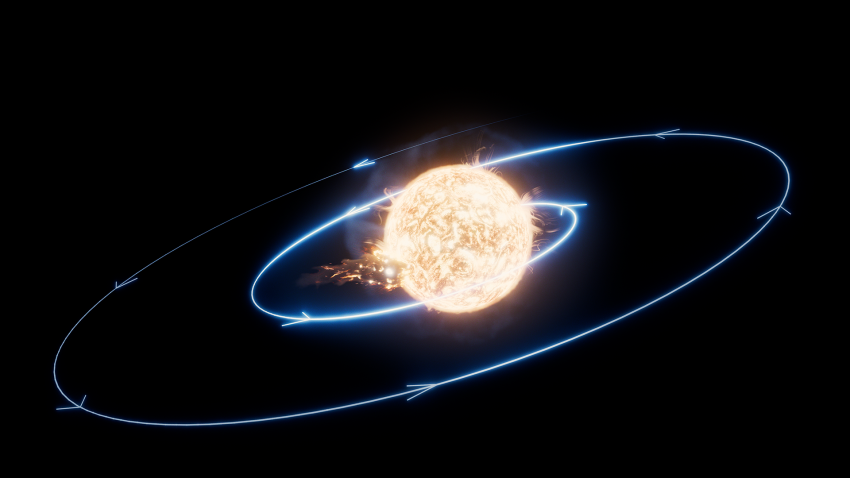
The chronology suggested by the research is as follows:
- Formation: The Sun and a suite of planets, including a super-Earth, form within the protoplanetary disk.
- Migration: Due to "disk torque" or gravitational scattering from other proto-planets, a super-Earth migrates into the inner solar system, crossing the current orbit of Mercury.
- Engulfment: The planet reaches the "Roche limit" or is dragged by gas into the Sun’s outer layers.
- Mixing: As the planet dissolves, its heavy elements (excluding lithium, which the planet was already poor in) sink into the Sun, while the energy of its impact and subsequent dissolution creates turbulence. This turbulence deepens the convection zone temporarily, allowing the Sun’s original lithium to be transported to hotter depths and destroyed.
- Stabilization: The Sun settles into its long-term main-sequence phase, carrying the "fingerprints" of the ingested planet in its sound speed profile and chemical signature.
Supporting Data and Comparative Astronomy
The idea of a star consuming its planets is not merely theoretical. Observations of distant star systems have provided a wealth of supporting data. Astronomers have identified many "Hot Jupiters"—gas giants orbiting extremely close to their stars—and have witnessed "pollution" in the spectra of white dwarfs, which indicates they have recently shredded and consumed planetary debris.
Furthermore, the "missing super-Earth" problem in our own solar system supports Yildiz’s findings. Surveys of exoplanets by missions like Kepler and TESS have shown that super-Earths are among the most common types of planets in the galaxy. The fact that our solar system lacks a planet in the mass range between Earth and Neptune (roughly 1 to 17 Earth masses) has long been considered an anomaly. If the Sun engulfed a super-Earth during its youth, it would explain why our system lacks this common class of planet.
The chemical composition of the proposed planet—rocky and lithium-poor—is also consistent with our understanding of planet formation. Planets form from the solid materials that condense out of the solar nebula. Since lithium does not condense easily into solid grains at the temperatures found in the inner disk, a rocky planet would naturally be depleted of the element, further contributing to the Sun’s overall lithium-poor appearance once engulfed.
Official Responses and Scientific Community Analysis
The scientific community has reacted to the study with cautious optimism. While the "planetary engulfment" theory is not new, the precision with which Yildiz’s model addresses both the lithium and helioseismic issues simultaneously is seen as a significant step forward.
Dr. Catherine Pilachowski, an astronomer not involved in the study but an expert in stellar evolution, noted that while internal mixing mechanisms are still being debated, the "external delivery" of material via a planet provides a cleaner solution to the sound speed discrepancy. "The challenge has always been finding a mechanism that changes the interior structure without violating other known constraints of the Sun," she observed. "This model provides a compelling link between the Sun’s history and the architecture of the wider solar system."
The Royal Astronomical Society highlighted that the research aligns with a growing body of evidence suggesting that the early solar system was a much more violent and dynamic place than previously thought. The study suggests that the Sun is not an isolated furnace but a body whose current state was shaped by its interactions with the very planets it birthed.
Broader Impact and Future Implications
The implications of this research extend far beyond a simple "whodunit" of a missing planet. Understanding the Sun’s history is vital for accurate stellar dating. Astronomers use the chemical composition of stars to determine their age and the age of the galaxies they inhabit. If planetary engulfment is a common occurrence, it could mean that many stars appear older or more chemically complex than they actually are, necessitating a recalibration of stellar evolution models.
Furthermore, this study provides a new lens through which to view the "habitability" of solar systems. If the Sun consumed a super-Earth, the gravitational shift caused by such an event would have dramatically altered the orbits of the remaining planets, including Earth. It raises the question of whether the specific conditions required for life on Earth were influenced by the removal of a massive inner planet.
Professor Yildiz is now looking toward the future, hoping that next-generation helioseismic observations—perhaps from space-based observatories with higher resolution—will be able to detect more specific "fingerprints" of the engulfed planet. "The next step is to see if these fingerprints can be independently detected," Yildiz said. "Our paper asks whether the Sun itself could still carry observable evidence that such an engulfment actually happened, and we believe it could."
As researchers continue to probe the solar interior, the Sun is increasingly revealing itself to be more than just a source of light and heat; it is a historical record of the solar system’s chaotic origins. If Yildiz’s models are correct, the very heart of our star contains the remains of a world that never was, providing the final piece of a 4.5-billion-year-old puzzle.