admin
admin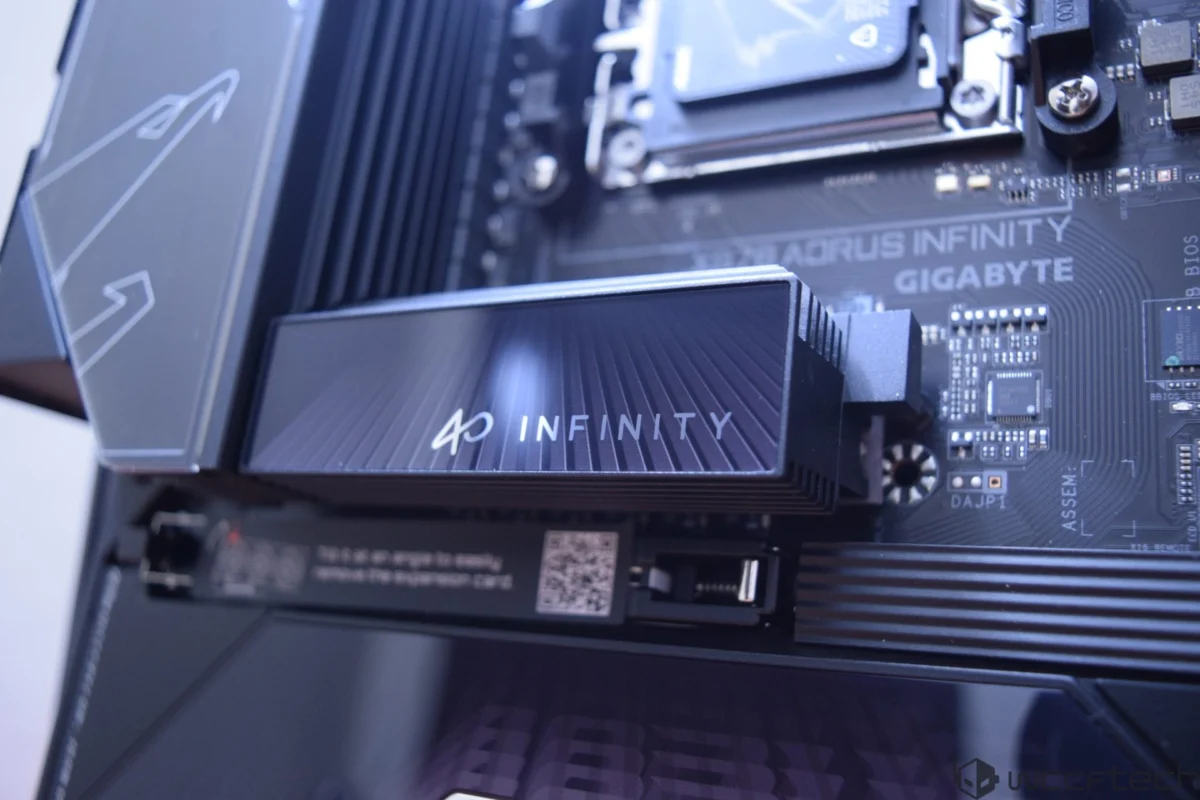
The landscape of high-performance computing has reached a significant milestone in July 2026 as AMD and its primary manufacturing partners, led by Gigabyte, officially transition into the second major phase of the AM5 motherboard era. Four years after the initial debut of the Socket AM5 platform and its accompanying 600-series chipsets, the introduction of the 800-series chipset marks a pivotal shift in how enthusiasts and content creators approach system builds. At the forefront of this technological wave is the Gigabyte X870 AORUS Infinity, a flagship motherboard designed specifically to harness the full potential of the latest Zen 5 architecture, while providing a bridge for users still operating on the aging but resilient AM4 platform.
The Strategic Context of the 800-Series Launch
The release of the 800-series chipset, comprising the X870E, X870, B850, and B840, is not merely an incremental update but a strategic response to the evolving demands of modern I/O and memory performance. Since 2022, the AM5 platform has supported several generations of processors, including the Ryzen 7000 "Raphael," Ryzen 8000 "Hawk Point," and the Ryzen 9000 "Granite Ridge" families. While the existing 600-series motherboards remain compatible with these CPUs through BIOS updates, the 800-series introduces native hardware-level optimizations that were previously optional or unavailable.

The Gigabyte X870 AORUS Infinity serves as the vanguard for this new series. As a motherboard dedicated to extreme overclocking (OC) and high-end workstation tasks, it integrates the latest USB4 standards and PCIe 5.0 lanes as mandatory features rather than premium add-ons. This standardization ensures that the AM5 ecosystem remains competitive against rival architectures while fulfilling AMD’s long-term commitment to platform longevity, which has now been officially extended through 2029.
A Chronology of the AM5 Ecosystem: 2022–2026
To understand the significance of the X870 AORUS Infinity, one must examine the timeline of the AM5 socket. In late 2022, AMD moved away from the Pin Grid Array (PGA) design of AM4, which had served the market since 2017, in favor of the Land Grid Array (LGA) 1718 socket. This transition was necessitated by the need for increased power delivery and more complex signal routing required by DDR5 memory and PCIe 5.0.
By 2024, the Ryzen 9000 series introduced the Zen 5 core, offering significant IPC (Instructions Per Cycle) gains. However, many users remained on X670E or B650 boards. The 2026 launch of the 800-series represents the "maturity phase" of the AM5 platform. Industry analysts suggest that this mid-lifecycle refresh is designed to capture the remaining AM4 user base—those who skipped the first generation of DDR5 platforms—by offering a more refined, feature-complete experience that guarantees support for at least three more years of CPU releases.

Technical Deep Dive: The 800-Series Chipset Hierarchy
The 800-series utilizes the Promontory 21 and Promontory 19 silicon dies to segment the market into four distinct tiers. Each tier is tailored to specific user needs, ranging from professional overclockers to budget-conscious office users.
- X870E (Extreme): This is the dual-chipset flagship. By utilizing two Promontory 21 dies, the X870E offers the maximum number of PCIe 5.0 lanes and USB4 connectivity. It is designed for users who require multiple Gen5 NVMe drives and multi-GPU configurations for AI or rendering workloads.
- X870: The chipset found on the Gigabyte AORUS Infinity, the X870, uses a single Promontory 21 die. Despite the single-die configuration, it maintains mandatory support for USB4 and PCIe 5.0 for both the graphics card and the primary M.2 slot. This makes it the ideal choice for high-end gaming and enthusiast-level performance.
- B850: Serving the mainstream market, the B850 chipset allows for CPU and memory overclocking. While PCIe 5.0 for the GPU is standard, Gen5 support for M.2 SSDs is optional, allowing manufacturers to produce more affordable boards.
- B840: A new entry in the stack, the B840 utilizes the older Promontory 19 die. It is restricted to PCIe 4.0 and supports only memory overclocking, positioning it as a direct competitor to entry-level Intel platforms in the sub-$200 category.
Features of the Gigabyte X870 AORUS Infinity
The Gigabyte X870 AORUS Infinity is engineered to be a showcase of what the 800-series can achieve. One of its most prominent features is the enhanced memory trace routing, which allows for DDR5 speeds exceeding 8000 MT/s when paired with AMD EXPO profiles. This is a substantial leap from the early days of AM5, where 6000 MT/s was considered the "sweet spot."
The board also features a sophisticated power delivery system (VRM), essential for the high-TDP requirements of flagship Ryzen 9 processors. With the introduction of new Precision Boost Overdrive (PBO) and Curve Optimizer (CO) algorithms in the Zen 5 era, the X870 AORUS Infinity provides the thermal and electrical headroom necessary for the silicon to maintain peak boost clocks for extended durations.

In terms of connectivity, the inclusion of USB4 as a standard feature across the X870 line provides 40 Gbps bandwidth, enabling high-speed external storage and single-cable docking solutions that were previously the domain of specialized Intel Thunderbolt motherboards. Gigabyte has also focused on user-friendly design, incorporating "EZ-Latch" mechanisms for M.2 heatsinks and PCIe slots, simplifying the assembly process for enthusiasts.
Comparative Analysis of AM5 Chipsets
The following data illustrates the evolution of I/O and expansion capabilities across the AM5 chipset generations:
| Feature | X870E | X870 | X670E | B850 | B840 |
|---|---|---|---|---|---|
| USB4 Support | Mandatory | Mandatory | Optional | Optional | No |
| GPU PCIe Support | Gen 5 | Gen 5 | Gen 5 | Gen 5 | Gen 4 |
| NVMe PCIe Support | Gen 5 | Gen 5 | Gen 5 | Optional | Gen 4 |
| Overclocking | CPU + RAM | CPU + RAM | CPU + RAM | CPU + RAM | RAM Only |
| SATA 6Gb/s Ports | 8 | 8 | 8 | 4 | 4 |
This comparison highlights the "standardization" trend. Where the 600-series made Gen5 and USB4 optional for many boards, the 800-series—specifically the X870—elevates the baseline for the enthusiast segment.

Socket Longevity and Thermal Considerations
AMD’s decision to maintain the LGA 1718 socket through 2029 has been met with widespread approval from the PC building community. This longevity provides a clear upgrade path, allowing a user to purchase the Gigabyte X870 AORUS Infinity today and potentially install a "Zen 6" or "Zen 7" processor in the future without changing the motherboard.
Furthermore, the physical dimensions of the socket and the Integrated Heat Spreader (IHS) of the CPUs have remained consistent. The 45x45mm square design ensures that cooling solutions designed for AM4 and early AM5 platforms remain fully compatible. This backwards compatibility reduces the total cost of ownership for users transitioning from older systems, as high-end liquid coolers and air towers do not require new mounting hardware.
Broader Market Implications
The launch of the 800-series and boards like the X870 AORUS Infinity arrives at a time of intense competition in the semiconductor industry. Intel’s recent platform shifts have forced AMD to double down on its "longevity" value proposition. By offering a platform that is both technologically advanced (USB4, WiFi 7, PCIe 5.0) and long-lasting, AMD is targeting the high-end desktop (HEDT) and enthusiast markets that prioritize stability and future-proofing.

Industry reactions from system integrators suggest that the B840 and B850 chipsets will be particularly influential in the pre-built market. These chipsets allow for cost-effective builds that still benefit from the efficiency of the Zen 5 architecture. Meanwhile, the X870E and X870 boards are expected to dominate the DIY enthusiast sector, where brand loyalty to lines like Gigabyte’s AORUS is high.
Conclusion: The Future of the Desktop PC
As the Gigabyte X870 AORUS Infinity begins to hit retail shelves, it represents the pinnacle of the AM5 ecosystem’s current development. It addresses the early criticisms of the platform—namely the high cost of entry and the "beta" feel of early DDR5 adoption—by providing a mature, high-bandwidth foundation for the next generation of computing.
With the commitment to support the socket until 2029, the 800-series is positioned not just as a product for today’s needs, but as a durable investment for the remainder of the decade. For the gamer, the content creator, and the professional overclocker, the combination of AMD’s chipset innovation and Gigabyte’s engineering excellence provides a compelling reason to embrace the next era of the Ryzen desktop experience.