admin
admin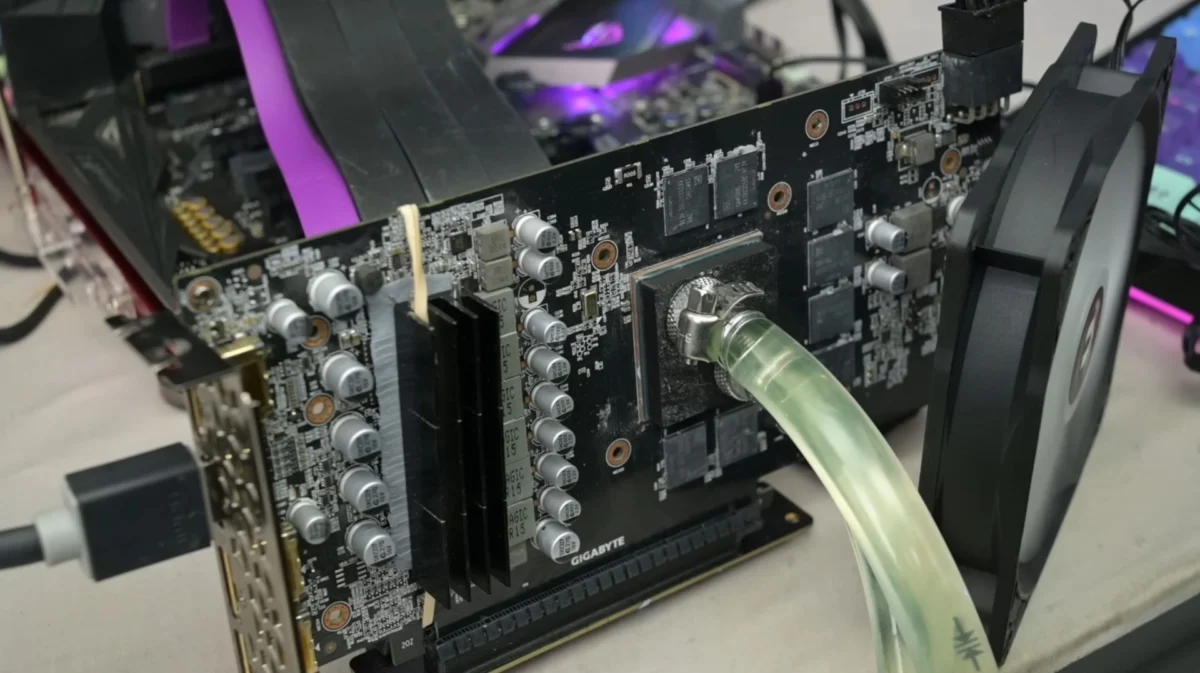
In an era where PC enthusiasts and hardware engineers are constantly pushing the boundaries of thermal management, a recent experiment by the hardware modder known as TrashBench has garnered significant attention within the technology community. By bypassing traditional cooling methodologies—which typically rely on heat pipes, copper cold plates, and thermal interface materials—the modder successfully implemented a "direct-to-die" water cooling system on an NVIDIA GeForce RTX 2060. This unconventional approach involves pumping coolant directly onto the exposed silicon die of the graphics processing unit (GPU), a technique that presents extreme risks but yielded remarkable thermal results, bringing operating temperatures down to near-ambient levels during heavy synthetic workloads.
The Evolution of GPU Cooling and the Quest for Lower Thermal Resistance
To understand the significance of this experiment, one must first consider the standard architecture of modern cooling solutions. In a typical factory-cooled GPU, heat is generated by the silicon die and must travel through several layers before being dissipated into the air. These layers include the thermal interface material (TIM or thermal paste), a copper or aluminum cold plate, heat pipes, and finally, the aluminum fin stack where fans provide airflow. Each of these interfaces introduces thermal resistance, a physical property that hinders the efficient transfer of heat.

While liquid cooling through All-In-One (AIO) units or custom loops significantly improves this process by using water—a medium with much higher thermal conductivity than air—the water still remains separated from the silicon by a metal block. Direct-die cooling aims to eliminate the metal interface entirely. By allowing the coolant to make physical contact with the GPU die, the thermal resistance is minimized to the lowest possible theoretical level. While this concept has been explored in industrial applications and extreme overclocking circles using liquid nitrogen (LN2), implementing it with circulating water on consumer-grade hardware remains a rare and hazardous feat.
Chronology of the Experiment: From Prototype to Proof of Concept
The project undertaken by TrashBench was not an immediate success but rather a calculated progression through several stages of trial and error. The modder followed a systematic approach to ensure the viability of the sealing mechanism before risking functional, high-value hardware.
Phase One: The Sacrificial RTX 3060
The experiment began with a non-functional NVIDIA GeForce RTX 2060 (initially tested on a dead RTX 3060 board). This stage was critical for developing a waterproof seal. The primary challenge of direct-to-die water cooling is the proximity of the silicon die to the PCB substrate and surrounding surface-mounted devices (SMDs), such as capacitors and resistors. Because water is conductive (unless using specialized deionized fluids, which still carry risks of contamination), any leak onto the PCB would result in an immediate short circuit.

TrashBench utilized a custom-designed, 3D-printed plastic block to act as a reservoir over the GPU core. To prevent leaks, the modder applied a thick layer of epoxy resin around the base of the silicon die, effectively "damming" the area to isolate the electrical components from the liquid chamber. Initial tests saw several failures, with water seeping through the porous 3D-printed plastic and the epoxy seal, but iterative refinements eventually produced a watertight housing.
Phase Two: Validation on the GTX 980
Once the sealing method was perfected on the dead hardware, the modder moved to a functional but older GeForce GTX 980. This served as a "live" test to ensure that the pressure of the water and the chemical properties of the epoxy would not interfere with the GPU’s operation under load. After successfully replicating the setup and confirming that the card remained operational, the stage was set for the primary subject of the experiment: the RTX 2060.
Technical Implementation and Thermal Results
The GeForce RTX 2060, based on NVIDIA’s Turing architecture, is known for generating a moderate amount of heat, typically operating between 65°C and 75°C under load with a standard dual-fan cooler. TrashBench established a baseline using the Unigine Heaven benchmark, a popular tool for stressing GPU hardware.

Comparative Data Analysis
The results of the experiment provided a clear look at the efficiency gains of removing the thermal interfaces:
- Stock Air Cooler: Under full load in Unigine Heaven, the RTX 2060 reached a stable temperature of 70°C. This is considered standard for the card’s factory configuration.
- 360mm All-In-One (AIO) Liquid Cooler: Before moving to the direct-water method, the modder tested the card with a high-end 360mm AIO cooler. This traditional liquid cooling method brought temperatures down to 36°C.
- Direct-to-Die Water Cooling: With the custom plastic block installed and water pumped directly onto the silicon, the temperature plummeted to 28°C. The "hotspot" temperature—the hottest single point on the die—was recorded at 41°C.
The delta between the stock cooler and the direct-water method is a staggering 42°C. Even more impressively, the direct-water method outperformed a massive 360mm radiator setup by 8°C, illustrating that the copper cold plate in the AIO was indeed a bottleneck in the heat transfer process.
The CPU Comparison: An Unexpected Limitation
Following the success with the GPU, TrashBench attempted to apply the same direct-water cooling method to an Intel Core i5-7600K CPU. However, the results were markedly different. Unlike the GPU, the direct-water cooling on the CPU was unable to outperform a standard AIO cooler.

Analysts suggest this discrepancy is due to the difference in heat density and surface area. Modern CPUs have relatively small dies compared to GPUs, and the heat is concentrated in a much smaller area. Furthermore, the Integrated Heat Spreader (IHS) on a CPU is designed to spread that concentrated heat across a larger surface area for the cooler to handle. By removing the IHS and applying water directly to the small CPU die, the coolant may not have had enough surface area contact to effectively whisk away the concentrated thermal energy as efficiently as the copper base of an AIO.
Professional Analysis of Risks and Implications
While the thermal gains achieved by TrashBench are undeniable, the experiment highlights several reasons why this technology is not currently viable for the consumer market.
Structural Integrity and Longevity
The use of epoxy resin to seal a GPU is a permanent and destructive modification. Epoxy can become brittle over time when subjected to repeated thermal cycling (the constant heating and cooling of the hardware). If the seal cracks, the resulting leak would be catastrophic for the entire computer system. Furthermore, 3D-printed materials like PLA or PETG have relatively low melting points and can warp if the pump fails and temperatures spike, leading to immediate failure.

Chemical Reactions and Corrosion
Directly exposing silicon and its surrounding substrate to water raises concerns about long-term chemical stability. Even with distilled water, the presence of different metals in a loop (such as a copper radiator and the plastic/epoxy housing) can lead to galvanic corrosion or the growth of biological matter, which would be difficult to clean from an epoxy-sealed chamber.
Industry Impact
From an industrial standpoint, this experiment validates the push toward immersion cooling in data centers. Companies like Microsoft and Google have experimented with "two-phase immersion cooling," where entire server racks are submerged in non-conductive engineered fluids. TrashBench’s mod is essentially a localized, DIY version of this concept. It proves that the "thermal wall" created by metal heat spreaders is a real limitation in reaching the next level of semiconductor performance.
Conclusion
The TrashBench experiment stands as a testament to the ingenuity of the PC modding community. By achieving a load temperature of 28°C on an RTX 2060, the project demonstrated the ultimate potential of liquid cooling when stripped of its traditional boundaries. However, the failure to replicate these gains on a CPU and the inherent risks of the sealing process suggest that direct-to-die water cooling will remain in the realm of extreme experimentation rather than becoming a mainstream cooling solution.

For the general public, the takeaway is a deeper understanding of the thermal bottlenecks within their own systems. While pumping water directly onto a GPU is not recommended, the experiment reinforces the value of high-quality thermal interface materials and the effectiveness of traditional liquid cooling. As hardware continues to demand more power and generate more heat, the lessons learned from these "wild" experiments may eventually inform the design of the next generation of professional-grade cooling systems.