admin
admin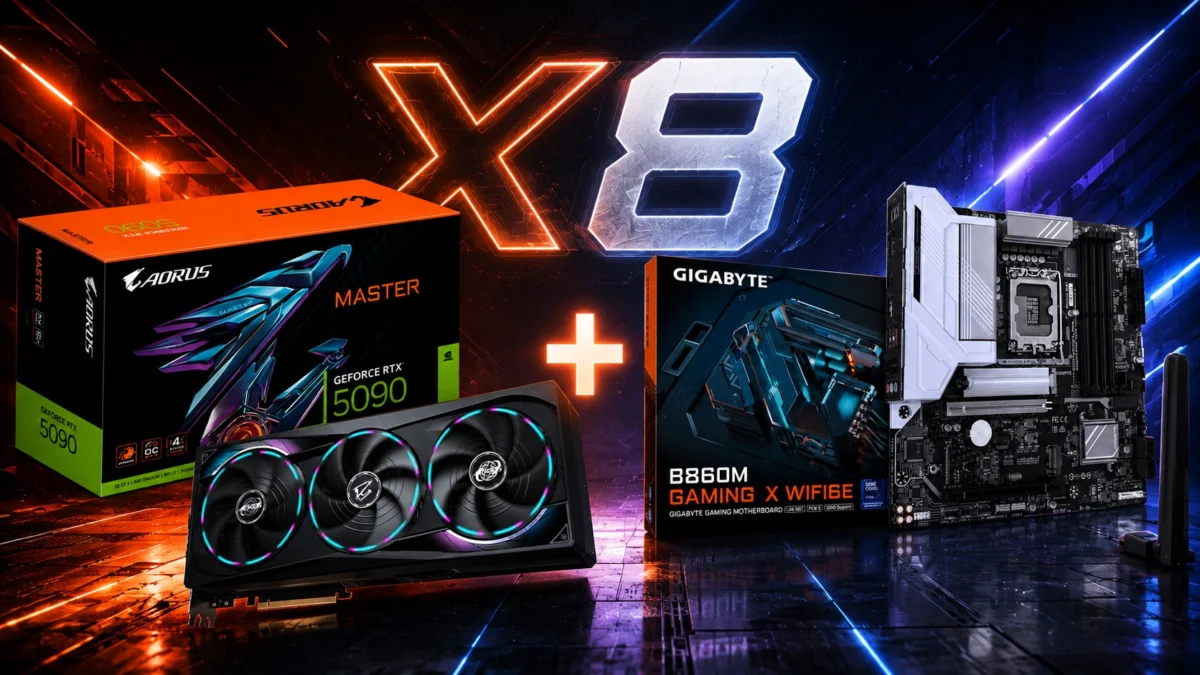
The retail landscape for high-end computer hardware has reached a point of unprecedented complexity in Taiwan, as major vendors begin implementing extreme "mega-bundle" requirements for NVIDIA’s flagship GeForce RTX 5090 graphics cards. In a move that has sent shockwaves through the enthusiast community, prominent Taiwanese retailer PC Home has effectively removed the option to purchase the RTX 5090 as a standalone component, instead gating the hardware behind massive packages that include up to eight motherboards, secondary GPUs, and high-end processors. This development follows a similar trend observed with the RTX 5080, signaling a systemic shift in how premium silicon is distributed in the Asia-Pacific region during the current market cycle.
The shift toward bundling is not a new phenomenon in the PC hardware space, but the scale of the current offerings is without precedent. During the cryptocurrency mining boom of 2020-2022, retailers frequently paired GPUs with less desirable power supplies or motherboards to move stagnant inventory. However, the current "Blackwell" generation bundles have escalated this practice. Consumers looking to acquire an RTX 5090 are now finding themselves forced to purchase entire ecosystems of hardware, often spanning multiple platform generations and even competing brand architectures.

The Architecture of the Mega-Bundle: A Breakdown of Current Listings
Recent listings on PC Home reveal a series of increasingly elaborate bundles designed to offload significant quantities of secondary inventory. One of the most striking examples is the GIGABYTE AORUS GeForce RTX 5090 MASTER 32G bundle. This package does not merely include a single companion item; rather, it requires the buyer to purchase a total of eight motherboards and a 1000W power supply alongside the flagship GPU. The motherboard selection in this specific bundle includes a mix of Intel and AMD platforms, specifically featuring the B860M chipset, the enthusiast-grade X870E, and five separate B850 chipset motherboards.
The financial implications of these bundles are staggering. The GIGABYTE AORUS bundle is priced at 241,290 New Taiwan Dollars (TWD), which converts to approximately $7,481 USD. Market analysts note that the cumulative value of the eight motherboards and the power supply accounts for roughly $1,600 USD of that total. This leaves the effective price of the RTX 5090 alone at nearly $6,000 USD—a massive premium over its expected manufacturer’s suggested retail price (MSRP).
Other manufacturers are seeing similar retail strategies. The MSI GeForce RTX 5090 Gaming TRIO OC is currently being offered in a bundle that includes three MSI MPG X870E Carbon motherboards, two MSI B650M Gaming Plus motherboards, and the flagship AMD Zen 5 Ryzen 9 9950X3D CPU. This package is listed at 274,090 TWD, or approximately $8,498 USD. Perhaps most unusual is the ASUS ProArt RTX 5090 OC bundle, which takes the cross-brand approach to an extreme by pairing the NVIDIA flagship with four ASUS Dual Radeon RX 9060 XT GPUs—mid-range cards from NVIDIA’s direct competitor, AMD. This bundle is priced at 248,990 TWD ($7,720 USD).

The "RAMpocalypse" and the Global Supply Chain Crisis
To understand why retailers are resorting to such drastic measures, one must look at the broader economic and logistical factors currently strangling the hardware market. The term "RAMpocalypse" has emerged among industry insiders to describe the volatile state of the memory market. The RTX 50 series utilizes the new GDDR7 memory standard, which is currently seeing low initial yields and high production costs. As NVIDIA and its partners compete for limited memory modules, the production cost of the RTX 5090—which boasts a massive 32GB of VRAM—has skyrocketed.
Furthermore, the demand for AI-capable hardware has fundamentally altered the priority of silicon fabrication. NVIDIA’s Blackwell architecture is the foundation for both consumer gaming cards and high-margin AI data center accelerators like the B200. With enterprise demand for AI chips at an all-time high, the allocation of wafers for consumer GPUs has been significantly constrained. Retailers in Taiwan, who sit at the doorstep of TSMC’s fabrication facilities, are acutely aware of these supply limitations. By bundling the few RTX 5090 units they receive with slower-moving inventory like mid-range motherboards and previous-gen CPUs, they maximize the profit margin on every limited-edition shipment.
Chronology of the RTX 50 Series Market Escalation
The current retail situation is the culmination of several months of escalating market tension. The following timeline illustrates the path to the current bundle-only environment:

- Q4 2024: Early reports indicate that NVIDIA would prioritize AI chip production over consumer Blackwell units, leading to initial fears of a low-stock launch.
- Launch Month: The RTX 5090 and 5080 are officially released. In Taiwan, standalone stock is depleted within minutes of listing, primarily by professional builders and scalpers.
- The Second Wave: As the second shipment of cards reaches retailers, "soft bundling" begins, requiring customers to buy a PSU or a single motherboard.
- The RAMpocalypse Peak: Reports of GDDR7 shortages intensify. Retailers in Taiwan, such as PC Home and others, officially pivot to "Mega-Bundles," citing the need to ensure cards go to "full system builders" rather than individual resellers.
- Current State: Standalone listings for the RTX 5090 have effectively vanished from major Taiwanese e-commerce platforms, replaced entirely by multi-component packages.
Technical Analysis of the Bundled Components
The composition of these bundles is not random; it reflects a strategic effort to clear inventory of components that are currently in oversupply. The inclusion of B850 and B860 motherboards is particularly telling. These mid-range chipsets are often produced in high volumes but see slower sell-through rates compared to the flagship X870E boards. By forcing eight of these units into a single RTX 5090 sale, retailers are essentially liquidating their warehouse shelves to a single buyer.
The inclusion of the AMD Ryzen 9 9950X3D in the MSI bundle highlights a different trend. While the 9950X3D is a highly desirable high-end CPU, its high price point makes it a slower mover than the gaming-focused 9800X3D. Pairing it with an RTX 5090 ensures that the most expensive CPU and the most expensive GPU are moved together, securing a high-ticket transaction that most consumers would otherwise avoid.
The ASUS bundle, featuring four Radeon RX 9060 XT GPUs, is perhaps the most illogical from a consumer standpoint but the most logical from a retail inventory perspective. The RX 9060 XT serves the mid-market, which is currently saturated. Forcing a buyer to take four of these cards alongside one RTX 5090 suggests that the retailer is struggling to move AMD’s mid-range offerings in a market currently dominated by NVIDIA’s high-end hype.

Market Implications and Consumer Reaction
The reaction from the enthusiast community has been largely negative, with many accusing retailers of exploitative practices. On various hardware forums and social media platforms, users have labeled these bundles as "scalping with extra steps." The primary frustration stems from the fact that an enthusiast who already owns a high-end system cannot simply upgrade their GPU without also acquiring thousands of dollars worth of redundant hardware.
However, from a business perspective, retailers argue that these bundles serve to deter scalpers. A reseller who intends to flip an RTX 5090 for a profit on the gray market is less likely to purchase a bundle that requires them to also manage the resale of eight motherboards. This theory is contested, as the high effective price of the GPU within the bundle often matches or exceeds gray market prices, suggesting that the retailers are simply capturing the "scalper premium" for themselves.
The broader implication for the PC building industry is a potential cooling of the enthusiast market. If the barrier to entry for the highest tier of performance is a $7,000+ investment in redundant parts, many hobbyists may opt to skip this generation entirely or settle for lower-tier hardware. This could lead to a long-term decline in the "DIY" segment of the market, as users move toward pre-built systems where retailers can hide the cost of components more effectively.

Future Outlook and Industry Projections
As we look toward the remainder of the fiscal year, the availability of standalone RTX 5090 units is unlikely to improve significantly. Supply chain analysts suggest that GDDR7 yields will not stabilize until mid-2025, and NVIDIA’s commitment to the AI sector remains the primary drain on production capacity.
There is also the possibility of regulatory scrutiny. In some jurisdictions, "tied selling"—the practice of making the sale of one product conditional on the purchase of another—is subject to consumer protection laws. While Taiwan’s retail market is generally more permissive regarding such practices, the sheer scale of an eight-motherboard bundle may test the limits of what is considered acceptable commerce.
For now, the RTX 5090 remains a "halo" product in the truest sense—visible to all, but accessible only to those willing to navigate a prohibitively expensive and complex retail gauntlet. Whether this remains a localized phenomenon in Taiwan or spreads to Western markets will depend entirely on how global supply chains weather the ongoing memory shortage and the insatiable demand for AI silicon. For the average gamer, the message from the Taiwanese retail market is clear: the era of the simple component upgrade is, at least for the time being, at an end.