Sisilia Frederika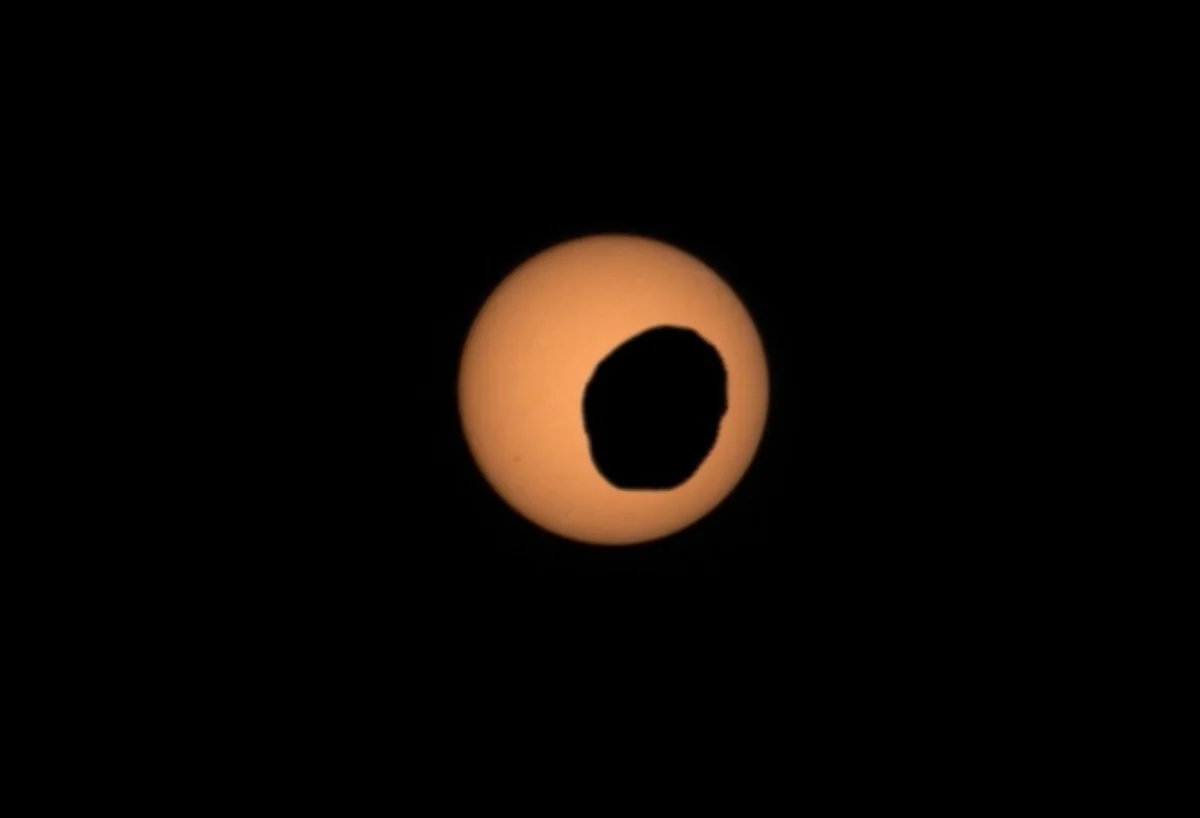
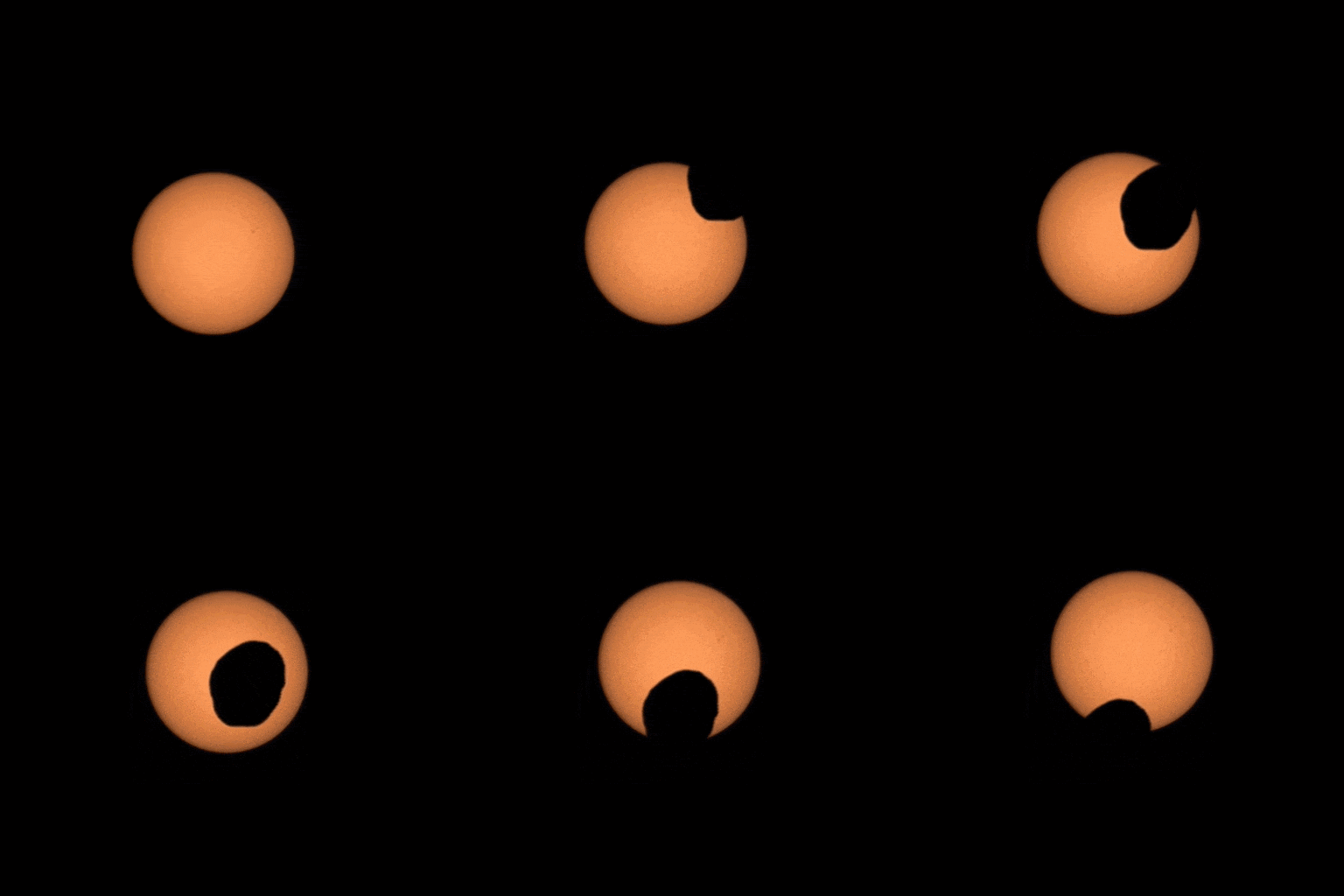
The NASA Mars Perseverance rover has successfully documented a transit of the Martian moon Phobos across the face of the Sun, providing researchers with critical data to refine the orbital dynamics of the Martian satellite system. Captured on August 12, 2026—marked as Martian Sol 1948 of the mission—the event was recorded using the rover’s advanced Mastcam-Z camera system. While images of Phobos crossing the solar disk have become a semi-regular occurrence in the era of modern robotic exploration, this latest observation serves as a high-precision tool for geophysicists seeking to understand the internal structure of Mars and the eventual fate of its largest moon.
The August 2026 Transit Event
The transit occurred with Phobos appearing as a dark, irregular silhouette against the brilliant backdrop of the Sun. Unlike the nearly perfect circular symmetry of a total solar eclipse seen from Earth, a Phobos transit is often described as a "misshapen annular eclipse." This is due to the moon’s distinctively lumpy, "potato-like" shape and its relatively small size, which prevents it from ever fully obscuring the solar disk.
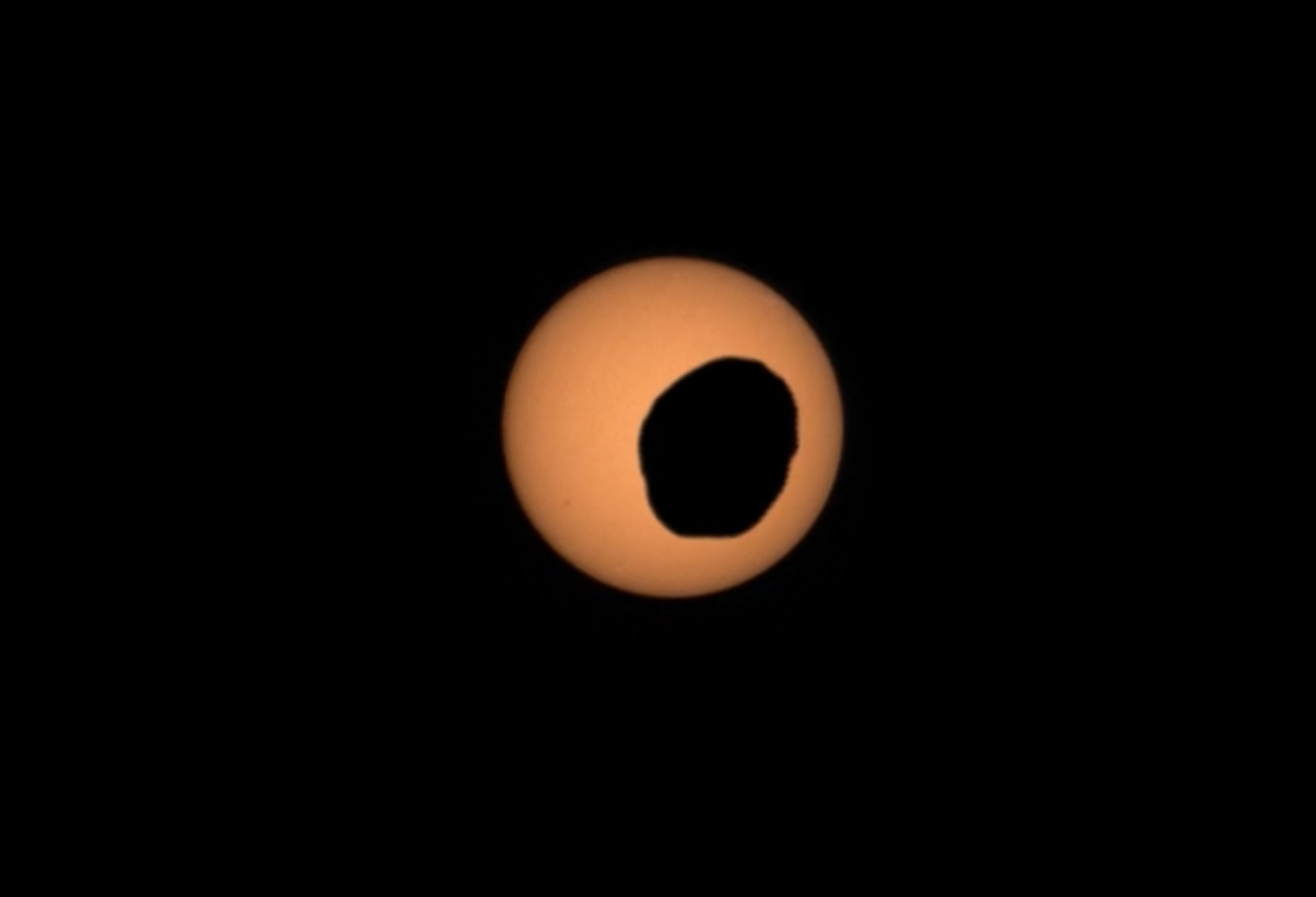
At its maximum coverage, Phobos obscures approximately 25 percent of the Sun’s apparent diameter. Because Phobos orbits Mars at an incredibly low altitude—roughly 6,000 kilometers (3,700 miles) above the surface—and travels at a high velocity, the entire transit lasted less than a minute. Observers watching a real-time feed of the event would see the moon moving perceptibly across the Sun, a stark contrast to the slower celestial movements typically observed from Earth’s surface.
The imagery was made possible through the use of specialized solar filters equipped on the Mastcam-Z. According to Mark Lemmon of the Space Science Institute, a senior scientist involved in the mission’s imaging efforts, the rover employs rigorous safety protocols to protect its sensitive optics. The solar filters act much like "eclipse glasses" for the rover, reducing the intensity of the light to prevent sensor damage. Lemmon noted that while the instruments on the remote sensing mast are robust, the sequence of applying filters before aiming at the Sun is a standard precaution to ensure the longevity of the hardware.
A Chronology of Martian Astronomy
The study of Martian moons from the planet’s surface is a discipline that has evolved over several decades, moving from accidental shadow detection to high-definition video captures.
- 1977: The Viking Era: The first evidence of a transit from the Martian surface was captured not as a direct image, but as a shadow. Viking 1 detected the shadow of Phobos passing over its landing site at Chryse Planitia.
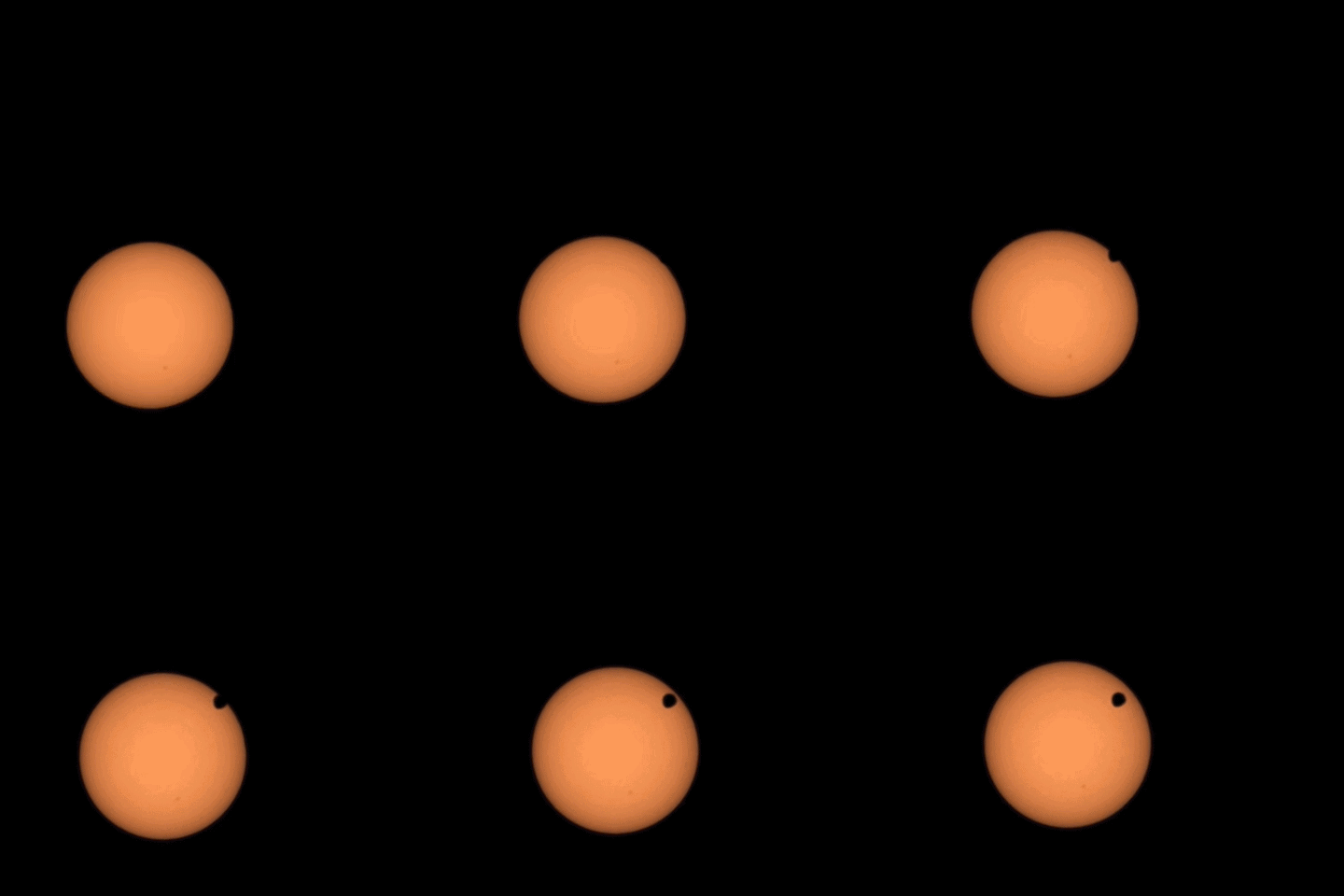
- 2004: Opportunity’s Breakthrough: The Opportunity rover became the first robotic explorer to directly image a Martian moon transiting the Sun. This event proved that mobile science platforms could double as astronomical observatories.
- 2014: Comet Siding Spring: Curiosity and Opportunity turned their cameras toward the heavens to witness Comet C/2013 A1 Siding Spring as it passed within 140,000 kilometers of Mars, providing a unique perspective on a long-period comet.
- 2024-2025: Expanded Observations: Recent years have seen an uptick in "Martian astronomy." In early 2024, Perseverance captured a transit of Deimos, the smaller of the two moons. In October 2025, the rover was tasked with tracking the interstellar comet 3I/ATLAS during its close approach to the Red Planet.
- 2026: Earth Occultation: Prior to the August Phobos transit, Perseverance recorded a rare and bizarre occultation where Phobos passed in front of the Earth, as seen from the Martian surface.
The Science of Orbital Refinement
Beyond the visual spectacle, these transits provide data that cannot be obtained through any other means. By timing the exact moment Phobos enters and exits the solar disk, scientists can determine the moon’s position with an accuracy of better than 100 meters.
"We image the transits because they give precise measurements… of the location of Phobos at a specific instant," Mark Lemmon explained. This level of precision is vital because the orbits of Phobos and Deimos are constantly changing. When transit imaging first began, researchers found that the predicted position of Deimos was off by as much as 40 kilometers based on older, Viking-era calculations. Today, thanks to continuous monitoring by rovers like Curiosity and Perseverance, that margin of error has been reduced to the kilometer level.
The primary scientific objective of this tracking is to use orbital evolution as a probe into the Martian interior. Phobos is locked in a "death spiral," gradually drawing closer to Mars due to tidal forces. As Phobos orbits, its gravity raises small tides in the Martian mantle. The way the planet responds to these tidal stresses—its "flexibility"—causes a feedback loop that alters Phobos’s orbit. By analyzing these minute orbital shifts over a 20-year baseline, geophysicists can infer the composition and state of the Martian interior, specifically the properties of its mantle and core.
Solar Monitoring and Space Weather Forecasting
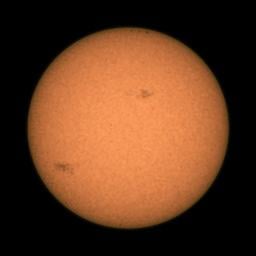
Perseverance’s observations of the Sun also serve a dual purpose in the field of heliophysics. Because Mars is often positioned on the "farside" of the Sun relative to Earth, the rover can see sunspots and solar activity before they rotate into Earth’s view.
This capability was demonstrated in May 2024, when Perseverance identified a massive sunspot region. Approximately one week later, that same region rotated toward Earth, unleashing an historic G5-class solar storm that produced auroras at uncharacteristically low latitudes. By acting as a distant sentinel, Perseverance provides an early warning system for solar weather that could affect satellite communications and power grids on Earth.
Nighttime Campaigns and the Six Parameters of Flight
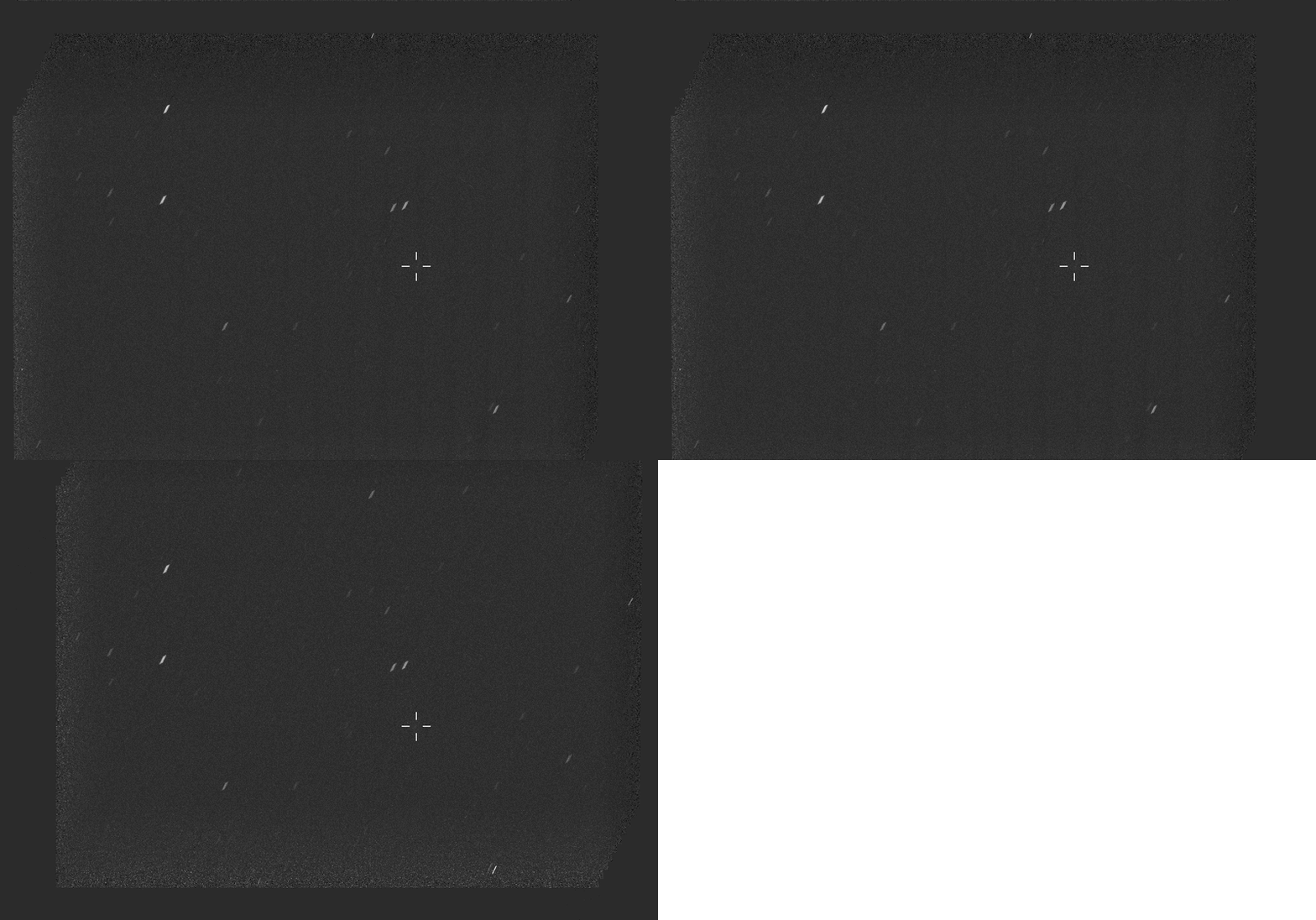
The August 2026 solar transit is only one half of a broader imaging campaign. Following the transit, the Perseverance team initiated a multi-night nighttime imaging sequence. During these sessions, the rover captures Phobos against a backdrop of distant stars.
While a solar transit provides high-precision data on two orbital parameters (essentially the moon’s position along its path), a full description of an orbit requires six parameters. By photographing Phobos near background stars in different parts of its orbit, scientists can fill in the remaining gaps. This process involves a combination of short exposures to pinpoint the moon’s location and long exposures to create star trails, which serve as a fixed reference frame.
The Road to the Mars Moons Explorer (MMX)
The data gathered by Perseverance is becoming increasingly critical as humanity prepares for the first sample-return mission from the Martian moons. The Japan Aerospace Exploration Agency (JAXA), in collaboration with NASA, is scheduled to launch the Mars Moons Explorer (MMX) on October 19, 2026, utilizing an H3-24L rocket from the Tanegashima Space Center.
The MMX mission aims to land on Phobos, collect a surface sample, and return it to Earth by 2031. Navigating a spacecraft to a landing on a small, irregularly shaped body with a weak gravitational field requires absolute certainty regarding its orbital position. The decade-long "experiment" conducted by the Mars rovers ensures that MMX mission controllers have the most accurate ephemerides possible for the approach and descent phases.
Historical Context and Future Outlook
The discovery of Phobos and Deimos in 1877 by American astronomer Asaph Hall was a triumph of 19th-century observational astronomy. Using the U.S. Naval Observatory’s 26-inch refractor—then the largest telescope of its kind—Hall spotted the elusive moons during a favorable opposition of Mars.
Today, the torch has passed from ground-based refractors to robotic laboratories situated on the Martian surface. As Mars approaches its next opposition on February 19, 2027, the planet will again become a prime target for Earth-bound astrophotographers. However, no view from Earth can match the perspective of Perseverance, which stands on the dusty floor of Jezero Crater looking upward.
The ongoing success of these observations suggests a future where dedicated astronomical observatories may be established on the Martian surface. Such facilities would benefit from the thin atmosphere and unique vantage point in the inner solar system, allowing for uninterrupted monitoring of the Sun, the asteroid belt, and the outer planets. For now, Perseverance continues its dual mission: searching for signs of ancient life in the Martian soil while serving as a silent witness to the clockwork of the heavens above.