Sonny Valindra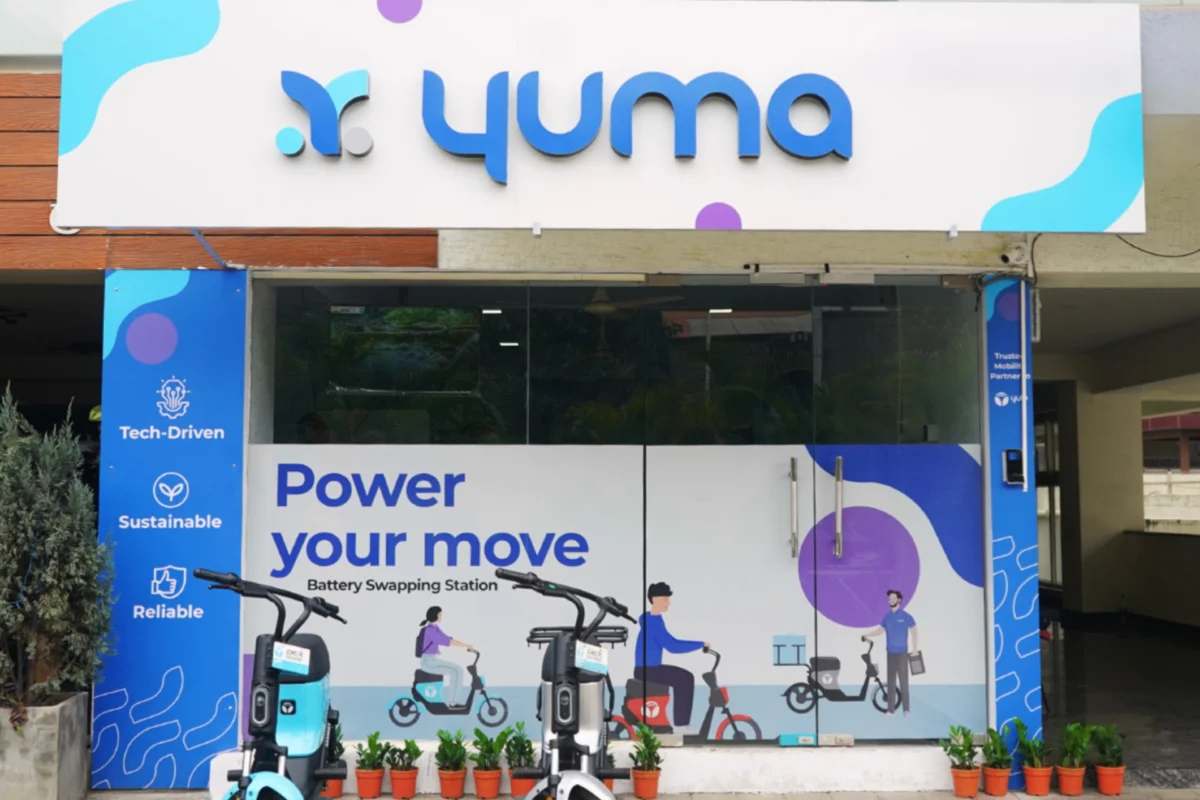
Canadian auto parts giant Magna International is significantly expanding its financial commitment to Yuma Energy, a Bengaluru-based company spearheading battery-swapping solutions for electric two- and three-wheelers in India. This substantial investment underscores Magna’s conviction that the battery-swapping model, which has faced global adoption challenges, holds immense potential for scalability within the unique economic landscape of India. The company’s bolstered stake in Yuma, increasing from its initial joint venture majority, signals a strategic pivot towards leveraging India’s burgeoning gig economy and its rapidly expanding electric mobility sector.
Magna International has injected an additional $35 million into Yuma Energy, further solidifying its ownership position. This latest funding round follows Magna’s initial significant commitment made in 2022, where it invested a combined $77 million across Yuma and its parent company, Yulu. The earlier investment saw $25 million directed towards Yulu, the electric two-wheeler mobility startup, and $52 million dedicated to the battery-swapping joint venture, Yuma. This new infusion of capital will dilute Yulu’s previously held 49% stake in Yuma, though the precise new ownership split remains undisclosed by Yuma’s managing director, Muthu Subramanian. Magna confirmed that these ventures represent its sole startup investments in India.
Yuma Energy, which officially spun out of Yulu in early 2023, has already established a formidable operational footprint. The company reports a cumulative total of over 60 million battery swaps conducted to date, supported by a deployed network of approximately 100,000 batteries. This extensive network is crucial for its ambitious strategy, which hinges on the unique demands of India’s rapidly expanding gig economy.
The Engine of India’s Gig Economy: A Case for Swapping
Magna’s strategic alignment with Yuma is deeply rooted in the transformative growth of India’s gig economy. The operational realities faced by delivery riders, a significant segment of this workforce, present a compelling argument for efficient and rapid battery replenishment. Traditional charging methods, even fast-charging solutions, can lead to substantial downtime for these riders. This downtime directly translates into lost revenue, a critical factor for individuals whose livelihoods depend on maximizing their operational hours.
Subramanian highlighted the current disparity, estimating that only 10% to 15% of vehicles utilized by gig workers in India are currently electric. This presents a vast untapped market for electric mobility solutions, particularly for operators like Yuma that can facilitate a seamless transition from gasoline-powered vehicles. "With Indian gig workers’ high runtime on a daily basis, an EV makes absolute sense in terms of cost of ownership," Subramanian stated in a recent interview. "Uptime is important."
The core of Yuma’s value proposition lies in the speed and convenience of its battery-swapping model. Subramanian estimates that a battery can be exchanged in under two minutes. This stands in stark contrast to even the most advanced fast-charging solutions, which can require 20 to 30 minutes, effectively taking a rider out of service for an extended period. Furthermore, fast-charging infrastructure often demands significant spatial and power resources to accommodate multiple vehicles concurrently, whereas battery-swapping stations can offer a more streamlined and space-efficient solution.
Navigating Capital Intensity and Scaling for Profitability
The operational efficiency of battery swapping, while highly beneficial for end-users, presents a significant capital investment challenge for providers like Yuma. The company must proactively build and maintain a robust network of batteries and swapping infrastructure, often ahead of the full demand from riders. "It’s a capital-intensive business, and the unit economics will play out at scale," Subramanian acknowledged.
Despite these challenges, Yuma is making tangible progress towards financial sustainability. While the company is not yet profitable overall, Subramanian indicated that some of its more established swapping stations have achieved EBITDA-positive status. For the fiscal year concluding in March 2026, Yuma reported revenues of approximately ₹1 billion (roughly $10.5 million). The company has set an ambitious target to reach EBITDA break-even within the next two fiscal quarters.
To achieve this crucial milestone and to support its ambitious growth plans, Yuma intends to leverage the majority of Magna’s latest investment towards expanding its swapping infrastructure. A key objective is to double its current fleet of around 100,000 batteries over the next 12 to 18 months. This expansion is vital to accommodate the increasing demand and to ensure continued operational readiness.
Diversifying Beyond Yulu: A Growing Ecosystem
While Yulu remains a cornerstone of Yuma’s operations, accounting for the vast majority of its historical 60 million battery swaps, the company is actively working to diversify its customer base. In the most recent quarter, approximately 15% to 20% of swaps were performed for customers other than Yulu, indicating a growing trend of adoption.
Yuma’s integration efforts extend beyond its initial partner. The company now collaborates with over five distinct fleets and has successfully integrated its battery technology with more than 10 vehicle platforms. These include offerings from prominent manufacturers such as Kinetic Green, Motovolt, BGauss, and Quantum Energy. Yuma anticipates that non-Yulu customers will contribute approximately 25% of its total swaps within the next two years, showcasing a burgeoning ecosystem of partners.
The recent fundraising success of Yulu, which secured $93 million earlier this month to expand its electric two-wheeler fleet, further underscores the need for Yuma to scale its network. This expansion will be crucial not only to support its largest customer but also to seamlessly integrate newer fleets that are increasingly adopting Yuma’s battery technology.
Expanding Reach: A National Network with Global Aspirations
Yuma’s operational presence currently spans 18 major Indian cities, including key metropolitan hubs like Bengaluru, Hyderabad, Mumbai, and the Delhi National Capital Region. The company also has a significant presence in cities such as Jaipur, Lucknow, Indore, Coimbatore, Kochi, and Kolkata. The recent capital infusion is earmarked for further expansion, with plans to establish operations in Chennai and Pune in the coming quarters. Additionally, Yuma aims to augment the number of swapping stations in its existing operational cities.
While India remains Yuma’s primary focus for the immediate future, with expansion plans projected for the next 12 to 18 months, the company harbors long-term global ambitions. Subramanian indicated that Yuma is exploring the possibility of extending its model to overseas markets. Southeast Asian countries like Vietnam and Thailand, along with select African markets, are identified as potentially attractive due to their substantial two-wheeler segments. While no concrete discussions have commenced for these international ventures, the long-term roadmap clearly includes global expansion.
A key differentiator for Yuma in the competitive landscape is its vertically integrated approach. Unlike many operators that merely manage swapping networks, Yuma designs and manufactures its own battery packs and charging units. This end-to-end control is maintained through its manufacturing facilities in Chennai, where battery packs are produced, and in Bengaluru, where charging units are assembled. This strategic control over both the hardware and the network infrastructure provides Yuma with a distinct advantage in terms of product development, quality assurance, and operational efficiency.
The sustained investment from Magna International, a titan in the global automotive supply chain, provides Yuma with not only crucial capital but also invaluable industry expertise and credibility. As India continues its ambitious push towards electric mobility, the success of Yuma’s battery-swapping model could serve as a blueprint for other emerging markets grappling with similar challenges and opportunities in electrifying their transportation sectors. The synergy between Magna’s global reach and Yuma’s localized operational prowess positions this partnership as a significant player in shaping the future of sustainable mobility in India and potentially beyond.