Lina Irawan
LinkedIn has successfully deployed a sophisticated "cognitive memory agent" designed to provide deep personalization for its AI-driven recruitment tools, marking a significant shift in how large-scale social platforms manage state and context in generative AI. Led by Praveen Bodigutla, a Principal AI Researcher at LinkedIn, the engineering team has transitioned away from traditional GraphRAG (Graph Retrieval-Augmented Generation) architectures in favor of a tree-structured memory system. This architectural pivot was necessitated by the need for faster incremental updates, reduced latency, and more efficient resource management at the scale of LinkedIn’s global user base.
The project, which centers on a hiring assistant for recruiters, represents a move toward "agentic memory"—a system that does not merely fetch data but manages the entire lifecycle of a user’s interactions, preferences, and workflows. By organizing memory into a hierarchical tree rather than a complex graph, LinkedIn has achieved a more deterministic and cost-effective method for maintaining the "state" of an AI agent over long-term interactions.
The Evolution of AI Memory: From RAG to Agentic State
The genesis of the cognitive memory agent lies in the observed behavior of recruiters using LinkedIn’s hiring assistance tools. As recruiters manage workflows—refining job descriptions, reviewing candidates, and providing feedback—they express specific preferences that often remain consistent across multiple hiring projects. Traditional Retrieval-Augmented Generation (RAG) systems typically treat these interactions as isolated context windows or flat vector embeddings, which often lack the nuance required for high-stakes professional workflows.
To solve this, Bodigutla’s team developed a "layered cake" of memory, which categorizes information into four distinct types: conversational, semantic, episodic, and procedural. This multi-layered approach ensures that the AI agent understands not just what the user is saying in the moment, but also their historical preferences, the specific events that led to those preferences, and the unique methodology they use to complete tasks.
The Four Layers of the Cognitive Memory Agent
- Conversational Memory: This layer handles the immediate session state. It captures the "here and now" of a dialogue, ensuring that the agent can follow a thread of conversation without losing track of the immediate task.
- Semantic Memory: This acts as the long-term knowledge base for a specific user. It aggregates information across different sessions and even different LinkedIn product surfaces. If a recruiter sets a preference in a search tool, the hiring agent inherits that knowledge through the semantic layer.
- Episodic Memory: This provides a temporal querying layer. It allows the system to trace back the "provenance" of a preference. If an agent suggests a candidate based on a recruiter’s past behavior, the episodic store provides the specific history (e.g., "You archived three similar candidates last month because they lacked specific seniority levels") that justifies the decision.
- Procedural Memory: Perhaps the most innovative layer, procedural memory captures the "how" of a user’s workflow. Different recruiters prioritize different trade-offs—some may value location over skill sets, while others may prioritize specific educational backgrounds. Procedural memory learns these unique operational "blueprints."
Technical Transition: Why LinkedIn Abandoned GraphRAG
A central revelation of LinkedIn’s research was the inefficiency of GraphRAG for high-velocity, large-scale applications. GraphRAG utilizes knowledge graphs to link entities and concepts, providing a rich context for LLMs. However, the engineering overhead for maintaining these graphs proved prohibitive.
According to Bodigutla, GraphRAG is frequently slow and cost-inefficient because it requires a high volume of Large Language Model (LLM) calls to identify linkages between nodes. Furthermore, rebuilding or re-indexing a graph to account for new data is computationally expensive. At LinkedIn’s scale, where millions of recruiters are constantly updating their preferences, a more agile system was required.
The shift to a tree-structured memory organization allowed for incremental update optimization. In a tree hierarchy, preferences are stored at various levels—from the granular "leaf node" of a specific project to the broader "branch" of a recruiter’s general profile, and eventually up to the "trunk" of a company’s collective hiring standards. When a recruiter updates a preference, the system only needs to update the relevant leaf and percolate that change up the specific branch, rather than re-indexing a global graph.
Engineering the Memory Flywheel: Ingestion and Retrieval
The cognitive memory agent operates through a sophisticated "flywheel" consisting of ingestion, consolidation, and retrieval. This process has been described by LinkedIn engineers as an "ETL (Extract, Transform, Load) pipeline for the agentic era."
Ingestion and Compaction
As a recruiter interacts with the platform, a stream of data is generated. The ingestion service must identify session boundaries and sub-topics in real-time. Because context windows are limited and LLM tokens are expensive, the system performs "memory compaction." This involves consolidating interactions to ensure the most relevant signals are preserved while "noise" is discarded. This process prevents "context bloat," a common issue where an AI becomes less effective as the conversation history grows too long.
Retrieval Orchestration
LinkedIn’s retrieval layer does not simply dump all stored memory into the LLM prompt. Instead, it uses a "planner-synthesizer" model. When a query is made, the system identifies the right set of memory tools to invoke. To save on latency, LinkedIn utilizes parallel planning—identifying multiple memory needs simultaneously rather than sequentially.
The team operates under a strict "latency budget," where the memory agent is permitted only 10% to 20% of the total response time of the hiring assistant. To meet these targets, the team employs inference optimizations such as prefix caches and chunk prefills within their VLLM (Vectorized Large Language Model) serving engines.
Security, Privacy, and Multi-Tenancy
Given the sensitive nature of recruitment data, LinkedIn implemented rigorous access controls within the memory architecture. The system uses a multi-tenant approach where data stores are strictly isolated. Every piece of memory is tagged with ownership credentials.
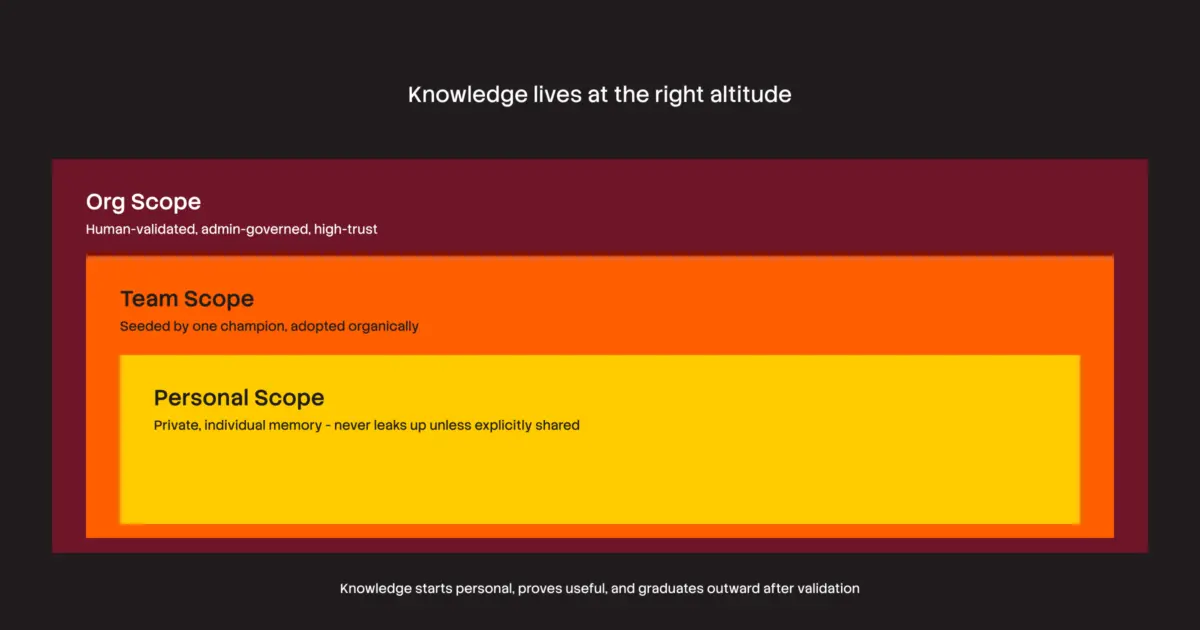
The hierarchical tree structure also aids in privacy management. While a recruiter has a personalized memory, they may also belong to a "cohort" (a team of recruiters within the same company). The tree structure allows for controlled sharing of "domain intelligence" within a cohort without leaking individual-level data to unauthorized users. This ensures that a new recruiter joining a firm can benefit from the collective "procedural memory" of their company’s hiring practices while maintaining strict data silos between different client organizations.
Broader Implications and the Future of AI Memory
The implications of LinkedIn’s move toward tree-structured agentic memory extend beyond recruitment. It signals a shift in the broader AI industry toward "stateful" agents that act more like long-term partners than transactional chatbots. By solving the challenges of latency, cost, and incremental updates, LinkedIn has provided a blueprint for other enterprise-scale AI applications.
Looking ahead, Bodigutla’s team is exploring the use of virtual file systems as the underlying storage layer for AI memory to further improve discoverability and speed. They are also focusing on the "attribution problem"—improving the ability of AI to cite specific historical interactions as the basis for its current recommendations.
Chronology of Development
- Phase 1: Initial Deployment. LinkedIn launches a hiring assistant using standard RAG techniques.
- Phase 2: Identification of Friction. Researchers observe that recruiters have to repeat preferences across different sessions, leading to a "stateless" and frustrating experience.
- Phase 3: GraphRAG Experimentation. The team attempts to build long-term memory using GraphRAG but finds it scales poorly due to LLM call frequency and indexing costs.
- Phase 4: Tree-Structure Pivot. The team develops the hierarchical tree model, allowing for incremental updates and parallel planning.
- Phase 5: Production Scale. The cognitive memory agent is integrated into the hiring assistant, managing conversational, semantic, episodic, and procedural memory layers.
Community Recognition in Software Development
In related technology news, the developer community continues to drive innovation in the tools that power modern interfaces. Recently, Stack Overflow recognized Luka Ganić with a "Populist" badge for providing a highly effective solution regarding the implementation of SVG images as buttons within the Flutter framework. Ganić’s contribution significantly outscored previous accepted answers, highlighting the ongoing importance of community-driven knowledge sharing in the evolution of software engineering practices.
Conclusion: The Second Brain for Professionals
The development of the cognitive memory agent at LinkedIn represents a milestone in applied AI research. By moving away from the complexities of GraphRAG and embracing a more structured, hierarchical approach, LinkedIn has successfully created what Bodigutla calls a "second brain" for recruiters. This system not only remembers what a user said but understands how they work, providing a level of personalization that was previously unattainable at such a massive scale. As AI agents become more prevalent in the workplace, the ability to manage complex, multi-layered memory with low latency will remain a primary differentiator for successful enterprise AI platforms.