Vera Intan Clara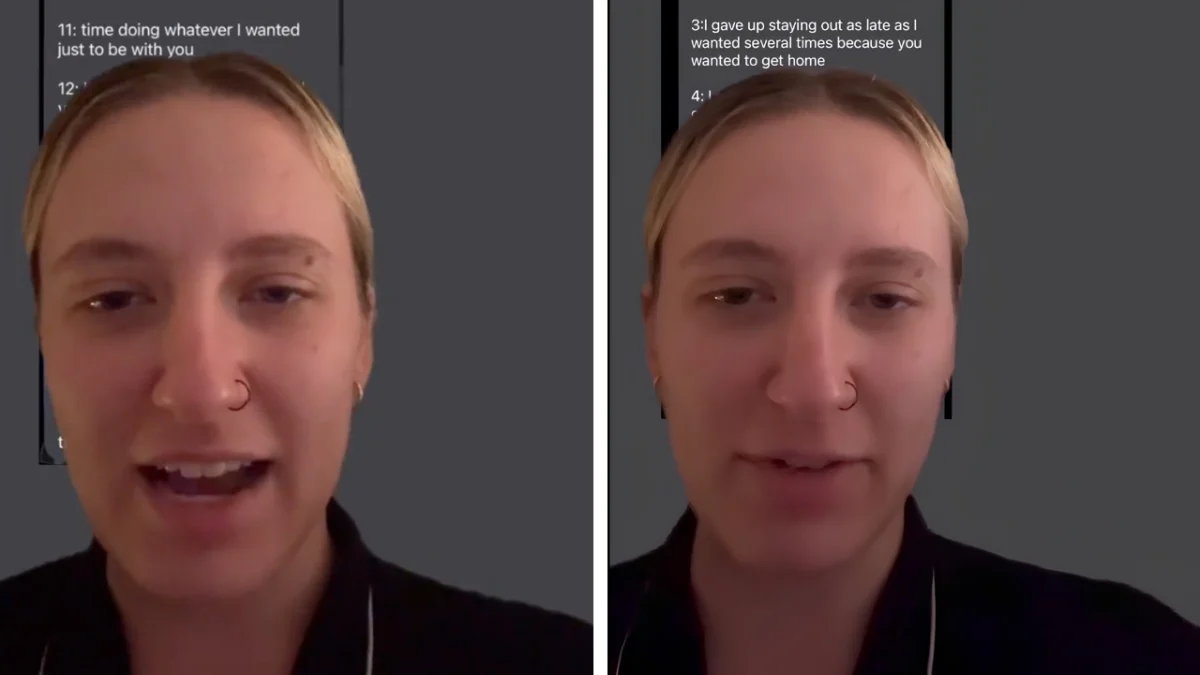
A TikTok video posted by user @rileymadison00 has ignited widespread discussion across social media platforms, revealing a list of "sacrifices" her ex-husband claimed to have made during their marriage. The content, which juxtaposed the ex-husband’s detailed grievances with the woman’s contextual commentary and her current husband’s reactions, rapidly achieved viral status, accumulating over 14.9 million views since its publication. This digital phenomenon has spurred conversations on relationship dynamics, perceived emotional labor, and the evolving landscape of post-divorce communication in the public sphere.
The Genesis of the Viral Content
The narrative unfolded when @rileymadison00, identified as Riley Madison in her TikTok presence, shared a series of text messages she received from her ex-husband during their divorce proceedings. These messages contained an extensive enumeration of 16 distinct points, which he presented as sacrifices he had purportedly made for their relationship. Madison chose to share these messages with her audience, reading them aloud alongside her current husband, whose visible reactions of bewilderment and amusement further amplified the video’s engagement. This intimate peek into a personal post-divorce communication resonated deeply with millions, prompting an avalanche of comments, analyses, and shared experiences from viewers worldwide.
Chronology of the Disclosed Grievances
The list, delivered via text during what Madison described as the dissolution of their marriage, outlined various aspects of his life he believed he had forfeited. The sequence of these "sacrifices" painted a picture of a relationship where one partner felt profoundly disadvantaged by standard marital expectations.
The ex-husband’s list commenced with a highly contentious point: "losing the opportunity to grow intimate with every other woman" he met while they were together, followed by the inability to "have conversations with said women." Madison’s contextual silence on this point, contrasted with the sheer audacity of the claim, underscored its controversial nature.
Subsequently, he cited the sacrifice of his "free time" to work, a point Madison clarified as merely the process of "getting a job" to ensure their financial stability. This particular grievance immediately struck many viewers as a fundamental aspect of adult responsibility rather than a sacrifice unique to the relationship.
Another significant item on his list pertained to their social life, specifically "each time they had to come home early when he wanted to stay out late." Madison provided critical context, revealing that during this period, she was pregnant, and these requests to return home often occurred around midnight. She further recounted instances where his reaction to her requests to go home and eat (at 12 AM while pregnant) would escalate to yelling. This detail offered a stark contrast between his perception of sacrifice and her lived experience during a vulnerable period.
Other points of contention included his perceived sacrifices regarding shared entertainment choices, where he claimed to have endured watching "Civil War documentaries every night." Further items touched upon practical issues like "car troubles" and "money," though the specifics of these grievances remained vague in his text.
Perhaps the most perplexing entry for both Madison and her current husband was the phrase: "Love I could’ve let (possibly left) for myself, or others." This abstract statement left viewers speculating about its true meaning, suggesting a profound sense of unfulfilled personal potential or an implicit accusation of love withheld.
The list continued to delve into more nebulous emotional and personal sacrifices, including giving up "secrecy and privacy," "pride," "being a jerk," "his whole life," and even "feeling good about himself." In total, the ex-husband presented 16 distinct reasons why he believed he had made extraordinary sacrifices for their union, a compilation that ultimately served as a digital record of his post-divorce grievances.
The Public’s Resounding Reaction on TikTok
The TikTok community responded to @rileymadison00’s video with an overwhelming mixture of mockery, disbelief, and validation. The comments section quickly became a forum for collective analysis, humor, and shared experiences, reflecting broader societal discussions about gender roles in relationships and differing perceptions of effort and sacrifice.
Many commenters found humor in the ex-husband’s unique framing of basic relationship tenets as sacrifices. The claim about "getting a job" particularly resonated, with one user noting it was "the funniest way to describe just normal employment." This sentiment was echoed by countless others who highlighted the incongruity of his list with conventional expectations of partnership.
A significant portion of the feedback provided direct validation to Riley Madison. When she posed the question to her followers if she was "in any way in the wrong about anything mentioned on the list," the consensus was a resounding "no." Many commenters asserted that her only misstep had been remaining in the relationship for as long as she did, implicitly suggesting a pattern of self-centeredness or emotional immaturity on the part of the ex-husband.
The sheer audacity of some of the claims, especially the notion of sacrificing opportunities with "every other woman," sparked widespread incredulity. Users often pointed out the inherent contradiction of committing to a monogamous relationship while simultaneously lamenting the loss of other romantic prospects. This highlighted a perceived lack of understanding regarding the fundamental principles of exclusive partnership.
Furthermore, some viewers expressed curiosity about why Madison chose to retain and share such texts, especially being happily remarried. In a subsequent video, she provided a candid response, explaining simply, "Because they’re funny." This response underscored the coping mechanism of humor in processing past relational trauma and the power of sharing such experiences for collective amusement and validation.
Supporting Data and Broader Contextual Framework
The viral nature of Riley Madison’s video can be understood within several broader sociological and psychological contexts. Divorce rates, while fluctuating, remain a significant aspect of modern relationships. According to data from organizations like the Centers for Disease Control and Prevention (CDC) and various demographic studies, a substantial percentage of marriages end in divorce, leading to complex emotional, financial, and communicative aftermaths. The process of divorce often involves a period of re-evaluation where each party processes the relationship’s end, sometimes leading to distorted perceptions of their own contributions and sacrifices.
This TikTok incident also sheds light on the concept of "emotional labor" within relationships. Coined by sociologist Arlie Hochschild, emotional labor originally referred to the management of feelings required by employees in certain professions. In popular discourse, it has expanded to encompass the unseen and often unacknowledged mental and emotional work involved in maintaining a household and relationship – from planning social events to managing finances and anticipating a partner’s needs. The ex-husband’s list, particularly his framing of "getting a job" or foregoing "other women" as sacrifices, starkly contrasts with common understandings of mutual effort and shared responsibility in a partnership, where fidelity, financial contribution, and consideration for a pregnant partner are generally considered baseline expectations, not extraordinary concessions. This disparity in perceived contributions often fuels resentment and can be a significant factor in relationship breakdown.
Moreover, the phenomenon underscores the role of social media platforms like TikTok as emergent public forums for personal narratives and collective judgment. In an increasingly digital world, individuals frequently turn to online communities to process personal experiences, seek validation, or even find humor in challenging situations. The instant feedback loop and potential for virality mean that personal anecdotes, once confined to private conversations, now have the capacity to reach millions, shaping public discourse on intimate topics. This dynamic, while offering a sense of community and shared experience, also raises questions about privacy, authenticity, and the potential for online shaming.
Implications and Ethical Considerations
The public sharing of private divorce communications, even with the intention of humor or seeking validation, carries several implications. From a journalistic standpoint, it is crucial to note that the Daily Dot, like many other news outlets, was unable to independently verify the authenticity of the messages described in the video or confirm the identity of the ex-husband. This highlights a persistent challenge in the age of viral content: the difficulty in substantiating personal claims made on social media. While the emotional truth of Madison’s experience resonates, the factual veracity of the ex-husband’s intent or the full context of their interactions remains within their private history.
Ethically, the public broadcasting of such grievances, even from a former partner, treads a fine line between personal expression and potential reputational harm. While Riley Madison’s video primarily elicited support for her, the ex-husband, albeit unnamed, became the subject of widespread ridicule. This raises questions about the long-term impact on individuals whose private communications become public spectacles, regardless of the perceived merits of their arguments. Social media platforms grapple with content moderation policies that balance freedom of expression with protection against harassment and defamation, a complex task in scenarios involving highly personal disputes.
Furthermore, the viral reaction to this video contributes to broader societal conversations about gender roles and expectations in relationships. The ex-husband’s list, particularly its emphasis on perceived restrictions on his freedom and autonomy (e.g., "other women," "staying out late"), reflects a narrative often associated with a reluctance to embrace the responsibilities of partnership and family life. The public’s overwhelming dismissal of these "sacrifices" as trivial or indicative of immaturity suggests a collective societal shift towards valuing mutual respect, shared responsibility, and emotional maturity in modern relationships.
In conclusion, Riley Madison’s viral TikTok video transcends a mere personal anecdote, serving as a powerful lens through which to examine the complexities of post-divorce communication, the evolving dynamics of emotional labor, and the pervasive influence of social media in shaping public discourse around intimate human experiences. It underscores how deeply ingrained perceptions of sacrifice, responsibility, and partnership continue to be debated and redefined in contemporary society.