Sisilia Frederika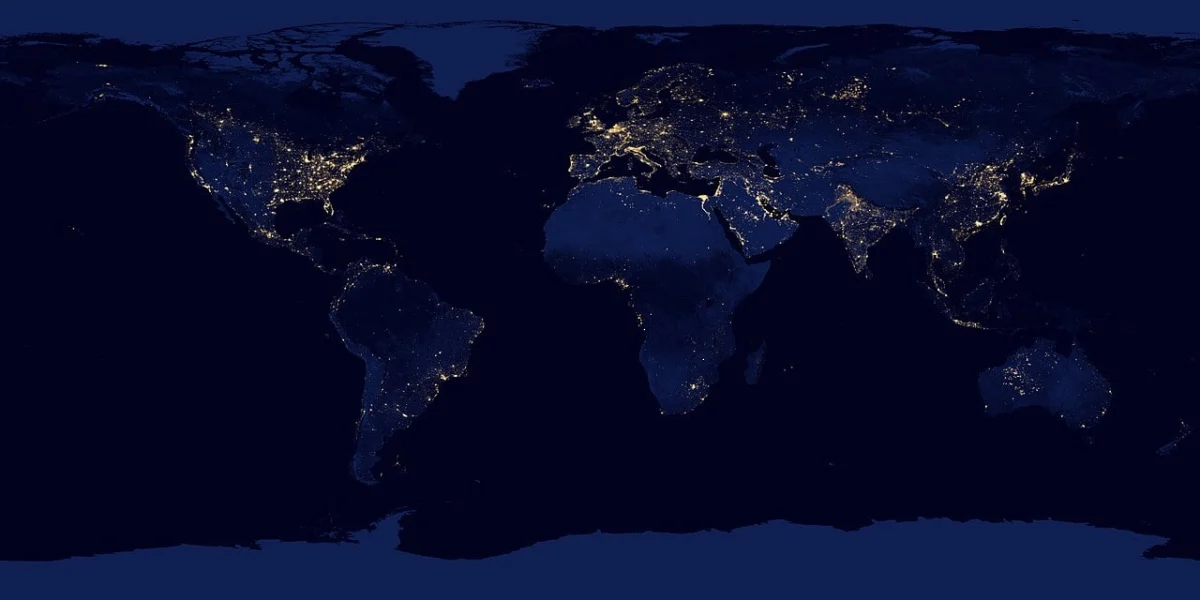
The search for life beyond Earth has traditionally focused on the hunt for "biosignatures"—chemical markers like oxygen, methane, and ozone that suggest the presence of biological processes. However, as astronomical technology advances toward the next generation of space telescopes, the scientific community is increasingly pivoting toward "technosignatures." These are detectable indicators of advanced technology and industrial activity on distant worlds. While a single pixel of light from an exoplanet can reveal its atmospheric composition and surface features, it may also carry the unmistakable "smell" of a civilization’s factories, power grids, and chemical plants. Central to this upcoming era of discovery is the Habitable Worlds Observatory (HWO), a mission recommended by the 2020 Decadal Survey on Astronomy and Astrophysics (Astro2020), which aims to directly image at least 25 Earth-like planets and analyze their atmospheres for signs of both life and technology.
The Shift from Biosignatures to Technosignatures
For decades, astrobiologists have grappled with the ambiguity of biological markers. Oxygen, for instance, can be produced by photosynthetic life, but it can also be generated abiotically through the photolysis of water vapor in a planet’s upper atmosphere. Methane is another "noisy" signal, as it can be produced by both methanogenic microbes and hydrothermal volcanic activity. To confirm life, scientists must find these gases in specific disequilibrium—a difficult task that requires rigorous statistical modeling to rule out non-living explanations.
Technosignatures, by contrast, offer a higher degree of certainty. Many industrial chemicals have no known natural origin. If a telescope detects chlorofluorocarbons (CFCs) in the atmosphere of a planet orbiting a distant G-type star, the probability of a geological or astronomical explanation is effectively zero. These molecules represent "synthetic chemistry," the hallmark of a civilization that has harnessed industrial processes. Unlike the subtle, often ambiguous signals of primitive life, the presence of these chemicals would serve as a "neon sign" indicating the presence of an intelligent, technological society.
The Chemistry of Industrial Detection
Industrial civilizations release a variety of gases that leave distinctive imprints on a planet’s transmission or emission spectrum. The most prominent candidates for detection by the HWO and subsequent missions include:
Chlorofluorocarbons (CFCs)
CFCs, such as Freon-11 and Freon-12, were used on Earth as refrigerants and aerosol propellants. They are exceptionally potent greenhouse gases and are entirely anthropogenic. On Earth, their presence was only detected after the 1930s. From an astronomical perspective, CFCs are ideal technosignatures because they absorb infrared light in specific, narrow bands that do not overlap with common natural gases like water vapor or carbon dioxide.
Sulfur Hexafluoride ($SF_6$)
Used primarily in high-voltage electrical insulation and semiconductor manufacturing, sulfur hexafluoride is the most potent greenhouse gas evaluated by the Intergovernmental Panel on Climate Change (IPCC). It is thousands of times more effective at trapping heat than $CO_2$ and has an atmospheric lifetime of approximately 3,200 years. Its stability and lack of natural sources make it a premier target for exoplanetary surveys.
Nitrogen Trifluoride ($NF_3$) and Perfluorocarbons (PFCs)
These chemicals are byproducts of modern electronics manufacturing, including the production of solar panels and liquid crystal displays (LCDs). $CF_4$ (tetrafluoromethane), for example, has an atmospheric residence time of over 50,000 years. If a civilization ever reached an industrial peak, the "scent" of their electronics industry could linger in their atmosphere for tens of millennia, long after the civilization itself might have transitioned to cleaner energy or even vanished.
The Pandemic Proof of Concept: Monitoring the Global Economy from Orbit
The feasibility of monitoring industrial activity through atmospheric chemistry was inadvertently demonstrated during the COVID-19 pandemic. In 2020, as nations implemented lockdowns, satellite data from the European Space Agency’s Sentinel-5P and NASA’s Aura satellite showed a dramatic decline in nitrogen dioxide ($NO_2$) levels. $NO_2$ is a byproduct of high-temperature combustion in vehicle engines and coal-fired power plants.
In regions like the Yangtze River Delta in China and the Po Valley in Italy, $NO_2$ concentrations dropped by as much as 30% to 50% within weeks of industrial shutdowns. This "accidental experiment" proved that orbital sensors can detect real-time fluctuations in a planet’s industrial output. For an alien observer with a telescope equivalent to the HWO, the 2020 lockdowns would have appeared as a sudden, sharp dip in Earth’s $NO_2$ signature, effectively allowing them to "plot" the global GDP and economic health of human civilization from light-years away.
A Chronology of Detection Capabilities
The quest to find life and technology on other worlds has followed a steady technological progression:
- 1960s – 1990s: The Radio Era. Early SETI (Search for Extraterrestrial Intelligence) efforts focused almost exclusively on radio waves, assuming civilizations would broadcast their presence. However, radio signals are subject to the inverse square law, meaning they weaken rapidly over distance and are easily lost in cosmic noise.
- 1995 – 2010: The Discovery Era. The first exoplanets were confirmed. Telescopes like Spitzer and Hubble began the first tentative studies of "Hot Jupiter" atmospheres, though they lacked the resolution to see Earth-sized worlds.
- 2021 – Present: The JWST Era. The James Webb Space Telescope (JWST) began analyzing the atmospheres of TRAPPIST-1 planets. While JWST can detect $CO_2$ and methane, it is not optimized for the direct imaging of Earth-like planets in the "habitable zone."
- 2040s (Projected): The HWO Era. The Habitable Worlds Observatory is expected to launch. It will utilize an advanced coronagraph—a device that blocks the light of a parent star—to allow the faint light reflected off a planet to be captured and analyzed. This is where the detection of specific industrial pollutants becomes a reality.
The Paradox of the "Pollution Window"
One of the most significant challenges in detecting technosignatures is the "temporal window" of pollution. As civilizations advance, they often recognize the environmental damage caused by industrial byproducts and move toward sustainability.
The Montreal Protocol of 1987 serves as a primary example. After scientists discovered that CFCs were depleting the ozone layer, the international community phased them out. Earth’s CFC levels peaked in the 1990s and are currently declining. By the year 2200, Earth’s most distinct industrial "neon sign" may be gone. Similarly, a transition away from fossil fuels will eventually eliminate the $NO_2$ signature.
This creates a paradox: the more mature and sustainable a civilization becomes, the less detectable it is through pollution. A civilization might only be "loud" in the infrared spectrum for a few centuries—a mere blink in the 4.5-billion-year history of a planet. This implies that if we do detect a polluted exoplanet, we are likely catching a civilization in its "adolescent" phase, characterized by rapid industrial growth but perhaps lacking long-term environmental management.
Official Perspectives and Scientific Analysis
NASA’s Goddard Space Flight Center and the SETI Institute have increasingly collaborated on technosignature workshops. Dr. Ravi Kopparapu, a planetary scientist at NASA Goddard, has noted that $NO_2$ on Earth is primarily produced by human activity, and detecting it on another planet could indicate a civilization using combustion processes similar to our own.
"We found that for a sun-like star, $NO_2$ could be detected with about 400 hours of observation time using a large telescope," Kopparapu stated in a 2021 study. While 400 hours is a significant investment of telescope time, it is within the operational parameters of a flagship mission like HWO.
Furthermore, the search for technosignatures avoids the "human-centric" bias of radio SETI. While an alien civilization might not choose to broadcast radio signals toward Earth, they cannot avoid the laws of thermodynamics; any industrial activity will inevitably produce waste heat and chemical byproducts that must be vented into the atmosphere.
Broader Impact and the Future of Astrobiology
The implications of finding a technosignature would be the most significant discovery in human history. It would provide an answer to the Fermi Paradox—the question of why we haven’t seen signs of others despite the high probability of their existence. Finding a "dirty" planet would suggest that industrialization is a common stage in the evolution of intelligent life, while finding many "clean" planets with biosignatures but no technosignatures might suggest that civilizations either transition to "invisible" technologies quickly or fail to survive their industrial adolescence.
As the Habitable Worlds Observatory moves from the design phase to construction over the next two decades, the focus will remain on refining the spectroscopic "fingerprints" of these chemicals. Scientists are currently building databases of synthetic molecules, simulating how they would appear across different star types and atmospheric pressures.
Ultimately, the HWO represents a shift in our cosmic perspective. We are moving from a passive search for "signals" to an active "smelling" of the galaxy. Whether we find a pristine world covered in forests or a bustling industrial hub choked with $SF_6$, the result will redefine our place in the universe. For now, we remain in our own "pollution window," a brief, bright flash of chemical activity on a single pale blue dot, waiting to see if anyone else in the darkness is looking back.