Chandra Wibowo
Bitcoin and the broader cryptocurrency market looked poised for recovery on Tuesday as progress on landmark U.S. crypto legislation boosted sentiment, with analysts also pointing to a slowdown in the Artificial Intelligence (AI) trade as a potential catalyst for capital rotation back into digital assets.
Regulatory Clarity on the Horizon: A Game-Changer for Digital Assets
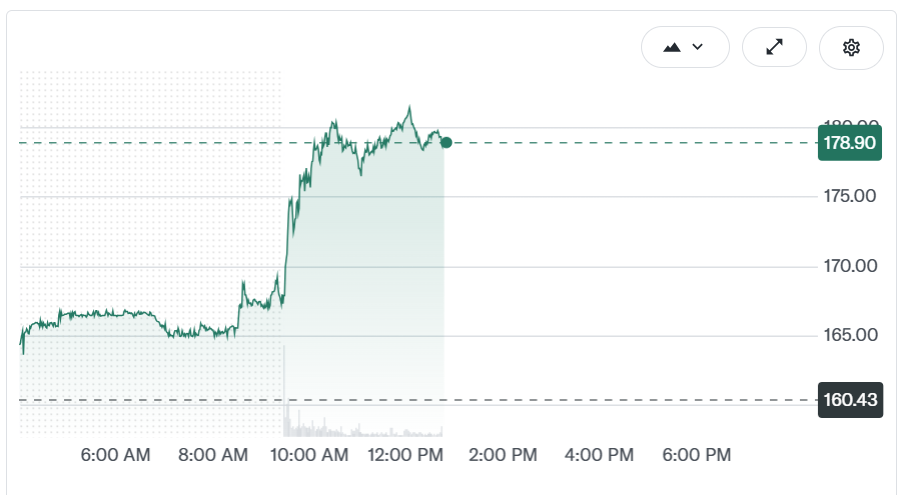
The cryptocurrency market experienced a notable uptick on Tuesday, with Bitcoin (BTC) briefly surpassing the $67,000 mark and Ether (ETH) nearing $1,950. This positive momentum extended to crypto-related equities, which saw significant rallies. Coinbase shares climbed 12%, American Bitcoin gained 14%, and Cipher Digital jumped 17%, reflecting renewed investor confidence.
This surge in market activity followed a significant statement from U.S. Treasury Secretary Scott Bessent. He indicated that lawmakers were nearing a critical juncture, describing the legislative process for the long-debated CLARITY Act as being at the "1-yard line." The CLARITY Act, if passed, is poised to establish a clear framework for the regulatory oversight of digital assets in the United States, specifically defining the roles and responsibilities of the Securities and Exchange Commission (SEC) and the Commodity Futures Trading Commission (CFTC). This legislative progress is widely seen as a crucial step towards providing much-needed regulatory certainty, a factor that has long been a concern for institutional investors and the broader adoption of cryptocurrencies.
The CLARITY Act, a product of extensive bipartisan discussions, aims to address the complex and often overlapping jurisdictions of various regulatory bodies concerning digital assets. For years, the industry has grappled with an ambiguous regulatory landscape, leading to uncertainty for businesses, investors, and innovators. The potential passage of this act signifies a proactive effort by U.S. lawmakers to create a more defined and predictable environment for the burgeoning digital asset sector. This clarity is expected to not only foster innovation but also attract greater institutional capital, which has historically been hesitant to engage fully due to regulatory concerns.
The AI Trade Slowdown: A Pivot Point for Capital Allocation?
Beyond the significant regulatory tailwinds, market observers are also highlighting a potential shift in investment strategy. Analysts suggest that a slowdown in the Artificial Intelligence (AI) trade could be a significant catalyst for capital to reallocate back into digital assets. For an extended period, AI-related equities have been the dominant force in speculative markets, capturing a substantial portion of investor attention and capital.

"With Bitcoin at the top end of the range, we see the path of least resistance being higher and an elevated likelihood of a breakout of the range as the AI trade slows and the market becomes more comfortable with the path of interest rates," commented Stephane Ouellette, CEO of FRNT Financial, in a statement to Bloomberg. This perspective suggests that as the fervor surrounding AI stocks begins to wane, investors may seek out alternative asset classes with strong growth potential, and cryptocurrencies are emerging as a prime candidate.
A Shifting Investment Landscape: From AI Dominance to Digital Assets
The past year has witnessed the unprecedented rise of AI-related stocks, largely driven by the explosive growth and potential of generative AI technologies, exemplified by the widespread adoption of platforms like ChatGPT since its launch in late 2022. This technological wave has spurred immense innovation, attracted substantial venture capital investment, and ignited retail enthusiasm, consequently diverting a significant portion of the market’s speculative appetite toward AI.
The Philadelphia Semiconductor Index (SOX), a key benchmark for chipmakers essential to the AI boom, had surged by approximately 110% over this period, underscoring the immense investor interest in the sector. However, recent market dynamics indicate a potential cooling-off. Last week, the SOX index entered a technical bear market, experiencing a decline of over 20% from its recent peak. This downturn is attributed to growing investor concerns regarding the lofty valuations of AI-centric companies and the potential for overcapacity in AI infrastructure spending.
This shift in sentiment marks a significant departure from the narrative that has dominated financial markets for the better part of the last year and a half. The relentless focus on AI has, at times, overshadowed other promising sectors, including digital assets. The current confluence of regulatory progress in the crypto space and the apparent maturation of the AI investment narrative suggests a potential rebalancing of portfolios, with digital assets poised to benefit from this reallocation.
Timeline and Background of the CLARITY Act
The journey towards the CLARITY Act has been a protracted one, marked by numerous legislative proposals, committee hearings, and intense lobbying efforts from various stakeholders within the financial and technology sectors. The need for a comprehensive regulatory framework for digital assets became increasingly apparent as the cryptocurrency market grew in size and complexity, attracting both mainstream financial institutions and retail investors.
Key milestones in the legislative process include:
- Early 2023: Initial discussions and proposals for crypto regulation gain momentum in response to high-profile market events and increased institutional interest.
- Mid-2023: Various bipartisan efforts emerge, with different committees in Congress exploring potential legislative solutions. The CLARITY Act begins to take shape as a prominent proposal aimed at establishing clear regulatory lines between the SEC and CFTC.
- Late 2023 – Early 2024: The CLARITY Act undergoes further refinement, with lawmakers engaging with industry experts, regulators, and consumer advocacy groups to address concerns and incorporate feedback. Debates center on defining what constitutes a security versus a commodity in the context of digital assets.
- Recent Weeks: Renewed urgency and bipartisan consensus appear to be building, culminating in Treasury Secretary Bessent’s "1-yard line" assessment, indicating that a legislative breakthrough may be imminent.
The CLARITY Act, in essence, seeks to provide a clear delineation of authority. The SEC typically oversees securities, while the CFTC regulates commodities. Many digital assets, particularly those with utility and functionality beyond mere investment, fall into a grey area, leading to regulatory ambiguity. The CLARITY Act aims to resolve this by providing a more precise classification framework, which is expected to streamline compliance for businesses and offer greater investor protection.
Broader Market Implications and Analysis
The potential passage of the CLARITY Act carries significant implications for the cryptocurrency market and the broader financial ecosystem.
- Institutional Adoption: Regulatory clarity is a critical prerequisite for many institutional investors, including pension funds, asset managers, and large corporations, to increase their exposure to digital assets. A well-defined regulatory framework can mitigate risks and provide the confidence needed for larger capital inflows.
- Innovation and Development: Clear rules of the road can foster a more predictable environment for developers and entrepreneurs, encouraging further innovation in blockchain technology and decentralized applications. This could lead to the development of new products and services, further integrating digital assets into the global financial system.
- Investor Protection: The act aims to enhance investor protection by providing clearer guidelines on disclosures, market conduct, and the responsibilities of digital asset intermediaries. This can help prevent fraudulent activities and build greater trust in the market.
- U.S. Competitiveness: Establishing a robust regulatory framework could position the United States as a leader in the digital asset space, attracting talent and investment away from jurisdictions with less developed or more restrictive regulatory regimes.
- Impact on Crypto-Related Stocks: The positive sentiment surrounding the CLARITY Act has already translated into gains for crypto-related stocks. This trend is likely to continue as regulatory certainty increases, potentially leading to further appreciation in the valuations of companies operating in the digital asset ecosystem.
The dual catalysts of regulatory progress and a potential pivot from the AI trade create a compelling narrative for a renewed bull run in cryptocurrencies. While the market remains susceptible to macroeconomic factors and inherent volatility, the current developments suggest a period of significant positive momentum. The coming weeks and months will be crucial in observing the legislative process unfold and witnessing how capital flows adjust in response to these evolving market dynamics. The cryptocurrency market appears to be at an inflection point, with the potential for substantial growth driven by both regulatory advancements and a recalibration of investor sentiment.