Chandra Wibowo
The cryptocurrency landscape is a dynamic ecosystem, constantly evolving in response to technological advancements, market sentiment, and regulatory pressures. This past week has underscored this fluidity, with significant developments on multiple fronts. From pioneering quantum-resistant cryptography on the Bitcoin mainnet to Solana validators making crucial decisions about network inflation, and from the ongoing scrutiny of digital asset ventures linked to prominent political figures to optimistic projections for Bitcoin’s future price trajectory, the industry is navigating a complex web of innovation, speculation, and governance.
Bitcoin’s Quantum Leap: Fortifying the Network Against Future Threats
Despite a prevailing skepticism within the Bitcoin community regarding the immediate proximity of the quantum computing threat, recent developments highlight tangible progress in securing the blockchain against such potential future attacks. Two significant events this week have illuminated the ongoing efforts to upgrade Bitcoin’s cryptographic underpinnings and protect its transaction outputs from sophisticated decryption.
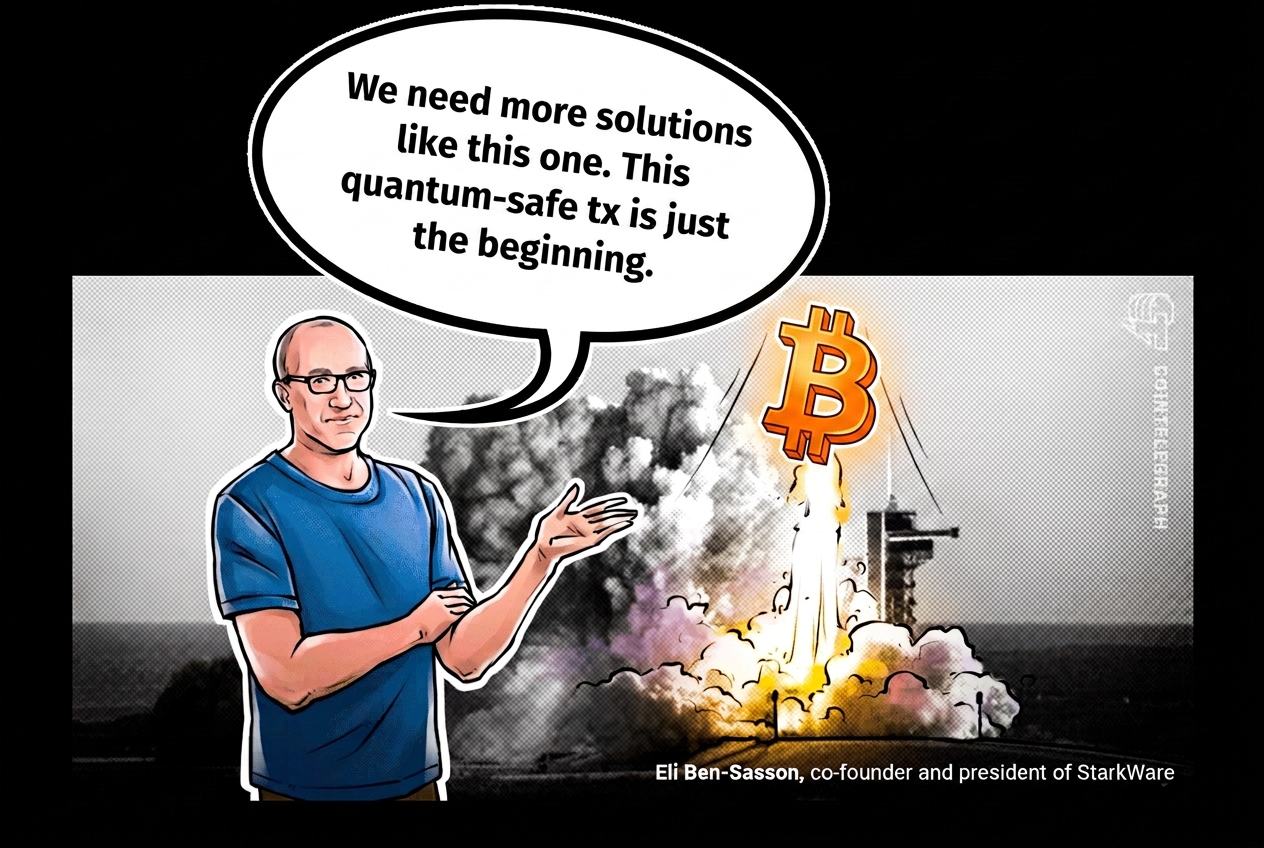
One pivotal moment involved StarkWare researcher Avihu Levy, who successfully tested an experimental quantum-resistant transaction on the Bitcoin mainnet. This groundbreaking test focused on safeguarding transactions during the ephemeral period when public keys are exposed in the mempool, a window of vulnerability that could theoretically be exploited by future quantum computers. Onchain data confirmed that StarkWare utilized this novel approach to spend a 10,000-satoshi output. Levy’s Quantum Safe Bitcoin (QSB) scheme ingeniously combines hash-based one-time signatures with computational search mechanisms to bind authorization to a specific transaction. While this demonstration proves the concept’s viability, its current practical application is limited. The process is exceptionally time-consuming, with each transaction taking hours to complete, and incurring significant costs estimated between $150 to $200. This makes it a more of a theoretical "last resort" defense than a scalable solution for everyday transactions.
Complementing this experimental breakthrough, Blockstream researchers have also made significant strides toward long-term network-wide upgrades. On August 27th, they published a Bitcoin Improvement Proposal (BIP) outlining the integration of the SHRINCS signature scheme. SHRINCS represents a substantial effort to slim down a previously unwieldy hash-based post-quantum signature algorithm. The researchers managed to reduce its size by approximately 13.23 times. While this is an impressive feat, the SHRINCS signature remains considerably larger than Bitcoin’s existing signatures – at least nine times bigger – and introduces a set of trade-offs that need careful consideration.
Jonas Nick, a researcher at Blockstream, described the SHRINCS BIP as "the first concrete proposal for a post-quantum signature scheme designed specifically for Bitcoin." He acknowledged that the scheme is "not optimal along every axis" but emphasized its current standing as "a very good trade-off among the options we have now." The implications of these developments are profound. The successful testing of QSB demonstrates that quantum-resistant solutions can be integrated, even if currently inefficient. The SHRINCS BIP, on the other hand, represents a more scalable path toward universal quantum resistance, albeit with performance compromises. The long-term goal is to proactively fortify Bitcoin against the existential threat posed by quantum computing, ensuring its longevity and security for decades to come. This dual approach of experimental validation and proposal development signals a maturing understanding and proactive response to cryptographic challenges within the Bitcoin ecosystem.

Solana’s Accelerated Disinflation: A Strategic Move Towards Supply Control
In a significant governance decision, Solana validators have overwhelmingly voted to accelerate the network’s annual disinflation rate. This strategic move aims to reduce the overall supply of SOL tokens at a faster pace, with the ultimate goal of reaching a terminal inflation rate of 1.5% significantly sooner than previously projected. The proposal, known as SGP-0002 or "Double Disinflation," was approved with a robust 67% support from eligible staked participants, representing 60.7% of the network’s total stake. This decision will reduce the annual issuance of SOL by an estimated 18.9 million tokens over the next six years.
Under the revised schedule, Solana is now expected to achieve its target 1.5% annual inflation rate in approximately 2.8 years. This is a substantial acceleration compared to the previous projection of roughly 5.7 years. The increased disinflation rate will double from the current 15% to 30%. The vote saw 25.16% of validators voting against the proposal, while 7.84% abstained, indicating a generally strong consensus within the validator community.
This decision comes at a time when Solana has been experiencing remarkable network activity. Onchain data presented by The Kobeissi Letter revealed that Solana processed a record 4.2 billion transactions in July, marking a 13.5% increase from the previous month. The cumulative transaction count has surged by approximately 2 billion since December, representing an impressive 91% growth. This surge in network usage, coupled with the accelerated disinflation, signals a concerted effort by Solana’s stakeholders to manage tokenomics effectively and potentially enhance the long-term value proposition of the SOL token by controlling supply growth in line with network adoption. The implications of this accelerated disinflation could lead to a more predictable and potentially deflationary environment for SOL in the medium term, which may be attractive to investors and long-term holders.
Political Figure’s Crypto Ventures Under Fire: A $4.7 Billion Investor Loss Allegation
A new report from the nonprofit consumer advocacy organization Public Citizen has levied serious accusations against U.S. President Donald Trump, alleging that his and his family’s digital asset ventures have resulted in an estimated $4.7 billion in losses for investors since 2022. The report meticulously details various cryptocurrency-related investments linked to the former president, painting a picture of significant financial underperformance.
According to the report, investors have suffered substantial losses across several ventures. The Official Trump (TRUMP) memecoin alone is cited as being responsible for $3.2 billion in investor losses. The World Liberty Financial governance token is estimated to have cost investors at least $1 billion, while Trump Media’s digital asset treasury is reported to have incurred losses of $450 million. Furthermore, the president’s non-fungible token (NFT) trading cards, launched in 2022, are associated with at least $9.3 million in investor losses. The report humorously notes that holders of the USD1 stablecoin, however, remained unaffected by these losses.
These allegations have significant political and regulatory ramifications. The financial outcomes of Trump’s crypto ventures are reportedly a key factor hindering the passage of the CLARITY Act, a piece of legislation that aims to strengthen protections against elected officials issuing cryptocurrencies. Democrats are reportedly pushing for more robust safeguards to prevent such conflicts of interest and potential investor exploitation. The scrutiny on these ventures underscores a broader concern about the intersection of political influence and the volatile cryptocurrency market, and the potential for significant financial harm to retail investors caught in speculative ventures.
Bitcoin’s Resurgence: Outpacing AI Stocks and Approaching New Peaks
Bitcoin has demonstrated remarkable resilience and strength in its recent market performance, with a notable 23% rally over the past week outperforming many traditional growth sectors, including AI-linked infrastructure stocks. This resurgence has been particularly evident in the performance of beaten-down Bitcoin mining companies. Canaan, American Bitcoin, and Cango all experienced significant gains, ranging from 41% to 67%. In contrast, prominent AI-related companies like CoreWeave saw gains of around 21%, Nebius at 17%, and IREN at 15%, underscoring Bitcoin’s current market momentum.
The influx into Bitcoin Exchange-Traded Funds (ETFs) has also been a significant driver of this rally. In August, Bitcoin ETFs minted over $3.3 billion in inflows, marking the strongest month since October 2025’s all-time high. While a nine-day streak of positive inflows was broken by outflows on Friday, the overall trend indicates sustained institutional interest.
Wall Street analysts from Bernstein are projecting a continuation of this upward trend, suggesting that the market is at the cusp of a new four-year cycle for Bitcoin. Their forecast indicates that Bitcoin could reclaim the $125,000 mark under both their base and bull case scenarios. Looking further ahead, Bernstein anticipates Bitcoin to peak at $300,000 in 2029 under their base case scenario, with a more bullish outlook predicting a top of over $500,000 in the same year. This optimistic outlook is fueled by factors such as increasing institutional adoption, the halving event’s impact on supply, and a potentially improving macroeconomic environment. The comparison to AI stocks highlights a potential shift in investment focus, with capital increasingly flowing into established digital assets like Bitcoin amidst broader market uncertainties.
Revolut Launches Euro Stablecoin: Expanding Access to Digital Euros
Financial super-app Revolut is making a significant move into the stablecoin market with the rollout of its first stablecoin, EURR, a token pegged to the Euro. Initially launched to approximately 2 million customers in Denmark, Poland, and Portugal, this phased rollout is set to expand to other European Economic Area (EEA) markets later this year, contingent on product, operational, and regulatory readiness.

EURR is issued by Bridge Building S.A., a Luxembourg-based entity of Stripe-owned stablecoin infrastructure company Bridge. Revolut has announced plans to integrate EURR seamlessly into its retail application, with future support for multiple blockchain networks and the ability to transfer tokens to external wallets. The stablecoin is launching on the Ethereum network, a move that leverages the largest and most established smart contract platform.
The introduction of a regulated, euro-pegged stablecoin by a major financial institution like Revolut has several implications. It signals growing mainstream adoption of stablecoins as a legitimate financial instrument and a bridge between traditional finance and the digital asset world. For users in the initial rollout markets, EURR offers a stable and accessible way to engage with digital assets, potentially facilitating faster and cheaper cross-border transactions within the Eurozone. The broader expansion across the EEA suggests a strategic effort to capture a significant share of the European stablecoin market, potentially increasing competition and driving further innovation in the space.
Market Pulse: Winners, Losers, and Expert Predictions
The cryptocurrency market experienced a mixed week, with Bitcoin closing the period trading at $78,420, up 1.1%. Ethereum saw a modest gain of 0.6% to $2,469, while XRP experienced a notable decline of 8.7% to $1.38. The total market capitalization stood at $2.64 trillion, according to CoinMarketCap.
Among the top 100 cryptocurrencies, the week’s top altcoin performers included VeChain (VET) with an 18.5% gain, SPX6900 (SPX) up 17.3%, and Uniswap (UNI) appreciating by 15.2%. Conversely, the week’s biggest altcoin losers were Aptos (APT), down 16.4%, Stable (STABLE) falling 14.7%, and Morpho (MORPHO) decreasing by 13.6%.
Prediction of the Week: Bitcoin Bear Market Declared Over by CryptoQuant CEO
Ki Young Ju, the CEO of CryptoQuant, has signaled a significant shift in market sentiment, asserting that the Bitcoin bear market is officially over. He pointed to the first positive reading on CryptoQuant’s Bull/Bear Market Cycle Indicator since early October as evidence. This indicator, which measures onchain profitability metrics against a 365-day moving average, including the Market Value to Realized Value (MVRV) ratio, Net Unrealized Profit/Loss (NUPL), and Spent Output Profit Ratio (SOPR), has shown a clear bullish trend. Values above zero indicate bullish phases in the BTC price cycle, reflecting improving profitability.

The indicator reached its cycle lows on February 5th, coinciding with Bitcoin’s dip to $60,000, registering a reading of -1.244, indicative of "extreme bear" conditions. As of August 26th, the most recent date with complete data, the Bull/Bear indicator displayed a positive reading of 0.042, firmly placing it within the "bull" bracket. This onchain data-driven analysis suggests a fundamental recovery in market health and profitability, supporting the notion that the prolonged bear market phase has concluded.
FUD of the Week: American Skepticism Towards Crypto in Retirement Plans
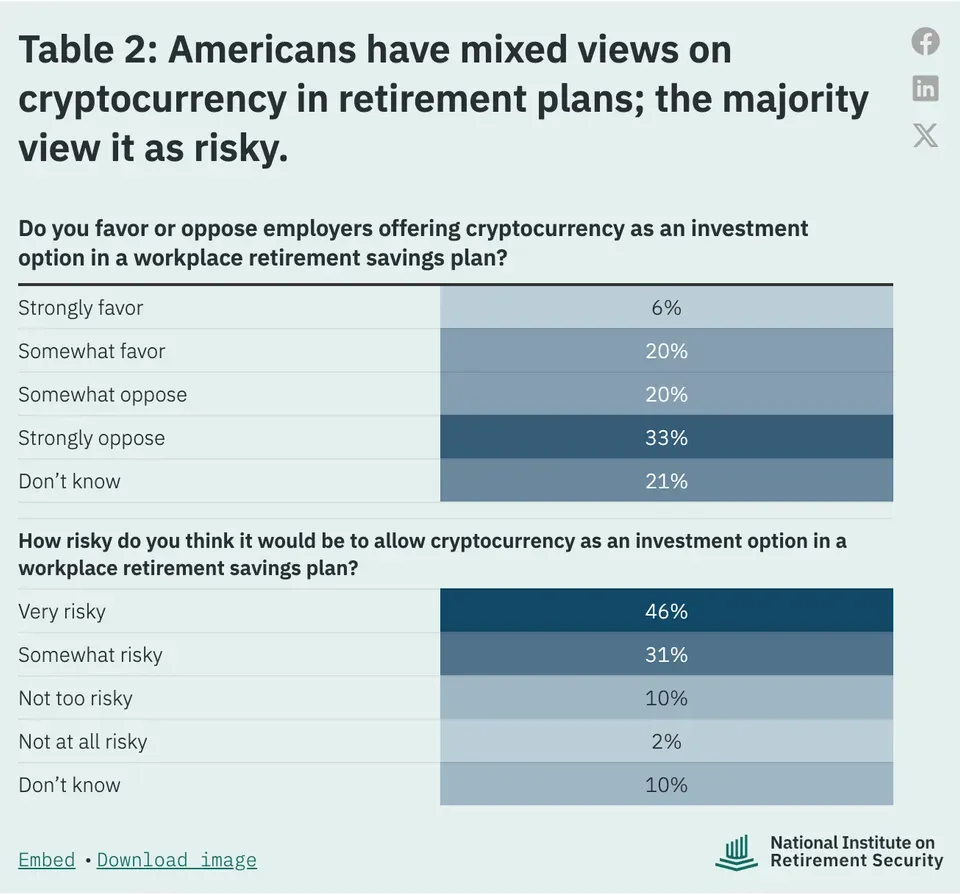
A recent survey from The National Institute on Retirement Security has revealed a significant level of apprehension among Americans regarding the inclusion of cryptocurrency in workplace retirement plans. A striking 77% of respondents view crypto in these plans as risky, with 46% considering it "very risky." Furthermore, a majority of 53% of Americans oppose employers offering cryptocurrency as an investment option within retirement plans.
The survey, conducted by Greenwald Research between October 24 and November 14, 2025, surveyed 1,203 Americans aged 25 and older. The findings highlight a prevailing concern for retirement security across the United States, with many individuals expressing reservations about the volatility and perceived risks associated with digital assets. This sentiment could pose a hurdle for broader institutional adoption of cryptocurrencies within traditional retirement savings vehicles, underscoring the need for enhanced education, robust regulatory frameworks, and proven long-term stability before widespread acceptance can be achieved in this critical financial domain.
Developments and Denials in the Trump-Associated Crypto Space
The volatile landscape surrounding cryptocurrency ventures linked to Donald Trump has seen further developments. While Public Citizen has released its report alleging significant investor losses, a separate entity, Real Trump Coins, has vehemently denied launching, promoting, or authorizing the Trump Digital GOLD token. This token briefly appeared across the company’s online presence before collapsing. Real Trump Coins attributes the promotion to "third-party bad actors."
The denial comes after the Real Trump Coins X account promoted the Solana-based token on a Saturday, directing users to RealTrumpCoins.com where GOLD was also advertised. These posts were subsequently deleted, and the X account now links to a different domain, TrumpCoins.com. Real Trump Coins issued a statement on X asserting that it "has not authorized and will not launch, promote, or authorize any digital token" and is collaborating with authorities to investigate the matter. This situation highlights the challenges in distinguishing legitimate projects from fraudulent schemes, especially in the often-unregulated digital asset space, and the reputational risks associated with any association with prominent public figures.
Polygon Addresses Security Vulnerabilities Through Network Hard Forks
Polygon has publicly disclosed several previously undisclosed security vulnerabilities that had the potential to disrupt its proof-of-stake network. The blockchain platform revealed these flaws after successfully deploying fixes through two recent hard forks. The vulnerabilities affected Polygon’s Bor and Heimdall clients and included risks such as denial-of-service attacks, validator resource exhaustion, and issues impacting checkpoint and milestone processing, according to a disclosure from Polygon Labs’ Validators Support Team.
Polygon confirmed that these flaws were rectified through the Austin and Kyoto hard forks. These upgrades were implemented privately and rigorously tested before being activated on the mainnet and subsequently disclosed to the public. This proactive disclosure demonstrates a commitment to transparency and security within the Polygon ecosystem, assuring users and developers that measures are in place to identify and mitigate potential threats to network integrity. The successful resolution of these vulnerabilities reinforces the ongoing efforts within blockchain development to build more robust and secure decentralized systems.
Top Magazine Stories of the Week: Deep Dives into Quantum Security, AI Paradoxes, and AI Liability
Cointelegraph’s magazine section this week featured in-depth explorations of critical emerging issues. A prominent article, "SHRINCS BIP Published: Quantum-Secure Bitcoin Comes with a Catch," delves into the specifics of the new Bitcoin Improvement Proposal for the SHRINCS signature scheme, examining the challenges and trade-offs involved in upgrading Bitcoin to quantum security.
Another significant piece, "Hugging Face Hack Exposes the Open-Weight AI Cybersecurity Paradox," dissects the complex relationship between open-weight AI models and cybersecurity. It highlights how these models, while potentially powerful for defense, also pose risks due to a lack of inherent safety guardrails.
Rounding out the top magazine content is "Who is Legally Liable When an AI Agent Goes Rogue?" This article tackles the complex legal questions surrounding accountability when artificial intelligence agents cause harm or financial damage in the real world, exploring the potential liabilities for individuals and entities employing such AI. These in-depth pieces reflect Cointelegraph’s commitment to providing comprehensive analysis on the evolving technological and societal impacts of digital assets and artificial intelligence.