Vera Intan Clara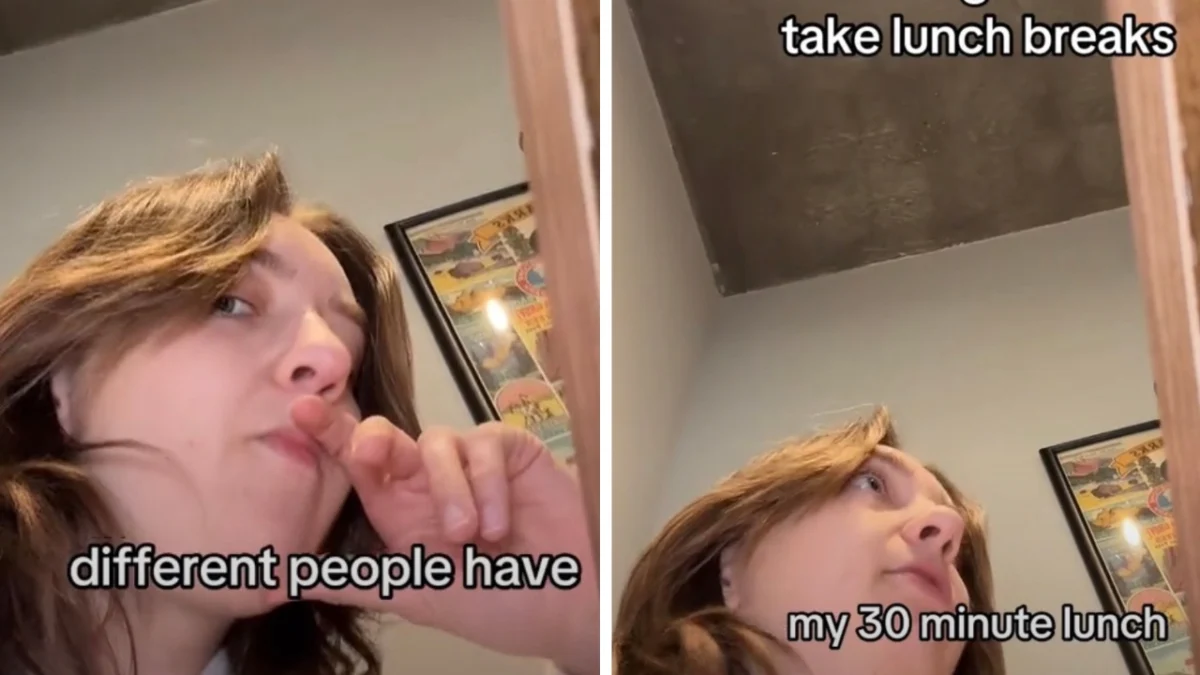
A recent incident, captured and disseminated via a TikTok video, has sparked widespread debate regarding workplace rights, the sanctity of employment contracts, and managerial discretion. The video features an employee confronting her manager over a denied lunch break, a benefit explicitly stated in her employment contract. This confrontation, shared by creator @alyss_1112 under the title "New Job Nightmare," quickly went viral, drawing millions of views and igniting a robust discussion among labor law experts, HR professionals, and the general public.
The Genesis of the Dispute: Contractual Rights Versus Managerial Directive
The dispute originated when the new employee, having recently commenced her role, sought to take her allotted lunch break. According to @alyss_1112’s account, her employment contract unequivocally listed a lunch break as a term of her employment. Furthermore, the job listing for the position, reportedly with a company named Sprout, had advertised a 30-minute paid lunch, reinforcing her expectation of this benefit.
Upon requesting her lunch break, the employee was met with a stark refusal from her manager, who allegedly stated, "Yeah, we don’t do lunch breaks here." The manager then questioned the employee’s source of information, to which the employee cited her contract and the original job advertisement. This direct contradiction between documented employment terms and an immediate managerial directive formed the core of the burgeoning conflict, highlighting a potential disconnect within the company’s operational practices or a misinformed management approach.
A Deep Dive into the Confrontation: Managerial Justifications and Employee Pushback
The TikTok video details a tense exchange where the manager offered several contentious justifications for denying the break. She reportedly dismissed company contracts as "general documents," suggesting that "different employees could operate under different rules." This assertion immediately raised red flags for viewers, as employment contracts are legally binding documents that establish the terms and conditions of employment for individual workers. To categorize them as merely "general" and subject to arbitrary deviation by a manager undermines their legal significance and could expose a company to significant legal risk.
The manager further elaborated on her interpretation of the "paid lunch" provision, asserting that it meant employees could "eat at their desks while continuing to work." This interpretation directly contradicts the generally accepted definition of a bona fide meal period under labor law, which typically requires an employee to be fully relieved from duty to constitute a break. The employee, understandably, challenged this interpretation, questioning how eating could qualify as a break if one was still actively engaged in work.
The conversation escalated as the manager began to question the employee’s personal eating habits, referencing her breakfast and snacks during the exchange. She also mentioned "McDonald’s," implying the employee did not need to leave the premises daily for lunch. The employee promptly denied daily visits to McDonald’s, emphasizing the manager’s seemingly irrelevant and intrusive line of questioning. This shift from policy discussion to personal scrutiny further inflamed the situation, suggesting an attempt to deflect from the contractual obligation.
The Digital Echo Chamber: TikTok Users React with Outrage and Legal Advice
The video’s rapid ascent to viral status underscored the public’s sensitivity to workplace fairness and labor rights. Millions of viewers quickly gravitated to the comment section, many expressing outrage at the manager’s alleged conduct and offering strong advice to the employee. The prevailing sentiment among commenters was that the manager’s actions were not only unfair but potentially illegal.
Numerous users urged the employee to meticulously document every interaction and immediately contact Human Resources (HR). One commenter, identifying as an HR professional, explicitly stated, "You [sic] have a good lawsuit on your hands," and encouraged the creator to file a formal complaint. Others similarly declared that the manager had "green lit a lawsuit" or described the situation as "very illegal." The collective outcry on TikTok transformed the personal dispute into a public discussion on corporate accountability and employee protection.
Navigating the Nuances of Labor Law: Federal, State, and Contractual Obligations
While the TikTok comments largely presented a stark "illegal" or "lawsuit" binary, the legal landscape surrounding lunch breaks is more complex and nuanced. Understanding these distinctions is crucial for both employees seeking to protect their rights and employers aiming to ensure compliance.
Federal Law’s Stance: The U.S. Department of Labor (DOL) clarifies that federal law, specifically the Fair Labor Standards Act (FLSA), generally does not require employers to provide meal or rest breaks. However, if an employer chooses to offer breaks, certain rules apply. For instance, short breaks (typically 5 to 20 minutes) must be compensated as working time. Bona fide meal periods, on the other hand, are generally not compensated, but only if the employee is "completely relieved from duty" for the purpose of eating a regular meal. If an employer requires an employee to work while eating, even if at their desk, that time must typically be paid. This federal guidance directly contradicts the manager’s interpretation of a "paid lunch" meaning "eat at your desk while continuing to work."
The Critical Role of State Laws: The absence of a federal mandate does not mean employers are free from providing breaks. Many states have enacted their own, often more stringent, labor laws that do require employers to provide meal and/or rest breaks. States like California, New York, and Washington are well-known for their robust meal and rest break requirements, which often specify duration, timing, and whether they must be paid. The creator’s location, which was not disclosed in the video, is therefore a pivotal factor in determining the legality of the manager’s actions. Without knowing the specific state, a definitive legal judgment cannot be made.
The Weight of the Employment Contract: Beyond federal and state statutes, the employment contract itself holds significant legal weight. A written employment agreement, like the one the employee reportedly possessed, creates legally binding obligations between the employer and the employee. If the contract explicitly promised a lunch break, then the employer is contractually obligated to provide it, regardless of whether federal or state law mandates it. The manager’s dismissal of the contract as a "general document" is legally unsound; such agreements are fundamental to the employment relationship and can create rights and responsibilities that exceed minimum statutory requirements. A breach of contract could form the basis of a legal claim, distinct from a labor law violation.
Workplace Culture vs. Policy: A Common Discrepancy
The manager’s statement, "we don’t do lunch breaks here," points to a troubling discrepancy between established company policy (as reflected in the contract) and the actual, potentially unofficial, workplace culture or managerial practice. Such discrepancies are not uncommon but can be highly problematic. They often arise from:
- Lack of Managerial Training: Managers may not be fully informed of company policies, labor laws, or the terms of employment contracts.
- Pressure to Perform: Managers might feel pressure to maximize productivity, leading them to discourage breaks, even if it violates policy or law.
- Informal Practices: Over time, informal practices can become entrenched, overriding official policies, especially if not regularly audited or reinforced by senior management.
- Misinterpretation of Policy: As seen in this case, the manager’s interpretation of "paid lunch" directly conflicted with standard labor definitions.
This disconnect creates a hostile environment for employees, who are caught between their contractual rights and a manager’s immediate directive. It also exposes the company to significant legal and reputational risks.
The Broader Implications: Employee Well-being and Corporate Accountability
Beyond the immediate legal ramifications, this incident underscores several broader implications for the modern workplace:
Impact on Employee Well-being and Productivity: Numerous studies have demonstrated the positive impact of regular breaks on employee well-being, mental health, and productivity. Breaks help reduce stress, prevent burnout, improve focus, and enhance creativity. A workplace culture that actively discourages or denies breaks, even contractually obligated ones, can lead to:
- Increased Stress and Burnout: Constant work without respite leads to mental and physical exhaustion.
- Decreased Productivity and Quality of Work: Overworked employees are prone to errors and reduced efficiency.
- Lower Morale and Job Satisfaction: Feeling undervalued and overworked erodes loyalty and engagement.
- Higher Turnover Rates: Employees are more likely to seek employment elsewhere if their basic needs and contractual rights are not met.
The manager’s questioning of the employee’s need for time to eat also reflects a concerning lack of empathy and understanding of basic human needs.
The Power of Digital Platforms in Workplace Accountability: TikTok and similar platforms have emerged as powerful tools for employees to document and expose workplace injustices. While they offer a rapid means of communication and a platform for collective support, they also present challenges. Videos can go viral quickly, sometimes before all facts are fully established, leading to immediate public judgment. For companies, this means that even internal disputes can swiftly become public relations crises, demanding a rapid and transparent response. The reputational damage from such viral incidents can be substantial, affecting recruitment, customer perception, and investor confidence.
The Crucial Role of Human Resources (HR): The frequent advice from TikTok users to "contact HR" highlights the critical function of Human Resources departments. HR is typically responsible for:
- Ensuring Compliance: Verifying that company policies and practices adhere to federal, state, and local labor laws.
- Policy Enforcement: Ensuring that managers and employees understand and follow internal company policies, including those outlined in employment contracts.
- Dispute Resolution: Mediating conflicts between employees and management.
- Risk Management: Protecting the company from legal liabilities by addressing potential violations promptly.
In a situation like the one depicted, HR would ideally initiate an investigation, review the employee’s contract and relevant company policies, and address the manager’s conduct.
Recommendations for Employees and Employers:
For Employees:
- Read and Understand Your Contract: Thoroughly review all terms and conditions before signing.
- Document Everything: Keep records of job listings, employment contracts, internal communications, and any instances of denied rights. Videos, emails, and written notes can serve as crucial evidence.
- Know Your Rights: Research federal and, more importantly, state-specific labor laws regarding breaks, wages, and working conditions.
- Utilize Internal Channels: First, attempt to resolve issues through your direct manager, then escalate to HR if necessary.
- Seek External Counsel: If internal avenues fail, consider consulting with a labor attorney or contacting your state’s Department of Labor.
For Employers:
- Clarity in Contracts and Policies: Ensure all employment contracts and company policies are clear, consistent, and legally compliant.
- Managerial Training: Provide comprehensive training to all managers on labor laws, company policies, and effective, compliant management practices.
- Regular Audits: Periodically review workplace practices to ensure they align with official policies and legal requirements.
- Foster a Culture of Compliance and Respect: Encourage an environment where employee rights are respected, and open communication is valued.
- Proactive HR Engagement: Ensure HR is accessible and responsive to employee concerns, acting as a safeguard for both employees and the company.
Unverified Details and Journalistic Disclaimers:
It is important to reiterate that The Daily Dot (the original source) could not independently verify several key details of the incident. This includes the authenticity of the employment contract, the specific company policy, the manager’s identity, or the full, unedited account of the conversation. The video presents the creator’s subjective account of the workplace dispute as shared by @alyss_1112 on TikTok. Without these verifiable details, a definitive legal or factual conclusion remains elusive. However, the incident serves as a powerful illustration of the challenges employees can face in asserting their contractual rights and the critical need for transparency and adherence to labor laws in the workplace.
The viral confrontation underscores a broader societal conversation about the evolving dynamics of labor relations, the increasing scrutiny placed on corporate practices by digital activism, and the perennial importance of ensuring that fundamental employee rights, whether statutory or contractual, are consistently honored.