Sonny Valindra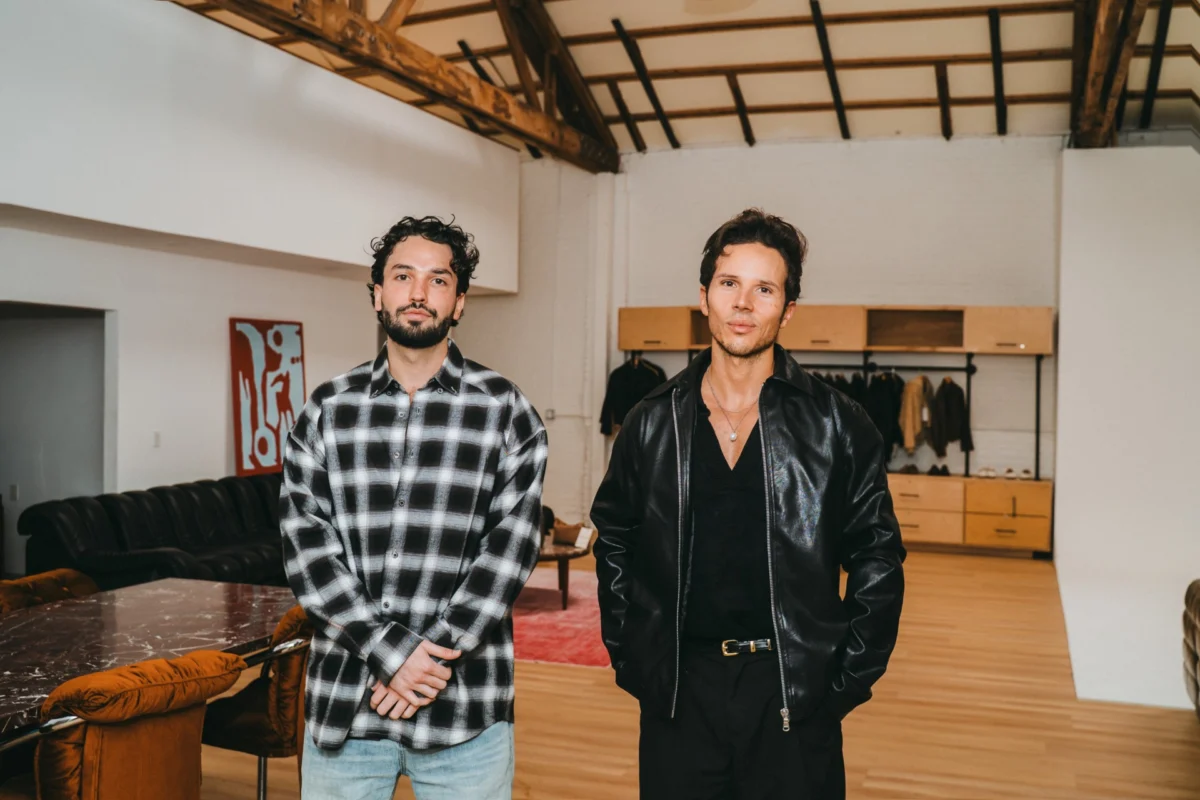
Fashion startup Atorie announced on Thursday the successful closure of a $9.5 million seed funding round, signaling a significant infusion of capital to fuel its ambitious plans. The round was led by prominent investors including a16z Speedrun, Night Capital, and Jeremy Liew from Lightspeed Ventures, underscoring strong market confidence in Atorie’s innovative approach to the fashion industry. This substantial investment is poised to accelerate the company’s mission to democratize access to high-quality fashion by directly connecting consumers with luxury manufacturers.
Atorie’s core business model centers on offering consumers access to handbags and clothing crafted from the same premium materials and manufactured in the same factories that produce high-end luxury goods. This direct-to-consumer strategy bypasses traditional luxury markups, allowing Atorie to offer items like Italian leather handbags for a few hundred dollars, a stark contrast to the thousands charged by established brands such as Prada or Louis Vuitton. This pricing strategy is particularly resonant in the current market climate, where consumers are increasingly scrutinizing the value proposition of luxury purchases.
The timing of Atorie’s emergence is highly strategic, aligning with a palpable shift in consumer behavior and market dynamics. The post-pandemic era has witnessed a surge in "dupe culture," a phenomenon where consumers actively seek out more affordable, near-identical alternatives to high-fashion items. This trend is partly fueled by a backlash against the significant price hikes implemented by many luxury brands in recent years, a move that has alienated a segment of their traditional customer base and created an opening for more accessible luxury. For younger consumers, in particular, acquiring these high-quality, affordably priced replicas has become a subtle yet significant status symbol, reflecting a desire for both style and fiscal prudence.
Despite the prevailing "dupe" trend, Atorie co-founder and serial entrepreneur Redouane Ramdani emphasizes that the company’s offerings are not simply counterfeit copies. "It’s the same material, same craftsmanship," Ramdani stated in an interview. "It’s coming from the same factories." He further clarified that Atorie eschews the label of "fast fashion," describing its production model as "slow" and deliberate. This distinction is crucial, as it positions Atorie as a provider of durable, well-made garments rather than disposable trend pieces.
Ramdani’s entrepreneurial journey includes a significant prior success: the development of the creator platform Snipfeed, which was acquired in 2024. His background is deeply rooted in the luxury manufacturing sector, having grown up in France with a family involved in the industry. This personal connection fostered a long-held ambition to contribute to the world of luxury fashion.
The evolution of the luxury manufacturing landscape provided Ramdani with the inspiration for Atorie. Traditionally, luxury brands would contract factories to produce their proprietary designs using specified materials. A significant challenge within this model was the requirement for large minimum order quantities (MOQs). These MOQs often led to overproduction, creating substantial inventory risks for both brands and factories. Factories, in turn, became heavily reliant on a small number of major brand clients. Any disruption, such as a brand canceling an order or insufficient sales of overproduced stock, could lead to significant financial strain and inventory imbalances for the manufacturing facilities.
A pivotal shift Ramdani observed in the industry is the increasing self-sufficiency of top-tier factories. "What’s changing is that the best factories increasingly have their own design and product-development capabilities," Ramdani explained. "Instead of simply manufacturing someone else’s designs, they can develop products themselves, adapt them quickly, and produce in smaller batches." This transformation allows factories to move beyond being mere contract manufacturers and become active participants in product creation and innovation.
This evolving factory capability, coupled with advancements in artificial intelligence, has created a fertile ground for Atorie’s business model. AI plays a crucial role by analyzing vast datasets to identify products with a high likelihood of selling out, enabling factories to optimize production runs and mitigate overstock. "That reduces overproduction and allows factories to diversify beyond a handful of large customers," Ramdani noted. This data-driven approach not only benefits factories by reducing risk but also aligns with growing consumer and industry demands for more sustainable and less wasteful production practices.

The convergence of these industry shifts and technological advancements inspired Ramdani, alongside co-founder Luis Angulo, to launch Atorie. The company operates as an AI-powered fashion brand, directly bridging the gap between skilled luxury manufacturers and the end consumer.
Atorie’s strategy bears resemblance to the successful model of retailers like Quince, which has gained popularity by offering high-quality goods at accessible price points. However, Ramdani believes Atorie is targeting a distinct consumer segment. "We are talking to a different generation who is coming back for things that are trendy but well-made," he said. This demographic, he suggests, is increasingly disillusioned with the environmental and ethical implications of fast fashion, seeking alternatives that offer both style and substance without the associated guilt.
The role of AI at Atorie extends far beyond production optimization. Ramdani envisions AI agents fundamentally reshaping the consumer shopping experience, potentially automating purchasing decisions based on user preferences. Currently, Atorie leverages AI to meticulously analyze fashion trends, predict desirable color palettes, and forecast consumer demand. AI agents are trained to anticipate material shortages, enabling factories to proactively manage their supply chains.
On the consumer-facing side, the Atorie website features an AI-powered outfit builder. This tool allows customers to generate ensemble suggestions based on a wide range of inspirations, from specific items to personal style icons. Over time, Atorie employs AI to learn individual shopper habits and preferences, providing personalized recommendations for future purchases. This hyper-personalized approach aims to enhance customer engagement and drive repeat business.
Ramdani has already observed a tangible impact of AI integration, noting an increase in sales referrals originating from platforms like ChatGPT and Claude. This suggests that AI-driven recommendation engines are becoming powerful conduits for consumer discovery and purchasing decisions.
The company’s overarching ambition is to establish itself as a compelling alternative to mass-market retailers like Zara, offering "very high quality for a price point that’s very affordable." Atorie demonstrated significant traction in its initial phase, concluding the previous year with approximately $5 million in sales. The company projects an annualized run rate exceeding $55 million this year, indicating a remarkable growth trajectory. "We are growing super fast," Ramdani affirmed, highlighting the company’s current collaborations with over 40 factories globally.
The newly secured $9.5 million in seed funding will be strategically deployed to enhance logistical operations, further develop its suite of AI tools, and bolster production capabilities. Atorie also has plans to launch its own in-house product line, akin to Amazon Essentials, providing a foundational range of core apparel items. Furthermore, the company intends to partner with creators and influencers, empowering them to rapidly launch their own branded clothing lines through Atorie’s established manufacturing and distribution infrastructure. This initiative taps into the burgeoning creator economy and offers a streamlined pathway for influencers to monetize their audience and personal brand through fashion ventures.
The implications of Atorie’s model are far-reaching. By directly engaging with manufacturers and leveraging AI for demand forecasting and trend analysis, the company is poised to challenge established luxury brands on both price and perceived value. The focus on utilizing existing high-quality manufacturing infrastructure, rather than building new factories, offers a more sustainable and capital-efficient approach to scaling. Moreover, Atorie’s success could pave the way for other startups to adopt similar direct-to-manufacturer models, potentially leading to a broader decentralization of the fashion supply chain and greater transparency for consumers. The company’s commitment to affordability without compromising on material quality and craftsmanship addresses a significant unmet need in the market, particularly among discerning yet budget-conscious consumers. As Atorie scales, its ability to maintain these quality standards while expanding its product lines and factory network will be critical to its long-term success.