Garick Elordi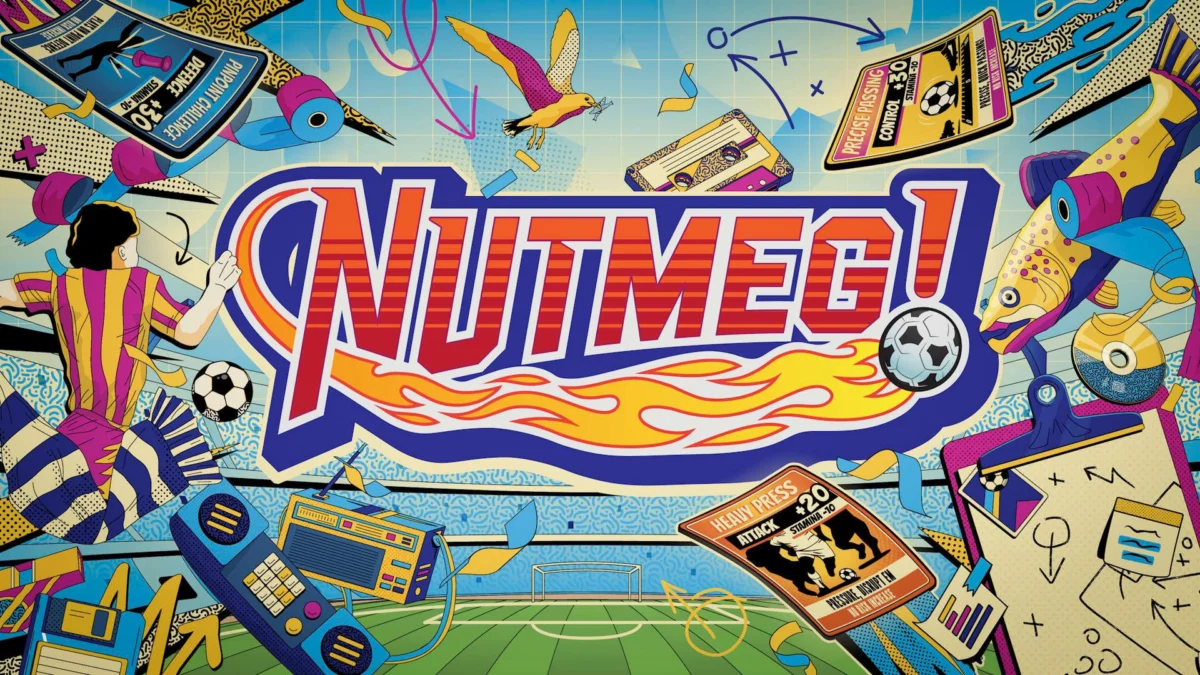
The digital gaming landscape has recently seen the emergence of Nutmeg!, a title that diverges sharply from the contemporary trend of microtransaction-heavy sports simulations. Developed by Sumo, the game positions itself as a tribute to the 1980s era of association football, emphasizing tactile interaction, strategic card-based management, and a visual style reminiscent of vintage Panini sticker albums. By eschewing the controversial "loot box" mechanics prevalent in modern franchises such as EA Sports FC, Nutmeg! seeks to capture a demographic of players interested in a "simpler time" of football management, characterized by mud-caked pitches, physical media, and manual administrative tasks.
The 1980s Management Simulation: A Tactile Experience
Nutmeg! operates as a hybrid between a traditional sports management simulation and a tactical card game. Unlike real-time simulators where players control individual athletes on the pitch, Nutmeg! focuses on the macro-level decisions of a football manager. Players are tasked with the comprehensive oversight of a club, including the acquisition and sale of personnel, the implementation of training regimes, stadium infrastructure upgrades, and the management of commercial merchandising.
The game’s aesthetic is rooted in the technological landscape of the 1980s. The player’s "headquarters" is modeled after a period-accurate office, featuring functional versions of now-obsolete technology. Key interactive elements include:
- The Fax Machine: Utilized for the formalization of player contracts and transfer negotiations, requiring a tactile engagement that mirrors the bureaucratic processes of the era.
- Ceefax Integration: A simulated version of the BBC’s teletext service provides news updates, fixture lists, and league tables, utilizing the blocky, low-resolution graphics synonymous with early digital information systems.
- Analog Communication Tools: The inclusion of a rotary-dial landline, a browning intercom system, and a physical blackboard for tactical layouts reinforces the game’s commitment to physical presence and historical fidelity.
This "tactile retro museum" approach serves both as a stylistic choice and a functional interface, where every object in the manager’s office serves a specific gameplay purpose, grounding the abstract management mechanics in a physical environment.
Tactical Mechanics and the "Broadcast" System
The core gameplay loop of Nutmeg! introduces a unique constraint on player agency known as the "Broadcast" system. In a departure from the industry standard where every match is playable, Nutmeg! limits manual control—referred to as "broadcasting"—to approximately one in every five scheduled matches. This mechanic forces players to prioritize pivotal fixtures, such as cup finals or high-stakes promotion battles, while the remaining matches are resolved via an automated simulation engine.
The simulation engine calculates results by comparing the aggregate card-point strengths of the opposing squads. This system places a premium on long-term preparation, as the outcome of simulated matches is directly influenced by the quality of the roster, the efficacy of training sessions, and the strategic upgrades made to the club’s facilities.
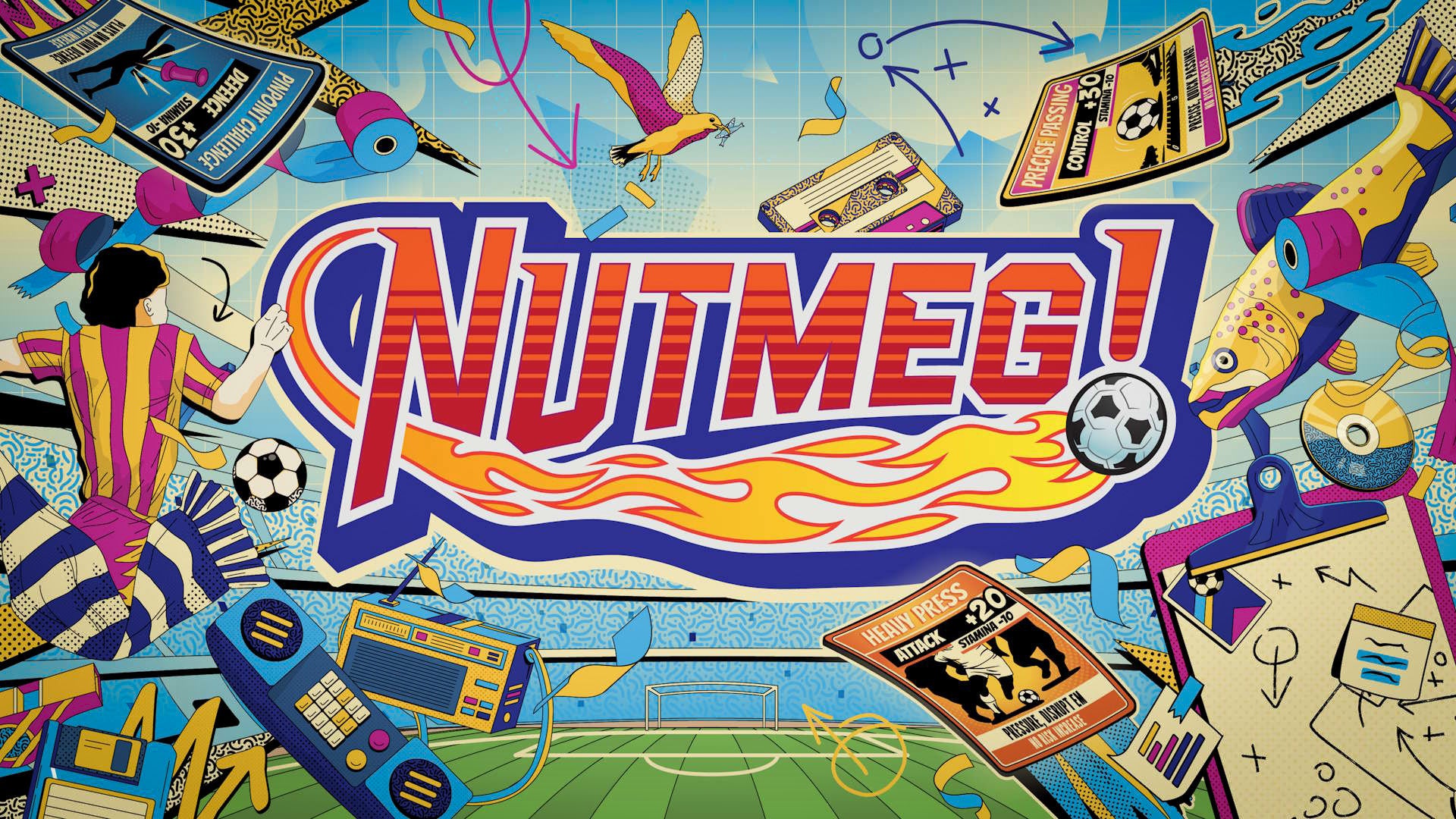
When a match is "broadcast," the gameplay transitions into a card-driven sequence of events. The match progresses linearly from defensive phases to attacking opportunities. Unlike traditional collectible card games (CCGs) where players deploy units, Nutmeg! utilizes "buff cards" to influence the statistical probability of specific outcomes. For instance, if a striker has a 30% chance of scoring during a highlighted event, the player may play a card to increase that percentage, effectively tilting the odds in their favor during critical moments.
Historical Context and Development Timeline
The development of Nutmeg! coincides with a broader cultural resurgence of 1980s nostalgia and a growing fatigue regarding "games-as-a-service" monetization models. The 1980s represented a transformative period for British football, transitioning from a grassroots-heavy culture to the nascent stages of the multi-billion-pound industry it is today.
Chronology of Influence:
- 1970–1980: The rise of the Panini sticker book phenomenon, which established the visual language of football card collecting.
- 1983–1984: York City, the starting club for players in Nutmeg!, achieves a historic 101-point season in the fourth division, providing the historical template for the game’s "underdog" career path.
- 1986: Diego Maradona’s "Hand of God" goal occurs during the FIFA World Cup, inspiring one of the game’s most potent tactical cards.
- 2020s: Growing regulatory scrutiny of loot boxes in European markets prompts indie developers to explore "premium" models without in-game purchases.
By setting the game in the fourth division (the modern-day EFL League Two), Sumo encourages a "rags-to-riches" narrative, requiring players to navigate the financial and logistical hurdles of lower-league football before reaching the upper echelons of the sport.
Strategic Depth and Statistical Probability
While the game’s interface is designed for accessibility, the underlying systems require significant tactical consideration. The cards available to a player during a match are not randomized in a vacuum but are instead generated based on the team’s preparation.
- Training Regimes: The selection of a specific training focus (e.g., defensive drills vs. offensive set pieces) determines the composition of the card pack the player receives before a match.
- Formations and Tactics: An attacking 4-3-3 formation will yield a higher frequency of offensive buff cards, whereas a defensive 5-4-1 will prioritize cards that mitigate the opponent’s scoring chances.
- Stamina Management: Every card played carries a stamina cost, reflecting the physical toll on the players. With the 1980s-accurate limitation of a single substitute per match, players must exercise caution to avoid late-game fatigue that could lead to defensive collapses.
Industry analysts note that this system creates a "temporary deck" experience. Unlike traditional CCGs where players build a permanent deck, Nutmeg! players must adapt to a revolving set of options dictated by their managerial decisions in the preceding week of the game world.
Market Implications and Industry Reaction
Nutmeg! enters a market currently dominated by two extremes: the hyper-realistic, data-intensive simulation of Football Manager and the high-speed, monetization-focused gameplay of EA Sports FC. By carving out a niche as a "fantasized glimpse" of management, the game appeals to a "mid-core" audience—players who desire more depth than a casual mobile game but less complexity than a professional-grade spreadsheet simulator.

The decision to exclude microtransactions has been viewed by industry observers as a strategic move to build brand loyalty. In a statement that can be inferred from the game’s marketing philosophy, the developers emphasize "transparency and fairness," aiming to return the focus to skill and strategy rather than financial investment.
Comparative Data: Sports Management Games (2023-2024 Trends)
| Feature | Nutmeg! | Traditional Modern Sims |
|---|---|---|
| Monetization | One-time Purchase | Microtransactions/Battle Passes |
| Pacing | Fast (1 in 5 matches played) | Slow (Every match playable) |
| Visual Style | 1980s Retro/Physical Media | High-Fidelity 3D/Modern UI |
| Mechanics | Card-based Buffs/RNG Tilt | Real-time Physics/AI Simulation |
| Administrative Tone | Tactile/Analog | Digital/Data-driven |
Broader Impact and Future Outlook
The release of Nutmeg! signals a potential shift in the "sports-lite" genre. By leveraging nostalgia not just as a skin, but as a core functional component (the fax machines, the Ceefax, the physical cards), the game creates a high level of immersion without requiring the processing power of high-end hardware.
The game’s reliance on the "York City" starting point also highlights a focus on the heritage of the English Football League. In the 1980s, lower-league football was characterized by a distinct lack of glamour, a reality that Nutmeg! embraces through its art style and the "yelp of pain" sound effects during aggressive defensive maneuvers.
While some critics have pointed to a lack of visibility over the "deck-building" aspect as a potential hurdle for long-term strategic play, the game’s brisk pacing—accelerated by the simulation of four out of every five matches—ensures that players can experience multiple seasons in a fraction of the time required by its competitors. This design choice facilitates rapid club progression, allowing players to engage more frequently with the high-level management aspects of stadium expansion and high-profile transfers.
Ultimately, Nutmeg! serves as both a cultural artifact and a modern gaming experiment. It challenges the assumption that sports games must be real-time simulations and provides a blueprint for how nostalgia can be used to simplify complex management systems into an engaging, tactile, and ethically monetized experience. As the title gains traction, it may encourage other developers to look toward the analog past to solve the digital fatigue of the present.