Sonny Valindra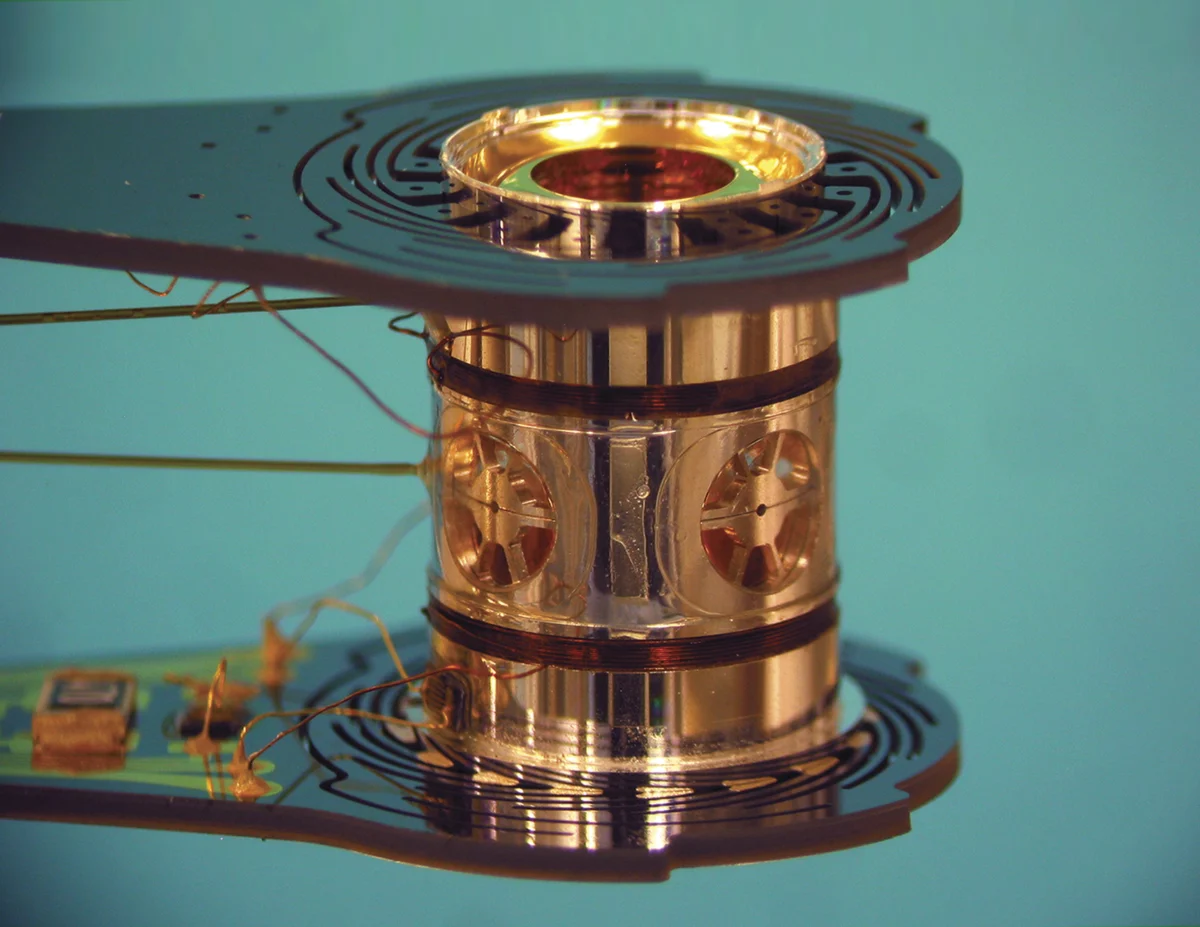
In a significant stride towards unlocking commercial fusion energy, Inertia Enterprises, a prominent fusion startup, has announced a breakthrough in its fuel pellet manufacturing process. The company revealed it has successfully reduced the time required to produce these critical components from several days to mere minutes. This monumental achievement addresses one of the primary logistical and economic hurdles standing between Inertia and its ambitious goal of deploying its first commercial fusion power plant. The startup provided TechCrunch with an exclusive insight into the innovative process that promises to revolutionize fuel production for fusion reactors.
The Challenge of Fusion Fuel: From Laboratory to Factory
The journey to harnessing fusion power is fraught with complex scientific and engineering challenges. One of the most intricate aspects involves the creation of the fuel pellets, which are the tiny, precisely engineered packages that contain the deuterium and tritium isotopes necessary to initiate and sustain a fusion reaction. Historically, these pellets have been produced through highly specialized and time-consuming methods, largely confined to advanced research facilities.
The National Ignition Facility (NIF) at Lawrence Livermore National Laboratory, a world-renowned center for inertial confinement fusion research, exemplifies this challenge. NIF’s fuel pellet fabrication process is an elaborate, painstaking endeavor. Each pellet is a marvel of precision engineering: a microscopic spherical diamond shell encases a frozen layer of deuterium and tritium, which in turn encloses a core of gaseous deuterium and tritium. The requirement for near-perfect sphericity is paramount, as even minute imperfections can disrupt the precise compression and heating needed to achieve ignition. At NIF, the production of a single pellet could take upwards of a week and incur substantial costs, a timeline and expense that are fundamentally incompatible with the demands of a commercial power generation facility.
This stark contrast between research-scale production and industrial viability was not lost on Inertia Enterprises. The company, which secured a substantial $450 million in funding on the premise of commercializing technology derived from NIF’s foundational work, recognized this critical bottleneck. "But when you really double-click on it, you’re like, wait a minute, they’re only making a handful of them a year," Jeff Lawson, co-founder and CEO of Inertia, explained to TechCrunch. "I put on my commercial hat and was like, wait a minute, I know the word for this: Prototypes."
Inertia’s Strategic Pivot: From Prototypes to Mass Production
Lawson’s "commercial hat" prompted a strategic re-evaluation of the NIF’s fuel pellet production methodology. The goal was to transform a process optimized for scientific experimentation into one capable of mass manufacturability, akin to the rigorous production standards seen in industries like consumer electronics. "That’s why we’re hiring people from the likes of Apple," Lawson stated. "There’s a bunch of industrial engineers who are like, ‘Alright, I guess I have to go figure out how to make that a billion times over in a factory.’"
This hiring strategy underscores Inertia’s commitment to industrializing fusion technology. By bringing in expertise from companies renowned for their high-volume, precision manufacturing capabilities, Inertia aimed to reimagine the fuel pellet creation process from the ground up. The objective was to condense the complex steps involved, such as the delicate layering of frozen isotopes and the precise shaping of the crystalline structures, into a rapid, scalable, and cost-effective operation.
The Technical Breakthrough: Condensing Days into Minutes
The core of Inertia’s innovation lies in its ability to dramatically accelerate the formation of the crystalline deuterium and tritium layers. At NIF, achieving the necessary density and purity of these frozen layers is a slow, deliberate process. Inertia’s team, however, has engineered a method that allows these crystals to grow in approximately 30 minutes, a stark contrast to the up to a week it could take at NIF.
When combined with other optimized steps in the manufacturing sequence, the total time to produce a single fuel pellet has been reduced to an astonishing two to three hours. This represents a reduction of over 90% in production time, a transformative leap that directly addresses the economic infeasibility of the original NIF process for commercial applications.
This advancement was not achieved in isolation. Inertia has leveraged a public-private partnership with the NIF at the Lawrence Livermore National Lab, building upon the groundbreaking physics discovered there. Annie Kritcher, co-founder and chief scientist at Inertia, played a pivotal role, having designed the initial NIF experiment that achieved scientific breakeven – producing more energy than was consumed. This deep understanding of the underlying fusion physics allowed Inertia to adapt and optimize the fuel pellet manufacturing process without compromising the scientific integrity required for successful fusion ignition.
The Role of Advanced Technology and Strategic Margin
A key factor enabling Inertia’s accelerated manufacturing process is its planned use of a laser system significantly more powerful than NIF’s. Inertia intends to deploy a laser that is four times more powerful. This enhanced driver offers a critical advantage: it can tolerate a greater degree of imperfection in the fuel pellet.
"We actually have a lot of margin," Lawson explained. "That’s our strategy, to oversize our driver, our laser, to give us lots of margin to go play with in every other part of the system." This strategic decision to invest in a more powerful laser acts as a buffer, allowing Inertia more flexibility in the manufacturing process. While NIF’s experiments require near-flawless fuel pellets to achieve their objectives, Inertia’s more powerful laser can compensate for minor deviations, thereby simplifying and speeding up the fuel production. This "margin for error" is precisely what allows for the rapid fabrication of pellets that still meet the stringent requirements for fusion ignition.
Economic and Safety Implications: Tritium Management
The reduction in fuel filling time has profound implications beyond just production speed. It directly impacts the management of tritium, one of the two key isotopes of hydrogen used in fusion fuel. Tritium is radioactive, requiring careful handling and containment, which adds complexity and cost to operations. Furthermore, tritium is an extremely expensive material, with current global stockpiles estimated at a mere 25 kilograms, and a price tag of approximately $30,000 per gram, according to a report in the journal Science.
By significantly reducing the time it takes to produce fuel pellets, Inertia also reduces the amount of tritium it needs to store at any given time. This minimized inventory is crucial for both safety and economic reasons. While Inertia, like many fusion startups, plans to eventually produce its own tritium through the fusion reactions themselves, an initial supply is necessary. A faster manufacturing process means this initial inventory can be smaller and replenished more rapidly, mitigating the risks and costs associated with handling large quantities of radioactive material.
Inertia’s vision for its full-scale commercial power plant involves an astonishing consumption rate: 10 fuel pellets every second. This high demand necessitates an efficient and continuous supply chain, which the accelerated manufacturing process directly supports.
A Transformative Impact on Fusion Power
The breakthrough in fuel pellet production is more than just an incremental improvement; it is a fundamental shift that could accelerate the timeline for commercial fusion power. "By reducing the latency of this step, you’ve made your facility smaller; you’ve made the whole thing faster, the whole thing more efficient," Lawson articulated.
This efficiency gain translates into several key benefits:
- Reduced Capital Costs: A smaller, faster manufacturing process implies smaller physical footprints for fuel production facilities, potentially leading to lower construction costs for power plants.
- Increased Throughput: The ability to produce pellets in minutes rather than days means that a commercial plant can operate at its designed capacity without being constrained by fuel supply.
- Enhanced Economic Viability: Lower production costs and higher operational efficiency are critical for making fusion power economically competitive with existing energy sources.
- Improved Safety Profile: Reduced tritium inventory minimizes the risks associated with handling and storing this radioactive material.
The journey from laboratory curiosity to a practical energy solution is paved with such engineering and manufacturing innovations. Inertia Enterprises’ achievement in rapidly producing fusion fuel pellets marks a significant milestone, demonstrating a clear path toward overcoming a critical barrier and bringing the promise of clean, abundant fusion energy closer to reality. This advancement, built on decades of scientific research and bolstered by cutting-edge industrial engineering, underscores the dynamic progress being made in the global pursuit of fusion power. The company’s strategic approach, combining scientific expertise with a rigorous manufacturing mindset, positions it as a key player in the unfolding narrative of fusion energy commercialization.