admin
admin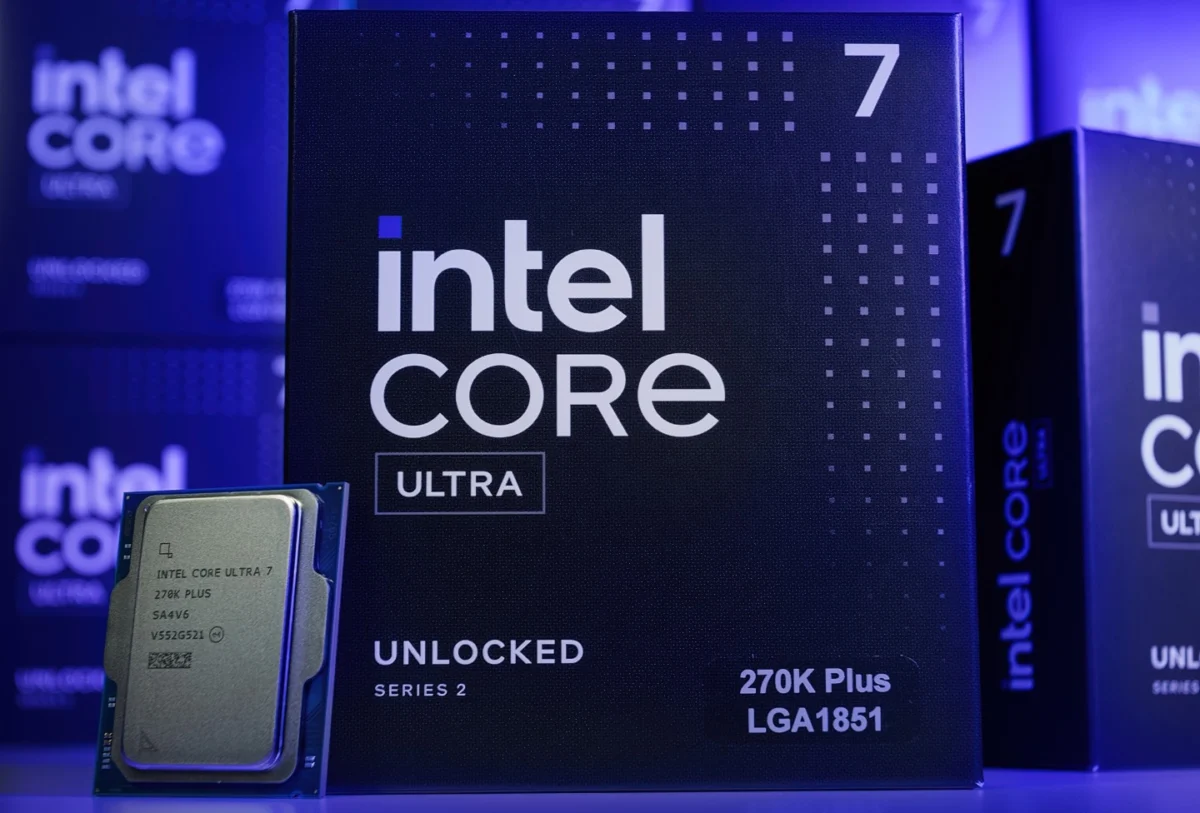
The Significance of the Sub-$200 Price Point
The price adjustment for the Core Ultra 7 270K Plus is not merely a routine discount; it is a strategic maneuver that disrupts the current hierarchy of the CPU market. Typically, the sub-$200 bracket is occupied by six-core or entry-level eight-core processors. By offering a 24-core chip—comprising 8 high-performance "Lion Cove" cores and 16 efficiency-focused "Skymont" cores—Intel is providing a level of multi-threaded compute density that was previously unheard of at this price point.
For gamers and professionals, the implications are substantial. The Core Ultra 7 270K Plus features a total of 24 threads and is built on the LGA 1851 socket architecture. It boasts 40MB of L2 cache and 36MB of Intel Smart Cache (L3), making it a formidable tool for data-heavy tasks such as video rendering, 3D modeling, and complex software compilation. In gaming scenarios, the architectural improvements of the Arrow Lake Refresh series allow this chip to rival, and in some cases exceed, the performance of the more expensive Core Ultra 9 285K, which currently maintains a retail price closer to $500.
A Chronology of Intel’s Arrow Lake Pricing Strategy
To understand the weight of this price drop, one must look at the timeline of the Arrow Lake release. Intel initially launched the Core Ultra series with the intent of reclaiming the efficiency crown while transitioning to a new naming convention and socket. The "Plus" variants were introduced as a refined iteration of the initial Arrow Lake silicon, designed to offer better clock stability and optimized power delivery.
The Core Ultra 7 270K Plus debuted with an MSRP of $299. However, amid fluctuating demand and intense competition from AMD’s Ryzen 9000 series, Intel officially raised the recommended pricing for the 270K Plus to $349 earlier this year. The sudden pivot to a $199 retail price at Micro Center suggests a "clearance" or "market penetration" strategy. This follows a similar trend observed with the Core Ultra 5 250K Plus, which recently saw its price slashed to $139.
Retail analysts suggest that Intel may be clearing inventory to make room for future architectural updates or simply attempting to capture the DIY PC builder market before the next major release cycle from competitors. By leveraging Micro Center’s "In-Store Pickup Only" model, Intel and its retail partners can drive foot traffic into physical stores, often leading to additional sales in motherboards, RAM, and cooling solutions.

Technical Specifications and Platform Requirements
The Intel Core Ultra 7 270K Plus is a sophisticated piece of silicon that requires a specific ecosystem to function. Unlike the previous three generations of Intel chips that utilized the LGA 1700 socket, the Arrow Lake family requires the new LGA 1851 socket. This means users cannot simply drop this CPU into an existing Z690 or Z790 motherboard.
Key technical specifications of the 270K Plus include:
- Core Configuration: 24 Cores (8P + 16E)
- Thread Count: 24 Threads
- Base Clock: 3.7 GHz (with significant Turbo Boost overhead)
- Cache: 76MB Total (L2 + L3)
- Memory Support: Native DDR5 support (No DDR4 compatibility)
- Integrated Graphics: Intel Graphics with Xe architecture
- TDP: 125W Base Power (Maximum Turbo Power significantly higher)
The transition to the LGA 1851 platform brings several modern advantages, including native support for PCIe 5.0 across more lanes and enhanced integration with WiFi 7 and Thunderbolt 4/5 controllers. However, the cost of a new Z890 motherboard has historically been a barrier to entry for many users. The current price drop on the CPU helps offset the platform entry cost, making the total system price much more competitive.
Bundle Value and the Total Cost of Ownership
Recognizing that a CPU is only as useful as the platform it sits on, Micro Center has introduced a comprehensive bundle deal alongside the standalone processor discount. For $599, consumers can acquire the Intel Core Ultra 7 270K Plus, a GIGABYTE Z890 Eagle WiFi Plus motherboard, and a 32GB kit of Patriot Viper Venom DDR5-6000 RAM.
When broken down by component value, the bundle offers nearly $280 in savings compared to purchasing the parts individually at their standard retail prices. The GIGABYTE Z890 Eagle WiFi Plus is a robust mid-to-high-range board that provides the necessary VRM cooling and power phases to handle the 270K Plus under heavy load. The inclusion of 32GB of high-speed DDR5 memory ensures that the system will not be bottlenecked in productivity tasks or modern AAA gaming titles.
For users currently on older platforms—such as Intel 10th or 11th Gen, or AMD Ryzen 3000/5000 series—this bundle represents one of the most cost-effective paths to a modern, future-proofed PC. It bypasses the "early adopter tax" that usually plagues new socket launches.

Comparative Landscape: Intel vs. AMD
The timing of this price cut is particularly noteworthy given the state of the CPU market. AMD has recently found success with its Ryzen 7 7800X3D and the newer Ryzen 9000 series. To counter this, Intel’s pricing must be aggressive. Specifically, the Core Ultra 7 270K Plus at $199 directly challenges the AMD Ryzen 5 7600X3D, which is also currently discounted to $199 at Micro Center.
While the Ryzen 5 7600X3D is a 6-core powerhouse for gaming due to its 3D V-Cache technology, the Core Ultra 7 270K Plus offers a much more versatile profile. With 24 cores, the Intel chip vastly outperforms the 7600X3D in multi-threaded workloads like streaming, video editing, and multitasking. Consumers are now faced with a choice: specialized gaming performance with AMD or massive multi-core versatility with Intel, both for the same $199 price tag.
Furthermore, the 270K Plus offers a more attractive value proposition than Intel’s own flagship, the Core Ultra 9 285K. Since the 270K Plus shares the same core count as the 285K and often achieves similar gaming performance due to architectural similarities, the $300 price difference between the two is difficult to justify for anyone other than extreme overclockers or those requiring the absolute highest bin of silicon.
Industry Implications and Market Reaction
Market analysts view these aggressive discounts as a sign of a "price war" in the semiconductor industry. Intel’s recent financial reports have highlighted a need to regain market share in the desktop segment, and aggressive pricing is a proven method to stall competitor momentum.
While Intel has not released an official statement regarding the specific Micro Center promotion, industry insiders suggest that these "localized" deals are often subsidized by manufacturers to move volume without officially lowering the global MSRP, which protects the brand’s perceived value in other regions.
The reaction from the enthusiast community has been overwhelmingly positive. On various hardware forums and social media platforms, the $199 price point for a 24-core chip is being hailed as the "deal of the year." However, some caution remains regarding the cooling requirements of the Arrow Lake series. Since the 270K Plus does not include a boxed heatsink, users must factor in the cost of a high-end air cooler or a 240mm/360mm All-In-One (AIO) liquid cooler to maintain optimal temperatures.

Future Outlook for the LGA 1851 Platform
The LGA 1851 socket is expected to support at least one more generation of Intel processors, providing a degree of longevity for those who buy into the platform now. With the Core Ultra 7 270K Plus acting as a high-performance anchor, users who take advantage of this deal will likely have a system that remains relevant for the next four to five years.
As Intel continues to roll out its "AI PC" branding, the integrated NPU (Neural Processing Unit) within the Arrow Lake architecture will also become increasingly relevant. While current applications for desktop NPUs are limited, future updates to Windows and creative software suites are expected to offload specific tasks—such as background blur in video calls or local AI image generation—to the NPU, further extending the utility of the 270K Plus.
In conclusion, the drop of the Intel Core Ultra 7 270K Plus to under $200 is a watershed moment for the PC hardware market. It democratizes high-core-count computing and forces a re-evaluation of value in the enthusiast space. Whether viewed as a response to AMD’s dominance or a strategic inventory clearing, the result is a win for the consumer, providing "monstrous" power at a fraction of its former cost. For those within proximity to a Micro Center, this deal represents a rare opportunity to secure a high-end foundation for a modern computing experience at a budget-friendly price.