Galang Taruna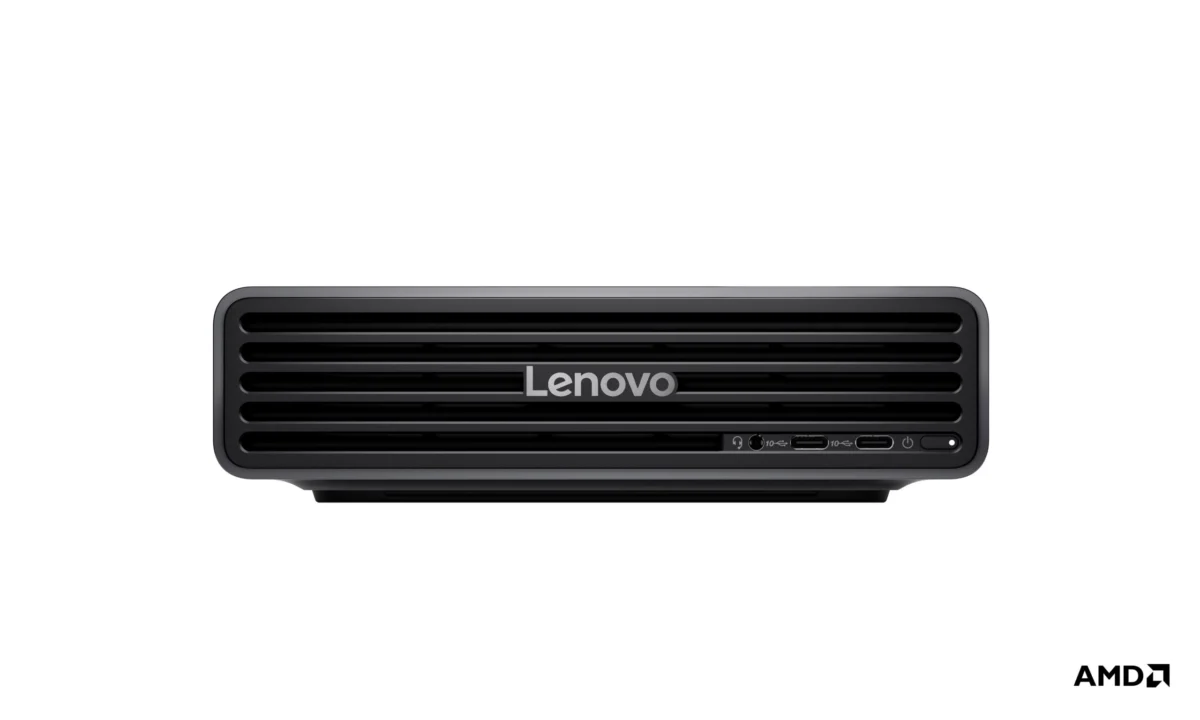
The technology giant Lenovo has officially lifted the veil on its latest innovation, the ThinkCentre X Ultra, a remarkably compact mini-PC engineered specifically for the burgeoning field of local artificial intelligence. This new device, with its diminutive 1.6-liter chassis, is set to redefine expectations for desktop computing in the AI era, boasting an impressive 128GB of unified memory and a starting price point of €3,100. The announcement positions the X Ultra as a powerful, space-efficient solution for developers, researchers, and small teams looking to harness AI capabilities without reliance on cloud infrastructure. Its introduction also marks a significant competitive move, notably offering a more accessible price point compared to some existing high-memory AI-focused mini-PCs, even amidst a global memory component shortage.
The Strategic Imperative for Local AI and High-Capacity Unified Memory
In recent months, the landscape of AI development has seen a pronounced shift towards local processing. This trend is driven by several factors, including enhanced data privacy, reduced operational costs associated with cloud subscriptions, and minimized latency for real-time applications. Running AI models locally allows users to maintain full control over their data and intellectual property, a critical consideration for businesses and sensitive research.
Central to the feasibility of local AI, particularly for large language models (LLMs) and complex machine learning tasks, is the availability of substantial, high-speed memory. As the adage goes in AI development, "a model that doesn’t fit, doesn’t run." This highlights the crucial role of memory capacity over sheer raw computational power for many AI workloads. Unlike traditional computing where CPU clock speed or GPU cores often dominate performance metrics, AI models require vast amounts of memory to load their parameters. Unified memory architectures, where the CPU and GPU share a common pool of high-bandwidth memory, are particularly advantageous here, allowing for seamless data transfer and efficient processing without the bottlenecks typically associated with discrete memory configurations.
For a considerable period, achieving 128GB of memory shared between the processor and graphics processing unit (GPU) often necessitated specialized hardware, with Apple’s M-series chips being a prominent example outside the x86 ecosystem. However, the market has rapidly evolved. Companies like Minisforum, Geekom, and GMKtec have begun offering compact, high-memory mini-PCs targeting this niche. Lenovo’s entry with the ThinkCentre X Ultra signifies a major endorsement of this trend by a leading global PC manufacturer, leveraging the next generation of AMD’s AI-focused silicon.
Technical Specifications: A Deep Dive into the ThinkCentre X Ultra
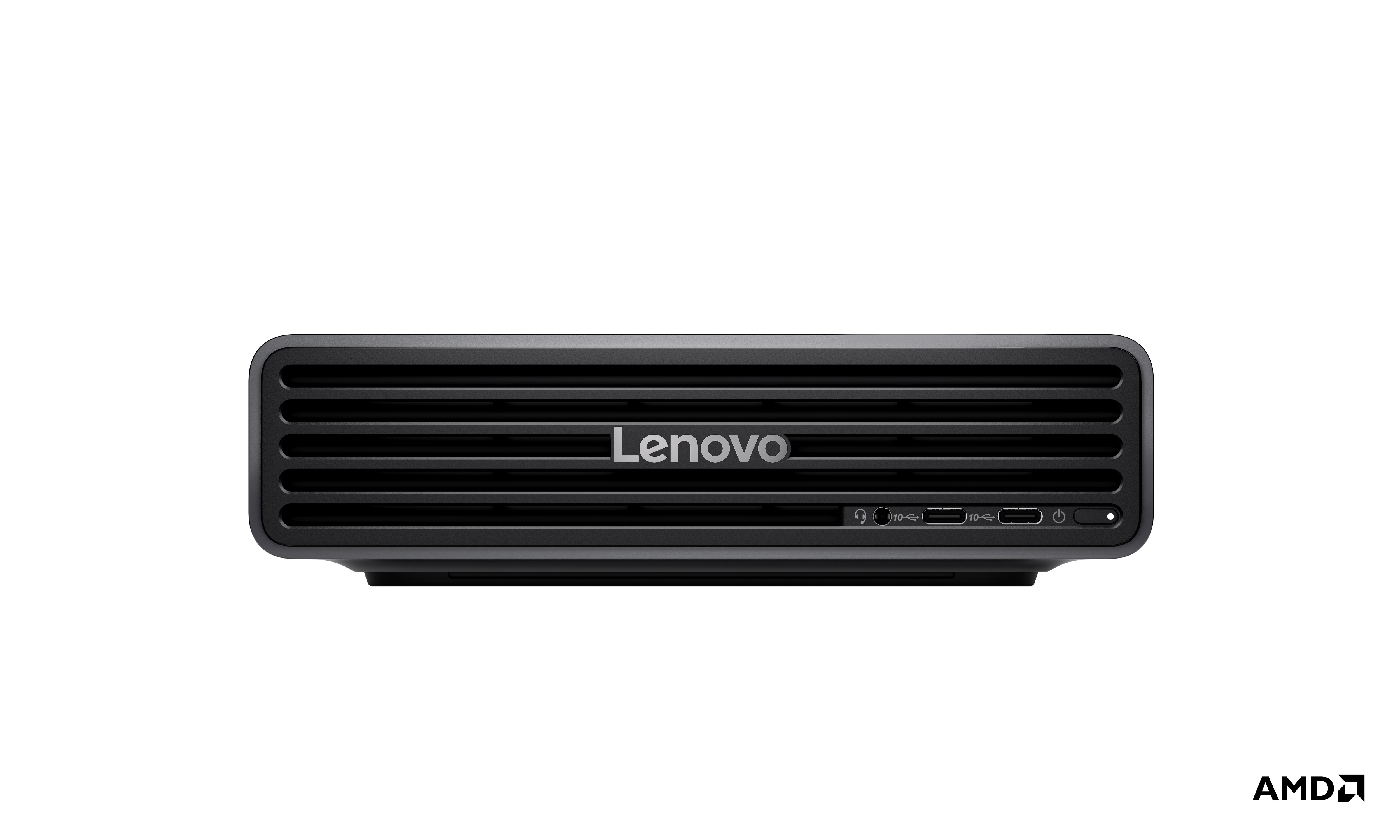
The ThinkCentre X Ultra is not just a compact machine; it’s a meticulously engineered piece of hardware designed to excel in compute-intensive AI environments. Measuring a mere 183 x 183 x 51 mm and weighing 2 kg, its footprint is comparable to, or even slightly larger than, a Mac mini, yet it packs significantly more memory capacity. This compact form factor is a testament to advancements in thermal management and component integration.
At its heart lies the AMD Ryzen AI Max+ PRO 495, an advanced system-on-chip (SoC) codenamed "Gorgon Halo," which AMD officially unveiled on September 5th. This processor represents a significant leap forward, building upon its predecessors with enhanced capabilities. The Ryzen AI Max+ PRO 495 features 16 Zen 5 CPU cores, providing robust multi-threaded performance for general computing and AI pre-processing tasks. Complementing the CPU is a powerful integrated GPU, the Radeon 8065S, equipped with 40 compute units. This iGPU is designed to handle parallel processing tasks crucial for AI model inference and training.
A notable upgrade in this generation is a 100 MHz clock speed increase across both the CPU and GPU, offering incremental but meaningful performance gains. Memory performance is also boosted, with the adoption of LPDDR5X-8533 RAM, an upgrade from the LPDDR5X-8000 found in earlier models. This faster memory standard directly contributes to higher memory bandwidth, critical for rapidly feeding data to the AI engine.
However, the standout feature remains the 128GB of unified memory. This vast memory pool can dynamically allocate up to 96GB specifically for the GPU, providing ample headroom for loading and executing large AI models. To put this into perspective, this capacity is sufficient to run a 70-billion-parameter language model using 8-bit quantization directly on the device, bypassing the need for expensive and often slower cloud-based inference services. 8-bit quantization is a technique that reduces the precision of model weights from standard 16-bit or 32-bit floating-point numbers to 8-bit integers, significantly lowering memory requirements while maintaining acceptable accuracy for many applications.
The integrated Neural Processing Unit (NPU) also sees an upgrade, moving from 50 TOPS (Tera Operations Per Second) to 55 TOPS. While this NPU handles specific, low-power AI tasks efficiently, Lenovo’s communication mentioning "131 TOPS" as a combined figure (NPU + GPU + CPU) should be viewed with a critical eye, as such aggregated figures often do not reflect real-world AI performance in a linear fashion. The NPU excels at dedicated, repetitive AI tasks, while the GPU handles more generalized, high-throughput parallel processing.
Connectivity and Ecosystem Support
Beyond raw processing power, the ThinkCentre X Ultra offers a comprehensive suite of connectivity options vital for modern workstations and AI development environments. It includes two M.2 slots for high-speed storage, supporting up to 8TB. While the system is announced with support for Gen5 SSDs, the article notes that these slots may be limited to Gen4 speeds, a detail that prospective buyers should verify for maximum storage performance.

For external connectivity, the mini-PC features two Thunderbolt 4 ports, providing versatile high-speed data transfer and display output capabilities. Display outputs are further augmented by DisplayPort 2.1 and HDMI 2.1, ensuring compatibility with the latest high-resolution monitors. Network connectivity is robust, with a 10 Gigabit Ethernet (10 GbE) port for blazing-fast wired network speeds, essential for large data transfers in AI workflows, and Wi-Fi 7 for cutting-edge wireless performance.
Lenovo offers the ThinkCentre X Ultra with a choice of operating systems: Windows 11 or Linux. For Linux users, an "AMD AI OS" image will be available, alongside official Ubuntu certification, signaling strong support for the open-source community prevalent in AI development. The device is slated for availability in November.
Pricing, Competition, and Market Dynamics
The starting price of €3,100 for the ThinkCentre X Ultra is a critical element of its market positioning, especially when viewed against the backdrop of current industry trends and component shortages. The phrase "à partir de" (starting from) is important here, as Lenovo has not yet explicitly confirmed that the base configuration at this price point includes the full 128GB of unified memory. In the United States, the announced starting price is $3,699, and similar clarity regarding the base memory configuration is awaited.
This pricing strategy becomes particularly interesting when compared to other players in the high-memory mini-PC space:
- Framework Desktop: A significant competitor, the Framework Desktop with a Ryzen AI Max+ 395 and 128GB of memory was initially launched in February 2025 at €1,999. However, due to a severe global shortage and subsequent price surge in high-bandwidth memory, its price in France had escalated to €3,889 by late August 2026, and this price did not even include an SSD. Framework is also reportedly preparing a PRO 495 version with 192GB, which is expected to come with an even higher price tag. In this context, Lenovo’s €3,100 starting price for a machine with the next-generation chip and 128GB of memory appears highly competitive, potentially even representing a relative "discount" compared to the inflated prices of current alternatives.
- Apple Mac Studio M5 Max: Apple’s Mac Studio M5 Max, priced at €2,999 with 36GB of unified memory, offers a different value proposition. While Lenovo’s X Ultra provides significantly more memory for a comparable price, Apple maintains a substantial advantage in memory bandwidth. The Mac Studio M5 Max boasts 614 GB/s of memory bandwidth, whereas the AMD "Gorgon Halo" chip in the X Ultra offers 273 GB/s. This difference directly translates to the rate at which data can be processed, impacting metrics like "tokens per second" for LLMs, where Apple’s architecture can provide a noticeable performance edge for certain workloads. Both companies are exploring clustering solutions: Apple via Thunderbolt 5 for cumulative processing, and Lenovo’s "cluster mode" allowing up to four X Ultra units to combine for a total of 512GB of memory. However, Lenovo has yet to detail the specific interconnection technology or the software orchestration layer for its clustering solution.
Target Audience and Long-Term Considerations
The ThinkCentre X Ultra is clearly not aimed at the casual user or the gaming enthusiast. While its integrated GPU offers impressive performance for an iGPU, it remains an integrated solution and cannot rival the dedicated graphics cards favored by serious gamers. Instead, its primary audience comprises developers, AI researchers, data scientists, and small enterprises that require robust local inference capabilities, particularly for models that demand large memory footprints. The certification for Ultra Low Noise by TÜV further underscores its suitability for professional environments where quiet operation is paramount, even under heavy loads.

From a long-term perspective, the X Ultra, like many modern compact systems, presents trade-offs in modularity. While the Framework Desktop allows for swapping motherboards, power supplies, and chassis components, the ThinkCentre X Ultra features soldered memory, limiting future upgrades. The article notes that the current chip can support up to 192GB of memory, but the X Ultra caps at 128GB, indicating a design choice that prioritizes compact size and cost-efficiency over maximum expandability. Similarly, the potential limitation of Gen5 SSDs to Gen4 speeds, if confirmed, could slightly curtail the theoretical maximum storage performance. Despite these points, the X Ultra offers a powerful, current-generation architecture that is only marginally different from the previous generation in terms of core architecture and bandwidth.
Broader Impact and Implications
The launch of the Lenovo ThinkCentre X Ultra is more than just a new product; it signals a maturing market for specialized AI hardware. It validates the growing demand for powerful, compact, and accessible solutions for local AI inference and development. This move by Lenovo, a major player in enterprise and consumer computing, will likely intensify competition in the mini-PC segment, pushing other manufacturers to innovate further in terms of performance, memory capacity, and price-to-performance ratios.
For AMD, the ThinkCentre X Ultra represents a significant platform for showcasing its Ryzen AI Max+ PRO 495 chip, bolstering its position in the competitive AI hardware landscape against rivals like Intel and Apple. The emphasis on unified memory and NPU capabilities highlights AMD’s strategic focus on optimizing its processors for diverse AI workloads.
Ultimately, the ThinkCentre X Ultra could play a pivotal role in democratizing access to powerful AI capabilities, enabling smaller teams and individual developers to experiment with and deploy complex AI models without the prohibitive costs and complexities of cloud infrastructure. Its blend of compact design, substantial unified memory, and competitive pricing positions it as a compelling option for those at the forefront of the local AI revolution.