Sonny Valindra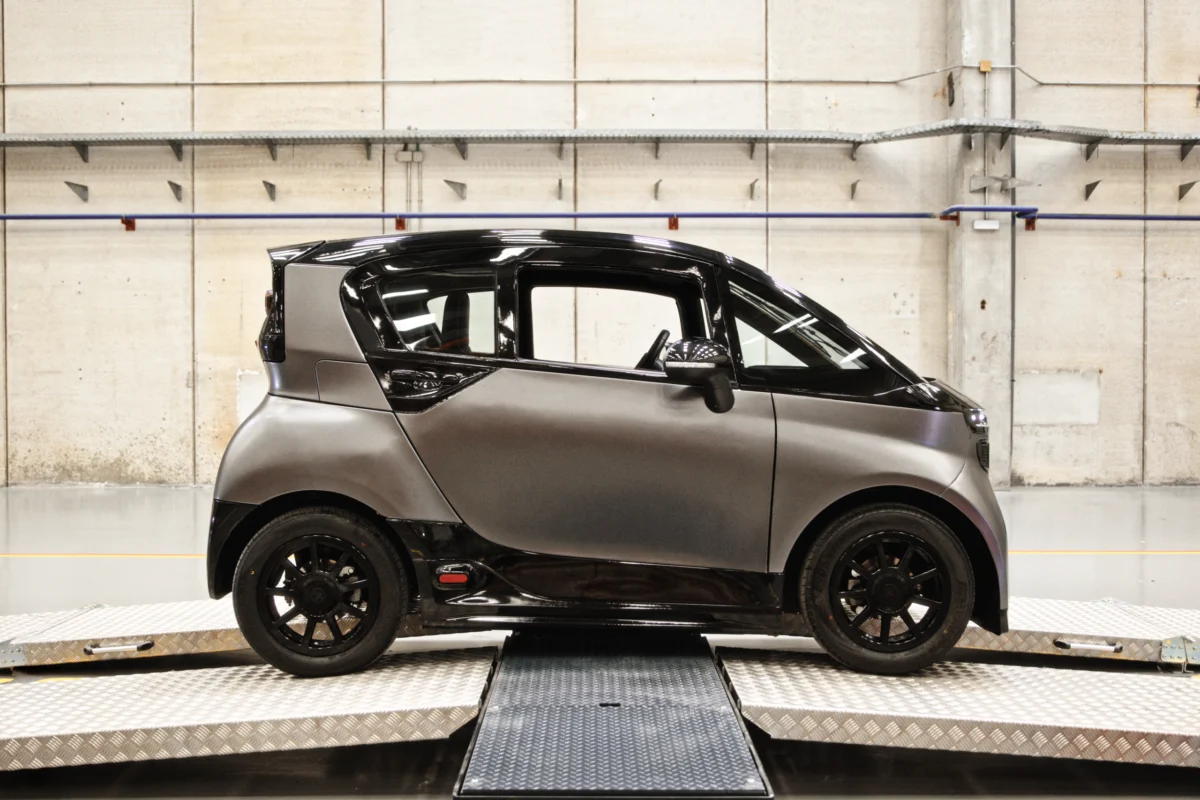
The European urban landscape is undergoing a significant transformation in its automotive sector, with a pronounced shift towards smaller vehicles. Historically, the market was characterized by iconic, often charmingly nicknamed, "yoghurt pots" of European origin. However, this trend has seen a dramatic evolution, with compact electric vehicles (EVs) predominantly hailing from China now dominating the scene. Even established brands like Smart, once the epitome of the ultracompact car, have transitioned their manufacturing to China, signaling a profound change in the industry’s supply chains and competitive dynamics. Amidst this evolving market, Spanish startup Liux is making a bold entrance with its tiny electric car, the Liux Big, positioning itself as a contender built on the bedrock of sustainability and an unconventional approach to automotive manufacturing.
The Liux Big, with its intentionally ironic moniker, is designed for urban agility, capable of parking at a right angle to the curb. Yet, the name also encapsulates the ambitious vision of a company that deliberately eschews conventional paths. "The idea of ‘a European car’ does not exist," stated Liux co-founder Antonio Espinosa de los Monteros in an interview with TechCrunch. This seemingly paradoxical statement, coming from the CEO of a startup emphasizing its "made in Spain" origins, underscores the company’s pragmatic understanding of globalized supply chains and its unwavering commitment to sustainability as its guiding principle.
A New Dawn for Spanish Automotive Manufacturing
Liux has indeed marked a significant milestone by opening Spain’s first new car plant in over three decades. Located in Azuqueca de Henares, approximately an hour’s drive from Madrid, this facility represents a renewed commitment to domestic automotive production. However, as Espinosa and his co-founder David Sancho explained, the pursuit of a fully sovereign supply chain was deemed unattainable. Instead, Liux aims to navigate the complexities of global sourcing while prioritizing environmental responsibility.
The company’s approach to sustainability is multifaceted, extending beyond mere electric propulsion. While the batteries for the Liux Big are not manufactured in Europe, they are designed for convenient home recharging, including utilizing power generated from solar panels. A core tenet of Liux’s philosophy is longevity and ease of maintenance, aiming to counteract the trend of rapid obsolescence often seen in modern vehicles. Perhaps its most innovative feature is the car’s fiber body, constructed from a novel linen-based biocomposite. This material is engineered for effective extraction and recycling, embodying Liux’s commitment to a truly circular economy.

"One thing that’s very clear for David and me is that recycling isn’t just a lab concept," Espinosa elaborated. "You can recycle almost anything in a lab. What makes something recyclable has to do with how it’s built. When you build something, you have to try to preserve the integrity of the material and the components so that a second life is possible." This dedication to "real circularity" stems from Espinosa’s previous success as co-founder of Auara, a Spanish B Corp renowned for its sustainable mineral water packaging. Following Auara’s acquisition, Espinosa embarked on a new venture with Sancho, channeling his expertise into the automotive sector.
Engineering Excellence and a Pivot Towards the Micro
David Sancho, with his background in engineering high-performance electric vehicles, brings a critical dimension to Liux. His prior work includes the Bóreas, a hybrid supercar unveiled at the 2017 24 Hours of Le Mans, showcasing his capability in pushing the boundaries of EV technology. After a divergence with his former partners, Sancho joined forces with Espinosa to establish Liux.
Their initial foray into the market was the Liux Animal, a fully electric five-seater prototype unveiled in 2022. This vehicle was notable for its construction from almost entirely recycled or plant-based materials, a testament to their shared vision. However, shortly after its debut, the founders made a strategic pivot. They concluded that their chances of successfully navigating the rigorous homologation process would be significantly higher with a smaller vehicle. This realization led to the development of the Liux Big.
Navigating Homologation and Scaling Production
The strategic shift proved prescient. By 2026, Liux had secured Europe-wide homologation for the Liux Big, paving the way for its market entry. The company anticipates sales to commence in the first half of the following year. In the interim, Liux has expanded its workforce to 65 employees and is preparing to scale up production across three facilities in Spain.
The Azuqueca de Henares factory, though compact, adheres to Toyota’s "lean management" principles, focusing on the final stages of assembly. Beatriz Belda González, head of production and a former BMW engineer, highlighted this approach. Despite its size, Liux projects a production capacity of up to 20,000 cars annually by 2030, a testament to efficient manufacturing strategies.

Understanding the Target Market and Future Ambitions
While it remains early to definitively gauge market demand, Liux has already garnered significant interest, with over 7,500 individuals joining the waiting list for the Liux Big. This list, which does not require an upfront fee, has provided valuable insights into the prospective customer base. The data suggests a primary demographic of 55- to 60-year-old urban dwellers, leading Liux to anticipate that the Liux Big will often serve as a household’s second vehicle.
This observation might temper expectations of microcars entirely replacing traditional car ownership. However, Espinosa remains focused on strategic growth. Rather than attempting to predict market trends, Liux is actively exploring partnerships with B2B fleet operators and companies specializing in autonomous vehicle technology, indicating a forward-looking strategy that embraces evolving mobility solutions.
Affordability and Performance: A Delicate Balance
Liux aims to offer a more sustainable and affordable alternative in the burgeoning microcar segment. While the final pricing is yet to be confirmed, the company has indicated it will be below €18,000 (approximately $21,000) before potential EV subsidies. This positions the Liux Big at the higher end of the microcar price spectrum, but the company believes its value proposition will justify the cost.
Celso Fernández Llorens, Liux’s head of R&D, emphasized the significant engineering challenges posed by weight and size limitations inherent in this vehicle category. He noted that while European regulations differentiate between ultralight L6e and slightly heavier L7e four-wheelers, Liux has leveraged its L7e homologation to optimize its vehicle’s capabilities. This includes integrating a surprisingly spacious 260-liter trunk, a feat achieved through meticulous design decisions.
A key focus for Liux is to provide a driving experience that truly feels like operating a car, rather than a two-wheeled vehicle. This extends to safety, a paramount concern for Sancho. The company is committed to ensuring the Liux Big’s structural integrity, capable of withstanding potential collisions and maintaining stability during maneuvers, even though its category does not mandate crash testing. Liux has proactively conducted and showcased tests for slalom, braking, and other dynamic performance metrics, demonstrating the vehicle’s robust engineering.

A Multi-Variant Future and a Distinctive Brand Experience
The initial Liux Big model will be available in two battery configurations: 15 kWh and 20 kWh. Plans are also underway for a cargo variant. With Sancho’s engineering prowess, the possibility of developing more performance-oriented models, perhaps even a supercar, remains a tantalizing prospect. The company has publicly stated its ambition to evolve beyond a "one-car brand."
To bring the Liux Big to market, the company has secured €16 million (approximately $18.5 million), including European funding. This capital will be instrumental in establishing partnerships with car dealerships across Europe for sales and distribution.
The company’s showroom experience is also designed to be distinctive, a deliberate contrast to its Chinese competitors. Head of Brand, Ana Terrado Leyva, highlighted features such as textile screens, interactive 3D models showcasing the Liux Big’s three color options, and the use of linoleum flooring as a subtle nod to the car’s linen-based materials. These aesthetic and experiential choices are part of Liux’s strategy to cultivate a unique brand identity and appeal to a discerning European market.
Ultimately, Liux’s endeavors may reignite the concept of "a European car," not as a singular entity defined by origin, but as a testament to European ingenuity, sustainability, and a commitment to building vehicles that align with the evolving values of its consumers.