
 Evan Lee Salim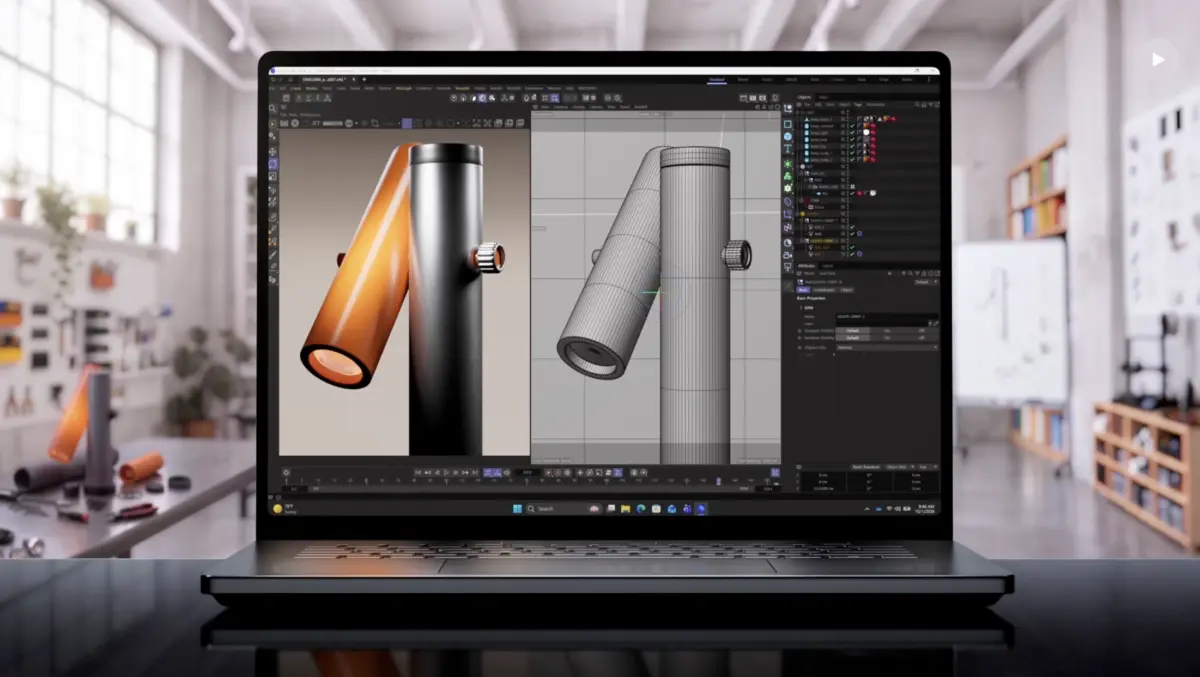
Back in June, Nvidia signaled its ambitious expansion into the burgeoning AI PC market, announcing strategic agreements with Microsoft, Dell, HP, and other leading PC manufacturers. The goal was clear: to develop a new class of AI- and agent-ready Windows PCs, all built around Nvidia’s innovative RTX Spark chip. At the time, specific details regarding these revolutionary machines were scarce, leaving the industry and consumers eager for more concrete information. That anticipation culminated on Wednesday during San Francisco’s annual Tech Week, where Microsoft and Dell took center stage to lift the veil on their respective offerings, providing a first look at the hardware that promises to usher in a new era of personal computing.
The Dawn of On-Device AI: Microsoft’s Surface Laptop Ultra and Dev Box
Microsoft, a pivotal partner in Nvidia’s endeavor, used the high-profile event to unveil the full specifications and pricing for its much-anticipated Surface Laptop Ultra. This device is positioned as a premium offering, designed to harness the power of AI directly on the user’s machine. The Surface Laptop Ultra will be available in two primary configurations. The entry-level model starts at a substantial $2,600, while a more potent variant, featuring an enhanced chip, begins at $3,700. For users requiring maximum performance, memory, and storage, prices can ascend to $5,900, reflecting the cutting-edge technology packed within. Notably, Microsoft indicated that the highest-end configuration had already sold out, underscoring the significant demand and interest surrounding these new AI-capable devices.
Beyond the consumer-focused Surface Laptop Ultra, Microsoft also introduced a dedicated workstation tailored for the professional developer community: the Surface RTX Spark Dev Box. Priced from $6,000, this powerhouse machine is purpose-built to facilitate the development of sophisticated AI applications and agents. It comes pre-equipped with a comprehensive suite of Microsoft’s developer tools, including the ubiquitous VS Code, the AI-powered GitHub Copilot CLI, Windows Subsystem for Linux (WSL), and PowerShell 7. This bundle signals Microsoft’s clear intent to cultivate an ecosystem where developers can seamlessly build, test, and deploy AI models directly on optimized hardware.
The fundamental premise underpinning both the Surface Laptop Ultra and the Surface RTX Spark Dev Box is their unparalleled ability to execute AI models locally on-device. This capability is achieved through a meticulously integrated hardware architecture that combines a powerful CPU, a dedicated GPU (powered by the Nvidia RTX Spark chip), unified memory, and advanced thermal management solutions like superior cooling. These modifications are critical to handle the intensive computational demands of AI workloads, allowing users to run complex AI operations "for free," bypassing the recurring costs and latency often associated with cloud-based AI services. This on-device processing promises enhanced privacy, reduced reliance on internet connectivity, and instantaneous AI model execution.
Windows 11 Reimagined for the AI Age: Execution Containers and Agent Orchestration
Complementing the new hardware, Microsoft simultaneously revealed a significantly revamped version of Windows 11, specifically optimized for the AI era. A cornerstone of this update is a groundbreaking feature dubbed "Execution Containers." This innovation is designed to simplify and secure the sandboxing of AI agents, providing a controlled environment for their operation. The company confirmed that this crucial feature would be rolled out to all Windows 11 users, democratizing access to safer and more efficient AI agent management across the platform.
During the event, Microsoft CEO Satya Nadella elaborated on the strategic vision behind these advancements. "One of the things we realized in the last 3-4 years is that just having a model doesn’t do much for anything," Nadella explained, highlighting a critical insight from the rapid evolution of AI. He continued, "You really do need to orchestrate, and you need to have memory outside of the model. You need to have this harnessed layer that is able to take multiple models plus context, plus memory, and the action space." Nadella’s statement underscores Microsoft’s understanding that effective AI deployment goes beyond mere model execution; it requires sophisticated orchestration, contextual awareness, and persistent memory to create truly intelligent and dynamic agents.
Nadella further emphasized Microsoft’s commitment to fostering a broad AI ecosystem, stating that the company is enabling this capability "not just for our apps but apps for anyone’s agent. That’s what the Windows platform is all about going forward." This declaration signals a profound shift in Windows’ strategic direction, positioning the operating system as the foundational platform for a new generation of AI-driven applications and services, empowering developers to build agents that can interact with the system and user data in intelligent, context-aware ways.
Targeting the Developer Community: A Direct Challenge to Apple
The strategic intent behind these new Surface PCs is unmistakably geared towards developers and AI agent enthusiasts. This focus is underscored by Microsoft’s aggressive trade-in offer, providing up to $1,000 off for individuals who exchange a MacBook Pro. This move is a direct challenge to Apple, whose MacBook Pro line has become a de facto standard for developers and creative professionals, particularly within the tech hubs of Silicon Valley. By offering high-performance, AI-optimized hardware coupled with robust developer tools and a significant financial incentive, Microsoft is making a compelling case for developers to migrate to the Windows ecosystem.
While primarily aimed at the developer community, Microsoft was quick to highlight the versatility of these powerful new Surface PCs. The company promises that the robust graphics processing capabilities inherent in the Nvidia RTX Spark chip will also make these devices exceptional tools for content creation, demanding video processing tasks, and high-fidelity gaming. This broader appeal positions the Surface Laptop Ultra and Dev Box as comprehensive powerhouses capable of meeting a diverse range of high-performance computing needs.
The Broader AI PC Landscape: Dell Joins the Fray
Microsoft was not alone in unveiling its Nvidia-RTX Spark AI Windows PCs on Wednesday. Dell also took the opportunity to announce the detailed specifications of its previously teased Dell XPS 16 Creator Edition PC. This release further solidifies the emerging trend of premium AI PCs designed for demanding users. The Dell XPS 16 Creator Edition is now available for preorder, with deliveries slated for a later October timeframe, and carries a starting price of $3,800. Its availability at major retailers like Best Buy signals a broader market push for these new AI-centric machines.
The simultaneous announcements from two of the industry’s giants — Microsoft and Dell — underscore a concerted effort to establish the "AI PC" as a distinct and rapidly growing product category. This coordinated rollout, just months after Nvidia’s initial announcement, highlights the strategic importance and rapid pace of innovation in this sector.
Chronology and Context: A New Chapter in Computing
The journey towards the AI PC gained significant momentum in June when Nvidia, a company synonymous with GPU innovation and a key enabler of the AI revolution in data centers, announced its foray into the consumer CPU market with the RTX Spark chip. This move marked a strategic pivot for Nvidia, signaling its intent to extend its AI dominance from the cloud to the edge, directly into personal computing devices. The agreements with Microsoft, Dell, and HP laid the groundwork for a new generation of Windows machines designed from the ground up to handle complex AI workloads locally.
Wednesday’s event in San Francisco, strategically timed during the city’s annual Tech Week, served as the formal launchpad for these devices. Tech Week brings together industry leaders, developers, and media, providing an ideal platform to introduce groundbreaking technologies. The announcements from Microsoft and Dell represent the culmination of months of collaborative development, translating Nvidia’s chip innovation into tangible products ready for the market. This rapid progression from initial announcement to detailed product reveal within a few months demonstrates the urgency and competitive intensity driving the AI PC market.
Supporting Data and Market Implications: The Rise of Edge AI
The shift towards on-device AI, exemplified by these new RTX Spark-powered PCs, is not merely a technological upgrade; it represents a fundamental change in how personal computing will operate. Industry analysts predict a significant surge in the "AI PC" market, with some projections estimating hundreds of millions of units shipped within the next few years. This growth is fueled by the increasing demand for privacy, personalization, and efficiency that local AI processing offers.
Traditional computing has relied heavily on cloud infrastructure for complex tasks, especially in AI. However, the latency, data privacy concerns, and recurring costs associated with cloud processing have always presented limitations. On-device AI, or "edge AI," addresses these challenges by bringing the computational power closer to the user. This enables instantaneous responses for tasks like real-time language translation, advanced image editing, personalized content generation, and sophisticated code completion—all without sending sensitive data over the internet.
The Nvidia RTX Spark chip, at the heart of these new PCs, is designed to optimize this edge AI performance. It integrates specialized AI accelerators alongside traditional CPU and GPU cores, creating a unified architecture that can efficiently manage diverse AI models. The unified memory architecture further enhances performance by allowing the CPU and GPU to access the same data pool quickly, minimizing bottlenecks. Advanced cooling systems are also critical, as AI workloads can generate substantial heat, requiring robust thermal management to sustain peak performance.
The concept of "Execution Containers" in Windows 11 is particularly significant for the future of AI agents. As AI models become more autonomous and capable of interacting with system resources, ensuring their secure and isolated operation is paramount. Sandboxing AI agents within these containers mitigates potential security risks and prevents runaway processes, providing developers and users with a safer environment for deploying intelligent assistants and automated tools. This also aligns with Nadella’s vision of an "agent platform," where Windows provides the necessary infrastructure for diverse AI agents to coexist and collaborate effectively.
The Competitive Landscape: A Battle for AI PC Dominance
The launch of Nvidia RTX Spark-powered PCs intensifies the already fierce competition in the AI PC market. While Nvidia brings its unparalleled AI hardware expertise, established players like Intel and AMD are also aggressively developing their own solutions. Intel’s latest Core Ultra processors feature an integrated Neural Processing Unit (NPU) with "AI Boost" capabilities, designed to handle AI tasks efficiently. Similarly, AMD’s Ryzen AI processors incorporate dedicated AI engines to accelerate AI workloads. Apple, with its M-series chips, has been a pioneer in integrating powerful neural engines directly into its silicon, offering robust on-device AI capabilities in its MacBook and iPad lines for several years.
Microsoft’s aggressive targeting of MacBook Pro users with trade-in offers highlights the strategic importance of winning over the developer community. Developers are the architects of the future, and securing their allegiance is crucial for establishing platform dominance in the AI era. By offering powerful hardware, a rich suite of developer tools, and an operating system optimized for AI agents, Microsoft aims to create a compelling alternative to Apple’s ecosystem.
The partnership between Nvidia and Microsoft is particularly potent. Nvidia brings the silicon innovation, while Microsoft provides the operating system and the vast ecosystem of Windows users and developers. This collaboration creates a formidable force, aiming to define the standards and capabilities of the next generation of personal computers.
Broader Impact and Future Implications
The emergence of AI PCs like the Surface Laptop Ultra and Dell XPS 16 Creator Edition signifies more than just an incremental hardware upgrade; it marks a pivotal moment in the evolution of personal computing. These devices are designed to fundamentally change how users interact with their computers, enabling unprecedented levels of intelligence, personalization, and efficiency.
For end-users, this means more powerful creative tools, more responsive productivity applications, and a more intuitive computing experience driven by intelligent agents that anticipate needs and automate tasks. For developers, it opens up entirely new frontiers for innovation, allowing them to create AI applications that are faster, more private, and more deeply integrated into the operating system.
Economically, the AI PC market is poised to drive significant growth in the technology sector, stimulating demand for new hardware, software, and services. It will also foster competition, pushing all major players to innovate rapidly and deliver increasingly sophisticated AI capabilities. The long-term vision articulated by Satya Nadella — of Windows as a platform for any agent — suggests a future where AI becomes an omnipresent, integral layer of the operating system, fundamentally reshaping the digital experience.
As these first wave of Nvidia RTX Spark-powered AI PCs hit the market, they represent a tangible step towards a future where artificial intelligence is not just a cloud service, but an integral, localized, and personal companion in our daily computing lives. The industry watches keenly as this new chapter in computing unfolds, promising a transformative impact on how we work, create, and interact with technology.








