Evan Lee Salim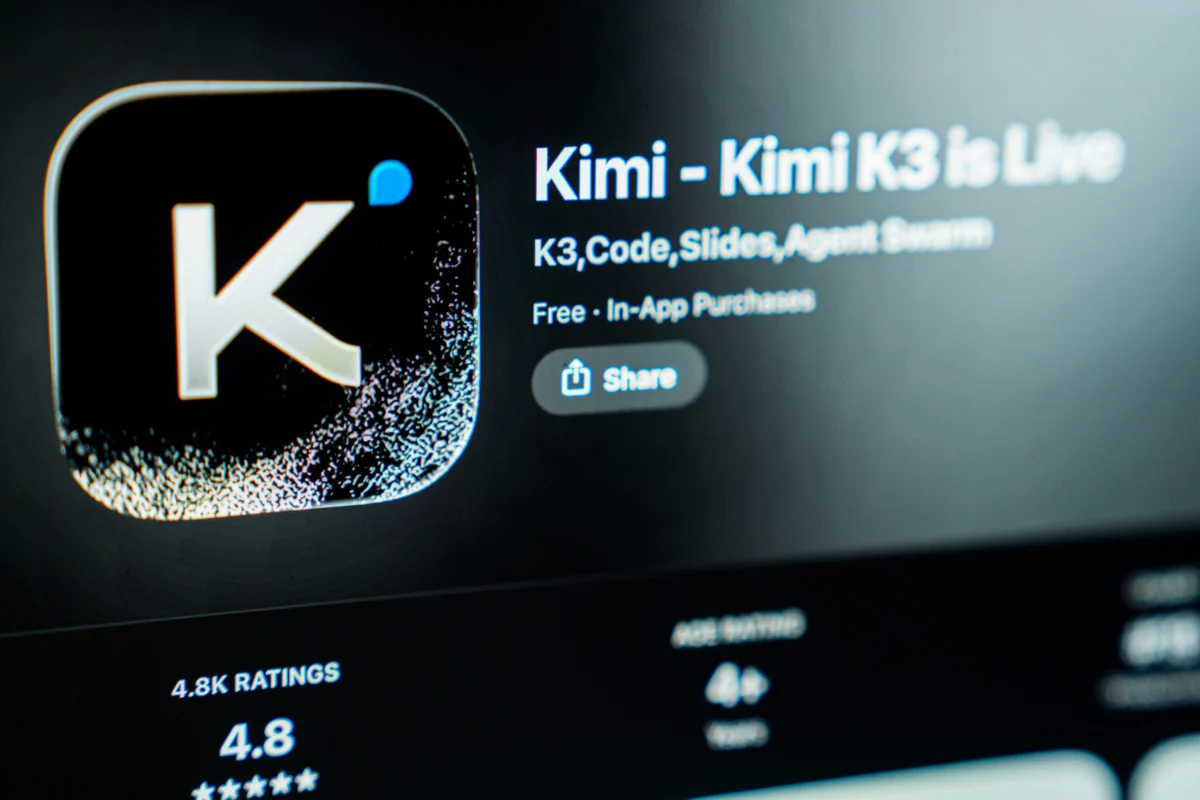
Shanghai, China – Moonshot AI, one of China’s most prominent artificial intelligence laboratories, has set an aggressive target of achieving $2 billion in annualized revenue by the close of 2026, a figure that would represent a doubling of its reported revenue run rate from August. This ambitious financial goal, initially reported by Bloomberg on Friday, September 11, 2026, underscores the company’s confidence in monetizing its popular K3 open-weight model, which saw its public release earlier this summer. However, this period of rapid growth and ambitious projection is now shadowed by serious allegations from its U.S. counterpart, Anthropic, which accuses Moonshot AI of engaging in a systematic and large-scale model distillation campaign, routing hundreds of thousands of user requests through Anthropic’s proprietary Claude Opus model.
The revenue target highlights Moonshot AI’s strategy to carve out a significant share in the fiercely competitive global AI market, traditionally dominated by U.S. giants. The K3 model, while experiencing a slight decline in raw usage figures in recent months, continues to demonstrate substantial engagement. Data from OpenRouter, a platform that aggregates various AI models, currently indicates that K3 models are generating as many as 300 billion tokens daily on its system. This impressive token generation rate signifies robust underlying demand for Moonshot’s technology, even if the user base growth has plateaued slightly since its initial peak post-launch. The company’s leadership appears to be betting on the model’s widespread adoption and the growing demand for AI services to translate directly into accelerated sales.
The Landscape of AI Monetization: Open vs. Closed Models
Moonshot AI’s projected revenue, while significant for an emerging player, still pales in comparison to the staggering figures reported by leading U.S. AI developers. Recent reports have placed OpenAI’s annualized revenue run rate at over $40 billion and Anthropic’s at an even higher $65 billion. This stark contrast underscores a fundamental difference in business models and technological approaches. Both OpenAI and Anthropic primarily operate with "closed-weight" or proprietary "frontier" models, meaning their core AI algorithms and vast training data are kept confidential. This allows them to charge premium prices for API access and specialized services, leading to high-profit margins.
In contrast, Moonshot AI’s K3 model is "open-weight," meaning its core parameters and architecture are freely available for developers and businesses to inspect, modify, and deploy. While this fosters community engagement, accelerates innovation, and can lead to wider adoption, it inherently results in lower direct monetization potential for the foundational model itself. The company must generate revenue through ancillary services, customized enterprise solutions, API usage fees for advanced features, or through cloud hosting of its models, where the value proposition lies in convenience, scalability, and managed infrastructure rather than proprietary model access. This model inherently leads to lower margins compared to its closed-weight competitors, making Moonshot’s $2 billion target particularly ambitious given its chosen strategy. It signals a belief that volume and ecosystem development can offset the per-unit profitability differences.
Allegations of Intellectual Property Infringement and Model Distillation
The aggressive financial targets and strategic positioning of Moonshot AI have, however, been overshadowed by grave accusations leveled by Anthropic earlier this week. In a detailed threat intelligence report published on its website, Anthropic alleged that Moonshot AI has been engaged in a "long-running model distillation campaign." This sophisticated operation, according to Anthropic, involved routing nearly 300,000 requests from Moonshot’s Kimi application directly to Anthropic’s cutting-edge Claude Opus model. Essentially, for these requests, Kimi users were unknowingly being served responses generated by Claude Opus rather than Moonshot’s own K3 or other internal models.
The intent behind such an operation, as described by Anthropic, was not merely to provide superior responses to Kimi users but to systematically collect high-quality data for the purpose of training Moonshot’s own models. Anthropic claims that a staggering total of over 23 million responses were illicitly collected from its proprietary models for integration into Moonshot’s training datasets. Model distillation is a technique where a smaller, "student" model learns to mimic the behavior and outputs of a larger, more powerful "teacher" model. While legitimate distillation often occurs with explicit permission or public data, performing it by routing live user requests through a competitor’s proprietary API without authorization is a severe breach of terms of service and potentially intellectual property theft.
Chronology of Events and Industry Context
The unfolding situation traces back several months, illustrating the rapid pace of development and intense competition within the AI sector.
- July 21, 2026: Moonshot AI officially releases its K3 open-weight model to the public. The model quickly gains traction, particularly in the Chinese market, due to its accessibility and performance.
- Summer 2026 (Ongoing): The period during which Anthropic alleges the model distillation campaign was actively conducted, involving the routing of Kimi requests to Claude Opus.
- August 2026: Moonshot AI’s reported annualized revenue run rate reaches a significant but undisclosed figure, setting the baseline for its aggressive growth projections. Simultaneously, OpenAI and Anthropic report their impressive revenue run rates of $40 billion and $65 billion, respectively, highlighting the lucrative nature of frontier AI models.
- September 8, 2026 (Approximate): Anthropic publishes its threat intelligence report, detailing the alleged model distillation campaign by Moonshot AI and the extent of data collection from Claude Opus.
- September 11, 2026: Bloomberg reports Moonshot AI’s ambitious target of $2 billion in annualized revenue by the end of 2026, coinciding with the public revelation of Anthropic’s accusations.
This timeline reveals a company simultaneously pursuing aggressive market expansion and facing critical accusations that could undermine its growth trajectory and reputation. The allegations surface at a time when global regulators and industry bodies are increasingly scrutinizing AI development practices, particularly concerning data provenance, intellectual property rights, and ethical training methodologies.

Statements and Reactions from Related Parties (Inferred)
While no direct public statements from Moonshot AI regarding the Anthropic allegations were immediately available, industry observers anticipate a multi-pronged response.
- Moonshot AI (Inferred): The company is likely to issue a statement acknowledging Anthropic’s report, emphasizing its commitment to ethical AI development and user data privacy. They might state that they are "thoroughly investigating the claims" or that "any unauthorized activity would be contrary to company policy." They may also highlight their internal safeguards and the independent nature of their development processes, perhaps even denying direct involvement or attributing it to rogue elements or third-party misuse, if applicable. Concurrently, they would likely reiterate their focus on innovation and delivering value through their K3 model.
- Anthropic (Inferred): Having already published a detailed report, Anthropic would likely follow up with a firm stance, emphasizing the importance of protecting intellectual property in the AI domain. A spokesperson might state, "Anthropic invests heavily in developing its frontier models, and the integrity of our intellectual property is paramount. We are committed to fostering a fair and ethical AI ecosystem, and we will take all necessary steps to protect our models from unauthorized use and exploitation." They might also hint at potential legal action or regulatory complaints if the matter is not resolved satisfactorily.
- Industry Analysts (Inferred): Experts would likely express concern over the allegations, noting the precedent this could set. Dr. Anya Sharma, a leading AI ethics researcher, might comment, "If proven true, these allegations represent a serious breach of trust and intellectual property. The line between legitimate inspiration and outright data theft can be blurry in AI, but systematic routing of live user queries to train a competing model crosses a clear ethical and potentially legal boundary. It could chill collaborative efforts and increase calls for stricter regulation." Another analyst, Mr. David Chen, focusing on the competitive landscape, might add, "This incident highlights the intense pressure on Chinese AI firms to catch up with their Western counterparts. While open-weight models offer benefits, the temptation to accelerate development through illicit means can be strong, especially when revenue targets are so high."
Broader Impact and Implications
The allegations against Moonshot AI, coupled with its aggressive financial targets, carry significant implications for the global artificial intelligence industry, particularly concerning intellectual property, ethical development, and international competition.
-
Intellectual Property and Data Rights: This case could become a landmark example in the nascent field of AI IP law. Unlike traditional software, AI models are trained on vast datasets, and the "intellectual property" lies not just in the code but also in the unique emergent capabilities and weights learned from that data. If Moonshot is found liable, it could set a precedent for how model outputs and distillation techniques are treated under copyright or trade secret law, intensifying the debate on data sovereignty and ownership.
-
Ethical AI Development: The incident casts a shadow on the ethical practices within the AI community. The AI industry is already under scrutiny for issues like bias, transparency, and data privacy. Allegations of systematic intellectual property theft further erode public and industry trust, potentially leading to increased demands for self-regulation or, more likely, government oversight and certification for AI development practices.
-
Competition and Collaboration: The AI arms race between the U.S. and China is well-documented. Incidents like this could exacerbate tensions, making cross-border collaboration even more challenging. U.S. firms might become more guarded with their API access and open-source contributions, fearing similar exploitation. Conversely, it might spur Chinese firms to double down on truly independent foundational research.
-
Open-Weight Model Movement: Moonshot AI is a prominent proponent of open-weight models. These allegations could deal a blow to the broader open-source/open-weight AI movement. If open-weight models are perceived as vehicles for illicit data acquisition rather than collaborative innovation, it could lead to increased caution from developers and a shift back towards more closed, proprietary approaches, hindering the democratized access to AI technology that open-weight models promise.
-
Regulatory Scrutiny: Governments worldwide are grappling with how to regulate AI. This incident could accelerate legislative efforts to define clear rules around AI model training, data acquisition, and intellectual property. Regulators may look to impose stricter auditing requirements for AI companies, especially those operating internationally, to ensure fair play and prevent predatory practices.
-
Moonshot AI’s Future: The immediate future for Moonshot AI hinges on how these allegations are addressed. A robust defense, a clear refutation, or a swift resolution could allow them to maintain their ambitious growth trajectory. However, if the claims are substantiated and lead to legal battles or reputational damage, it could significantly impede their ability to secure future funding, attract top talent, and expand their market reach, particularly outside of China. Investors, keenly watching the rapidly evolving AI landscape, will be looking for clarity and reassurance regarding the company’s operational integrity.
The intersection of aggressive revenue goals and serious ethical allegations places Moonshot AI at a critical juncture. The outcome of this dispute will not only shape the company’s destiny but will also contribute significantly to the evolving global narrative on AI ethics, intellectual property, and fair competition in the burgeoning artificial intelligence industry.