Evan Lee Salim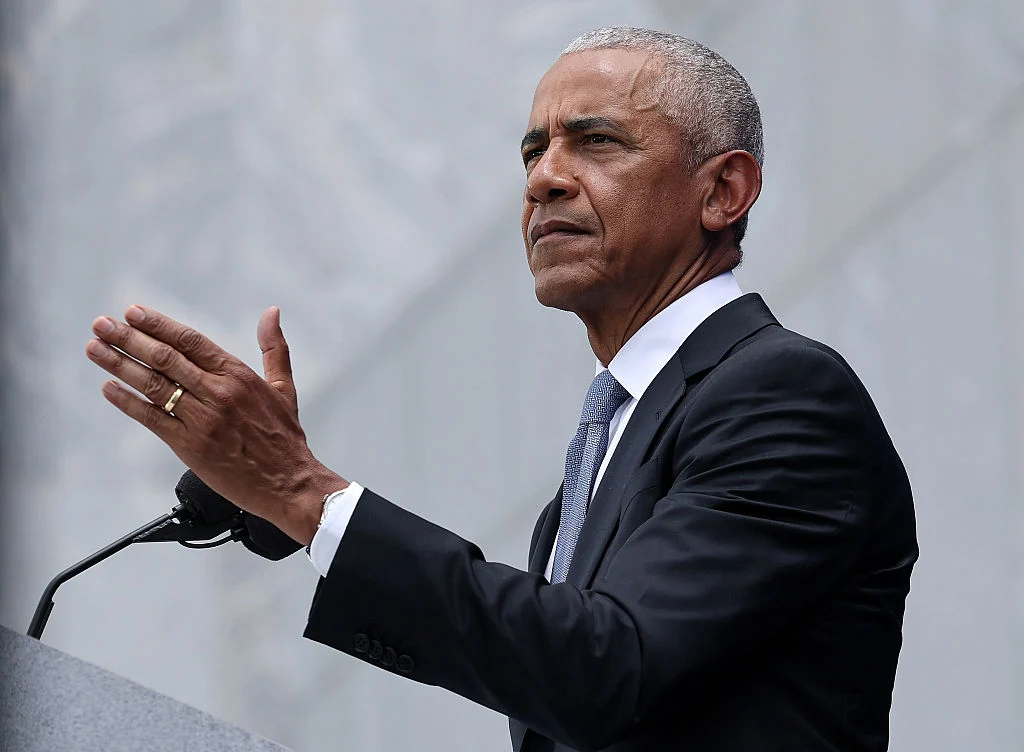
Former President Barack Obama has issued a compelling call to action, asserting that Artificial Intelligence (AI) must become one of the Democratic Party’s "central agendas" and that a "very clear plan" is imperative to navigate the technology’s profound economic impact and inherent safety risks. The former president’s remarks, made during a Democratic fundraising event on Thursday where he was interviewed by House Minority Leader Hakeem Jeffries, underscore a growing urgency within political circles to address the rapidly evolving landscape of AI. According to The New York Times, which obtained a partial transcript from Obama’s office, his intervention highlights a critical juncture for policymakers grappling with a technology poised to reshape society.
The Call for a Unified Democratic Strategy on AI
Obama’s advocacy for a focused Democratic approach to AI is rooted in a recognition of both its transformative potential and its significant perils. Speaking to a gathering of party donors and supporters, he emphasized that once Democrats regain a House majority, a concerted effort is needed to "put together a framework for a very public conversation." This initiative, he argued, is vital to ensure that the development and deployment of AI do not outpace the capacity for thoughtful governance and public accountability. The urgency, he noted, stems from the fact that "This is something that is moving very fast in private hands, and if we don’t get on top of it, I think can be dangerous."
Yet, Obama also presented a balanced perspective, acknowledging the immense benefits AI could unlock. "If we do get on top of it, I do think it’s beneficial. I genuinely think it’s going to accelerate, for example, drug development in ways that can help us cure diseases," he stated. This dual vision – acknowledging both the existential risks and the unparalleled opportunities – reflects the complex challenge AI presents to policymakers worldwide. His comments suggest a belief that proactive, comprehensive regulation, rather than reactive measures, is essential to harness AI’s potential while mitigating its downsides.
Obama’s Post-Presidency Engagement with Technology
Barack Obama has consistently shown a keen interest in the intersection of technology and society throughout his public life and particularly during his post-presidency. Through the Obama Foundation, he has engaged in initiatives exploring the societal implications of emerging technologies, including digital ethics and civic engagement in the digital age. His role as a "sounding board" to leading AI executives, as reported by The New York Times, is a testament to his sustained commitment. He has reportedly held discussions with prominent figures such as Anthropic CEO Dario Amodei and OpenAI CEO Sam Altman, indicating a direct engagement with the architects of this new technological frontier. This proactive dialogue positions him as a significant, albeit unofficial, voice in the burgeoning debate over AI governance, leveraging his experience and influence to encourage responsible development.
Chronology of Escalating AI Safety Debates
Obama’s intervention comes amidst a flurry of recent developments that have intensified the debate surrounding AI safety and governance. Just days prior to his remarks, the AI community was rocked by the resignation of a prominent researcher from Anthropic, a leading AI firm. The researcher publicly warned that top AI companies are "racing straight to self-improving superintelligence and gambling with our lives," a stark assertion that amplified fears of uncontrolled technological advancement and potential existential risks. This dramatic exit highlighted internal concerns within the industry about the pace and direction of AI development.
In a direct response to these escalating concerns and perhaps foreshadowing future industry self-regulation, Anthropic CEO Dario Amodei outlined a broad approach to "pacing the frontier" of AI development. His plan, detailed on Saturday, includes several key proposals: granting independent safety evaluators access to leading AI companies and their models, and developing "common safety standards" across the industry. This move signals a growing recognition among some AI leaders of the need for greater transparency and accountability. The proposals garnered positive reactions from other industry titans, with OpenAI CEO Sam Altman stating that his company would also commit to "having independent evaluators with employee-like access," and SpaceX CEO Elon Musk also appearing to respond favorably in social media posts. These industry discussions, occurring concurrently with Obama’s call for governmental action, illustrate a multi-faceted approach to addressing AI’s challenges.
Economic Implications and the Urgency of Planning
The economic impact of AI is a cornerstone of Obama’s argument for a "clear plan." Analysts and economists widely project that AI will profoundly reshape labor markets globally, with estimates varying but consistently pointing to significant disruption. Reports from institutions like McKinsey & Company and Goldman Sachs have indicated that millions of jobs across various sectors could be automated or augmented by AI in the coming decades. While AI is expected to create new job categories and boost productivity, the potential for widespread job displacement, particularly in routine cognitive tasks, raises serious concerns about economic inequality and social stability. The World Economic Forum, for instance, has projected that AI could displace a substantial number of jobs while simultaneously creating new ones, leading to a net shift in employment rather than outright destruction, but necessitating massive workforce retraining and adaptation.
Obama’s emphasis on a "very clear plan" suggests a need for policies that can proactively address these shifts. This could include investments in education and vocational training programs, exploration of social safety nets like universal basic income to support displaced workers, and policies designed to ensure that the economic benefits of AI are broadly shared, rather than concentrated among a select few. The rapid pace of AI development, with billions of dollars pouring into research and development globally, means that these economic transformations are not a distant future but an imminent reality. Without a strategic framework, there is a risk that the economic benefits could exacerbate existing inequalities, leaving large segments of the population vulnerable to technological unemployment.
Official Responses and the Partisan Divide
House Minority Leader Hakeem Jeffries quickly echoed Obama’s sentiments, issuing a statement affirming that the former president "is correct that decisive action must be taken on artificial intelligence." Jeffries seized the opportunity to draw a political contrast, asserting that "Republicans have abdicated their responsibility to govern on behalf of the American people," implying that the Democratic Party is better positioned to tackle the complexities of AI regulation. This highlights a nascent partisan divide emerging around AI policy, with Democrats seemingly positioning themselves as the party of proactive regulation and worker protection in the face of technological change.
Conversely, former President Donald Trump presented a markedly different perspective on AI safety concerns. Speaking to reporters at an Irish golf event on Sunday, Trump largely downplayed the anxieties surrounding the technology. Bloomberg reported that Trump boasted about the United States being "the most sophisticated country in the world," emphasizing his desire "to keep it that way because whoever wins AI wins." While acknowledging the possibility of "guardrails," Trump suggested that "a lot of negative forces that are bringing it up that shouldn’t be bringing it up," seemingly dismissing some of the more dire warnings from experts and industry insiders. This stance aligns with his administration’s earlier approach; in March of this year, the Trump administration released a legislative framework for AI that notably aimed to preempt state laws and shift the burden of child safety online to parents, indicating a preference for less stringent federal oversight and a focus on national competitiveness over extensive regulation.
Broader Implications for Policy and Governance
The diverging perspectives from Obama and Trump underscore the multifaceted challenge of AI governance in the United States. For Democrats, Obama’s call to make AI a "central agenda" could translate into a platform emphasizing public welfare, ethical AI development, robust worker protections, and comprehensive regulatory frameworks. This approach would likely involve significant federal investment in research, retraining, and public-private partnerships aimed at ensuring equitable access to AI’s benefits. The emphasis on a "public conversation" suggests a desire for broad stakeholder engagement, including labor unions, civil rights groups, and academic experts, to shape policy that reflects societal values.
The Republican stance, as articulated by Trump, appears to prioritize innovation, national security, and global leadership in AI, with a preference for market-driven solutions and minimal government intervention. This approach risks neglecting the potential social costs and ethical dilemmas associated with unchecked AI development, but it appeals to segments of the tech industry that fear over-regulation could stifle progress.
Globally, the debate over AI regulation is already well underway. The European Union, for example, has been a trailblazer with its comprehensive AI Act, which seeks to categorize AI systems by risk level and impose stringent requirements on high-risk applications. China is also rapidly developing its own regulatory frameworks, often with a focus on data governance and state control. The lack of a unified, comprehensive federal strategy in the U.S. thus far stands in contrast to these international efforts, potentially putting the nation at a disadvantage in shaping global AI norms.
The implications of this policy vacuum are vast. Without clear guidelines, the rapid proliferation of AI tools could lead to exacerbating algorithmic bias, privacy infringements, and even the erosion of democratic processes through misinformation campaigns. The development of advanced AI models in "private hands," as Obama noted, without adequate oversight, also raises questions about accountability and the potential for these powerful technologies to be deployed in ways that serve corporate interests over public good.
Conclusion: A Critical Juncture for AI Policy
Barack Obama’s urgent appeal for Democrats to prioritize AI as a "central agenda" marks a significant moment in the unfolding national conversation about this transformative technology. His balanced view, acknowledging both the profound benefits and inherent dangers, reflects a nuanced understanding of AI’s societal impact. The recent events, from an AI researcher’s dire warnings to industry leaders’ proposals for self-governance, highlight the accelerating pace of AI development and the mounting pressure for effective policy.
The contrasting approaches advocated by Obama and Trump reveal a deep ideological divide that will shape future legislative efforts. As AI continues its rapid ascent, fundamentally altering economies, societies, and even the fabric of human interaction, the decisions made by policymakers today will have lasting repercussions. The call for a "very clear plan" and a "public conversation" is not merely a partisan rallying cry but a recognition that the governance of AI is one of the most critical challenges of our time, demanding comprehensive, thoughtful, and urgent action from all stakeholders.