Vera Intan Clara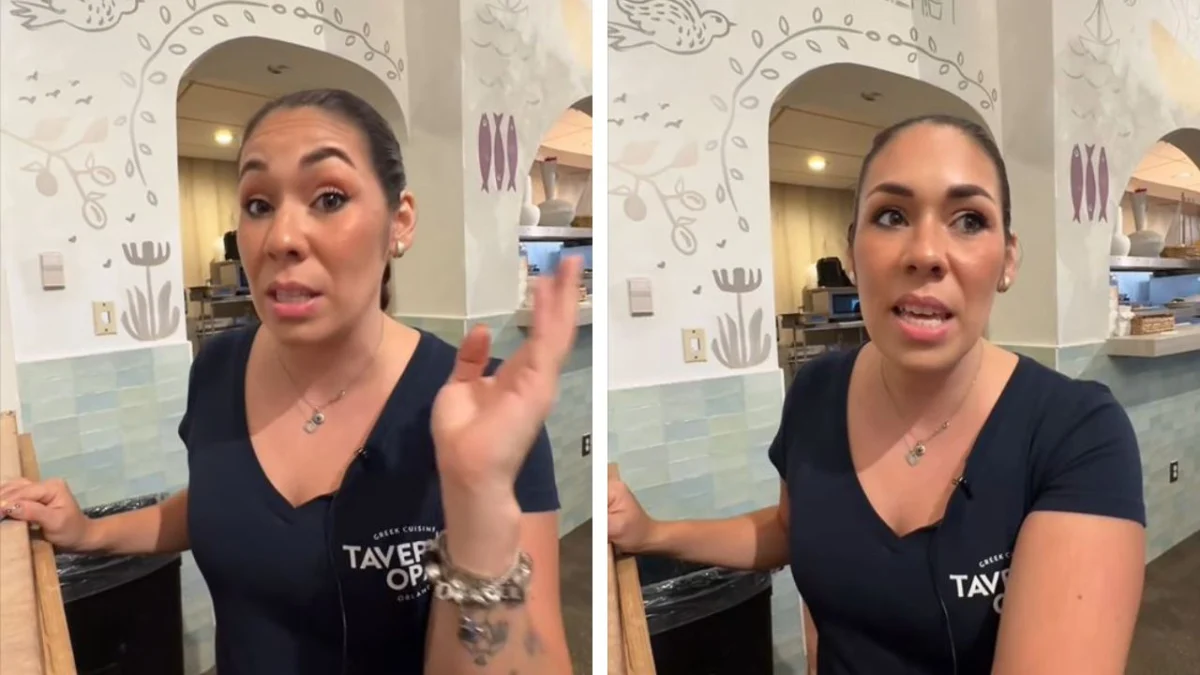
A recent incident at Taverna Opa Orlando, brought to light through a viral TikTok video from an employee account, has reignited the perennial debate surrounding tipping culture in the United States. The video detailed a significant financial shortfall for service staff after a large party, arriving minutes before closing, left a minimal tip on a substantial bill, prompting widespread discussion on social media regarding server wages, customer responsibility, and industry practices.
The incident, which reportedly occurred at the popular Orlando establishment, involved a party of 15 diners who arrived at approximately 9:45 p.m., merely 15 minutes before the restaurant’s scheduled 10:00 p.m. closing time. Despite the late hour, restaurant staff made the decision to accommodate the group. The party proceeded to place a comprehensive order for their entire meal at once, ultimately accruing a bill estimated at roughly $700.
According to the employee’s account, shared via the @tavernaopaorl TikTok channel, the group initially expressed no intention of leaving a tip. "I didn’t want to tip anything, like, nothing," the employee quoted the diners as saying, highlighting the initial stance of the party. This sentiment was particularly problematic for the serving staff, given the restaurant’s policy on "tip-outs," a common practice in the service industry where servers share a portion of their tips with other support staff.
The employee explained that due to the size of the party, three servers were assigned to the table. Under the restaurant’s policy, servers are required to contribute to a tip pool for other staff members—such as bussers, food runners, and bartenders—based on a percentage of their total sales, irrespective of the actual tip amount received from the customer. "If you sit on a table and it’s $700, I’m paying for you to sit down, because I’m paying runners, I’m paying the bar, etcetera, etcetera," the server articulated, underscoring the direct financial impact of a low or non-existent tip. This means that even if a table leaves no tip, the server still incurs an out-of-pocket expense to cover the tip-out obligations for that transaction.
After what the employee described as "further discussion," during which the diners were reportedly "very rude," the group eventually agreed to leave a tip of $50 on their $700 bill. This amount represents a tipping percentage of approximately 7.14%, significantly below the widely accepted industry standard of 15-20% for satisfactory service, and even further from the 20% or more often recommended for excellent service or large parties. The server concluded her video by stating that such incidents are not uncommon, particularly with tables seated close to closing time, and advised viewers, "For those who don’t tip, don’t go out."
Chronology of the Incident and Its Immediate Aftermath
The sequence of events unfolded rapidly within a condensed timeframe, exacerbating the impact on the restaurant staff.
- 9:45 PM: A party of 15 individuals arrives at Taverna Opa Orlando, 15 minutes prior to the restaurant’s official closing time of 10:00 PM.
- 9:45 PM – 10:00 PM: Despite the late hour, management and staff decide to accommodate the large group, a decision often made to avoid turning away potential revenue but one that extends working hours for employees.
- Shortly After Seating: The party places a comprehensive order for their entire meal, indicating a lengthy dining experience rather than a quick bite.
- Dining Period: The servers attend to the large table, managing multiple orders and requests, which, for a party of 15, typically requires significant coordination and effort from multiple staff members.
- Bill Presentation: The final bill for the party totals approximately $700.
- Initial Tip Refusal: Upon receiving the bill, the diners initially indicate they do not intend to leave any tip, reportedly stating, "I didn’t want to tip anything, like, nothing."
- Staff Intervention and Discussion: Servers engage with the party to discuss the bill and the expectation of a tip, particularly in light of the tip-out system. The employee described this interaction as involving "very rude" behavior from the diners.
- Resolution: After this discussion, the party eventually agrees to leave a $50 tip.
- Post-Incident: An employee records and uploads a TikTok video detailing the experience, which quickly garners significant attention and sparks a wide-ranging debate across social media platforms.
The Economics of Tipping and Server Compensation in the U.S.
The incident at Taverna Opa Orlando shines a spotlight on the complex financial ecosystem of the American restaurant industry, particularly concerning server wages. Unlike many other countries where service charges are often included or higher base wages are paid, the U.S. system heavily relies on customer tips to form the bulk of a server’s income.
Federally, the minimum wage for tipped employees is $2.13 per hour. This "cash wage" is permitted under the Fair Labor Standards Act (FLSA) on the condition that employees’ tips bring their total earnings up to at least the federal minimum wage of $7.25 per hour. If the combination of tips and the cash wage does not meet the federal minimum wage, the employer is legally obligated to make up the difference. However, many states have their own minimum wage laws for tipped employees, with some requiring a higher cash wage than the federal standard, and a few states (like California, Oregon, Washington, Nevada, Montana, Alaska, and Minnesota) requiring employers to pay servers the full state minimum wage before tips. Florida’s minimum wage for tipped employees, as of September 2023, is $7.98 per hour, with a standard minimum wage of $12.00 per hour.
The concept of "tip-outs" is central to understanding the server’s financial plight in this situation. A tip-out, or tip pool, is a system where servers share a percentage of their tips with other non-front-of-house staff or support staff who contribute to the dining experience. This often includes bussers, food runners, hosts, and bartenders. The percentage for tip-outs is typically calculated based on a server’s total sales for their shift, not just the tips they actually receive. For example, a restaurant might require servers to tip out 3% of their total food sales and 5% of their beverage sales.
In the case of the $700 bill, even with a minimal $50 tip, the servers involved would still be obligated to pay their share into the tip pool based on the full $700 sale. If, for instance, the tip-out rate was 3% of sales, the servers would collectively owe $21 ($700 * 0.03) to the support staff. With only $50 received in tips, this leaves $29 to be split among three servers, before any taxes, for serving a large party that likely occupied their time and effort for an extended period beyond closing. Had no tip been left, the servers would have been out-of-pocket by $21 for serving the table, effectively "paying to serve." This scenario vividly illustrates why the lack of a customary tip is not merely a loss of potential income but can result in an actual financial deficit for the server.
Cultural Nuances and the Tipping Divide
The employee’s video also touched upon the customers’ country of origin, noting they were "not in your country" and suggesting that tipping customs differ elsewhere. This observation highlights a significant cultural divide that frequently contributes to misunderstandings in the American service industry.
In the United States, tipping is deeply embedded in the service economy and is largely considered a social contract. It’s an expectation, rather than a purely optional gesture, due to the low base wages paid to tipped employees. The average recommended tip for standard service typically ranges from 15% to 20% of the pre-tax bill, with higher percentages for exceptional service.
However, tipping culture varies drastically around the world. In many European and Asian countries, for example, a service charge is often included in the bill, or staff are paid higher base wages, making additional tipping less common or entirely unnecessary. In some cultures, an excessive tip can even be considered an insult.
- Europe: In many parts of Europe (e.g., France, Italy, Spain, Germany), a service charge might be included, or a small rounding up of the bill or a few extra euros is customary, rather than a percentage-based tip.
- Asia: In countries like Japan and South Korea, tipping is generally not customary and can even be seen as rude or confusing, as excellent service is expected as part of the job.
- Australia/New Zealand: Tipping is not mandatory and is less common, as hospitality workers are paid higher minimum wages.
- Latin America: Tipping customs vary, but often involve smaller percentages than in the U.S., or a service charge might be automatically added.
This global disparity often leads to confusion for international visitors to the U.S. who may be unaware of or unaccustomed to the American tipping system. While some might argue that it is the visitor’s responsibility to understand local customs, others suggest that restaurants should do more to clearly communicate their tipping expectations, especially when serving international clientele or large parties. This could include adding a mandatory service charge for large groups or explicitly stating on menus that tips are customary and constitute a significant portion of server wages.
Economic Realities for Restaurants and Staff
Beyond the immediate financial impact on the servers, incidents like this underscore broader economic realities for the restaurant industry. Restaurants operate on notoriously thin profit margins, often between 3% and 6%. Labor costs, food costs, and rent are significant overheads.
Accommodating a large party just before closing time, while potentially beneficial for immediate revenue, also incurs additional costs and operational challenges:
- Extended Labor Hours: Staff members (servers, cooks, bussers, dishwashers) must remain on duty longer than scheduled, potentially incurring overtime pay or delaying their departure.
- Delayed Cleaning and Closing Procedures: The entire closing process, including cleaning the kitchen, dining room, and bar, is pushed back, impacting efficiency and staff morale.
- Food Waste: While not directly related to this incident, late-night service can sometimes lead to increased food waste if inventory management is not precise.
- Staff Morale: Repeated instances of late-night, low-tipping parties can significantly demoralize staff, leading to burnout and high turnover in an industry already struggling with staffing shortages.
For the restaurant owner, turning away a party of 15 represents a loss of $700 in revenue. Serving them, however, means taking on the associated labor costs and the potential for a negative customer service experience or a situation like this that sparks public controversy. It’s a delicate balance between maximizing revenue and ensuring staff well-being and operational efficiency.
Public Discourse and the "Tipping Is Optional" Argument
The TikTok video quickly became a flashpoint for public debate, drawing hundreds of comments that reflected a deeply divided public opinion on tipping.
- "Tipping is Optional": A significant portion of commenters echoed the sentiment that "Tipping is optional.. I think you forgot that." This perspective holds that tips are a voluntary reward for good service, not an entitlement, and customers should not be coerced into tipping. This argument often overlooks the structured compensation model for tipped employees in the U.S.
- "Restaurant Owners Are the Real Thieves": Another common critique redirected blame from customers to restaurant owners, arguing that employers should pay a living wage to their staff, thereby eliminating the reliance on tips. "This should be ILLEGAL – the restaurant owners are the real thieves," one commenter wrote, reflecting frustration with systemic issues in labor compensation.
- Support for Servers: Many commenters expressed solidarity with the servers, emphasizing the hard work involved in serving large parties and the financial necessity of tips. They often condemned the party’s actions as inconsiderate and disrespectful of service professionals.
- Calls for Transparency/Policy Change: Some suggested that restaurants should implement mandatory service charges, especially for large parties, to ensure fair compensation for staff and to remove ambiguity for customers.
The discussion also veered into the question of whether the restaurant "lost money" on the transaction. While the restaurant collected the $700 bill, covering its food and operational costs, the servers undeniably lost potential earnings and incurred out-of-pocket expenses for tip-outs, demonstrating a distinction between restaurant profitability and individual staff compensation.
Broader Implications for the Restaurant Industry
The Taverna Opa Orlando incident is not isolated; it’s emblematic of ongoing tensions and challenges within the service industry. Its viral nature brings to the forefront several broader implications:
- Policy Review for Restaurants: Many establishments might re-evaluate their policies regarding large parties, late arrivals, and mandatory service charges. Some restaurants already implement automatic gratuities for groups of six or more to mitigate such issues.
- Increased Transparency: There’s a growing call for restaurants to be more transparent about their tipping policies, especially for international guests. Clear signage, menu notes, or verbal communication about customary gratuities could help bridge cultural gaps.
- Server Morale and Retention: Incidents of inadequate tipping can severely impact server morale, leading to burnout and higher turnover rates in an already demanding profession. Ensuring fair compensation is crucial for attracting and retaining skilled staff.
- The Future of Tipping: This incident fuels the ongoing national debate about the sustainability and fairness of the traditional tipping model. Alternatives, such as implementing a service charge for all tables, moving to a higher menu pricing model with increased base wages, or eliminating tipping altogether, are frequently discussed.
- Customer Education: The incident serves as a public reminder for diners, particularly those unfamiliar with U.S. customs, about the critical role tips play in the livelihood of service workers.
The incident at Taverna Opa Orlando, while specific in its details, is a microcosm of a larger societal and economic conversation. It underscores the intricate balance between customer expectations, server compensation, restaurant profitability, and cultural norms. As the service industry continues to evolve, finding equitable solutions that support both businesses and their dedicated staff, while providing clarity for customers, remains a pressing challenge.
The Daily Dot was unable to independently verify the total bill amount, the tip ultimately left, or the identities of the customers described in this video. The details above reflect the account shared by @tavernaopaorl account on TikTok.