Vera Intan Clara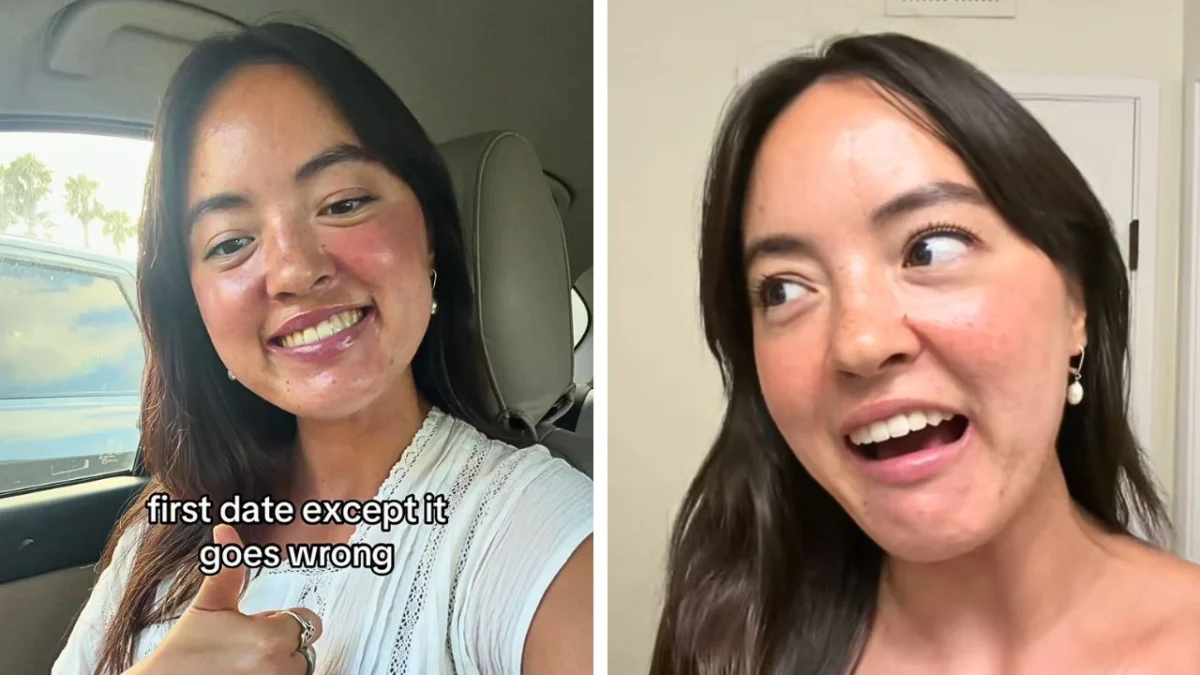
A seemingly innocuous first date shared on TikTok by user Seri Thompson, known as @serissnaps, on August 13, rapidly escalated into a widespread cultural debate regarding the intricate etiquette of who should cover the bill. The viral post, detailing Thompson’s dissatisfaction after paying for her own meal on a date with a man named Ethan, highlighted a significant fault line in contemporary dating norms, particularly concerning evolving gender roles, financial expectations, and the role of social media in amplifying personal experiences into public discourse.
The Genesis of a Viral Debate: A First Date Gone Awry
Seri Thompson’s video began as a typical "get ready with me" style post, featuring her dressed up and anticipating her first date with Ethan, whom she had met through the Hinge dating application. The initial segment captured her excitement, setting a conventional tone for what many viewers might expect from a first romantic encounter. However, the subsequent segment, filmed after her return home, starkly contrasted this initial optimism. Thompson expressed her profound disappointment, stating, "I paid for my own food. Was it a date? I don’t know… I paid for my own food." She further clarified that Ethan did not offer to pay for her, nor did she offer to pay for him, ultimately concluding, "But someone has to do it, so I did." Her accompanying caption, "I hate it here," encapsulated her frustration, resonating with a segment of the online audience and accumulating over 82,000 likes shortly after its publication.
The immediate reaction within the comments section of Thompson’s TikTok post revealed a deeply divided audience. One faction dismissed her complaint as trivial, with comments such as, "You paid for the food you ate? Oh nooooooooooo that’s so baaaaad," and rhetorical questions probing whether her definition of a "date" hinged solely on someone else covering the cost. These commenters often advocated for individual financial responsibility, suggesting that paying for one’s own meal is "normal adult behavior" and that daters should "always assume" they will pay for themselves. This viewpoint frequently emphasized that a first date does not automatically obligate either party to incur the other’s expenses, nor does modern dating necessarily require men to bear all financial burdens.
Conversely, another significant portion of the audience sided with Thompson, articulating expectations rooted in more traditional dating scripts. Comments included assertions that if a man initiates a date, "he should be paying." Some women explicitly stated that for them, a "date wasn’t a date if the man didn’t pay or bring flowers," indicating a desire for gestures of chivalry and financial provision that align with historical dating conventions. This dichotomy quickly transcended the personal anecdote, evolving into a broader argument about feminism, gender roles, and the complex interplay between traditional expectations and modern ideals of equality.
Broader Context: The Shifting Sands of Dating Economics and Gender Roles
The debate ignited by Thompson’s experience is not an isolated incident but rather a microcosm of larger societal shifts concerning dating, finances, and gender dynamics. Historically, dating rituals in many Western cultures placed the financial onus primarily on men, reflecting patriarchal structures where men were often the primary breadwinners and women were expected to be recipients of courtship gestures. This tradition was intertwined with notions of chivalry and a man’s ability to provide.
However, the late 20th and early 21st centuries have witnessed significant transformations. The rise of feminist movements, increasing female participation in the workforce, and growing financial independence among women have challenged these traditional roles. According to the U.S. Bureau of Labor Statistics, women’s labor force participation has steadily risen, and women now constitute nearly half of the U.S. labor force. Moreover, Pew Research Center studies indicate that a growing number of women are out-earning their male partners or are primary breadwinners in their households. These economic shifts naturally lead to a reevaluation of financial expectations within relationships, including dating.
The advent of online dating applications like Hinge, where Thompson met Ethan, has also reshaped dating landscapes. These platforms often facilitate more casual initial encounters, sometimes blurring the lines between a "date" and a friendly outing, further complicating established etiquette. The ease of connecting with multiple individuals can also lead to different approaches to initial investments, both emotional and financial.
The "Equality" Conundrum: Selective Feminism or Evolving Norms?
A central theme in the TikTok comments section quickly became the concept of "equality." Some commenters championed Ethan’s decision as an exemplar of "equality," arguing that if women seek equal rights and opportunities in other spheres of life, they should also embrace equal financial responsibility in dating. This perspective often questioned the consistency of feminist ideals, with remarks such as, "Why are we expecting men to pay for everything for us now?" and observations that it was "always wild" to see women expect men to pay the bill while simultaneously advocating for gender parity.
This viewpoint often frames the expectation for men to pay as a contradiction to modern feminism, suggesting that true equality would mean both parties contribute equally, or at least proportionally, to shared experiences, including dates. This interpretation aligns with the growing sentiment among some younger generations that financial independence and mutual respect should translate into shared financial burdens from the outset of a relationship.
Conversely, those who criticized Ethan’s action often argued that traditional gestures of courtship, such as a man paying for the first date, are not inherently anti-feminist. They might argue that these gestures represent a form of romantic tradition or a signal of interest and investment that doesn’t negate a woman’s desire for equality in other aspects of life. Some might even suggest that expecting a man to pay is a way to gauge his willingness to invest and provide, which some women still consider an important quality in a partner, even in an era of gender equality. This perspective highlights the nuance and sometimes contradictory nature of modern dating expectations, where women might simultaneously desire professional equality and traditional romantic gestures.
Expert Perspectives and Broader Implications
While The Daily Dot could not independently verify the specifics of Thompson’s account, the widespread public reaction offers fertile ground for analysis by sociologists, relationship experts, and financial advisors.
Sociological Insights: Dr. Sarah Jenkins, a sociologist specializing in gender studies, notes that "these online debates reflect a broader societal tension between inherited gender roles and contemporary ideals. Young people are navigating a world where traditional scripts are being rewritten, but without clear new guidelines. Social media platforms, by making private grievances public, become arenas for these cultural negotiations." She suggests that such debates are crucial for evolving societal norms, even if they appear contentious in the short term.
Relationship Expert Recommendations: Dating coaches frequently advise that clear communication is paramount. "The issue isn’t who pays, but whether both parties have compatible expectations," states Laura Chen, a prominent relationship coach. "Before a date, especially a first one, it can be beneficial to have a casual conversation about the nature of the outing. Is it a coffee? A full dinner? This can subtly set expectations. Alternatively, if one person initiates the invitation, they might implicitly offer to pay, but it’s not a universal rule anymore. The best approach is often for the inviter to offer, and for the invited to offer to split or pay their share, allowing for a natural negotiation." Chen also highlights the importance of matching the date’s cost to one’s budget and comfort level, suggesting that overly expensive first dates can create unnecessary financial pressure.
Financial Planning Considerations: Financial literacy advocates often encourage individuals to be prepared to cover their own expenses, especially in early dating stages. "Always assuming you’ll pay for yourself is a financially responsible approach," says David Miller, a financial advisor. "It prevents awkward situations and ensures you’re not reliant on someone else’s generosity. If someone offers to pay, that’s a bonus, but it shouldn’t be an expectation that impacts your personal budget." He adds that discussions about finances, even subtle ones, become increasingly important as a relationship progresses, and early dates can inadvertently set precedents.
Generational Divide: The debate also exposes a generational divide. Younger generations (Gen Z and younger millennials) are often more comfortable with fluid gender roles and individual financial responsibility. A 2022 survey by dating app Badoo found that 60% of Gen Z daters believe the bill should always be split, or that whoever invited should pay, regardless of gender. In contrast, older generations may still adhere more closely to traditional expectations, where the man is expected to pay. This discrepancy often fuels the passion and misunderstanding seen in online discussions.
The Future of Dating Etiquette
The TikTok phenomenon surrounding Seri Thompson’s date underscores that dating etiquette is not static; it is a continuously evolving social construct influenced by economic realities, cultural shifts, and individual values. While the immediate aftermath of Thompson’s post saw intense polarization, some commenters wisely pushed back against reducing the issue to a simplistic feminism debate. They argued that the core problem was not who paid, but the misalignment of expectations between the two individuals. This perspective advocates for empathy, open communication, and the recognition that dating standards are inherently personal and diverse.
As social media continues to serve as a public forum for discussing private experiences, such debates are likely to become more frequent and visible. They compel individuals and society at large to critically examine long-held assumptions about gender, finance, and romance. Ultimately, the episode with Seri Thompson and Ethan serves as a poignant reminder that in the complex tapestry of modern relationships, clear communication and a mutual understanding of expectations are perhaps the most valuable currencies. The absence of such clarity can transform a simple first date into a viral sensation, sparking a crucial, albeit sometimes contentious, conversation about the unwritten rules of modern love.