Vera Intan Clara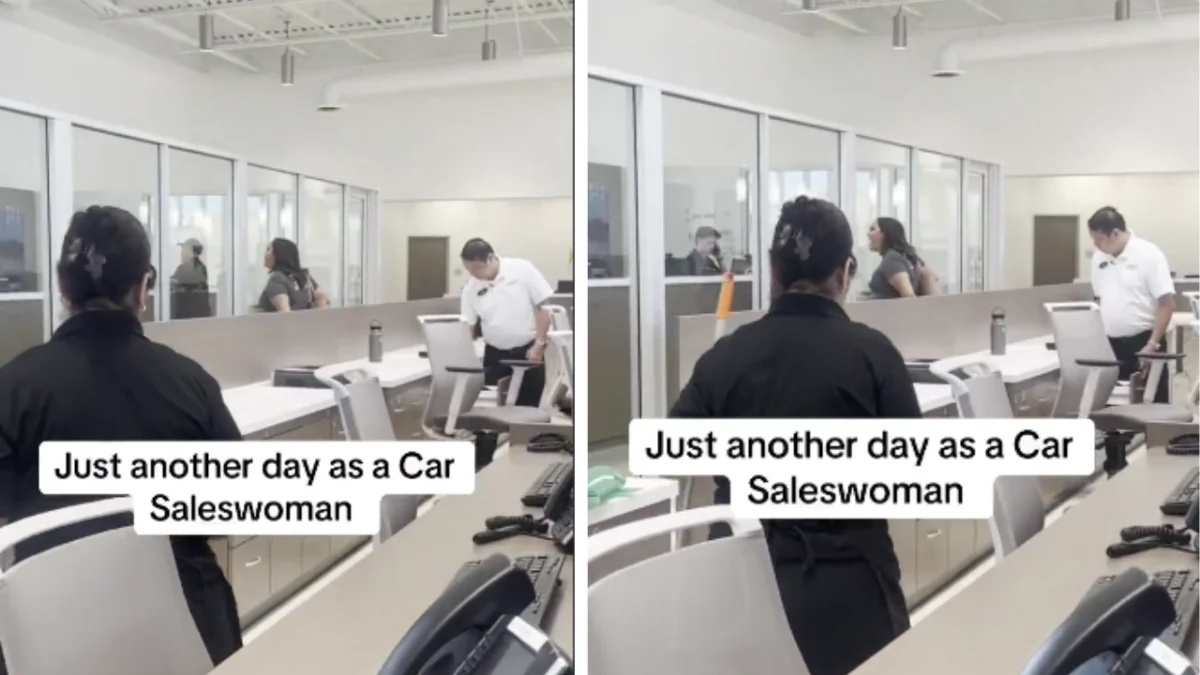
A recent incident at an unnamed car dealership, captured on video and widely circulated across social media platforms, particularly X (formerly Twitter), has sparked significant public discussion regarding consumer financing, creditworthiness, and appropriate conduct in high-stakes commercial environments. The footage, reposted by the prominent X account @ClownWorld, depicts a woman reacting with intense anger and verbal aggression upon learning that her application for vehicle financing had been denied. The short, yet impactful, clip has prompted a multifaceted dialogue among online users, delving into the complexities of auto loan approvals, the emotional toll of financial setbacks, and the evolving dynamics between customers and sales professionals.
The Viral Incident and Immediate Reactions
The brief video segment, which gained traction rapidly following its initial upload and subsequent repost on August 10, 2026, by @ClownWorld, portrays a dramatic scene unfolding within the confines of a car dealership. The central figure, a woman whose identity remains undisclosed, is shown confronting a saleswoman, expressing profound frustration and employing expletives after being informed of the financing denial. The exact words uttered during her outburst were largely obscured by the intensity of her rage, but the sentiment of disbelief and anger was unmistakably clear, punctuated by a vehement "Bull****!" directed at the dealership employee. The visible distress of the saleswoman, who appeared to be in the unenviable position of delivering unfavorable news, underscored the challenging nature of such customer interactions.
The brevity of the footage, a common characteristic of viral social media content, inherently limits the available context, leaving viewers to speculate about the preceding events and the precise reasons behind the financing rejection. Online commentators quickly converged on various theories, ranging from the woman possessing a poor credit history to a prolonged and frustrating negotiation process that culminated in the denial. This lack of comprehensive information, while fueling speculation, also broadened the scope of the discussion, inviting X users to share their own experiences with car dealerships and the intricacies of auto financing.
Chronology of a Typical Auto Loan Application and Potential Points of Friction
To understand the context of such an incident, it is crucial to outline the typical chronology of an auto loan application. The process generally begins when a prospective buyer selects a vehicle and expresses interest in financing it. The dealership’s finance and insurance (F&I) department then collects personal and financial information from the applicant, including income, employment history, residence, and social security number. This data is subsequently used to pull the applicant’s credit report from major credit bureaus (Experian, Equifax, TransUnion).
Upon obtaining the credit report and score, the dealership, acting as an intermediary, submits the application to a network of third-party lenders, which may include banks, credit unions, and specialized auto finance companies. Each lender has its own set of underwriting criteria, evaluating factors such as credit score, debt-to-income (DTI) ratio, payment history, employment stability, and the loan-to-value (LTV) ratio of the desired vehicle. The lenders then respond with an approval, a counter-offer (e.g., higher interest rate, larger down payment required), or a denial.
The moment of truth for many consumers comes when the F&I manager relays the lender’s decision. If approved, the process moves to finalizing terms and signing contracts. If denied, or if the terms offered are unfavorable, it can become a point of significant contention, as evidenced by the viral video. The frustration often stems from a disconnect between a consumer’s expectation of approval and the objective financial criteria applied by lenders.
Common Reasons for Auto Loan Denials: An Analytical Perspective
The incident brought to the forefront the common reasons why individuals might face rejection for an auto loan. While the specific reasons for the woman’s denial remain unverified, financial institutions typically base their decisions on several key metrics. According to industry reports, including insights from J.J. Best Banc & Co., some of the most frequent factors contributing to auto loan rejection include:
-
Poor Credit Score: This is arguably the most prevalent reason. Lenders use credit scores (like FICO scores, which range from 300 to 850) to assess a borrower’s creditworthiness and the likelihood of repayment. A score below the prime lending threshold (typically 660-700, depending on the lender and market conditions) can significantly reduce approval chances or result in higher interest rates. Data from Experian indicates that the average credit score for a new car loan in the U.S. is around 738, while for a used car loan it is approximately 680. Scores substantially below these averages often lead to denial.
-
High Debt-to-Income (DTI) Ratio: Lenders evaluate a borrower’s total monthly debt payments relative to their gross monthly income. A high DTI ratio, typically above 40-50%, signals that the borrower may already be overextended financially, making it difficult to take on additional debt. This is a critical indicator of a borrower’s capacity to manage new payments.
-
Insufficient Income or Unstable Employment History: Lenders require proof of stable income to ensure the borrower can consistently make payments. Irregular employment, a short work history, or an income level deemed insufficient to comfortably cover the proposed car payment alongside existing obligations can lead to denial.
-
Lack of Down Payment: While some loans require no money down, a substantial down payment (typically 10-20% for new cars, more for used) reduces the loan amount and the lender’s risk, especially if the vehicle depreciates quickly. A lack of a sufficient down payment can make a loan application appear riskier.
-
Vehicle-Related Issues: The age, mileage, and condition of the vehicle can also impact loan approval. Lenders may be reluctant to finance older, high-mileage vehicles that have a lower resale value or are perceived as less reliable, as this increases their risk in case of default and repossession. The loan-to-value (LTV) ratio, which compares the loan amount to the vehicle’s market value, is a key metric here.
-
Previous Loan Defaults or Bankruptcies: A history of defaulting on loans, particularly auto loans, or recent bankruptcies, is a significant red flag for lenders, indicating a higher risk of non-payment.
Perspectives from Industry Professionals and Social Media Commentary
The viral video resonated deeply with individuals who have professional experience in sales and management. One X user, identifying as a recently retired sales and management professional, commented, "Was in sales/mgt. Can’t believe I made it to retirement recently. Everything I thought it would be. Don’t miss these types either. Most know damn well they’re not gonna get approved. Yet, this may be (the) 3rd place she’s been to." This sentiment highlights the often-challenging nature of customer service roles, particularly when dealing with individuals facing financial disappointment. It also points to a common scenario where customers, aware of their precarious financial standing, might repeatedly apply for financing, leading to cumulative frustration.
Another line of commentary questioned the woman’s financing strategy, with one X user stating, "My first question is why would someone finance through the dealership? It’s car buying 101, NEVER FINANCE THROUGH THE DEALERSHIP!!!!" While this advice is often echoed by consumer advocates who recommend securing pre-approval from independent banks or credit unions before visiting a dealership, it is an oversimplification. Dealerships often have access to a wide array of lenders, including those specializing in various credit tiers, and can sometimes secure competitive rates. However, consumers are always advised to compare offers and understand that dealership financing might include markups on the interest rate. Securing pre-approval from an external lender provides a benchmark against which dealership offers can be evaluated, empowering the consumer with more leverage.
The Broader Implications: Financial Literacy and Consumer Preparedness
The incident serves as a stark reminder of the critical importance of financial literacy and proactive consumer behavior when undertaking significant purchases like a vehicle. Understanding one’s credit score, reviewing credit reports for inaccuracies, and getting pre-approved for a loan are fundamental steps that can mitigate the risk of disappointment and frustration at the dealership. Many financial experts advise checking one’s credit score months in advance, addressing any discrepancies, and working to improve it if necessary. A consumer armed with a pre-approved loan offer walks into a dealership with a clear understanding of their purchasing power and financing options, reducing reliance on the dealership’s financing department and potentially avoiding such confrontational scenarios.
Moreover, the emotional response captured in the video underscores the psychological impact of financial setbacks. For many, a vehicle represents not just transportation but a gateway to employment, independence, and personal freedom. The denial of financing can therefore be perceived as a direct threat to one’s livelihood or aspirations, triggering strong emotional reactions, especially if expectations were high.
Social Media’s Role and the Unverified Narrative
The widespread sharing of the video on platforms like X exemplifies the double-edged sword of social media. While it can bring attention to consumer issues and spark important discussions, it also raises questions about privacy, the ethics of public shaming, and the amplification of unverified narratives. The lack of independent verification of the circumstances surrounding the incident is a crucial caveat. The information presented to the public is based solely on a short video clip and accompanying user-generated comments, which inherently present a partial and potentially biased view. The dealership’s perspective, the full context of the customer’s interaction, or any prior events leading up to the outburst remain unknown.
In conclusion, the viral footage of a woman’s emotional reaction to a denied car loan at a dealership has transcended a mere incident to become a catalyst for broader conversations. It highlights the often-fraught process of auto financing, the critical role of creditworthiness, and the emotional complexities involved in significant financial transactions. While the immediate cause of the woman’s anger remains speculative, the episode undeniably underscores the perennial need for consumers to approach vehicle purchases with thorough financial preparation and a clear understanding of the lending landscape, thereby fostering more realistic expectations and potentially preventing similar public displays of frustration.