Garick Elordi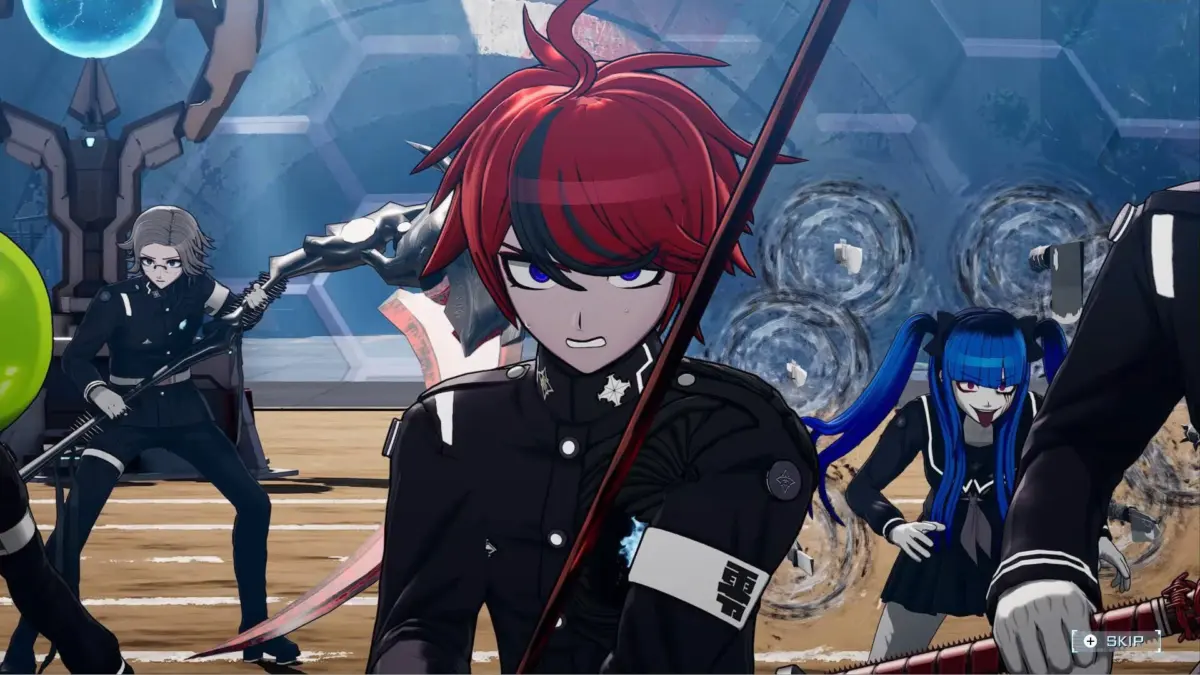
Kotaro Uchikoshi, the celebrated director and writer behind the critically acclaimed Zero Escape series and AI: The Somnium Files, has revealed that a major project at his newly formed studio, Crash Keys, has been cancelled. The announcement, which Uchikoshi described as a "bolt from the blue," comes after eighteen months of intensive development, leaving the future of the nascent studio in significant jeopardy. In a series of public statements, the developer cited a rapidly evolving technological and economic environment—specifically the rise of generative artificial intelligence (AI) and the tightening budgets of mid-sized development houses—as primary factors behind the sudden dissolution of the project.
The news has sent ripples through the international gaming community, particularly among fans of the Japanese visual novel and narrative-adventure genres. Uchikoshi, who has long been a fixture in the industry for his complex, philosophical plots and innovative "escape room" mechanics, expressed profound distress over the situation, noting that the cancellation has forced him to seek immediate outside investment or freelance opportunities to keep his team afloat.
The Genesis and Early Crisis of Crash Keys
Crash Keys was established in March 2025 as a specialized creative vehicle for Uchikoshi and a small team of veteran collaborators. According to the studio’s official documentation, the team includes prominent industry figures such as Akira Mine, a writer with credits on The Hundred Line: Last Defense Academy and the upcoming Danganronpa 2×2, and Muri Sasaki, a seasoned contributor to both the Zero Escape and AI: The Somnium Files franchises. The studio’s name itself serves as a direct reference to a pivotal organization within the Zero Escape lore, a detail that had initially sparked excitement among the series’ dedicated fanbase regarding a potential spiritual successor or expanded universe project.
Uchikoshi explained that the studio had intended to remain in "stealth mode" until a formal unveiling scheduled for 2026. However, the unexpected termination of their primary contract necessitated an early public reveal. "I’m not doing well at all," Uchikoshi stated via social media. "The game our whole team had poured our hearts and souls into for about a year and a half was suddenly canceled. I lost my job overnight."
The studio’s current financial position appears precarious. In an appeal for support, Uchikoshi highlighted the dire stakes for his staff, using his characteristic dark humor to underscore the reality of the situation. He noted that without new projects or capital infusion, the company risks total dissolution, potentially forcing the team to seek alternative means of survival.
The Role of Generative AI and Industry Economic Shifts
In a detailed follow-up, Uchikoshi offered a candid assessment of why the project was scrapped, pointing toward "major changes in the game development landscape." He specifically identified the advent and integration of generative AI as a disruptive force that has fundamentally altered the cost-benefit analysis for mid-sized developers.
Uchikoshi’s perspective provides a nuanced look at the AI debate currently polarizing the creative industries. While many workers fear AI will replace human labor, Uchikoshi argued that for mid-tier studios, the inability or refusal to utilize AI tools can lead to a lack of competitiveness. He suggested that in the current market, "not using AI" could be as detrimental to job security as the technology itself.
"Advances in AI have made it possible for people to create games at a much lower cost," Uchikoshi explained. "To stay competitive, mid-sized game developers like us need to find ways to cut costs. However, these days, using AI to make games is generally frowned upon. Unfortunately, under these circumstances, we’re fighting a losing battle."
He further clarified that while the creative core of the game—the writing, world-building, and character design—would always remain a human endeavor, the use of AI to handle "tedious tasks" could have potentially reduced development timelines and overhead enough to save the project. His comments coincide with a broader industry trend; recently, major tech entities such as Google have released generative AI tools specifically designed for game creators, sparking intense debate over the ethics and long-term viability of AI-assisted production.
Relationship with TooKyo Games and Kazutaka Kodaka
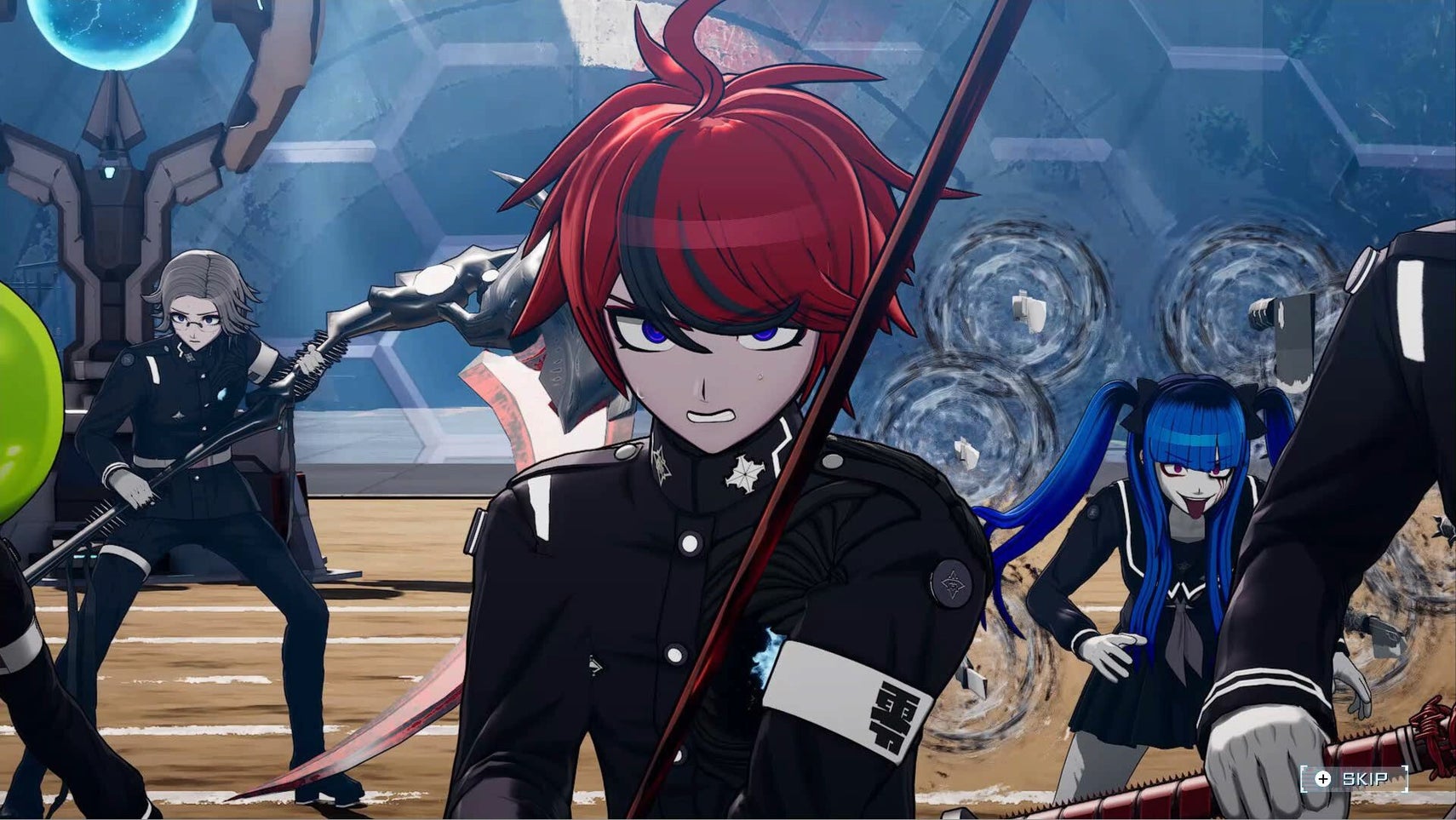
Following the announcement of Crash Keys, speculation arose regarding Uchikoshi’s status at TooKyo Games, the independent studio he co-founded in 2017 with Kazutaka Kodaka, the creator of the Danganronpa series. The two have been long-time collaborators, most recently releasing The Hundred Line: Last Defense Academy, a hybrid strategy-narrative title published by Aniplex.
Uchikoshi was quick to dispel rumors of a rift between himself and Kodaka. He confirmed that he remains a member of TooKyo Games and that his relationship with Kodaka remains strong, both professionally and personally. He described the two as being "still so close," dismissing any narrative of internal conflict. It appears that Crash Keys was intended to function as a parallel or subsidiary creative outlet rather than a replacement for his role at TooKyo Games.
This clarification is significant for stakeholders, as TooKyo Games represents one of the most successful examples of prominent Japanese creators moving from established corporate environments (such as Spike Chunsoft) to independent entrepreneurship. The stability of the partnership between Uchikoshi and Kodaka is often seen as a cornerstone of the niche "death game" and mystery genre market.
Contextualizing the Mid-Sized Developer "Squeeze"
The cancellation of the Crash Keys project is symptomatic of a wider trend often referred to as the "disappearing middle" of the video game industry. In recent years, the market has become increasingly bifurcated between massive, multi-billion-dollar AAA blockbusters and small-scale, agile indie productions. Mid-sized or "AA" studios often find themselves in a vulnerable position: they require budgets significant enough to produce high-quality assets and voice acting, yet they lack the massive marketing machines of industry giants.
Data from recent industry reports suggests that development costs for mid-tier titles have risen by as much as 40% over the last five years, driven by inflation, the demand for higher fidelity graphics, and the complexity of multi-platform releases. When a project in this tier fails to secure a clear path to profitability or faces a shift in publisher priorities, it is often the first to be cut.
For a creator like Uchikoshi, whose games rely heavily on niche appeal and high-concept narratives, the margin for error is razor-thin. The Zero Escape trilogy, while achieving cult classic status and critical acclaim, was famously a slow burner in terms of commercial success, particularly in its native Japan. It was the Western market’s enthusiastic reception that ultimately allowed the series to conclude with Zero Time Dilemma in 2016.
Implications for the Visual Novel Genre
The visual novel and narrative-adventure genre, which Uchikoshi helped define for a modern audience, faces unique challenges in the current hardware cycle. While the Nintendo Switch and PC platforms have provided a fertile ground for these titles, the rising expectations for "gameplay depth"—such as the tactical RPG elements seen in The Hundred Line—increase development complexity.
The cancellation of a project led by a writer of Uchikoshi’s caliber suggests that even established "auteur" creators are not immune to the volatility of the current market. If a studio led by the writer of 999: Nine Hours, Nine Persons, Nine Doors cannot find a stable footing, it raises questions about the future of original, high-concept IP within the mid-tier Japanese development scene.
Timeline of Recent Events
- September 2017: TooKyo Games is founded by Kotaro Uchikoshi, Kazutaka Kodaka, and other former Spike Chunsoft staff.
- 2019–2022: Uchikoshi releases AI: The Somnium Files and its sequel, Nirvana Initiative, to positive reviews.
- March 2025: Crash Keys is privately established to begin work on a new, unannounced project.
- Late 2024 – Early 2025: The project undergoes 18 months of development.
- June 2025: The project is abruptly cancelled due to "landscape changes."
- June 2025: Uchikoshi goes public with the existence of Crash Keys and issues an appeal for investment.
Conclusion and Future Outlook
As of this writing, the specific details of the cancelled game remain confidential. Uchikoshi teased that the title would have likely thrilled his long-time fans, suggesting it may have shared the mind-bending narrative DNA of his previous works. For now, the focus for Crash Keys shifts from development to survival.
The situation serves as a stark reminder of the fragile nature of independent game development in an era of rapid technological transition. Whether through traditional investment, a new publishing partnership, or a pivot in production methodology, the industry will be watching closely to see if one of its most idiosyncratic voices can navigate this "bolt from the blue." For the fans who have followed Uchikoshi through the nonary games and beyond, the hope remains that Crash Keys will live up to its name and find the right combination to unlock its next chapter.