Garick Elordi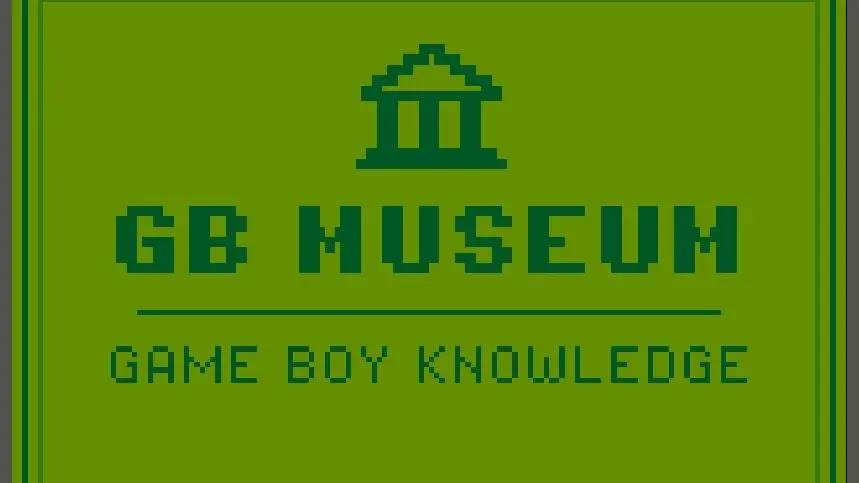
Dr. Marcel Pflug, a dedicated preservationist and historian of Nintendo’s portable legacy, has completed a multi-year project to house an entire digital archive of Game Boy history within a functional physical cartridge designed for the original 1989 handheld. The project, titled the Game Boy Museum, represents a paradoxical achievement in the world of retro-computing: a software title that contains no gameplay, serving instead as a comprehensive, interactive encyclopedia of the hardware it is currently running on. This "meta-museum" aims to bridge the gap between modern digital archiving and the tactile experience of 20th-century hardware, ensuring that the history of the Game Boy is preserved in the very medium that defined it.
The initiative began as an extension of Pflug’s existing web-based repository, a site that catalogues the dizzying array of hardware revisions, regional variants, and obscure peripherals associated with the Nintendo DMG-01. However, the transition from a high-resolution web interface to a 4-bit, monochrome portable screen presented a series of engineering hurdles that highlight the limitations of 1980s technology. Pflug’s work underscores a growing movement within the retro-gaming community toward "hardware-native preservation," where information about legacy systems is stored in formats compatible with the original devices to safeguard against the eventual decay of modern web servers and digital formats.
.jpg?width=1200&height=630&fit=crop&enable=upscale)
Technical Architecture and the Constraints of 1989 Hardware
Developing a text-heavy application for the Game Boy is a task that runs counter to the machine’s original design philosophy. The Game Boy’s Sharp LR35902 processor, running at approximately 4.19 MHz, was optimized for tile-based sprite movement rather than high-density information display. Pflug notes that the console is a "spectacularly bad e-reader," primarily due to the way it handles graphical memory. The system operates using "blocks" or tiles, with a limit of 255 unique tiles that can be loaded into memory at any given time.
In a standard game, these tiles represent character segments, environmental assets, or UI elements. In a museum archive, these blocks must be used to render text. Because the Game Boy’s resolution is a mere 160×144 pixels, displaying legible sentences requires a significant portion of the available tile memory. Pflug described the process as a "game of inches," where every letter and punctuation mark had to be carefully managed to prevent the system from running out of memory. This forced a minimalist approach to layout, requiring the creator to "earn every screen" through meticulous optimization of the code.
Beyond text, the inclusion of visual data posed an even greater challenge. The Game Boy screen is capable of displaying only four shades of olive-green/grey. When attempting to convert modern photographs of hardware into this format, the lack of mid-tones often results in "crushed" blacks or "blown-out" whites. Pflug found that standard algorithmic conversions of human faces frequently resulted in macabre, skull-like images, forcing him to manually edit graphics pixel-by-pixel. This labor-intensive process eventually led to the cancellation of a planned "virtual museum hall" feature, as the graphical overhead required to render 3D-style display cases was too taxing for the aging hardware.

Bridging Decades: The Integration of QR Code Technology
One of the most innovative features of the Game Boy Museum cartridge is its use of QR codes to link the 1989 hardware with 21st-century devices. Pflug implemented these codes as a solution to the console’s inability to display high-fidelity color photography. By scanning a QR code displayed on the Game Boy’s screen with a smartphone, users can access high-resolution images and expanded articles hosted on the museum’s website.
The implementation of this feature is historically significant, as QR (Quick Response) codes were not invented until 1994—five years after the Game Boy’s launch. Originally developed by Masahiro Hara of the Japanese company Denso Wave, a subsidiary of Toyota, the codes were intended to track automotive parts during the manufacturing process. Integrating a 1994 tracking technology into 1989 hardware required Pflug to develop a bespoke rendering solution, ensuring the Game Boy’s low-contrast screen could produce a pattern sharp enough for a modern smartphone camera to register. Pflug describes the successful handshake between these two eras of technology as "quietly wonderful," representing a functional bridge across nearly 40 years of technological evolution.
A Comprehensive Archive of the Nintendo Ecosystem
The content within the cartridge is an exhaustive distillation of the Game Boy Museum’s online presence. It is structured as a searchable, chapter-based encyclopedia that covers several distinct categories of Nintendo history:
.jpg)
- Hardware Evolution: A detailed guide charting the micro-adjustments made to the Game Boy’s internal circuitry and external shell over its decade-long lifespan. This includes documentation on the transition from the original "Play It Loud!" color series to the Game Boy Pocket and Light revisions.
- Peripherals and Oddities: An archive of the various devices that connected to the Link Port and cartridge slot, ranging from the common (Game Boy Camera and Printer) to the incidental (four-player adapters, external batteries, and specialized cables).
- The Journal: A collation of historical articles, advertisements, and press releases that provide cultural context for the handheld’s dominance in the 1990s.
- Technical Reference: Data regarding the cartridge slot contacts, memory mapping, and the specific quirks of the DMG-01’s hardware architecture.
Pflug characterizes the experience of navigating the cartridge as reading a "hardback encyclopedia," providing a tactile sense of permanence that digital-only archives often lack.
Community Response and the "GB Test Lab"
The announcement and release of the Game Boy Museum ROM have been met with significant acclaim within the international retro-gaming and homebrew communities. Despite the project’s niche appeal, it has resonated particularly well in Japan, the birthplace of the console. Pflug expressed surprise at the global reach of the project, noting that the recognition from Japanese enthusiasts felt like a "small gift" to the machine’s origins.
The success of the museum project has also spurred the development of a secondary, more utilitarian tool: the GB Test Lab. Utilizing the coding techniques perfected during the museum’s development, Pflug created the Test Lab cartridge to serve as a diagnostic suite for collectors and repair technicians. This software can identify specific faults in the cartridge slot, detect malfunctioning memory bits, and measure the physical wear on the console’s buttons. It also includes testing protocols for the Game Boy Printer and the Link Port, providing a professional-grade tool for the restoration of aging hardware.

Furthermore, Pflug’s research into the Game Boy Printer’s communication protocols has led to the creation of a "Label Maker" utility. This allows the thermal printer accessory to be used as a legitimate office tool, repurposing the 30-year-old device for modern organizational tasks.
The Philosophical Argument for Manual Preservation
In an era increasingly defined by the speed and automation of Artificial Intelligence, Pflug’s project stands as a testament to human-centric preservation. The development of the museum cartridge took several years of "evenings and weekends," a pace dictated by curiosity rather than commercial necessity. Pflug, who maintains a career in the corporate sector and manages other hobbyist projects like the guitar portal Sticky Tunes, views the slow, manual process of programming for the Game Boy as a form of relaxation and a way to "forget the world."
The project raises important questions about the nature of digital history. As websites go offline and servers are decommissioned, physical media remains one of the most reliable methods of data longevity. By placing the history of the Game Boy onto a Game Boy cartridge, Pflug has created a self-sustaining loop of information. Even in a future where the internet may look fundamentally different, a functional "little grey brick" will still be able to tell its own story using this cartridge.

The Game Boy Museum project reflects a deep generational connection to the hardware. Pflug argues that for many who grew up in the late 80s and 90s, the Game Boy is more than a toy; it is a cultural touchstone equivalent to the Sony Walkman or iconic fashion trends of the era. It represents a specific moment in design history where durability and portability first met mass-market success.
Future Outlook and Availability
While the primary development phase of the Game Boy Museum cartridge is complete, Pflug intends to issue annual updates to the ROM to ensure it remains synchronized with the expanding research on his main website. This allows the physical-style archive to "grow" alongside the ongoing discoveries of the collector community.
The Game Boy Museum is currently available as a free ROM download, allowing users with flash cartridges (such as the EverDrive or EZ-Flash) to run the museum on original hardware. By making the data freely available, Pflug ensures that his research is accessible to the widest possible audience, reinforcing his commitment to the open exchange of historical knowledge.

As the gaming industry continues to move toward all-digital futures and subscription-based access models, projects like the Game Boy Museum serve as a vital counterpoint. They remind the public and the industry alike that the history of technology is best understood through the lens of the hardware that made it possible. Through the marriage of meticulous coding and historical passion, Marcel Pflug has ensured that the "story of the little grey machine" will continue to be told, one pixelated screen at a time.