Sisilia Frederika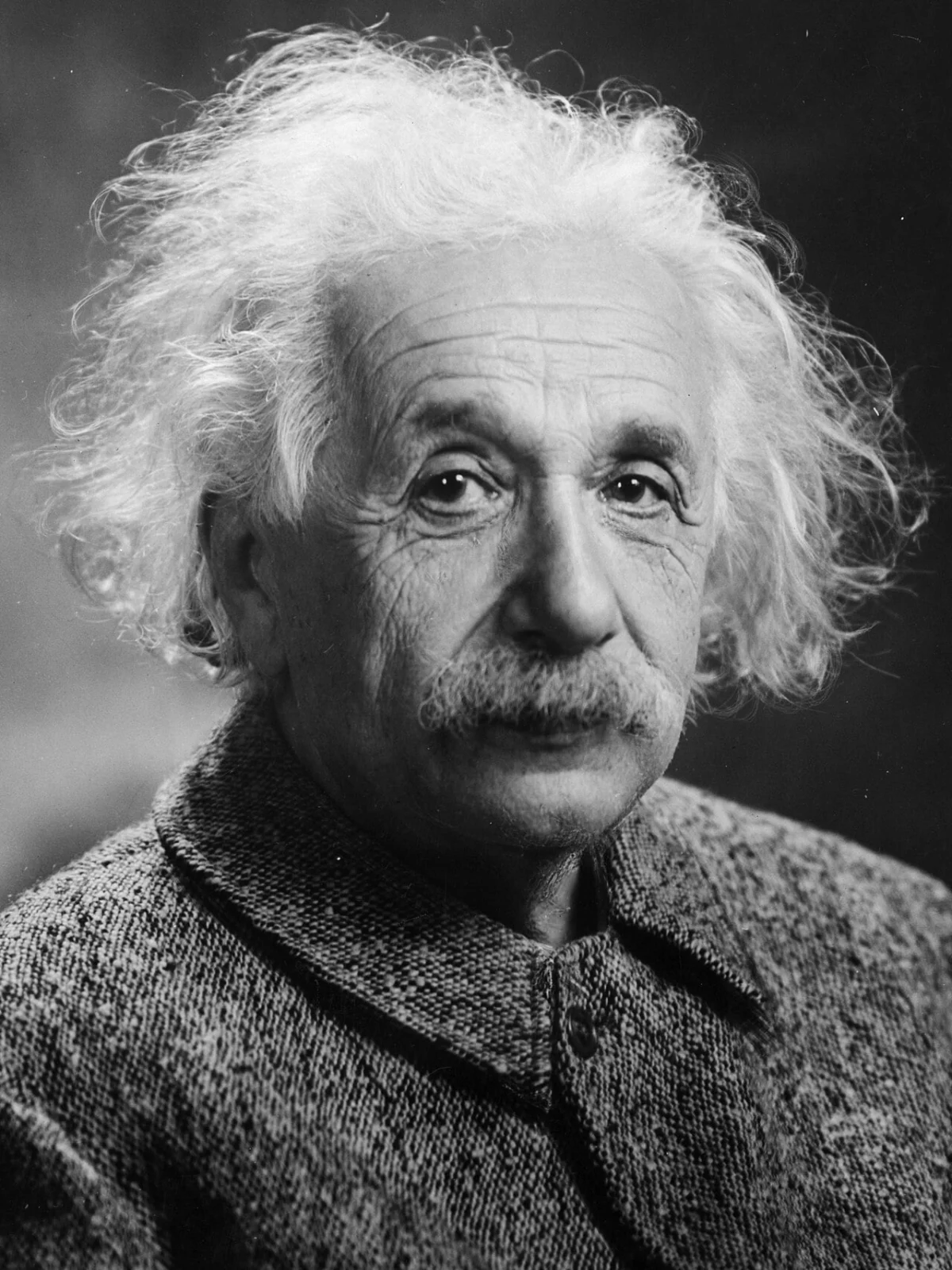
The theoretical pursuit of traveling at the speed of light has served as a cornerstone of modern physics since the early 20th century, fundamentally altering the human understanding of time, space, and the structure of the universe. This inquiry began not in a laboratory, but in the mind of a teenage Albert Einstein, who famously contemplated the visual experience of racing alongside a beam of light. While the initial thought experiment was a product of youthful curiosity, it eventually led to the development of the Special Theory of Relativity, a framework that dictates that the speed of light is a universal constant and an unbreakable limit for any entity possessing mass.
The Foundation of Special Relativity and the Light Speed Constant
In 1905, Albert Einstein published his paper "On the Electrodynamics of Moving Bodies," which introduced the world to special relativity. The theory is built upon two primary postulates: first, that the laws of physics are identical in all inertial frames of reference; and second, that the speed of light in a vacuum ($c$) is the same for all observers, regardless of their motion or the motion of the light source.
The value of $c$ is measured at approximately 299,792,458 meters per second. In the context of Newtonian physics, velocities were additive; if an observer moved toward a light source, they would expect to measure the light as traveling faster. Einstein’s breakthrough was the realization that this is not the case. No matter how fast an observer travels, light always recedes from them at exactly $c$. This constancy is the mechanism that forces space and time to become flexible, leading to the phenomena of time dilation and length contraction.
The Mechanics of Reference Frames and Relative Motion
To understand why traveling at light speed is a physical impossibility for matter, one must first analyze the concept of the "rest frame." In the realm of relativity, there is no such thing as absolute stillness. Every object exists within its own frame of reference. When an observer watches a high-speed object, such as a particle in an accelerator or a hypothetical spacecraft, they are observing it from their own rest frame.
From the perspective of an observer on Earth, they are stationary while the spacecraft moves. Conversely, from the perspective of an astronaut on that spacecraft, the ship is stationary while the Earth recedes at high velocity. Relativity dictates that both perspectives are equally valid. However, this symmetry breaks down when light is involved. Unlike a baseball, a car, or a planet, light does not possess a rest frame. There is no mathematical or physical configuration in which a photon—the fundamental particle of light—can be considered "at rest."
Why Light Has No Rest Frame
The impossibility of a "photon’s point of view" is rooted in the mathematical structure of the Lorentz transformations, the equations used to calculate how measurements of space and time change between different observers. As an object’s velocity ($v$) approaches the speed of light ($c$), the factor of change—known as the Lorentz factor ($gamma$)—approaches infinity.
If an object were to reach the speed of light, the equations would require dividing by zero, resulting in a mathematical singularity. Einstein argued that if one could catch up to a light wave, the wave would appear stationary. However, according to Maxwell’s equations, which govern electromagnetism, a stationary electromagnetic wave cannot exist. Light is, by definition, a self-propagating wave of electric and magnetic fields that must be in motion to exist. Therefore, the concept of a "stationary photon" is a logical contradiction.
Consequently, light does not experience time or distance. From the "perspective" of a photon emitted from a star billions of light-years away, its birth at the source and its absorption by a human eye on Earth occur simultaneously. For the photon, the distance traveled is zero, and the time elapsed is zero.
Chronology of Relativistic Discovery
The path to understanding these cosmic speed limits involved several key milestones in the history of science:
- 1887: The Michelson-Morley Experiment. This experiment attempted to detect the "luminiferous aether," the medium through which light was thought to travel. The failure to find the aether suggested that the speed of light was constant in all directions, providing the empirical basis for Einstein’s later work.
- 1905: The Annus Mirabilis. Einstein published his theory of special relativity, discarding the Newtonian concept of absolute time and space.
- 1915: General Relativity. Einstein expanded his theories to include gravity, showing that massive objects warp the fabric of spacetime, further affecting the path of light.
- 1971: The Hafele-Keating Experiment. Physicists took four atomic clocks on commercial airliners and flew them around the world. Upon their return, the clocks were compared to stationary ones. The results confirmed Einstein’s predictions of time dilation to within high degrees of accuracy.
- Current Era: Particle Accelerators. Facilities like the Large Hadron Collider (LHC) at CERN regularly accelerate protons to 99.9999991% of the speed of light. These experiments provide daily confirmation that as particles approach $c$, they gain kinetic energy and "mass-energy" rather than velocity, requiring ever-increasing amounts of power to achieve marginal speed gains.
Data and Implications of Near-Light Speed Travel
While reaching the speed of light is prohibited for matter, traveling at "relativistic speeds" (significant fractions of $c$) is theoretically possible, though it would result in a radical transformation of the experienced universe.
Time Dilation: According to the formula $Delta t’ = Delta t / sqrt1 – v^2/c^2$, time slows down for the moving object. If a traveler were to journey at 90% the speed of light for what they perceived as one year, approximately 2.29 years would have passed for a stationary observer on Earth. At 99.9% of $c$, that one year for the traveler would equate to 22.37 years on Earth.
Length Contraction: Objects and distances in the direction of motion appear to shrink. To a traveler moving at 99.9% of $c$, the distance to Proxima Centauri (4.2 light-years away) would appear to be only about 0.18 light-years.
Relativistic Mass and Energy: As an object approaches $c$, its relativistic mass increases. This is described by the most famous equation in physics, $E=mc^2$. To accelerate a single electron to exactly the speed of light would require an infinite amount of energy, which is why no object with mass can ever reach that threshold.
Scientific Analysis: The "Editing" of the Universe
When an observer moves at relativistic speeds, their visual perception is not merely a faster version of normal sight; the universe itself is visually "edited." This occurs through two primary effects: the Doppler Shift and Relativistic Aberration.
As a traveler accelerates toward a star, the light from that star is compressed, shifting its frequency toward the blue and ultraviolet end of the spectrum (blueshift). Conversely, light from objects behind the traveler is stretched (redshift). At extreme speeds, visible light from stars in front of the traveler would be shifted into the X-ray spectrum, becoming invisible to the naked eye, while infrared background radiation would be shifted into the visible spectrum.
Furthermore, aberration causes the field of view to warp. Stars that are actually located to the side or even slightly behind the traveler appear to shift toward the front. This creates a "tunnel vision" effect where the entire cosmos appears to be concentrated into a bright cone of light directly ahead of the spacecraft.
Broader Impact on Future Exploration
The limitations imposed by special relativity present significant hurdles for interstellar travel. Because $c$ is a hard limit, even the nearest stars remain years away. However, the phenomenon of time dilation offers a theoretical "loophole" for human lifespans. If a craft could maintain constant acceleration at 1g (simulating Earth’s gravity), a human crew could potentially cross the galaxy within a few decades of their own proper time, even though thousands of years would pass on Earth.
Current consensus among organizations such as NASA and the European Space Agency (ESA) remains focused on the practicalities of sub-relativistic speeds. However, the study of light-speed physics remains essential for the calibration of Deep Space Network communications and the operation of Global Positioning Systems (GPS). GPS satellites move at speeds relative to Earth that cause their internal clocks to drift by several microseconds per day. Without relativistic corrections, GPS coordinates would become inaccurate by kilometers within a single day.
Ultimately, Einstein’s realization that we cannot "race a light beam" was not a failure of imagination, but the discovery of a fundamental boundary of reality. The universe is structured such that space and time sacrifice their consistency to preserve the absolute nature of light. This hierarchy ensures that the laws of physics remain universal, even as it denies us the ability to ever see the cosmos from the perspective of the photon.