George Chandra Eka
Valve, the pioneering force behind the ubiquitous PC gaming platform Steam, has recently rolled out significant updates to its gifting and wishlist functionalities, marking a strategic enhancement aimed at streamlining user experience and broadening market accessibility. These changes, detailed in recent announcements from the company, address long-standing user requests and introduce features designed to simplify the purchase process for gift-givers and offer unprecedented organizational power to game enthusiasts. The core improvements include the ability to gift games without requiring a Steam account for the recipient and a robust new categorization system for wishlists, allowing for more personalized and manageable game tracking.
The Evolution of Gifting on Steam: A Leap Towards Universal Accessibility
For years, the act of gifting a game on Steam, while a popular feature, came with certain prerequisites that occasionally created friction. Historically, a gift-giver needed to be Steam friends with the recipient, or at least know their Steam account ID, to successfully send a game. This system, while functional for established users, presented a barrier for individuals less immersed in the Steam ecosystem—such as parents, grandparents, or non-gaming friends—who wished to purchase a digital game for a loved one. The new updates fundamentally alter this dynamic, ushering in an era of more flexible and inclusive digital gifting.
The most significant change in this regard is the introduction of a guest gifting option. Gift-givers can now purchase a game for someone using only their email address. This means that a recipient no longer needs an existing Steam account at the time of purchase. Instead, they will receive an email containing a link to claim their gifted game. This link directs them to a page where they can either log into an existing Steam account or create a new one to redeem the title. This simplification is poised to dramatically expand the pool of potential gift-givers, making it as straightforward to gift a digital game as it is to send an e-gift card for any other online retailer.
Valve has also incorporated a safeguard for this new email-based gifting method: if a gifted game is not claimed by the recipient within 30 days, the purchase is automatically refunded to the original gift-giver. This mechanism provides peace of mind, ensuring that funds are not indefinitely tied up in unclaimed gifts, and reflects a consumer-friendly approach to digital transactions.
Beyond the guest gifting option, Valve has also refined the process for international gifting. While sending a game to someone in a different country still requires the gift-giver and recipient to be Steam friends, the system now automatically calculates the cost of the game in the recipient’s local currency at the point of checkout. This eliminates the confusion and potential hurdles associated with regional pricing differences, which previously could complicate cross-border transactions. This feature is particularly valuable given Steam’s massive global user base, spanning hundreds of countries with diverse economic landscapes and currency valuations. For gifts within the same country, the requirement for Steam friendship has been relaxed, further streamlining the process for domestic gift-giving.
Implications of Enhanced Gifting:
These gifting enhancements carry substantial implications for both Valve and the broader PC gaming market. Firstly, they significantly reduce the barrier to entry for gift purchases, particularly for individuals unfamiliar with Steam. This could translate into a noticeable uptick in game sales, especially during peak gifting seasons like holidays, birthdays, and special occasions. The ease of purchase is a critical factor in consumer behavior, and by simplifying this process, Valve is tapping into a wider demographic of potential buyers.
Secondly, the updates strengthen Steam’s competitive position against other digital storefronts and even physical retail. While other platforms offer various gifting solutions, Steam’s sheer catalog size, community features, and now enhanced accessibility for gift-giving could solidify its market dominance. The ability to send a game directly via email, independent of a pre-existing platform account, mirrors the simplicity of physical gift cards while retaining the benefits of digital distribution.
For game developers and publishers, these changes are likely to be welcomed. An easier gifting process can lead to increased sales velocity, particularly for popular titles or new releases that friends and family might wish to share. The improved international gifting mechanism also ensures that games remain accessible across different regions without manual currency conversions or complex workarounds, potentially expanding the global reach of individual titles.
Revolutionizing Wishlist Management: Precision and Personalization
Complementing the gifting improvements, Steam has also rolled out a comprehensive overhaul of its wishlist feature, transforming it from a simple chronological list into a powerful organizational tool. For many users, Steam wishlists have long served as a digital repository for games they intend to purchase, are interested in, or are simply tracking for future consideration. However, as the Steam catalog has swelled to tens of thousands of titles, managing a sprawling, unsorted wishlist could become an overwhelming task. The new updates directly address this challenge by introducing a highly requested categorization system.
The new wishlist categories function much like folders or tags, allowing users to group saved games based on any criteria they choose. Users can name these categories freely, enabling highly personalized organization—be it by genre ("Upcoming RPGs," "Indie Gems"), by priority ("Buy on Sale," "Must-Have Day One"), by theme ("Space Sims," "Local Co-op"), or even by specific events ("Games for Summer Sale"). Games can be easily added to these categories directly from their store page or from the existing wishlist interface. Once categorized, selecting a specific category from the top of the wishlist page filters the entire list to display only the games within that chosen group, providing immediate clarity and focus.
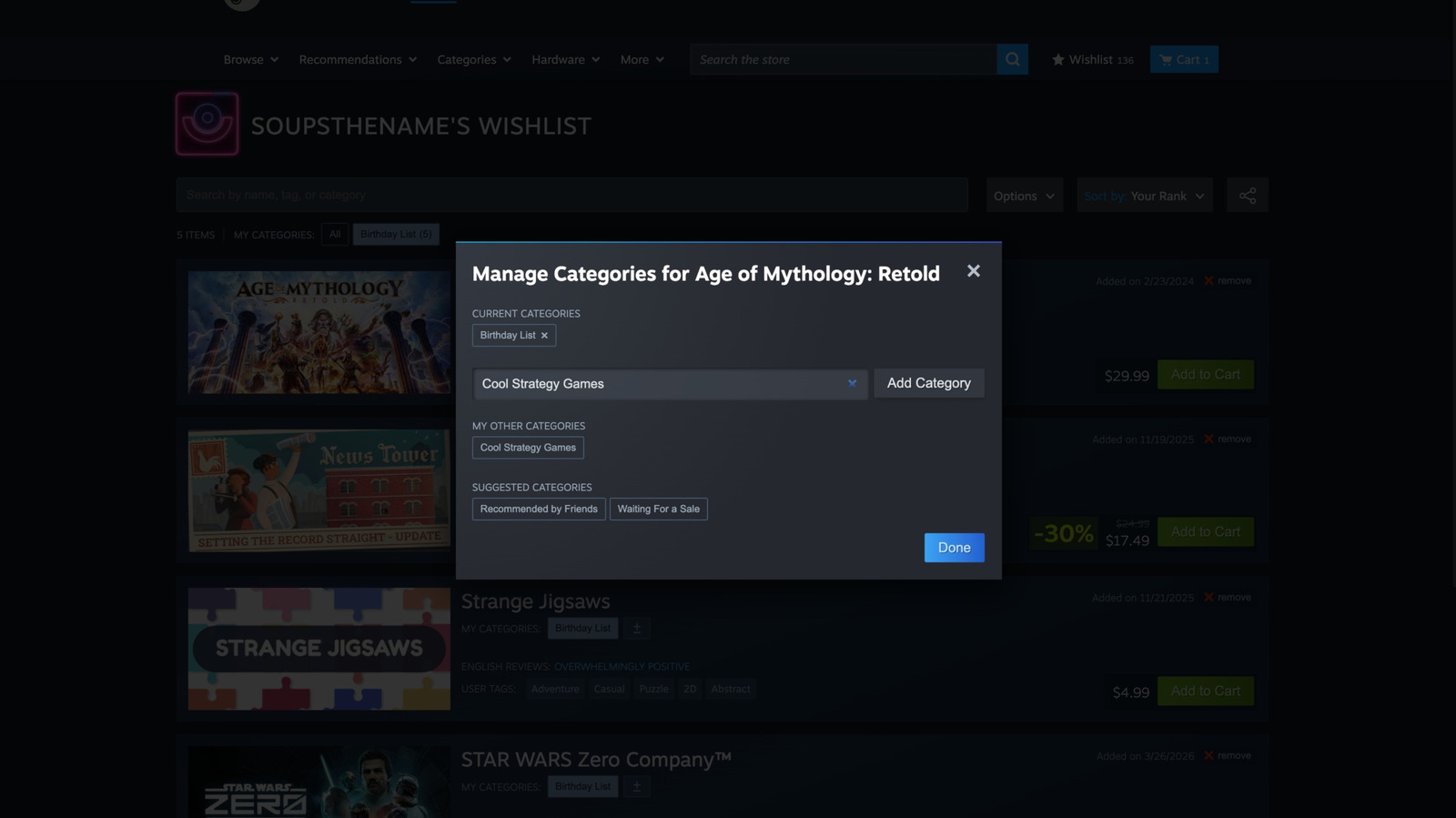
A particularly impactful feature tied to this new categorization is the granular control over sale notifications. Previously, users could only enable or disable sale notifications for their entire wishlist. This often led to "notification fatigue," where users would receive alerts for dozens of games they might only be mildly interested in, potentially causing them to ignore all notifications. With the update, users can now enable or disable sale alerts for specific categories. This means a user could receive notifications only for "High Priority Purchases" while silencing alerts for "Games to Check Out Eventually," allowing for a much more targeted and useful notification experience.
Further enhancements to the wishlist include improved sharing capabilities and enhanced visibility of game information. Users can now generate a shareable link not just for their entire wishlist, but also for specific categories. This makes it easier to share curated lists of games with friends, family, or online communities—perhaps a "Multiplayer Games to Play Together" list or a "Birthday Gift Ideas" category. Additionally, the updated wishlist now clearly indicates whether a saved game has a demo available, and users can play trailers for games directly from their wishlist page by simply hovering over the title. These smaller tweaks collectively contribute to a more interactive and informative wishlist experience, helping users make more informed purchasing decisions.
Implications of Enhanced Wishlist Management:
The revamped wishlist features represent a significant quality-of-life improvement for Steam’s vast user base. In an ecosystem where thousands of new games are released annually, effective discoverability and organization are paramount. By empowering users with robust categorization tools, Valve is directly addressing the challenge of content overload, making it easier for players to track, manage, and ultimately purchase games.
For developers, a more organized wishlist system could translate into more efficient sales. When users can prioritize and categorize their desired games, they are more likely to act on sale notifications for titles they genuinely want. The ability to share specific categories also acts as a form of organic marketing, allowing users to easily recommend games to their networks, potentially driving new purchases. Moreover, the increased visibility of demos and trailers directly on the wishlist page can help convert interest into purchases by giving users immediate access to crucial decision-making content.
Broader Market Context and Valve’s Strategic Vision
These recent updates are not isolated incidents but rather fit within Valve’s ongoing strategy of iterative improvement and user-centric development for Steam. Since its inception in 2003, Steam has evolved from a digital distribution platform for Valve’s own titles into the dominant PC gaming storefront, hosting a library of over 50,000 games and boasting hundreds of millions of active users. Valve’s success has largely been attributed to its commitment to fostering a robust ecosystem, continuous platform refinement, and responsiveness to community feedback.
Looking back, Valve has consistently invested in features that enhance the user experience, from the introduction of Steam Greenlight (and its successor, Steam Direct) to facilitate indie game publishing, to the development of Proton for Linux compatibility, and the recent launch of the Steam Deck, which seamlessly integrates the Steam library into a portable gaming device. The gifting and wishlist updates align perfectly with this trajectory, focusing on fundamental functionalities that touch every user’s interaction with the platform.
While Valve typically maintains a low profile regarding specific feature rollouts, industry analysts suggest that these changes are strategic moves to solidify Steam’s market leadership against growing competition from platforms like the Epic Games Store, GOG, and various publisher-specific launchers. By making core functions like gifting more accessible and wishlist management more powerful, Steam reinforces its value proposition beyond sheer catalog size or exclusive titles. It emphasizes ease of use, convenience, and a highly customizable user experience—factors that are increasingly critical in a crowded digital marketplace.
From a timeline perspective, these updates reflect an ongoing commitment that has seen Steam continually adapt. Previous major overhauls, such as the 2010 introduction of Steam Wallet, which simplified transactions, or the 2012 Big Picture Mode, which optimized the interface for TV screens, paved the way for more comprehensive feature enhancements. The current updates demonstrate that even foundational elements of the platform are subject to continuous refinement, ensuring Steam remains at the forefront of digital distribution innovation.
For the end-user, these updates represent a significant quality-of-life improvement, addressing long-standing requests from the community. While Valve rarely issues direct statements on such feature rollouts, the consistent stream of feedback from forums and social media regarding the complexities of gifting and the desire for better wishlist organization has been evident for years. The implementation of these features can be seen as a direct response to these community desires, further strengthening the relationship between Valve and its user base.
Conclusion
The latest updates to Steam’s gifting and wishlist features underscore Valve’s unwavering commitment to enhancing the user experience and maintaining its position as the premier PC gaming platform. By simplifying the act of giving games through email-based guest accounts and introducing robust categorization and notification controls for wishlists, Valve has addressed key pain points for both casual gift-givers and avid game collectors. These strategic improvements not only make Steam more accessible and user-friendly but also fortify its competitive edge in a dynamic digital market. As the digital gaming landscape continues to evolve, Valve’s focus on refining core functionalities ensures that Steam remains a powerful, intuitive, and indispensable tool for gamers worldwide.