Sonny Valindra
Amulya Vishwanath, a prominent figure who dedicated seven years to spearheading product marketing for NVIDIA’s advanced robotics platforms, offers a grounded perspective on the current state of artificial intelligence in physical systems. Vishwanath asserts that robotics is presently in its "Lego era," a phase characterized by the foundational rebuilding of essential components such as actuators, robotic manipulators, software architectures, and robust safety standards. This viewpoint sharply contrasts with prevailing sentiments that anticipate an imminent "ChatGPT moment" for robotics, driven by the development of a singular, generalized foundation model. The term "ChatGPT moment" refers to the transformative impact witnessed following the public release of OpenAI’s remarkably capable chatbot in late 2022, which democratized access to advanced AI capabilities and sparked widespread innovation.
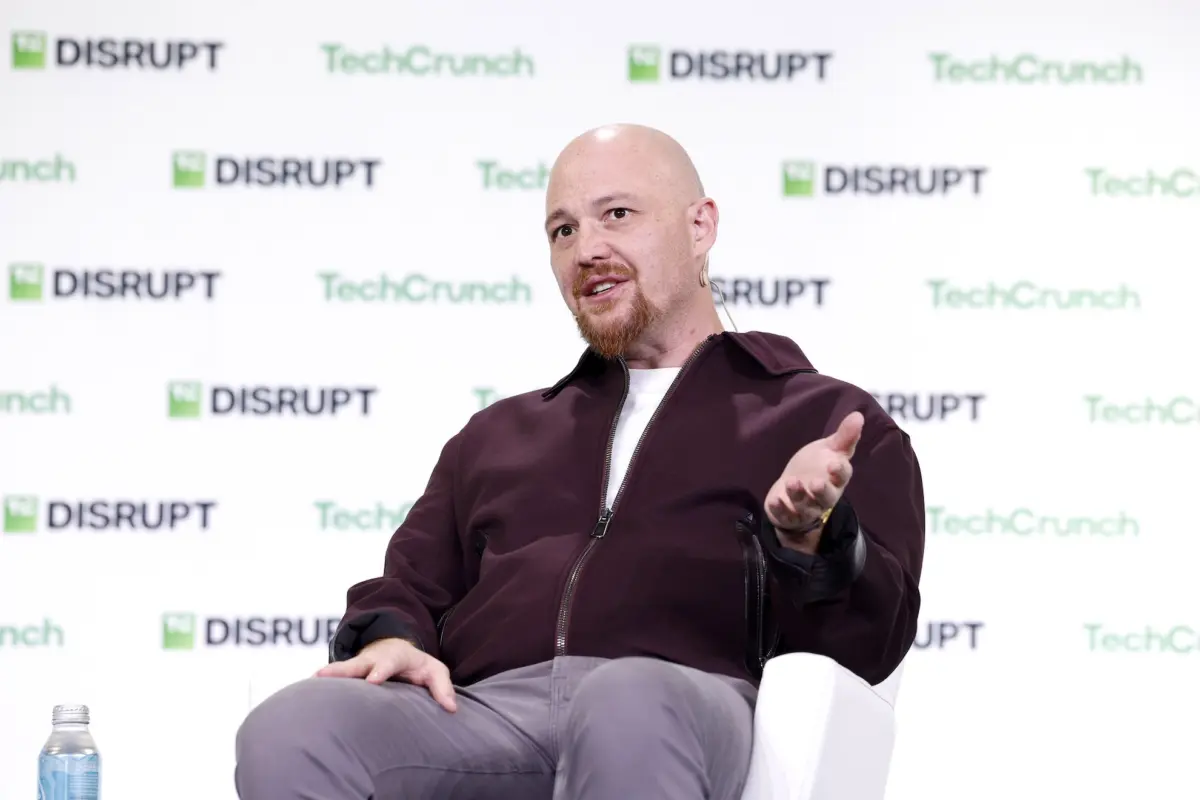
The debate surrounding the trajectory of robotics is gaining significant traction within the tech industry. While some envision a future where a universal AI model renders much of the current, specialized robotics development redundant, Vishwanath’s assessment suggests a more protracted journey. This divergence in opinion was highlighted in a recent discussion on TechCrunch’s "Equity" podcast, where Dominic-Madori Davis, a senior venture capital and startup reporter, interviewed Vishwanath. In her new capacity as the founder and managing partner of Techable VC, Vishwanath is now at the forefront of investing in early-stage companies. Her firm is specifically targeting physical AI innovations across critical sectors like robotics, materials science, and life sciences. The podcast episode delved into Vishwanath’s transition from a key executive at NVIDIA to an influential investor, offering insights into her experiences as one of the first women to spin out of a major tech giant to launch her own early-stage investment firm.
The "Lego Era" of Robotics: Building Blocks Under Construction
Vishwanath’s analogy of the "Lego era" underscores the fundamental nature of the current challenges and opportunities in robotics. She posits that the industry is still in the process of establishing and refining the core building blocks necessary for truly ubiquitous and sophisticated robotic systems. This involves significant advancements in:
- Actuators: The components that enable movement in robots. While progress has been made, achieving the fine motor control, precision, and energy efficiency required for a wide range of applications remains an ongoing effort. Innovations in materials and design are crucial here.
- Robotic Hands and Manipulators: The development of dexterous grippers and manipulators that can handle a diverse array of objects with varying shapes, sizes, and textures is a significant hurdle. Current robotic hands often lack the adaptability and sensitivity of human hands, limiting their utility in complex tasks.
- Software and Control Systems: The integration of advanced AI algorithms, including reinforcement learning and sophisticated motion planning, is essential. However, creating robust, adaptable, and scalable software that can manage the complexities of real-world robotic interaction is a formidable task.
- Safety Standards and Regulation: As robots become more integrated into human environments, the development and enforcement of comprehensive safety standards are paramount. This includes ensuring safe human-robot interaction, predictable behavior in unpredictable situations, and reliable fail-safe mechanisms.
This perspective is informed by Vishwanath’s extensive experience at NVIDIA, a company at the forefront of developing the hardware and software infrastructure that powers many advanced AI applications, including robotics. NVIDIA’s contributions, from high-performance GPUs to specialized AI platforms like NVIDIA Isaac, have been instrumental in accelerating research and development in this field. However, even with these powerful tools, the practical deployment of robots in diverse, unstructured environments continues to face significant obstacles.
The "ChatGPT Moment" Hypothesis: A Contrasting Vision
The optimistic view, often referred to as the "ChatGPT moment" for robotics, suggests that the advent of powerful, general-purpose foundation models will dramatically accelerate progress. Proponents of this idea believe that a single AI model, trained on vast datasets, could possess the inherent intelligence and adaptability to control robots for a multitude of tasks, effectively bypassing the need for highly specialized programming and hardware for each application.
Pim de Witte, CEO of General Intuition, articulated this perspective earlier this year, suggesting that a unified foundation model would indeed make much of today’s specialized robotics work redundant. This vision implies a paradigm shift where robots could learn and adapt to new tasks with unprecedented speed and generality, much like how ChatGPT can generate text on a wide range of topics with minimal prompting. The underlying assumption is that the core intelligence needed for complex manipulation and interaction can be abstracted and generalized within a single AI architecture.
However, translating the success of large language models (LLMs) like ChatGPT to the physical world presents unique challenges. LLMs operate in the digital realm, processing and generating information based on text and data. Robotics, on the other hand, requires interaction with the physical environment, involving perception, manipulation, locomotion, and real-time decision-making under uncertainty. The data required for training robots for physical tasks is often different in nature and significantly more complex to acquire and process than text-based data. For instance, learning to grasp a delicate object requires not just visual input but also an understanding of physics, material properties, and proprioception – the robot’s own sense of its body’s position and movement.
Techable VC: Investing in the Future of Physical AI
Vishwanath’s transition to founding Techable VC signifies a strategic move to directly influence and support the companies building the future of physical AI. By focusing on robotics, materials science, and life sciences, Techable VC aims to identify and nurture ventures that are tackling the fundamental challenges that Vishwanath believes are still being addressed.
The firm’s investment thesis likely centers on companies that are developing innovative solutions for the core components of robotics – improved actuators, dexterous manipulators, novel sensor technologies, and more efficient AI integration for physical systems. The emphasis on materials science could indicate a focus on developing new materials that enhance robot performance, durability, or even enable entirely new forms of robotic interaction. Similarly, investments in life sciences could point towards applications of robotics in areas like medical procedures, prosthetics, or biological research, where precision and delicate manipulation are critical.
Vishwanath’s background at NVIDIA provides her with a deep understanding of the technological landscape, the market dynamics, and the critical bottlenecks in the development and deployment of AI-powered physical systems. This experience is invaluable in identifying startups with truly disruptive potential and the ability to navigate the complex path from concept to commercialization.
Lessons from Leadership: A Woman’s Perspective in Venture Capital
The discussion also touched upon Vishwanath’s experiences as a woman in executive leadership within the technology sector. Her journey from a prominent role at NVIDIA to launching her own early-stage investment firm offers a unique perspective on leadership, entrepreneurship, and the evolving landscape of venture capital.
The tech industry, while making strides, still faces challenges in achieving equitable representation at all levels, particularly in leadership and investment roles. Vishwanath’s success in spinning out of a major corporation to establish her own firm is a testament to her vision and execution. Her focus on "physical AI" also highlights a growing trend where investment is shifting beyond purely software-based solutions to encompass the tangible, real-world applications of technology.
The implications of more diverse voices and perspectives in venture capital are significant. Research has consistently shown that diverse investment teams can lead to better decision-making, a broader range of investment opportunities being considered, and ultimately, a more inclusive and innovative tech ecosystem. Vishwanath’s leadership at Techable VC contributes to this broader effort by bringing a seasoned executive’s acumen and a forward-thinking investment strategy to the forefront.
The Road Ahead: Bridging the Gap Between Potential and Reality
The current state of robotics, as described by Vishwanath, is one of significant foundational work. While the allure of a singular AI model revolutionizing robotics is compelling, the practical realities of engineering and deploying complex physical systems suggest a more incremental, albeit rapid, path forward. The advancements in AI, particularly in areas like computer vision, natural language processing, and reinforcement learning, are undoubtedly accelerating progress. However, these advancements need to be integrated with robust hardware, sophisticated control systems, and rigorous safety protocols to realize their full potential in the physical world.
The companies that Vishwanath’s Techable VC invests in are likely to be those that are making tangible progress on these foundational elements. Their success will not only contribute to the advancement of robotics but also shape the broader landscape of physical AI. The "Lego era" may be characterized by the painstaking assembly of fundamental components, but it is precisely this careful construction that will ultimately enable the sophisticated and transformative robotic applications of the future. The journey towards a "ChatGPT moment" for robotics is ongoing, and it will likely be defined by companies that are not only innovating in AI but also mastering the complexities of the physical world. The intersection of advanced AI and physical engineering is where the true revolution in robotics will unfold, and investors like Amulya Vishwanath are strategically positioned to champion this critical evolution.