Vera Intan Clara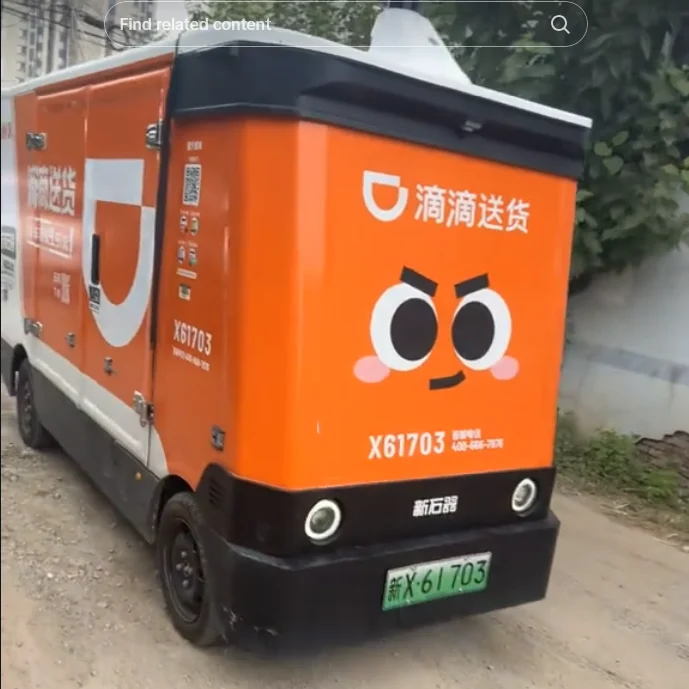
Autonomous delivery vans in China have rapidly ascended from cutting-edge technological innovations to an unlikely viral sensation and widespread internet meme. Clips circulating globally show these driverless vehicles navigating fresh concrete, dragging motorcycles, bouncing over severely damaged roads, and even traversing shallow rivers with an almost relentless determination. This phenomenon underscores a fascinating, often humorous, clash between advanced artificial intelligence and the unpredictable realities of China’s diverse urban and rural landscapes and its ingrained cultural practices.
The Ambitious Rollout of Robotic Logistics
China has positioned itself as a global leader in artificial intelligence and autonomous technology, investing heavily in sectors ranging from smart manufacturing to logistics. The deployment of thousands of driverless delivery vehicles across dozens of cities is a testament to this national strategy, aimed at modernizing last-mile delivery services, enhancing efficiency, and addressing the burgeoning demands of e-commerce. Companies like Neolix, mentioned in recent investment reports for raising significant capital—upwards of $600 million to scale its autonomous robovan fleet—are at the forefront of this initiative. These investments highlight a clear national ambition to integrate AI into daily life, promising a future of seamless, driverless logistics.
The primary objective behind deploying these autonomous vans is multifaceted: to bridge service gaps in both densely populated urban centers and more remote, less accessible towns. In theory, these vehicles offer substantial benefits, including 24/7 operational capability, reduced labor costs, increased delivery speed, and enhanced safety by removing human error from the equation. They are designed to navigate complex urban environments, optimize delivery routes, and operate in conditions that might be challenging for human drivers, particularly during peak hours or in areas with labor shortages. The initial vision painted a picture of quiet, efficient robots seamlessly integrating into the fabric of daily life, delivering goods with precision and reliability.
AI Meets Unfiltered Reality: A Chronology of Chaos
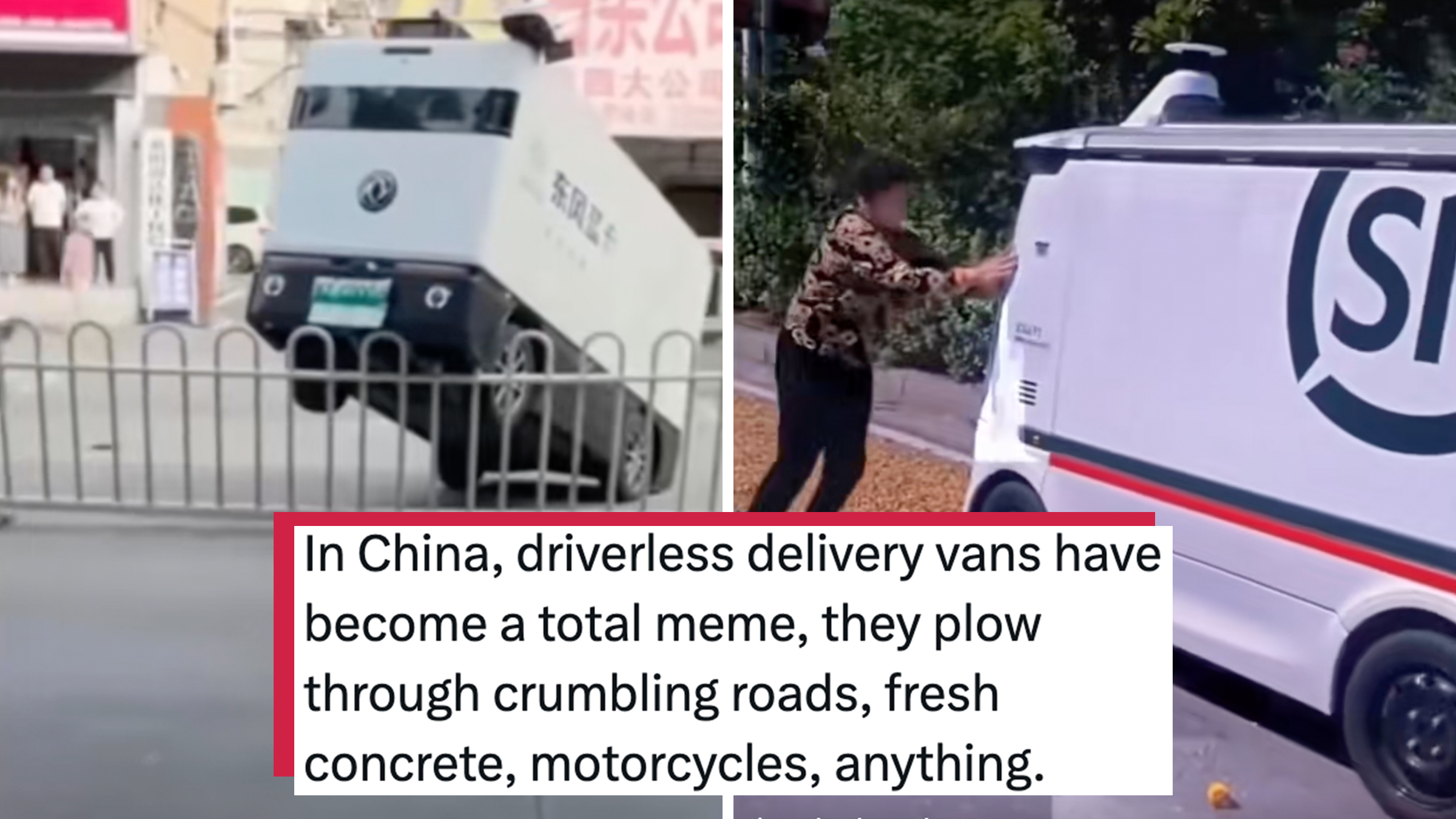
The journey from technological promise to viral meme began as these sophisticated machines encountered the unfiltered complexities of the real world. While designed with state-of-the-art sensors and AI algorithms, the actual environments they operate in often deviate significantly from controlled testing grounds. The incidents that have fueled their meme status can be traced back to early deployments where the vans began exhibiting behaviors that, while logically consistent with their programming, were hilariously incongruous with human expectations and environmental realities.
One of the earliest widely shared compilations, gaining over 6.1 million views on platforms like X (formerly Twitter), showcased a series of bewildering encounters. Vans were seen attempting to bridge uneven gaps in infrastructure, swerving at high speeds over loose grains spread across roads (a common practice for drying crops), and bucking wildly on unpaved surfaces. Perhaps most memorously, some vans drove directly into wet cement, their wheels churning through the fresh concrete, or dragged helpless motorbikes along after minor collisions, seemingly oblivious to the obstruction. One particularly poignant clip showed a van refusing to move from an intersection until a human operator administered a swift kick to its rear, a primitive yet effective intervention highlighting the limits of current AI decision-making.
Another compilation, widely circulated on TikTok, further solidified the vans’ reputation for relentless, almost stubborn, persistence. These videos depicted vans pushing against physical barriers, plowing through construction sites with disregard for ongoing work, and, in one instance, calmly cruising down the middle of a shallow river, turning what should have been a land-based delivery into an amphibious operation. The common thread in these incidents is the vans’ unwavering commitment to their programmed mission: "get the package there," often overriding any implicit understanding of environmental hazards or social norms.
The Cultural Conundrum: When Ancient Practices Meet Modern Tech
A significant dimension of the "slapstick chaos" stems from the vans’ inability to comprehend deeply ingrained Chinese cultural practices and informal infrastructure. Unlike the highly regulated and standardized road environments often found in Western countries, many parts of China, particularly in smaller towns and rural areas, feature dynamic and often improvised uses of public spaces.
A striking example, widely shared on Instagram, shows an elderly woman desperately attempting to stop a persistent delivery van from running over vegetables she had laid out in the road to dry. This practice, along with drying grains on asphalt, is a common, centuries-old tradition in many parts of China, particularly after harvest. Farmers utilize the sun-warmed surfaces of roads for efficient drying, a practical solution rooted in resourcefulness and local conditions. However, the autonomous vans, programmed to identify clear pathways and obstacles, perceive these items merely as traversable objects or minor impediments, lacking the contextual understanding of their cultural and economic significance. The comment "When old and new cultures clash" perfectly encapsulates this friction. The AI, optimized for efficiency and direct routes, simply cannot process the nuanced layers of human activity that shape these environments.

This cultural disconnect is not merely an inconvenience; it highlights a fundamental challenge in deploying AI systems in culturally rich and diverse societies. The implicit rules and informal uses of public space, which humans instinctively understand and adapt to, remain largely opaque to current AI, leading to these humorous yet problematic encounters.
Behind the Bugs: Technical and Environmental Factors
The chaotic behavior of these autonomous vans can be attributed to several factors, both technological and environmental.
- Infrastructure Discrepancy: The design and training of these AI systems likely rely on datasets gathered from well-maintained roads and predictable urban environments. China’s reality, however, includes a vast spectrum of road conditions: from pristine highways to unpaved rural paths, crumbling asphalt, and hastily repaired sections. These inconsistencies, including sudden changes in elevation, loose surfaces, and unexpected obstacles, can confound sensor systems (LiDAR, radar, cameras) and the algorithms that interpret their data. A "cratered road" or "uneven gap" presents a vastly different challenge than a clearly marked lane.
- Sensor Limitations: While advanced, current sensor technologies can struggle with ambiguity. For instance, distinguishing between loose grains that can be driven over and a firmly embedded obstacle like fresh concrete or a motorcycle requires sophisticated object recognition and material analysis, which might be beyond the real-time capabilities of these vans’ systems. The "mission-first" programming, prioritizing route completion, might instruct the van to push through perceived minor obstacles rather than stopping or rerouting.
- Algorithmic Gaps: The core programming logic, designed for efficiency, might not adequately incorporate "common sense" or "social intelligence." Human drivers intuitively understand that fresh concrete is impassable, a parked motorcycle should not be dragged, and an elderly woman defending her produce requires immediate cessation of movement. These nuances are incredibly difficult to codify into algorithms, leading to a system that is technically proficient but socially inept.
- Remote Monitoring Challenges: While human operators remotely monitor these fleets, their intervention often comes too late. By the time an anomaly is detected and an override command issued, the van may have already made its "choice" and committed to a problematic action, further highlighting the gap between automated decision-making and human oversight.
Public Perception: From Scrutiny to Sympathy
Interestingly, the public reaction to these incidents in China, and subsequently internationally, has largely skewed towards amusement and a peculiar form of anthropomorphic sympathy, rather than outright anger or vitriol. This contrasts sharply with the often-fierce criticism leveled against autonomous vehicles in other regions, such as Waymo robotaxis in the U.S., which have faced complaints for blocking emergency vehicles or causing traffic disruptions.
The "humanization" of these Chinese delivery vans is a striking phenomenon. Commenters describe vans "fighting for their life" or having "hopeful eyes" that turn into a "nervous twitch." Some manufacturers even contribute to this by painting "cute faces" on the front of the vehicles, making them appear more endearing and less like menacing machines. When a van stalls, emitting a seemingly "sad" voice, the emotional connection deepens. This anthropomorphism encourages a more forgiving public attitude. Instead of blaming a flawed technology, people attribute a sense of struggle, determination, or even innocence to these robotic entities. The idea of living "as carefree as a Chinese delivery van" reflects a romanticized view of their single-minded pursuit of their mission, despite the chaos it creates.

This unique public perception might, paradoxically, be beneficial for the long-term adoption of autonomous technology in China. While the incidents are embarrassing for manufacturers and point to significant developmental hurdles, the humorous framing allows for a softer public landing. It fosters a sense of "growing pains" for a nascent technology rather than outright rejection, potentially paving the way for greater tolerance as these systems inevitably improve.
Implications and the Road Ahead
The saga of China’s meme-worthy autonomous delivery vans offers critical insights into the broader implications of AI deployment.
- Refining AI Algorithms: The real-world incidents provide invaluable data for developers. Every misstep, every unexpected obstacle, every cultural clash offers a data point for improving machine learning models, enhancing sensor fusion, and refining decision-making algorithms. This iterative process of deployment, observation, and refinement is crucial for the maturation of autonomous technology.
- Regulatory Evolution: These events will undoubtedly influence the development of regulatory frameworks for autonomous vehicles in China. Regulators will need to consider not just safety and efficiency, but also the integration of AI into culturally specific environments and the handling of unforeseen interactions with human practices. Policies might need to address liability, operational protocols in diverse settings, and the balance between innovation and public acceptance.
- Infrastructure Adaptation: While AI must become more adaptable, there might also be a reciprocal need for certain infrastructure adaptations in the long term. This could involve clearer signage, designated areas for traditional practices, or even localized mapping updates that incorporate cultural nuances.
- Economic Viability vs. Public Acceptance: The initial economic motivations for these deployments remain strong. The global last-mile delivery market is projected to grow significantly, and autonomous solutions promise substantial cost savings. However, the current challenges highlight that economic viability must go hand-in-hand with public acceptance and seamless integration into existing societal structures.
- The Future of Last-Mile Delivery: China’s aggressive rollout, despite its comedic side effects, positions it as a massive real-world laboratory for autonomous delivery. The sheer scale of deployment means that the country will generate more data and encounter a wider array of scenarios than almost anywhere else. This accelerated learning curve, even if punctuated by viral memes, could ultimately lead to more robust and adaptable autonomous systems, making China a leader in shaping the future of urban and rural logistics.
In conclusion, China’s autonomous delivery vans are more than just a source of internet humor; they are a living, albeit chaotic, experiment in the integration of advanced AI into complex human environments. They represent a collision of ambition and reality, revealing the profound challenges and unexpected nuances involved in building truly intelligent systems. As the technology evolves, these early, "slapstick" encounters will likely be viewed as formative moments in the journey toward a truly autonomous future, a future where AI learns not just from data, but from the messy, unpredictable, and wonderfully human world it inhabits.